5 Factors That Determine How Long Landscape Timber Lasts
Landscape timbers typically last between 5 and 25 years. That wide range depends on five things you can actually control. Understanding each one helps you get more life from your wood investment.
Wood Species Matters More Than You’d Think
The type of wood you choose sets the baseline for durability. Class 1 woods like teak and cedar naturally resist decay and can last 25 years or longer without treatment. Softwoods like pine and spruce need chemical treatment to survive more than 5 to 10 years in outdoor conditions. When you’re shopping, ask your supplier which species they carry and what protection level each one has. Untreated softwood will rot quickly if it touches soil.
Moisture Control Is Your Main Job
Water breaks down wood from the inside out. The key is keeping moisture away from the timber itself. Elevate your landscape timbers at least 2 to 3 inches off the ground using a gravel or sand base. This allows water to drain underneath rather than pooling against the wood. Make sure your landscape slopes slightly—aim for a 2 to 3 percent grade—so rain runs off instead of settling. Good airflow around the timber matters too. Don’t pack soil tightly against the sides; leave a small gap so air can circulate.
Ground Contact Requires Special Materials
If your design calls for timber that sits directly in soil, you need lumber rated for ground contact. These boards have been pressure-treated with preservatives that resist the bacteria and fungi that cause rot. Standard untreated lumber will deteriorate in 2 to 4 years when in constant soil contact. Ground-contact rated timber can last 15 to 20 years depending on soil conditions and local climate.
Installation Details Add Years
How you install the timber matters as much as what you buy. Start with a solid foundation—a 4-inch gravel base prevents water from pooling underneath. Slope your entire landscape bed at that 2 to 3 percent angle so water naturally flows away. Use stainless steel fasteners instead of regular nails or screws, since standard metal rusts and stains the wood. Apply a water-repellent finish to all exposed surfaces when you first install the timber, then reapply it every 2 years to maintain protection.
Regular Upkeep Extends the Years
Maintenance is where many people fall short, yet it’s where you gain the most control. Clear debris from around the timber so it dries quickly after rain. Check for soft spots or discoloration once a year, which signals early rot. Reapply water-repellent coating on schedule rather than waiting until you see damage. Small maintenance steps done consistently add 5 to 10 extra years to your timber’s life compared to timber left alone.
How Long Do Landscape Timbers Last? (Typical Lifespan by Use)
How Long Do Landscape Timbers Last? (Typical Lifespan by Use)
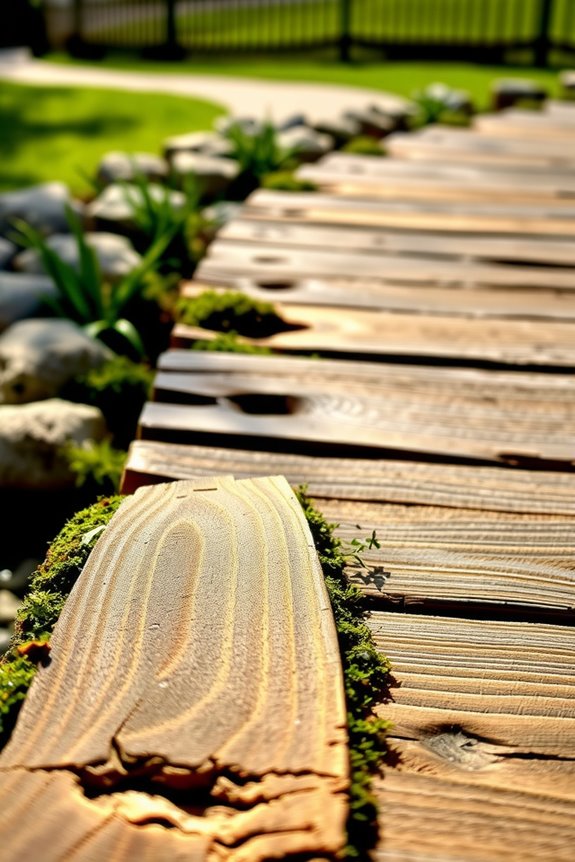
Your landscape timbers will last different amounts of time depending on where you put them and what type of wood you select. Above-ground installations typically survive 15–20 years. When wood sits on soil, expect 10–15 years of service. Timbers that stay fully buried or constantly wet degrade much faster—usually 5–10 years—unless you apply protective treatments to slow decay.
The durability class of your wood makes a real difference in how long it holds up. Class 1 woods handle wet weather exceptionally well, often lasting over 25 years above-ground and at least 25 years when in direct ground contact. Lower durability classes work fine for decorative purposes, but you’ll need to replace them more frequently.
You can extend how long your timbers last by installing them correctly and maintaining them over time. Start with proper drainage around your installation—this prevents water from pooling against the wood and causing rot. Applying a water-repellent stain and sealing the timbers afterward adds a protective layer that pushes their lifespan well beyond what you’d expect without treatment.
Wood Species: Choosing Durable Timber for Your Climate
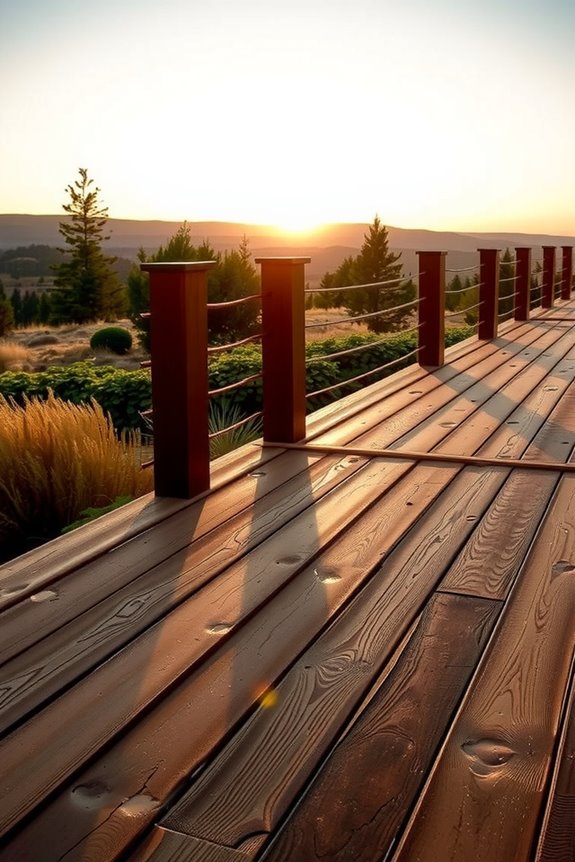
Picking the right wood species matters just as much as installation and maintenance—it’s actually the foundation of everything else you’ll do to protect your timbers. Think of it this way: the wood you choose determines how long your deck or fence will last before weather and bugs break it down.
Choosing the right wood species is the foundation of outdoor timber protection—it determines how long your deck or fence will last against weather and insects.
Class 1 woods like teak and ipe naturally resist decay for 25 years or more without any chemical treatment. On the other end, Class 5 softwoods need preservative treatment to survive outdoors at all. Your climate and the local insects in your area determine which species works best for your yard. If you live somewhere wet and warm, you’ll face different pressures than someone in a dry climate.
Naturally durable hardwoods cost more upfront but last longer without chemicals. If your budget is tight, thermally modified woods—also called Thermowood—achieve Class 1 durability through heat treatment instead of chemical preservatives. These woods are heated to about 212 degrees Fahrenheit, which changes their structure to resist rot and insects.
Here’s something many people miss: heartwood drives the EN 350 durability ratings, not sapwood. Heartwood is the older, inner part of the tree, and it’s naturally stronger and more resistant to decay. Sapwood, the lighter outer ring, doesn’t count toward durability ratings because it’s weaker. When you’re shopping for wood, look for heartwood grades to get the protection you’re actually paying for.
Match your wood choice to your region’s moisture and pest pressures. A wood that works perfectly in Arizona might rot within five years in Florida.
Moisture and Ground Contact: The Primary Lifespan Killers
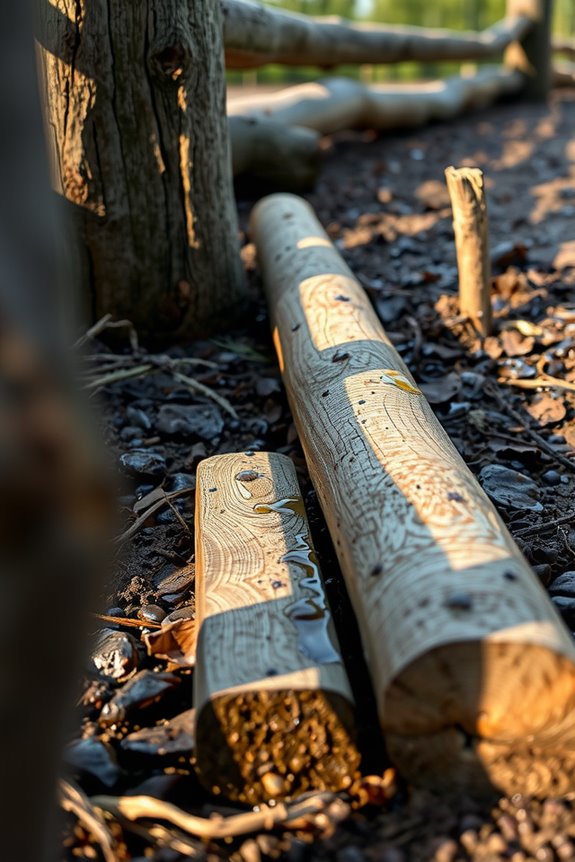
If you’ve ever left a wooden deck untreated for a few years, you know what happens. The wood darkens, softens, and eventually splits or rots. That’s moisture at work.
Moisture is landscape timber’s biggest enemy. When wood touches soil or sits exposed to rain, fungi and insects move in. They break down the wood’s structure from the inside out. The wood loses its strength and falls apart. This is why understanding durability classes matters—they tell you how well different timber types handle ground contact.
Protecting Your Wood Investment
Choose the right timber for the job. If you’re installing wood in soil, select ground-contact rated timber. Standard lumber sitting directly in earth will fail within 3 to 5 years. Ground-contact rated wood lasts 15 to 20 years or longer.
Manage water around your timber. Proper drainage stops water from pooling near wood bases. Dig a slight slope away from structures—even a 2 to 3 percent grade helps water run off instead of settling. Remove standing water within 24 hours of rain or irrigation.
Create airflow underneath. Elevate structures at least 6 inches off the ground using concrete piers or blocks. This gap lets air circulate beneath the wood, keeping it drier. Damp wood rots faster than wood that dries out between wet periods.
Seal the wood surface. Apply water-repellent finishes each year. This coating sits on top and sheds water rather than letting it soak in. Reapply after 12 months, or sooner if you live in a wet climate.
Well-ventilated, elevated installations stay drier longer and delay rot considerably. Regular moisture management can extend timber lifespan by 10 to 15 years compared to untreated wood left on bare ground.
Installation, Drainage, and Protective Coatings That Extend Life
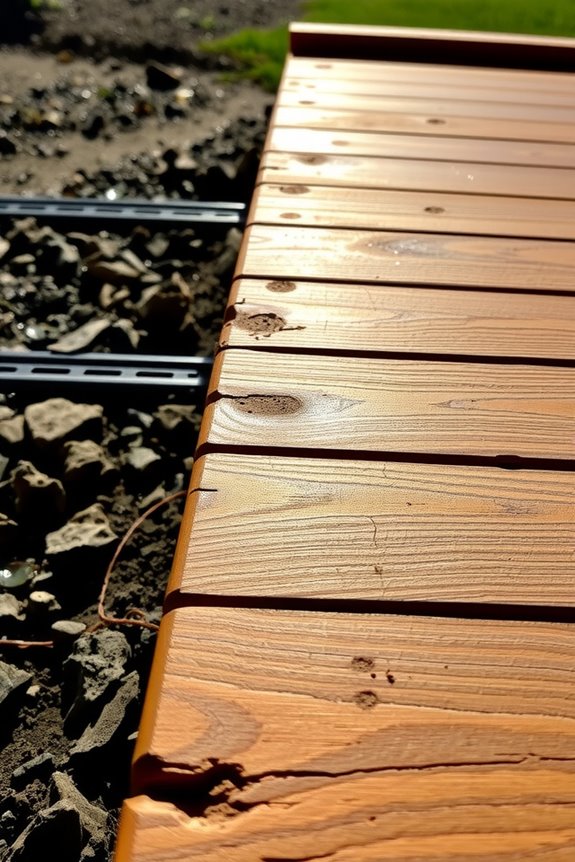
You’ve chosen the right timber and understand why moisture matters—now comes the part that actually keeps your wood standing for decades instead of rotting away in five years.
Start with the foundation. Use pressure-treated or soil-contact timber rated for ground exposure. Install a 4- to 6-inch gravel base beneath your timbers to create drainage channels that prevent water from pooling against the wood. This single step stops moisture from sitting where it shouldn’t.
Grade your landscape deliberately. Water should flow away from your structures, not toward them. Even a slight slope of 2 to 3 inches per 10 feet makes a real difference in how long your wood lasts.
Apply protective coatings on a schedule. Water-repellent stain slows moisture absorption significantly. Reapply every two years to maintain that protection. You can use products like semi-transparent deck stain or solid color wood stain, depending on your preference for appearance versus durability.
Create airflow gaps behind timbers. Leave a 1- to 2-inch space between the wood and any surface behind it. This allows wood to dry between rains and prevents moisture from getting trapped. Think of it like letting your wood breathe after a wet spell.
Proper moisture management isn’t glamorous. It’s the unglamorous work that determines whether your structure lasts five years or thirty.
Year-Round Maintenance to Maximize Your Investment
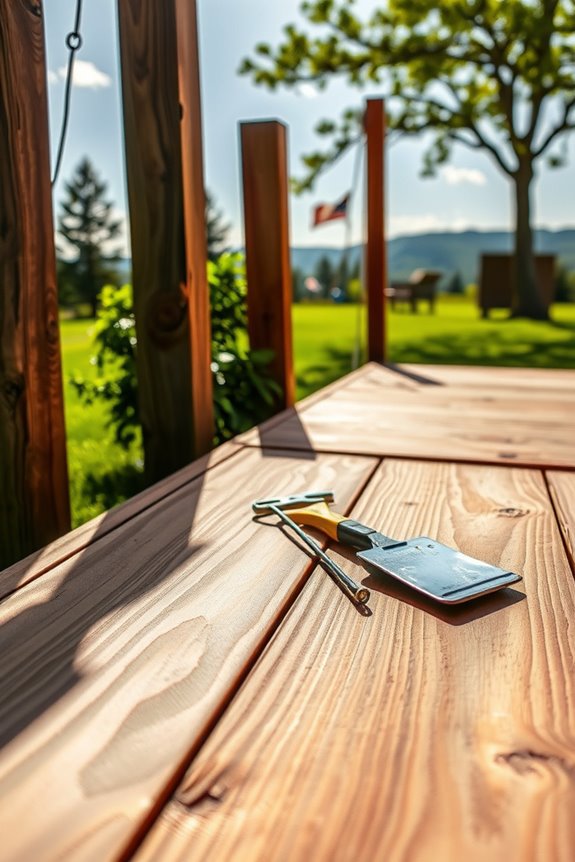
Why does one landscape timber installation last three decades while another crumbles in half that time? The answer lies in your year-round maintenance commitment.
You’ll maximize your investment by staying proactive. Schedule annual inspections each spring to catch soft spots early, before they spread. Apply water-repellent stain every 2-3 years to protect against weather damage. Clear debris that blocks drainage and airflow underneath the timbers, since moisture trapped against wood accelerates rot.
Replace damaged boards before rot spreads to healthy wood. This matters more than waiting until failure forces expensive replacements. Preventive action preserves structural integrity far better than reactive repairs.
Consistent moisture management is non-negotiable. Winter freeze-thaw cycles and summer wet seasons both demand attention. Using the correct timber rating at installation makes a real difference—ground-contact rated wood handles soil contact, while above-ground rated timber works for raised beds and retaining walls. Your landscape timbers reflect the care you invest in them. Small, regular efforts now prevent expensive replacements later.