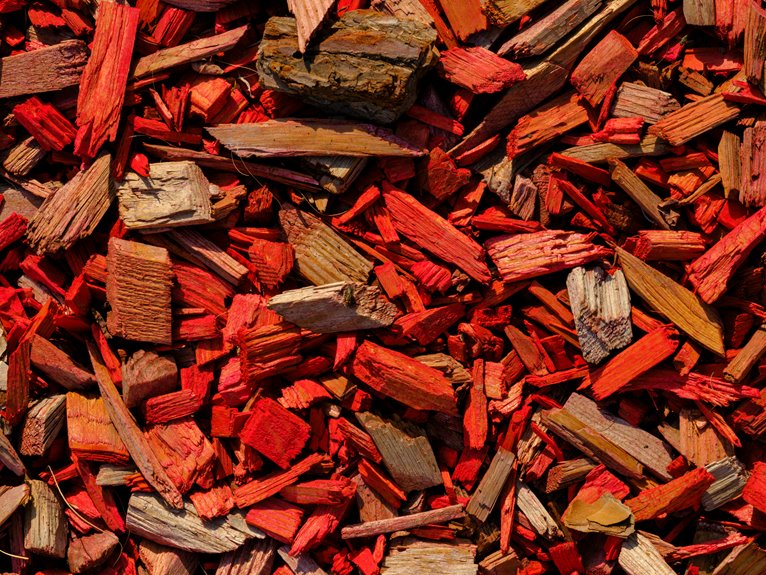
Choosing between mulch and rock shapes your garden’s future. Mulch enriches soil as it breaks down, cuts watering by 25%, and keeps roots comfortable—but you’ll replace it every 12–18 months and spend 4–6 hours yearly maintaining it.
Rock costs more upfront yet lasts longer with minimal work, though it won’t feed your plants or retain moisture.
Consider your soil goals first. If your plants need nutrients and better water retention, mulch works harder for you. Bark mulch and wood chips break down over time, adding organic matter that feeds the soil. Rock does the opposite. It sits on top of your beds without changing anything beneath the surface. It simply covers the ground.
Your water budget matters too. In dry climates or during hot summers, mulch reduces how often you need to water by holding moisture in the soil. Rock reflects heat and dries things out faster. If you live somewhere with regular rainfall and cool weather, this difference matters less.
Time and maintenance round out the picture. Mulch needs refreshing annually or every other year. You’ll rake it, check for compaction, and add fresh material. Rock requires occasional weeding and clearing of fallen leaves.
Over 5 years, mulch demands more effort. Over 10 years, rock becomes cheaper once you account for multiple mulch replacements.
Each option wins in different situations. Understanding your priorities reveals which material suits your landscape best.
Soil Health: Why Mulch Feeds Plants, Rock Doesn’t
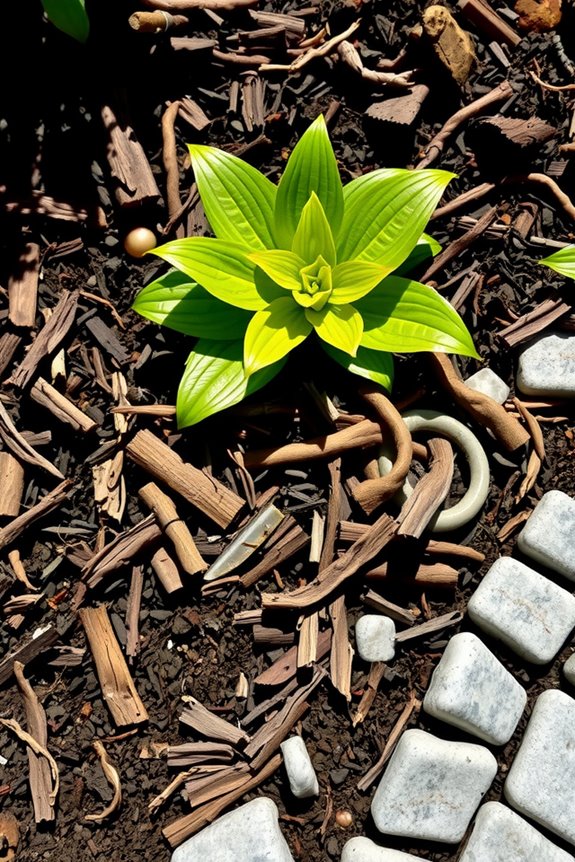
Have you ever wondered why some gardeners choose mulch while others prefer rock? The answer comes down to what your soil actually needs. Organic mulch breaks down over time, adding carbon and trace minerals to your soil as it decomposes. Rock, on the other hand, stays the same year after year—it won’t add any nutrients to feed your plants.
Mulch does more than just add nutrients. As it sits on top of your soil, it slows down water evaporation, which means you water less often while your plant roots stay healthier. The layer of mulch also acts like a blanket, protecting roots from temperature swings during hot summers or cold winters. At the same time, it blocks sunlight from reaching weed seeds, so fewer weeds sprout up around your plants.
Mulch slows water evaporation, protects roots from temperature swings, and blocks sunlight from reaching weed seeds.
Here’s how it works in practice: spread 2 to 3 inches of mulch around your plants, keeping it a few inches away from the stem or trunk. Over the course of a growing season, you’ll notice the mulch gradually flatten and darken as it breaks down. By the following spring, you’ll have lost about half an inch to decomposition, so you can add a fresh layer to maintain coverage.
If you want soil that gets richer and more fertile over time, mulch is the choice. Rock keeps your landscape looking the same, but mulch actually builds the soil you’ll depend on in future seasons.
Water & Temperature: Which Material Matches Your Watering Needs?
Now that you understand how mulch builds better soil, let’s look at how these materials handle water. Your watering schedule depends heavily on what you choose.
Organic mulch absorbs and holds water in the soil. It reduces evaporation and can cut your irrigation needs by up to 25%. This layer also acts as insulation, keeping roots cooler during hot summers and warmer during winter months. Your plants stay hydrated longer between watering days.
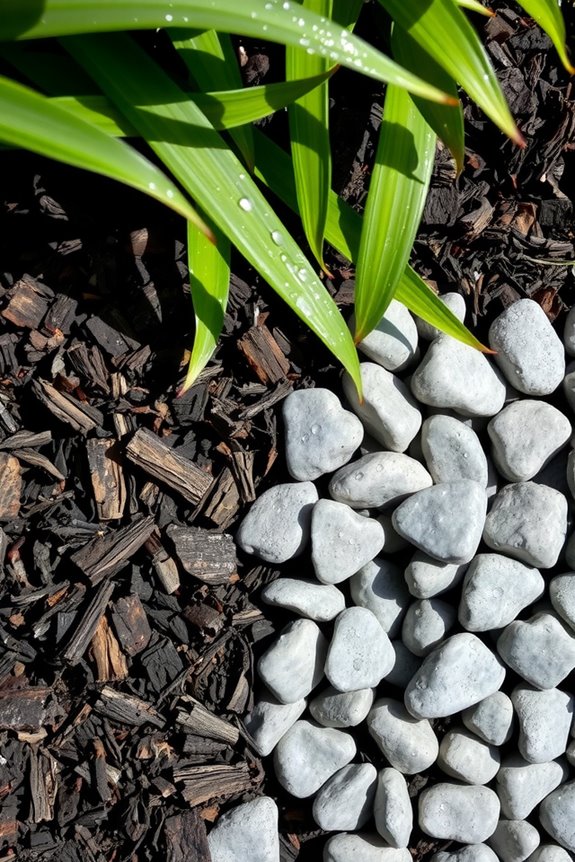
Rocks work differently. Their hard, non-porous surface doesn’t absorb water. Instead, rocks pull moisture away from nearby plants and increase how often you need to water. They also absorb heat from the sun rather than blocking it, which can stress young plants.
A practical approach combines both materials. Place organic mulch as ground cover around your plants where water retention matters most. Use rocks in pathways and decorative areas where you want a finished look without worrying about moisture. This method matches your watering needs while keeping your garden looking neat.
True Long-Term Cost: Rock vs. Mulch Over 10 Years
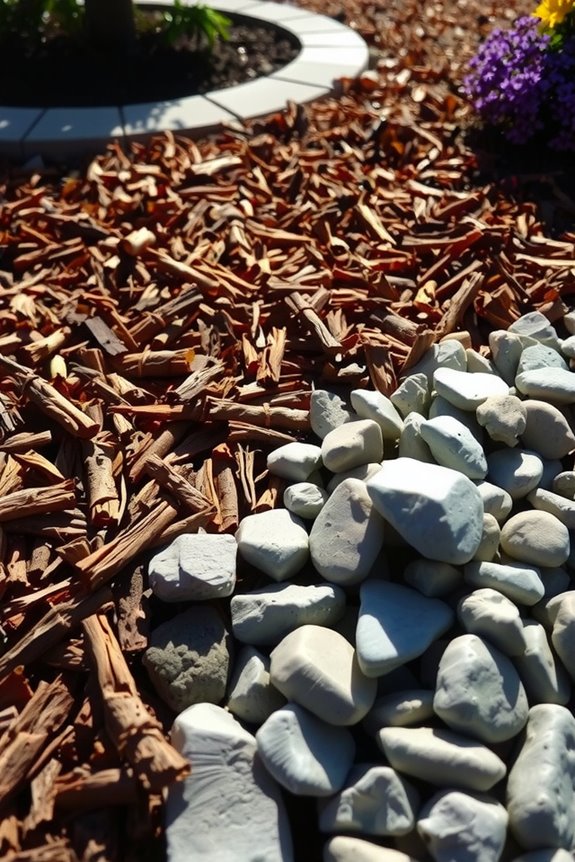
When you’re standing at the garden center deciding between mulch and rock, the price tag probably catches your eye first. Rock costs more upfront—sometimes $3 to $8 per square foot for installation, compared to $2 to $6 for mulch. That gap makes mulch look like the smarter choice initially.
But here’s what changes the picture: mulch breaks down. Every 12 to 18 months, you’ll need to add fresh mulch as the old material decays into the soil. Over 10 years, you might replace it five to seven times. Each replacement costs money and labor.
Let’s do the math. Say you spend $500 installing mulch in a 500-square-foot area. In year two, you’re buying another $500 worth. Year three brings another $500. By year four or five, your total spending has surpassed what decorative rock would have cost upfront.
Decorative rock, by contrast, stays put. It doesn’t decompose or compact into the ground. You might add a thin top layer every three to four years to refresh the look, but that’s minimal compared to mulch maintenance. Over 10 years, a $1,500 rock installation might only need $300 in refreshing work.
The real difference lies in replacement cycles. Mulch demands regular attention and repeated purchases. Rock demands an initial investment but then sits quietly in your landscape for decades. When you add up labor, materials, and your time over a full decade, stone wins financially. The numbers show it’s the longer-lasting choice for your budget.
Maintenance Time: What You’ll Actually Do Each Season?
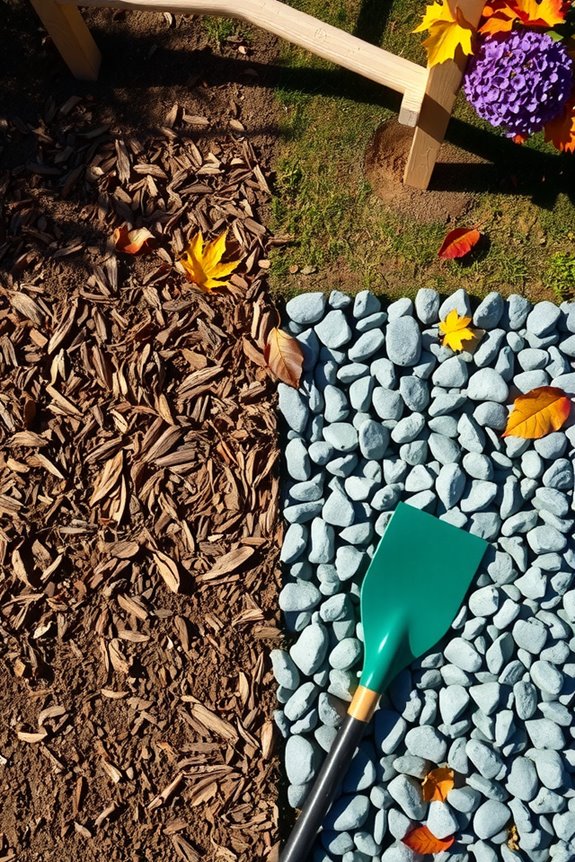
How much time you’ll spend on upkeep depends entirely on which material you choose, and the difference is substantial. With mulch, you’re committing to annual mulch maintenance that includes adding about 2 inches each year as mulch decomposition occurs. You’ll handle seasonal upkeep tasks like spot-weeding after heavy rain and monitoring soil health. Landscape rock demands far less attention—you’ll mainly blow away debris occasionally to keep things tidy.
| Task | Mulch | Landscape Rock |
|---|---|---|
| Annual Replenishment | 2 inches yearly | Minimal |
| Weed Suppression | Monthly spot-weeding | Occasional weeding |
| Seasonal Upkeep | 4-6 hours annually | 1-2 hours annually |
Mulch requires you to work with your beds regularly. Every month during the growing season, you’ll spot-weeds that push through, especially after heavy rains when the soil stays wet. The decomposition process happens naturally—mulch breaks down over time as microorganisms do their work—so you’ll need to add that 2-inch layer back each year, usually in spring or early fall.
Landscape rock takes a different approach. You won’t be weeding as often because the rock creates a barrier that makes it harder for seeds to settle into soil. Your main task involves occasional cleanup, using a leaf blower to push away fallen branches, dirt, and other debris that collects on top. This might take you an hour or two across the entire year.
Choose based on whether you prefer regular hands-on work or minimal upkeep spread throughout your landscape’s life cycle. Both options work well—it comes down to what fits your schedule and gardening style.
Aesthetics or Erosion Control: Choosing Your Priority
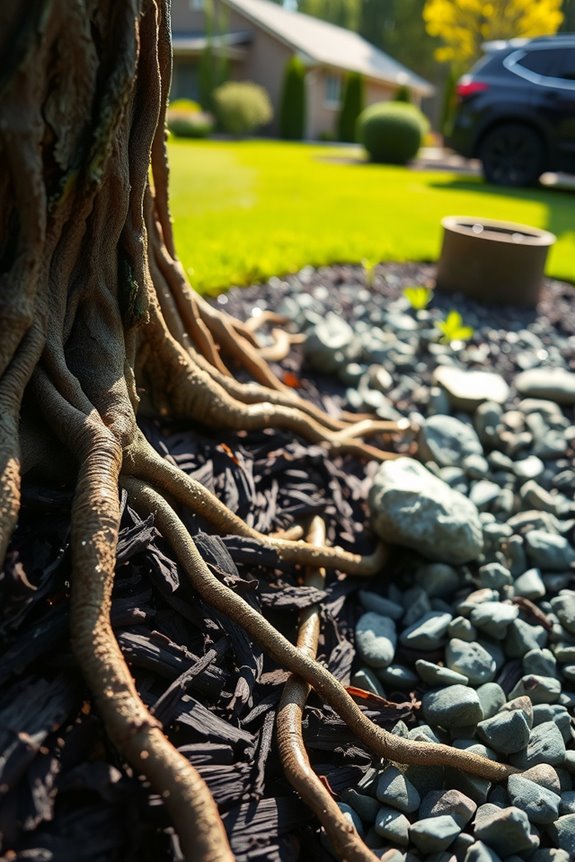
What look do you want your landscape to have, and what problem are you actually trying to solve? Start by asking yourself these two questions before you buy anything.
If aesthetics matter most, mulch is your answer. It gives you that softer, natural appearance that works well alongside your plants. Mulch breaks down over time—usually within 12 to 18 months depending on the type—so you’ll need to add more every year or two. The payoff is real: as it decomposes, it adds organic matter to your soil, helps retain moisture, and feeds your plants naturally.
If erosion control is your priority, rocks are the better choice. They perform well on slopes and stop soil from washing away during heavy rains. A 2-inch layer of rock typically holds up on moderate slopes; steeper areas might need 3 to 4 inches. Since rocks don’t break down, you won’t spend time replacing them season after season.
Consider laying landscape fabric underneath either option. This woven material blocks weeds while letting water through, and it adds a layer of stability.
Many gardeners use both materials strategically. Place rocks in problem areas where water runs off or slopes are steep. Use mulch around your plant beds where you want the soil to stay rich and moist. Your decision comes down to whether visual harmony matters more or whether you need to protect specific zones from water damage and soil loss.