Soda ash works by adding carbonate ions to your pool water. These ions raise both your pH level and total alkalinity at the same time, which is why it’s useful when both measurements are below where they should be.
The typical dose is 1 to 2 pounds per 10,000 gallons of water. Before you add anything, measure your current pH and alkalinity levels so you know exactly what you’re working with. After dosing, wait 24 hours, then test again to see how much the levels changed.
Here’s how to apply it correctly. First, dissolve the soda ash in a bucket of pool water—don’t dump the powder directly in. While your pump is running and water is circulating, pour the dissolved mixture slowly near your return jet. This circulation prevents the soda ash from clouding the water and helps it spread evenly throughout the pool.
Timing matters when you use soda ash. Add it during daylight hours so you can see the water clarity and monitor what’s happening. Avoid adding it at night, when you can’t easily spot problems. The 24-hour waiting period gives the chemicals time to fully mix and stabilize, which is why testing too soon gives you inaccurate readings.
One common mistake is adding too much at once. If you overshoot your target pH, you’ll need to add a pH decreaser to bring it back down, which costs more money and takes more time. Start with the lower end of your dosage range and work up from there if needed.
What Is Soda Ash and Why Pool Operators Use It
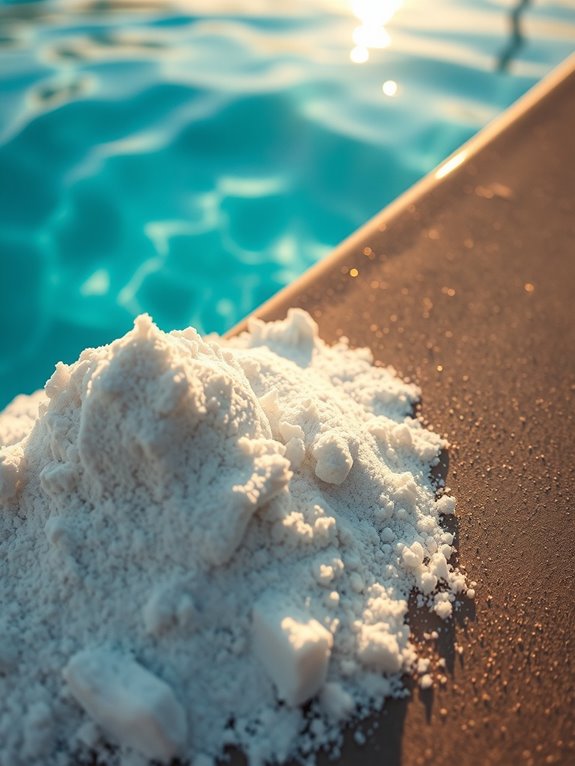
Soda ash, also called sodium carbonate (Na₂CO₃), is a white powder that serves two main jobs in your pool. It raises pH levels and increases total alkalinity. As a pool operator, you reach for soda ash when you need to make big adjustments, especially if your acid feeder system is working constantly. The powder works because it contains carbonate ions that push pH levels up quickly and noticeably.
You’ll typically use soda ash when your water’s pH drops too low. It’s also helpful when calcium hardness makes simple pH fixes difficult. Think of soda ash as your stronger option compared to sodium bicarbonate. It handles bigger challenges and more dramatic water balance problems. Knowing when to use it separates operators who keep their water balanced from those who spend all season fighting pH swings.
Why Soda Ash Raises Both pH and Total Alkalinity
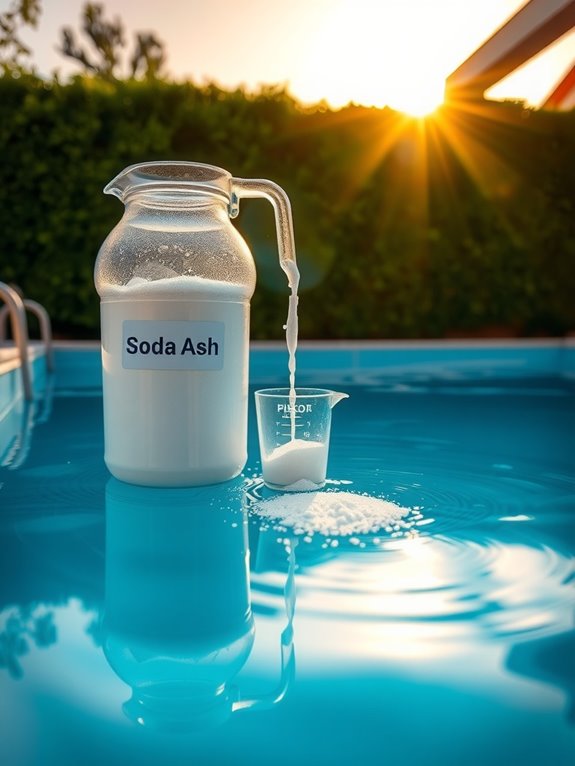
When you add soda ash to your pool, you’re introducing carbonate ions that do two jobs at once. They raise your pH while also increasing total alkalinity. This dual action is what makes soda ash different from other pool chemicals.
Here’s how it works. Your pool water contains a balance of different forms of alkalinity. As pH climbs, bicarbonate converts to carbonate. Those carbonate ions do two things: they strengthen your water’s buffering capacity and they add directly to your total alkalinity measurement. Both effects happen together because of your pool’s chemistry.
This matters when you’re deciding what chemical to use. If your total alkalinity is already high but your pH is low, soda ash can get you where you need to be. The chemical raises pH while the side effect of raising alkalinity happens too, but your TA was already elevated anyway. However, if both your pH and total alkalinity are already high, adding more soda ash will make the problem worse. In that situation, you’d need a different approach—perhaps using an acid to lower pH without raising alkalinity further.
Knowing this relationship helps you use soda ash strategically instead of just adding it whenever pH dips. Check both your pH and total alkalinity numbers before choosing your next move.
Carbonate’s Dual Chemical Impact
Why does soda ash do something that sodium bicarbonate won’t. The answer lies in carbonate ions and how they work in your pool water.
When you add soda ash, those carbonate ions perform two separate jobs at once. First, they consume hydrogen ions in your water, which raises your pH level. At the same time, those same carbonate ions increase your total alkalinity by making your water’s buffering capacity stronger. One chemical input creates two improvements in your pool chemistry.
Before you dose your pool with soda ash, you need to test your water first. This step matters because soda ash works differently depending on what you’re starting with. If both your pH and total alkalinity are low, soda ash handles both problems together. However, if your total alkalinity is already at a good level, adding soda ash might push alkalinity too high while you’re trying to fix pH. Testing tells you which situation you’re in so you can make the right choice about how much soda ash to use.
Bicarbonate-to-Carbonate pH Conversion
When you add sodium carbonate to your pool, something specific happens at the chemical level. Your bicarbonate ions start losing hydrogen atoms and become carbonate ions instead. This shift matters because it does two things at once: it raises your pH and increases your total alkalinity.
Here’s how it works. Bicarbonate and carbonate are related chemicals. Bicarbonate holds onto a hydrogen ion that carbonate doesn’t have. When pH climbs above 8.3, this conversion happens faster and stronger. Your pool gains better protection against pH swings because the carbonate ions are more stable in higher pH conditions.
The sodium ions you’re adding don’t participate in the pH change. They stay in the water to balance electrical charges while carbonate handles the actual water chemistry work. Think of sodium as the supporting player and carbonate as the main actor.
If you’re testing your pool weekly, you might notice this effect within a few days of adding sodium carbonate. A typical dose might be 1 to 2 pounds per 10,000 gallons of water, depending on how much you need to raise alkalinity. You’ll see both your pH number and alkalinity number move upward together, which is why this method works well for pools that need both adjustments.
Alkalinity and pH Interdependence
When you add soda ash to your pool, you’re actually doing two things at once. The carbonate ions in soda ash don’t just raise your pH number—they also increase your total alkalinity. Here’s what happens: those carbonate ions sit in your water and act like a buffer, which means they catch acids before those acids can lower your pH. This buffering action shows up directly in your TA reading.
This is different from what bicarbonate does. Bicarbonate mainly lifts your TA without pushing pH up very much. With soda ash, the two measurements move together. Raise one, and the other rises alongside it. They become linked.
Once you add soda ash, you’ll likely need to add acid afterward. The pH and alkalinity will both climb, and you’ll need to bring the pH back down to your target range (usually 7.2 to 7.6). This back-and-forth adjustment happens because soda ash has this dual effect on both measurements at once. Understanding this relationship means you can predict what comes next and plan your chemical additions accordingly.
How Much Soda Ash Do You Actually Need?
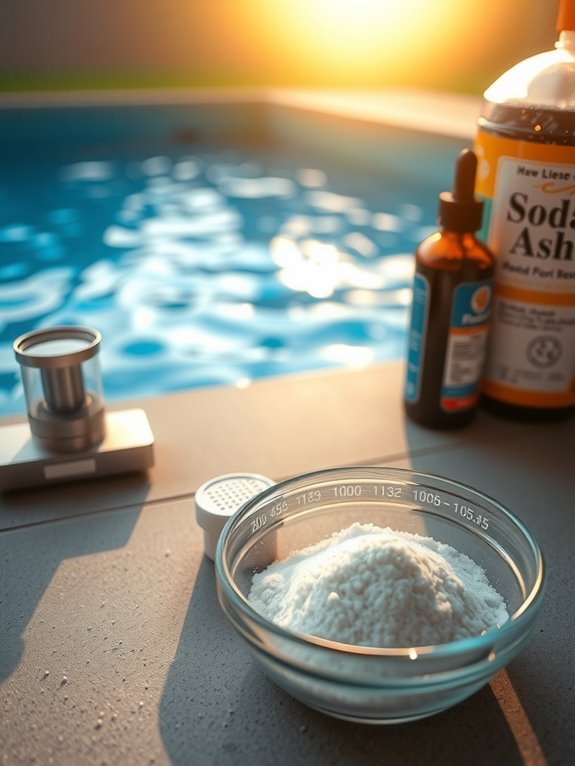
How do you know if you’re adding too much or too little soda ash to your pool. The answer lies in precise dosing based on your water’s current condition.
For a 10,000-gallon pool, 6 ounces of soda ash raises your pH by roughly 0.2 and total alkalinity by about 5 ppm. If you need a stronger adjustment, 12.2 ounces bumps pH up 0.4 and alkalinity by 8.6 ppm. The relationship between pH and total alkalinity matters here—they work together, not separately. When your starting pH sits near 8.3, you’ll need more soda ash for meaningful gains because the adjustment becomes harder at higher levels.
Start by testing your water first. Once you know your current numbers, adjust your dosage based on what your pool actually needs rather than guessing. Measure carefully using a scale that shows ounces, then add the soda ash to your pool. Wait 24 hours before retesting to confirm the results took effect. This waiting period lets the chemical distribute throughout the water properly.
Why Soda Ash Clouds Pool Water

When you add soda ash to your pool, you’re raising the pH level. If you dump it in too quickly, something specific happens in the water. A localized zone forms where carbonate ions become super saturated and immediately bind with calcium to create calcium carbonate crystals. You’ll see this almost instantly as a cloudy haze right where the soda ash entered the water.
Here’s why this occurs. The sudden pH spike at that spot disrupts the water’s natural balance and forces precipitation to happen. The good news is that this cloudiness often clears on its own. As your pool’s circulation system runs, the calcium carbonate either settles to the bottom or redissolves back into the water.
The real lesson here is straightforward: add your soda ash slowly and deliberately. Instead of pouring it all in at once, sprinkle it in over several minutes while your pump circulates the water. This gradual approach prevents those temporary cloudy zones from forming in the first place, which means you won’t have to wait for the water to clear or deal with sediment buildup on your pool floor.
Localized pH Violations
Have you noticed your pool turning cloudy right after adding soda ash. The problem happens because you’re creating a sudden spike in pH and carbonate ions in just one spot. When soda ash hits the water quickly, your pool’s available calcium immediately grabs onto those carbonate ions and forms calcium carbonate precipitate. This white clouding appears because the rapid pH increase throws off the balance between dissolved calcium and carbonate before the chemicals can spread throughout the water.
The cloudiness will fade as the precipitate settles or redissolves, but the underlying alkalinity problem stays put until you address it properly.
How to Add Soda Ash the Right Way
Add soda ash slowly while stirring constantly. Instead of dumping the whole bag in one spot, sprinkle it across the pool surface over 10 to 15 minutes, mixing as you go. This gradual approach gives your water time to adjust without creating those dramatic localized pH spikes that cause the clouding.
If you’re dealing with particularly stubborn cloudiness, calcium chelators can help by binding with excess calcium so it doesn’t precipitate out. These products work best when added to water that’s already been stirred thoroughly, so your soda ash has already started mixing.
The key difference between a cloudy pool and clear water comes down to pace. Fast additions create problems. Slow, steady additions let everything balance naturally.
Calcium Carbonate Precipitation
That white cloudiness appearing in your pool after adding soda ash comes from calcium and carbonate ions reacting together. It happens because you’re raising the pH too quickly in one spot. When soda ash dissolves fast, it converts bicarbonate into carbonate ions right away. These carbonate ions immediately grab onto the calcium hardness already in your water, forming calcium carbonate precipitate at the addition point.
The solution is straightforward: slow down your dosing rate. Add soda ash gradually over several minutes rather than all at once, letting it dissolve and spread evenly throughout the pool. This gentle approach keeps the pH from spiking in any single area.
Another option is using calcium chelators before you raise the carbonate alkalinity. These products bind with available calcium in your water, reducing the amount available to react with carbonate ions. When you then add soda ash at a measured pace—roughly one-quarter of your total dose every few minutes—you avoid the cloudiness altogether and maintain clear water.
The key difference between cloudy and clear results comes down to patience and distribution. Rushing the process creates visible turbidity within minutes. Taking time to dissolve and disperse the soda ash prevents the problem from starting.
Rapid Addition Effects
When you dump soda ash into your pool all at once, you create an immediate chemistry problem right at the pour site. The powder triggers a rapid pH rise and calcium carbonate precipitation in that concentrated zone, which causes the visible cloudiness. Here’s the sequence: soda ash shifts your Langelier Saturation Index (LSI) dramatically upward within seconds, converting bicarbonate ions to carbonate ions. These carbonate ions immediately bind with calcium hardness, forming solid calcium carbonate particles that suspend as a visible cloud.
The cloudiness you see isn’t throughout your entire pool—it’s localized turbulence at the addition point. This happens because you’re overwhelming a small area with high pH and carbonate concentration before circulation can spread it out.
| What Happens | Timeline | Result |
|---|---|---|
| Rapid LSI shift | Seconds | High pH zone |
| Carbonate formation | Minutes | Fine particles |
| Cloud visibility | Instant | Temporary cloudiness |
This temporary cloudiness typically settles or redissolves as your pool rebalances over the next few hours. Persistent clouds, however, signal ongoing precipitation that may need intervention—either through brushing the particles to the drain or waiting longer for circulation to fully disperse the soda ash.
To avoid this problem altogether, dissolve soda ash in a bucket of pool water before adding it, or pour it slowly near a return jet where water movement helps distribute it gradually.
Clear Cloudy Pool Water: Prevention and Fixes
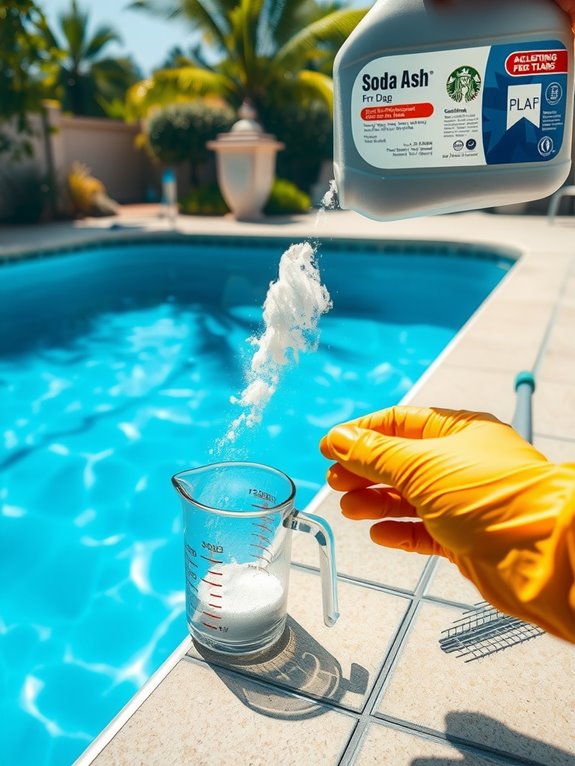
Why Your Pool Turns Milky After Adding Soda Ash
When you add soda ash to your pool, the rapid pH increase creates conditions where calcium carbonate starts to form. The carbonate ions spike in concentration and immediately attach to calcium already present in your water. This binding process is what creates that milky appearance you see right after application.
Two Ways to Clear the Cloudiness
You can fix this problem with dilution or acid. Fresh water added to your pool reduces the concentration of those carbonate ions, which helps the cloudiness fade. Alternatively, you can carefully add acid to bring the pH back down and reverse the chemical reaction. Both methods work, though the cloud often settles on its own or redissolves naturally over a few hours or days without intervention.
Preventing the Problem Before It Starts
Prevention is simpler than cleanup. If your calcium hardness reads above 400 ppm, add a calcium chelator like SC-1000 before introducing soda ash. This product binds to excess calcium and stops precipitation from happening in the first place. Another approach is to add soda ash gradually instead of all at once. Spreading the addition over several hours keeps your LSI balanced and prevents the sudden spike that triggers cloudiness.
How to Add Soda Ash Without Mistakes
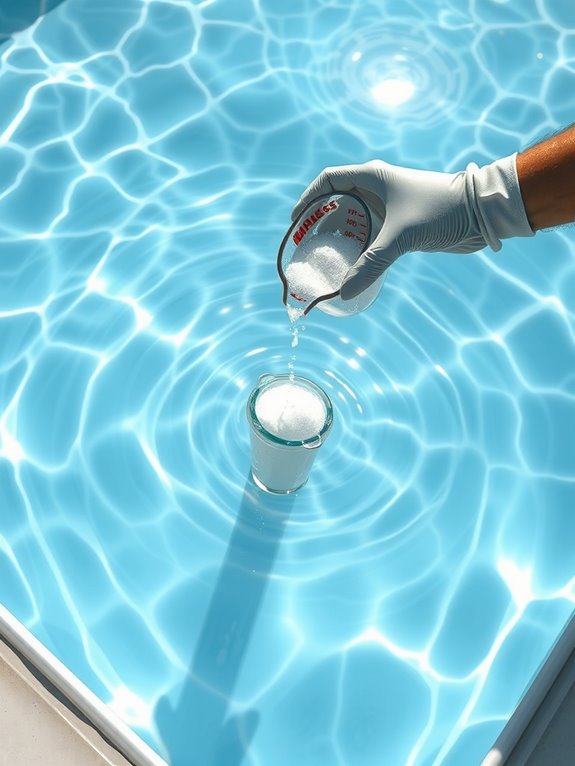
Now that you understand why cloudiness happens, you can prevent it by adding soda ash correctly. The method matters more than you might think.
Sprinkle soda ash slowly into your pool while the pump runs. This keeps the granules spread evenly throughout the water instead of sinking and clumping. Start with one pound per 10,000 gallons of water. This modest amount raises your pH by about 0.2 and increases total alkalinity at a steady pace.
Sprinkle soda ash slowly with the pump running to keep granules spread evenly and prevent cloudiness from clumping.
Never dump all the soda ash at once near the surface. When you do this, you create pockets of high concentration that turn your water cloudy. Think of it like dissolving salt in water—if you pour it all in one spot, it sits there cloudy before spreading out.
After you’ve finished adding soda ash, wait several hours before testing. Your pH and total alkalinity need time to balance throughout the pool. Then retest both levels. Your target range is 7.2 to 7.6 for pH. If you haven’t reached these numbers, add more soda ash in small amounts and wait again. This patient approach, repeating small doses and testing between each one, keeps your water clear and your chemical levels stable.
The Mistakes That Waste Soda Ash and Money
What’s the fastest way to throw money down the drain. Ignoring dosing guidelines and skipping measurements before adding soda ash will waste your product and leave your pool chemistry unbalanced.
Overshooting without checking total alkalinity first
Soda ash raises both pH and TA at the same time, which creates imbalances that demand extra acid adjustments. You end up spending more money fixing mistakes than you would have spent getting it right the first time. Before you add anything to your pool, test your current alkalinity level.
Pouring soda ash directly into your pool
When you dump soda ash straight into the water without dissolving it first, rapid pH and carbonate shifts happen all at once. This triggers calcium carbonate clouding, especially when calcium hardness is already present in your water. Once clouding starts, you have to treat the problem again, which doubles your cost and time.
Ignoring dosing math
The math is simple but necessary. 12.2 ounces of soda ash raises total alkalinity by roughly 8.6 ppm per 10,000 gallons of pool water. Guessing at measurements wastes expensive product without getting you to your target. Know your pool volume, measure the soda ash you’re using, and dissolve it in a bucket of pool water before adding it to the pool.
Measure your water chemistry first. Dissolve soda ash properly. Follow guidelines precisely. That’s how you protect your investment.
When Should You Choose Soda Ash Over Other pH Adjusters?
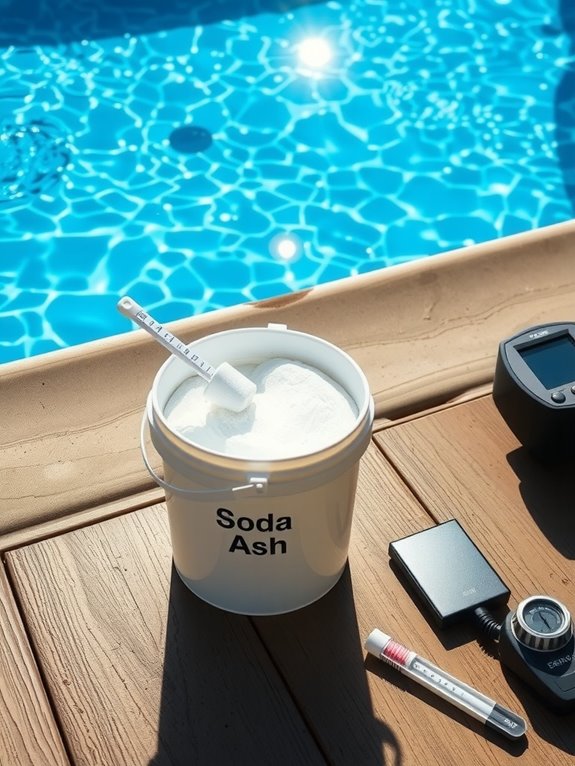
Choosing between soda ash and baking soda depends on what your pool needs right now. You’ll want soda ash when both your pH and total alkalinity are low. Soda ash raises pH more effectively than baking soda does, delivering more pH increase per pound of product. This means you’ll use less material and spend less money on dosing.
Use soda ash specifically for acid water correction. If your pH is below 7.2 and alkalinity is below 80 parts per million, soda ash works better than baking soda. One pound of soda ash raises pH by about 0.3 points in a 10,000-gallon pool, while the same amount of baking soda raises it by only about 0.1 points.
If you’re mainly trying to boost total alkalinity without changing pH much, stick with baking soda instead. Baking soda is gentler and won’t swing your pH upward as drastically.
Watch your calcium hardness levels when using soda ash. High saturation from soda ash can cloud your water, making it look hazy or milky. Test your water regularly—ideally every three to five days after adding soda ash—to catch cloudiness before it becomes a problem. This keeps your pool clear and prevents you from adding more chemicals than you actually need.
Soda Ash vs. Baking Soda: Which Chemical Saves You Money?
The price tag difference between these two chemicals might surprise you—baking soda costs about $0.26 per pound while soda ash runs $0.36 per pound—but that higher upfront cost doesn’t tell the whole story about what you’ll actually spend.
When you’re balancing pH and total alkalinity at the same time, soda ash wins on dosing efficiency. The reason is straightforward: soda ash raises both pH and TA faster, which means you’ll use fewer pounds overall and won’t need to acid-balance as often. That’s where your real savings happen.
Think about it this way. Raising pH from 7.2 to 7.6 requires significantly more baking soda than soda ash would need for the same job. That extra dosing erases baking soda’s price advantage, making soda ash the smarter long-term investment for your pool maintenance. Weekly and annual cost reductions add up despite the higher cost per pound.