3 Lowest Maintenance Fence Types for Homeowners
Three fence materials stand out for requiring minimal upkeep: vinyl, aluminum, and composite. Each one eliminates the yearly cycle of scraping, sanding, and staining that wood demands.
Vinyl Fencing
Vinyl lasts about 50 years. The material contains UV inhibitors that prevent color fading, so you won’t watch your fence turn gray over time. Cleaning takes just soap and water applied with a soft brush or cloth. That’s it. No special sealers or coatings needed. If you live somewhere with intense sun, vinyl’s fade resistance becomes especially valuable.
Aluminum Fencing
Aluminum won’t rust, even near saltwater. It also resists warping from moisture and temperature swings, which makes it practical for coastal properties or humid climates. Like vinyl, aluminum typically lasts 50 years with minimal care. You can rinse it down with a hose occasionally to remove dust and debris.
Composite Fencing
Composite blends wood fibers with recycled plastic. This combination resists rot and insect damage better than solid wood. Pressure washing once or twice per year keeps it looking clean. Composite costs more upfront than vinyl or aluminum, but some homeowners find the wood-like appearance worth the investment.
Each option frees you from the maintenance routine that traditional wood requires. Your choice depends on your climate, budget, and how much the fence’s appearance matters to your overall property look.
Vinyl Fencing: The 50-Year Low-Maintenance Standard
Why Choose Vinyl Over Wood
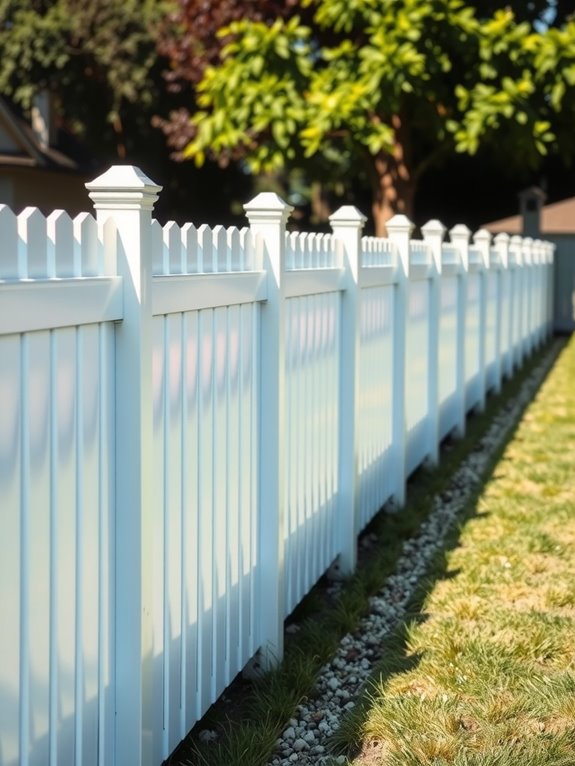
Wooden fences require regular maintenance. You’ll spend weekends scraping paint, sanding rough spots, and reapplying stain or sealant every few years. Vinyl fencing eliminates this cycle completely. A quality vinyl fence lasts 50 years with virtually no upkeep required.
A quality vinyl fence lasts 50 years with virtually no upkeep required, eliminating the endless maintenance cycle of wooden fences.
How Vinyl Actually Works
PVC vinyl won’t need painting or staining. When dirt accumulates, you simply rinse it away with soap and water from a garden hose. That’s the extent of your maintenance routine.
Manufacturers like CertainTeed and Bufftech add UV inhibitors to their vinyl products. These chemical additives protect against sun damage and color fading. Your fence stays looking the same after 10 years as it did on installation day.
Design Options Available
Vinyl comes in multiple patterns and colors. You can match your home’s exterior siding while getting the privacy that tall panels provide. Most quality vinyl panels stand 4 to 6 feet high, with picket spacing ranging from 3.5 to 5 inches depending on your preferred look.
Warranty Protection
Reputable manufacturers back their products with warranties lasting 10 to 25 years, depending on the brand. These warranties typically cover material defects and discoloration. This protection gives you confidence that your investment will perform as promised.
Aluminum Fencing: Rust-Proof Durability With Modern Style
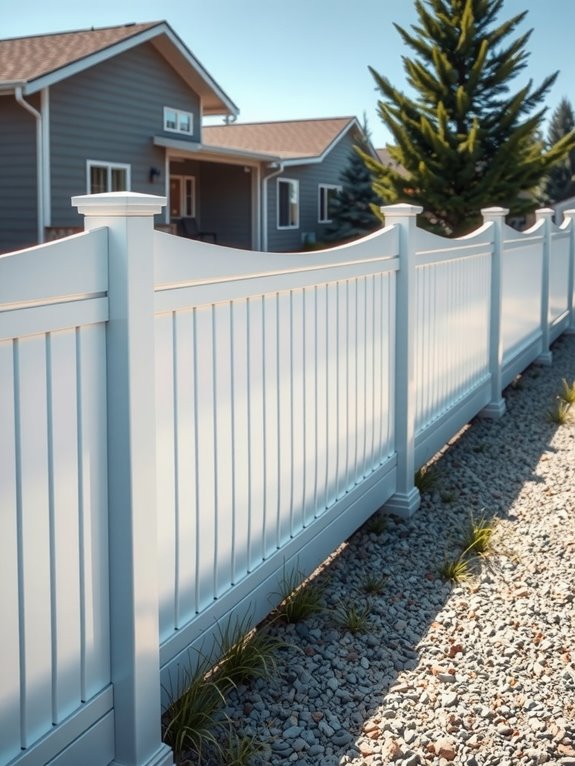
How’d you like a fence that never rusts, never needs painting, and still looks sleek after decades. Aluminum fencing delivers exactly that because this rust-proof material resists warping, rot, and splintering even in coastal environments where salt air challenges other materials.
You’ll find modern style options in traditional pickets, privacy panels, and multiple colors that suit any home aesthetic. Powder-coated finishes provide exceptional UV stability and weather resistance. Beyond occasional cleaning, your aluminum fence requires no maintenance.
Your aluminum fence typically lasts up to 50 years with proper upkeep, and many manufacturers offer lengthy warranties for peace of mind. Unlike wood, aluminum won’t absorb moisture or deteriorate because of its non-absorbent nature, making it ideal for humid climates. Low maintenance truly means low maintenance. No painting, no sealing, no constant repairs. That’s durability you can depend on.
Composite Fencing: Wood Appearance Without the Upkeep
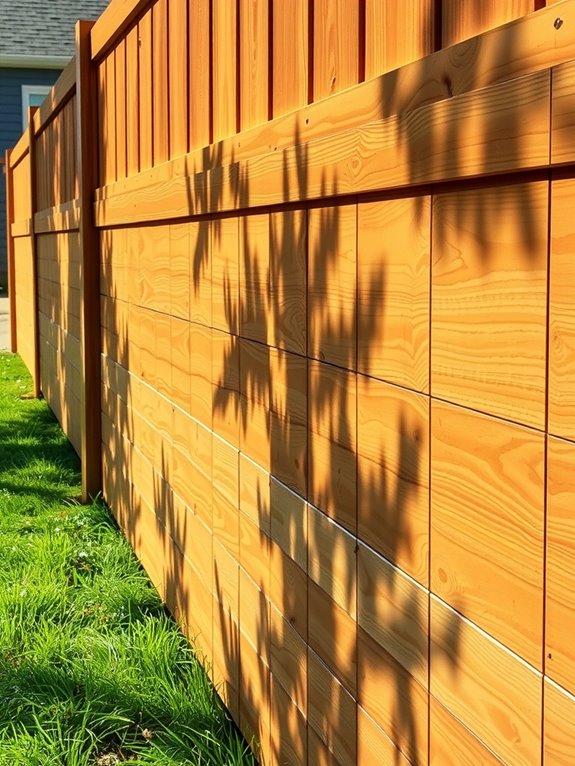
Imagine having a fence that looks like real wood but doesn’t need staining every spring. Composite fencing makes this possible. You get the authentic wood appearance combined with durability and minimal maintenance demands.
Cap Composite blends wood fibers with recycled plastic to create fencing that resists moisture, warping, and rot. The material handles UV exposure well, keeping your fence looking consistent for 30 years or longer. Instead of painting, sealing, or staining each season, you simply pressure wash the fence occasionally to remove dirt and debris.
The upfront cost runs higher than traditional wood fencing. However, the extended lifespan and low maintenance profile deliver better value over time. A typical composite fence might cost $25 to $40 per linear foot installed, compared to $8 to $15 for pressure-treated wood. When you factor in that wood requires sealing every 2 to 3 years and staining every 4 to 5 years, the composite option saves money and time across decades of ownership.
The 30-year warranty reflects the manufacturer’s confidence in durability. Many homeowners who switch to composite fencing stop spending weekends on seasonal maintenance tasks. The trade-off between higher initial investment and years of carefree ownership appeals to those looking for practical solutions.