
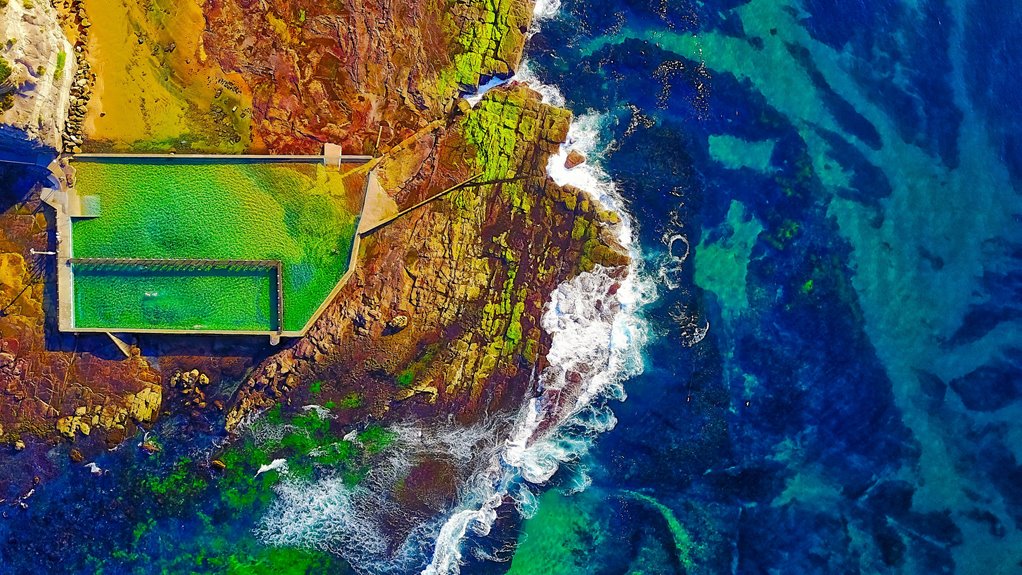
Water absorbs red light wavelengths while blue light scatters back toward your eyes, making pools appear blue. This happens because water acts like a filter. Red light gets stopped within the first 5 to 10 feet of depth, which is why deeper sections look darker and more vibrant blue.
Your pool’s finish plays a role in how blue it appears. A dark navy finish will intensify the blue color you see, while white plaster creates a lighter sky-blue appearance instead. The color you end up with depends on what material lines your pool.
Regular maintenance keeps the water crystal clear so the blue color stays visible. When algae builds up or the water gets cloudy, that blue effect fades. Clean water lets the light scatter properly, which is what makes the blue show up in the first place.
When you understand how depth, finish, and light work together, you start to see why blue dominates pool design. Deeper pools with dark finishes will always look more intensely blue than shallow pools with light finishes. The science behind it is straightforward: colored light, water absorption, and what’s under the water all combine to create what you actually see.
How Water Absorbs Red Light and Reflects Blue
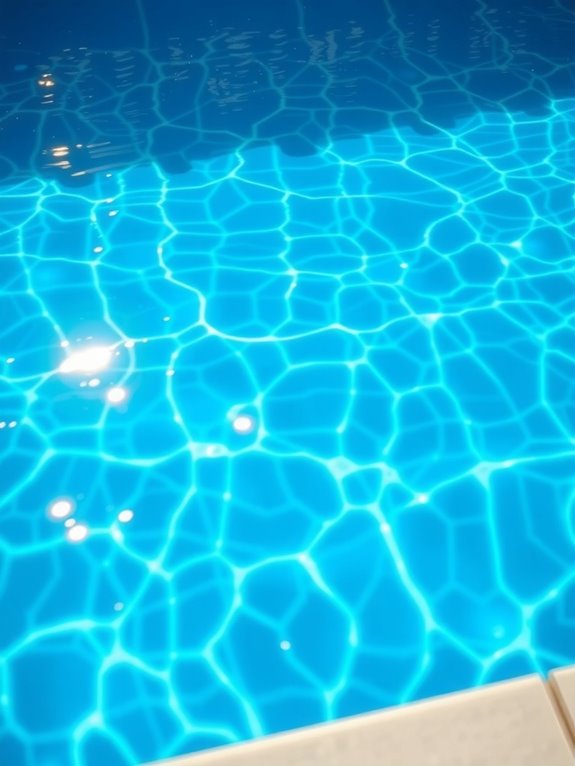
Ever wonder why the ocean looks so different from a glass of tap water?
You’re watching water absorption happen right in front of you. When light enters a pool, water absorbs red light wavelengths far more strongly than blue ones. This red light attenuation removes warm colors as light travels deeper, leaving blue light to dominate what you see.
Water absorbs red light wavelengths far more strongly than blue, leaving blue light to dominate what you see in deeper water.
Here’s how it works. Red wavelengths get absorbed into the water itself and disappear from view. Blue wavelengths, meanwhile, scatter around in the water and bounce toward your eyes. In larger volumes of water—say, a pool that’s 6 feet deep versus a drinking glass—this effect builds up. More water means more opportunity for red light to get absorbed, so the blue color becomes stronger and more noticeable.
The cleaner your pool, the more dramatic this effect becomes. Fewer particles in the water mean better scattering of blue wavelengths without interference from other colors. Dust, algae, or sediment will dull that blue hue by scattering light differently. A pool cleaned regularly will show a much deeper blue than one that’s been neglected for a few weeks.
The next time you’re at a pool or looking at ocean water, pay attention to the depth. Shallow areas look lighter blue or even greenish because less water is between the light source and your eyes. Deeper sections appear darker blue because more red light gets absorbed on its journey down and back up to you.
Why Pool Depth Makes Water Look Darker and More Blue
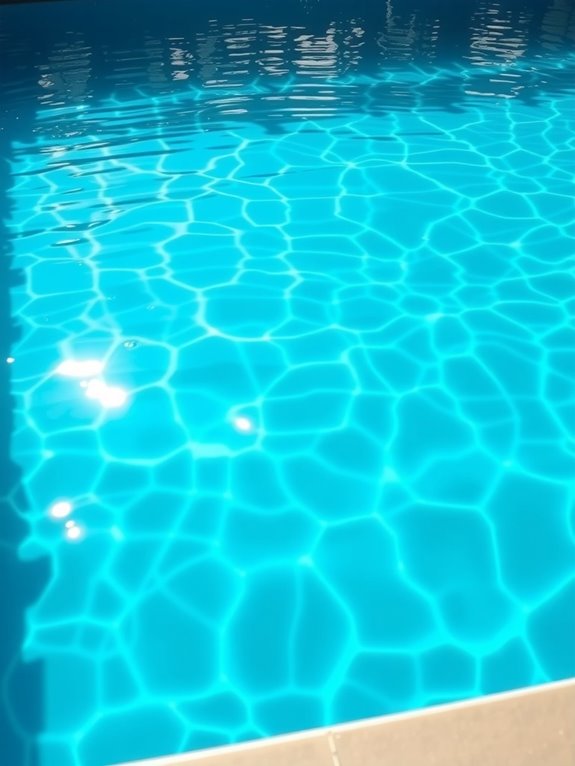
Have you noticed how the deep end of a pool looks much bluer than the shallow end? There’s a simple science behind what your eyes are seeing.
Light behaves differently as it passes through water. When sunlight enters the pool, red wavelengths get absorbed quickly—usually within the first 5 to 10 feet of depth. Blue wavelengths, on the other hand, scatter and bounce back toward your eyes. The deeper you go, the more water the light has to travel through, and the more red light gets filtered out. What remains is blue.
In shallow areas, you see more than just the water itself. Surface reflections, sunlight bouncing off the bottom, and debris all mix together. This combination dilutes the pure water color you’d see otherwise. But move to the deep end, and the water’s natural blue becomes the dominant color in your view. The greater the depth, the more selective light absorption occurs, and the richer and more intense that blue appears.
This same principle works in oceans and deep lakes. A lake that’s 30 feet deep will show a deeper blue than one that’s 10 feet deep. The water itself hasn’t changed—only the distance light travels through it has changed. Understanding how depth affects light helps you see what’s really happening when you’re in or near a pool. You’re not seeing magic. You’re seeing physics.
How Your Pool’s Finish and Tile Color Affect the Blue You See
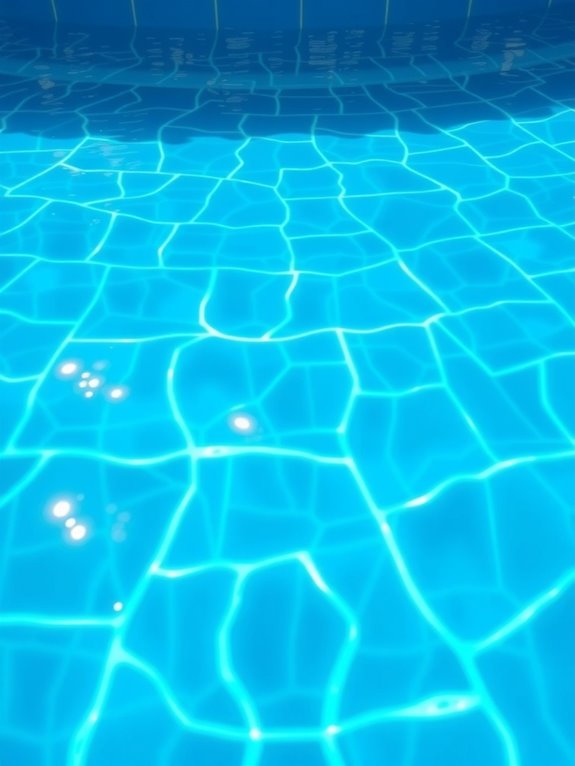
If you’ve ever stood between two pools and noticed they looked different shades of blue even though the water is the same everywhere, you’ve spotted something real about how color works. Your pool’s finish and tile color shape what your eyes actually see.
Dark finishes like navy or deep gray make blue water look more intense because they absorb light rather than bounce it back. White plaster does the opposite—it reflects more light, which creates a lighter, sky-blue appearance instead. Blue tiles push the effect further by reflecting more blue wavelengths specifically, making the water appear richer and more saturated.
The finish you pick works with two other factors: how deep your pool is and how much light the water absorbs. Together, these three things determine your pool’s final color.
| Finish Type | Blue Intensity | Light Reflection |
|---|---|---|
| Navy/Black | High | Low |
| Deep Gray | Moderate-High | Low |
| White Plaster | Moderate | High |
| Light Gray | Moderate | High |
| Blue Tiles | Very High | Medium |
Here’s how this plays out in practice. A 6-foot-deep pool with navy finish will look almost jewel-like because the darker bottom absorbs light and lets water absorb more blue wavelengths. The same 6-foot pool with white plaster will feel brighter and airier, almost like looking at the sky reflected in water. The depth stays the same, but the finish controls whether your blue appears vivid or muted.
Keeping Your Pool’s Blue Water Clear and Healthy
Now that you understand how your pool’s finish creates that blue you’re after, you’ve got to keep the water itself clear and healthy. No amount of dark plaster or blue tiles will help if algae, particles, or chemical imbalances cloud things up.
To maintain that inviting pool water blue, you’ll need to follow these steps:
Test chemical balance weekly. Your pH, chlorine, and alkalinity levels are the main guards against bacteria and algae. Check these three measurements every seven days to catch problems early.
Run filtration daily for 8 to 10 hours. This removes the tiny particles that scatter light and make your water look dull or murky. Think of the filter like a strainer—it catches what your eyes can’t see but that affects clarity.
Brush pool surfaces regularly. Algae likes to grow on walls and the pool floor before it spreads into the water. A weekly brushing stops it from taking hold in the first place.
Monitor for discoloration. Green or brown tints in your water signal real problems that need your attention right away. These colors mean algae or minerals are building up faster than your system can handle.
When you stick with these steps week after week, your pool water stays clear and blue. You’re protecting both the health and appearance of your pool.
Other Pool Colors: Why Blue Dominates the Market
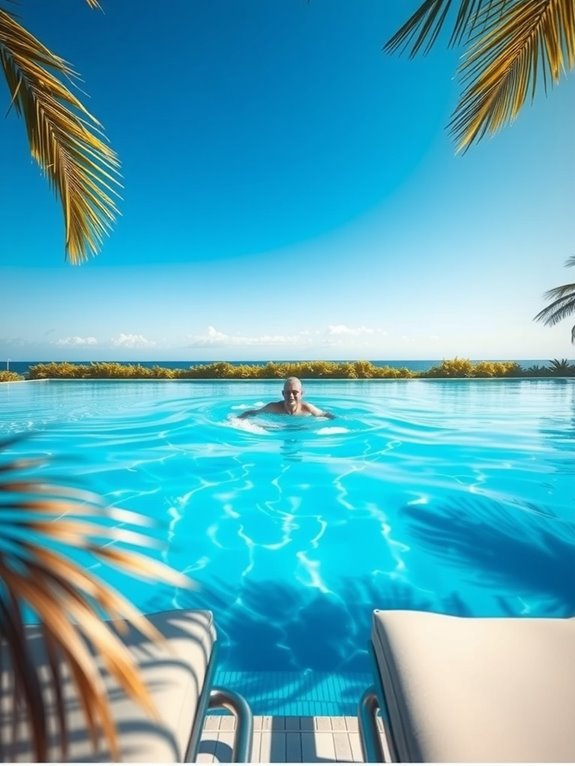
Blue pools are everywhere, but that’s not because it’s the only option. Your brain naturally links blue with cleanliness, safety, and freshness. This connection happens without you thinking about it, which is why blue feels right when you’re looking at a pool.
Tradition matters more than you might expect. For the past 50 to 60 years, blue has been the standard choice. When builders construct pools or homeowners design new ones, they choose blue because it’s familiar. What feels familiar also feels trustworthy. This creates a cycle where blue becomes the expected choice, and anything else seems unusual or risky.
The market reinforces this pattern. Manufacturers produce more blue tiles and finishes because that’s what people buy. Other colors sit on shelves longer, which means builders stock less of them. Homeowners see mostly blue options available, so they assume blue is the better choice. The result is that different colors feel like gambles instead of solid decisions.
Breaking this pattern takes awareness. You can request alternative finishes like turquoise, green, or even gray from manufacturers. Some pool companies now offer 8 to 12 color options instead of just 3. Once you know these choices exist, the decision becomes about what actually works for your yard and preferences, not just what tradition says you should pick.
Blue’s Psychological Appeal
Have you noticed that almost every pool you’ve seen is blue. The reasons run deeper than simple preference. Blue actually shapes how your brain perceives water in specific ways.
How blue affects your thinking
Blue works on your mind through several connected pathways. When you look at a blue pool, your brain registers the color as a signal of cleanliness and purity. This happens automatically, before you even think about it. The color also creates a sense of calm. People feel less nervous around blue water because the color itself reduces anxiety. Additionally, blue connects to feelings of safety and reliability. Psychologists have documented that blue builds trust in people more than other colors.
The practical side of blue pools
Beyond psychology, blue has a practical advantage. The color makes it easier to see swimmers underwater and spot pool features like steps or the shallow end. This visibility matters for safety. When swimmers feel they can see the bottom and sides clearly, they feel more secure. That security feeling adds to the calming effect the color already provides.
Why blue dominates
Pool builders choose blue because it works on multiple levels at once. The color addresses safety concerns, creates a psychological sense of calm, and connects pools to vacation destinations like tropical beaches. A pool that appears clean, feels calm to be around, and suggests vacation time will appeal to most people. This combination explains why blue remains the standard choice across the pool industry.
Cleanliness and Safety Perception
A pool’s color shapes how safe and clean you think it is. Blue surfaces work directly on your perception. When you see a blue pool, your brain registers it as cleaner because blue tiles let you see through the water easily. You can spot leaves, dirt, or other debris right away. This visibility builds your confidence that the pool is well-maintained.
Industry standards call for blue finishes for a reason. The color communicates that someone is taking professional care of the water. Compare a blue pool side by side with a green or brown one, and you’ll notice the difference immediately. Blue pools feel cleaner to most people.
Your brain makes a connection between the color blue and cleanliness. This happens naturally, without you thinking about it. The simple choice of blue tile becomes a powerful signal that the pool is safe to enter. Pools using blue finishes consistently meet what people expect when they think about sanitation.
Market Preference and Tradition
When you’re shopping for pool finishes, you’ll notice that blue options dominate the market. This isn’t random. The pool industry has built strong preferences around blue for several decades, and understanding why helps you make an informed choice.
Why blue became the standard
White plaster paired with blue tiles became the industry baseline when pools became common in residential neighborhoods during the 1950s and 1960s. You likely grew up seeing blue pools, which makes them feel familiar and trustworthy. Installers consistently recommend blue because surveys show homeowners prefer it for both how it looks and the impression of cleanliness it creates. Companies market blue as the default option, sometimes offering mixed patterns for variety while keeping the perceived cleanliness perception intact.
What this means for your decision
When you choose blue water and tiles, you’re selecting the same combination millions of others have selected. The market preference reflects genuine consumer feedback rather than arbitrary industry choices. Your pool will reflect what you’ve learned to expect from pools throughout your life.
Why We Love Blue Pools: Calm, Trust, and Safety
What’s the first thing you notice when you walk up to a swimming pool? That blue water probably catches your eye right away. You’re experiencing something backed by how our brains actually work: blue genuinely calms your mind. The color connects to relaxation and peace, which is why you feel more welcome the moment you see it.
Blue water catches your eye and calms your mind—your brain recognizes the color as a signal of relaxation and peace.
You also trust blue pools more than you might realize. When you see those blue tiles and water, your brain sends a signal that the pool is well-maintained and clean. That feeling of confidence matters when you’re standing at the edge, deciding whether to jump in.
Blue water serves a practical purpose beyond how it makes you feel. The color creates clear sightlines that help lifeguards spot swimmers quickly. You can see pool features and other people around you better because blue reflects light in specific ways. This improved visibility works both at the surface and underwater, which keeps everyone safer.
The choice to paint pools blue isn’t based on tradition alone. Pool designers understand that the color works on two levels at once: it calms your mind while also giving you clear sight lines. Every time you visit, that blue water is doing its job.