
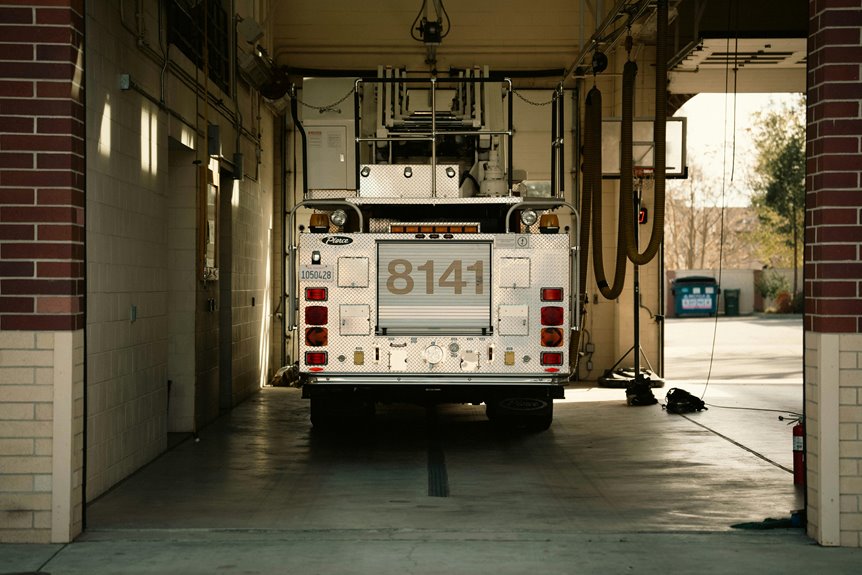
Some fire departments fill pools as a community service, but this isn’t guaranteed where you live. Whether your department offers it depends on three things: your location, their specific policies, and whether they’re dealing with emergencies that day.
The first step is calling your local non-emergency fire line. Ask if they fill residential pools and what their requirements are. Most departments that do this work charge between $50 and $200, depending on how much water you need. You’ll also want to know their scheduling timeline—some departments book weeks in advance, while others work on shorter notice.
Before you call, consider two practical concerns. Water tenders—the trucks that carry and deliver the water—weigh over 23 tons. This weight can crack or damage driveways and yards, especially if the ground is soft or already weak. The water itself sometimes contains firefighting additives that aren’t meant for swimming, so ask about the water quality before it goes into your pool.
One phone call answers most of your questions about what’s actually available in your area. After you have those details, you can decide if this service fits your needs.
Can Fire Departments Actually Fill Your Pool?
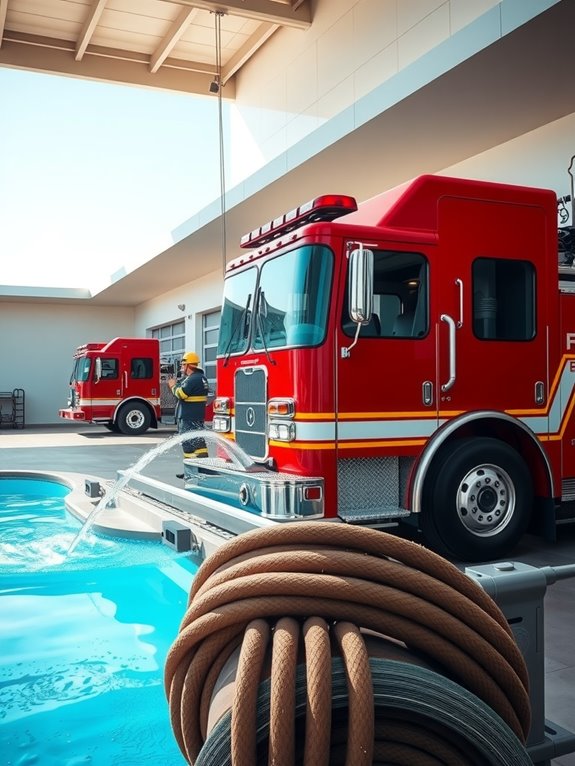
Some fire departments will fill your pool, but it’s not guaranteed. Your local fire department might offer pool filling as a community service, though they’re under no obligation to do so.
Some fire departments offer pool filling as a community service, though they’re under no obligation to do so.
Many departments decline because they need to keep equipment and personnel ready for emergencies. When trucks are out filling a 15,000-gallon pool, they’re unavailable if a house catches fire or someone needs medical help. That’s the main reason most departments say no.
If your fire department does participate in pool filling, the details vary widely depending on where you live. Some departments handle requests through their non-emergency phone line rather than through the main dispatch system. Others won’t do it at all.
Before you plan around this service, contact your local fire department directly. Ask three things: whether they fill pools, whether they charge fees or accept donations, and what eligibility requirements they have. You might need to live within city limits, or they might only help during certain months. Call their non-emergency number to find out. You’ll get a clear answer quickly rather than wasting time on assumptions.
Why Most Departments Say No to Pool Filling

Fire departments prioritize emergency response over pool filling. Water tenders—vehicles that weigh more than 23 tons—serve a specific purpose in firefighting operations. When these trucks park on residential property, they create real problems. The weight and size damage driveways and limit how quickly the truck can move if an emergency call comes in.
The water itself presents another issue. Fire department tenders contain additives like foam used in firefighting. These chemicals contaminate pools and make the water unsafe for swimming. A department covering a large service area can’t afford to remove equipment from active duty for non-emergency requests.
When fire departments do fill pools, they handle it as a one-time exception rather than an available service you can count on. Understanding these practical limitations helps explain why most departments decline the request.
Which Fire Departments Actually Fill Pools?
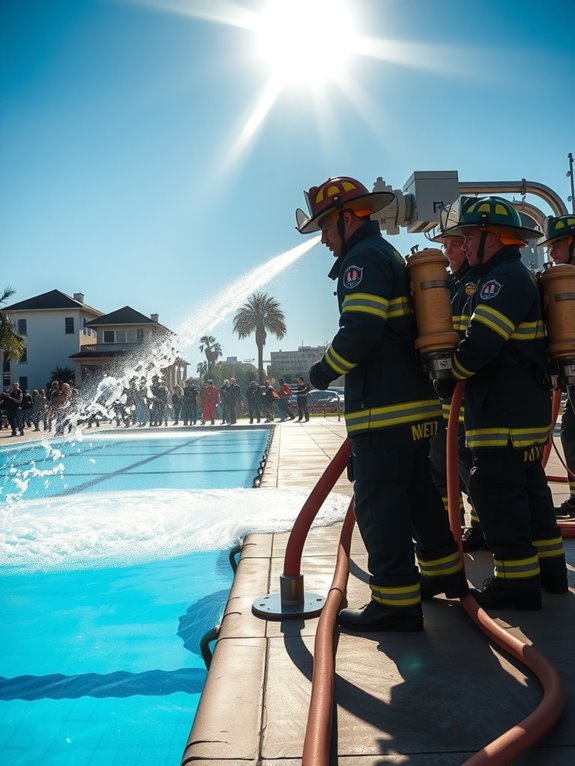
Do Fire Departments Actually Fill Pools?
Yes, some fire departments do fill pools. This service exists in certain areas as part of community outreach, though availability varies widely by location.
How the Service Works
Departments that offer pool filling typically require you to call ahead and schedule a time. They’re not a walk-in service. When you contact your local fire station, ask about their specific policies, what they charge (if anything), and when they can help. Some departments request donations instead of fees to support community programs.
What You Should Know About the Water
The water used may not be potable, meaning it’s not safe for drinking or swimming. Firefighting foam and other additives mix into the water during equipment use. This makes the water suitable for some purposes—like filling a pool for cooling off on a hot day—but not for activities where people might swallow water.
Getting Started
Call your local fire station directly. This is faster than visiting in person. During the call, find out if they offer this service at all. Ask about scheduling timelines, fees or donation amounts, and any restrictions they have. Many fire departments handle payments through their fire prevention division rather than collecting money on the spot.
Setting Realistic Expectations
Emergency calls always come first. If a fire alarm sounds while firefighters are at your property, they’ll leave immediately. Plan for flexibility with timing and understand that department priorities won’t bend around a pool-filling appointment.
Does Your Pool Type Matter? In-Ground vs. Vinyl-Lined
Your pool’s construction type determines whether your local fire department will fill it. In-ground, non-vinyl pools qualify for fills in many jurisdictions like Jacksonville. Vinyl-lined pools typically don’t receive this service because of what firefighting water can do to them.
In-ground, non-vinyl pools typically qualify for fire department fills, while vinyl-lined pools don’t due to potential water damage.
Fire department tenders carry non-potable water—meaning it’s not safe to drink. This water often contains firefighting additives or foam that can permanently damage vinyl liners. The contaminants seep into the material and break it down over time, creating expensive repairs you’d need to pay for yourself.
When you call your local fire department about a pool fill, mention your pool type right away. This detail shapes how they’ll respond. If you have a non-vinyl in-ground pool, the process moves forward. Your Utility Billing department handles payment and scheduling. If you have a vinyl-lined pool, you won’t qualify for a fill, though you may be eligible for billing adjustments instead.
Keep in mind that services aren’t guaranteed. Fire departments prioritize emergencies before pool fills. They’ll also decline requests if your pool type creates risks to their equipment or local water systems. A quick phone call to confirm eligibility saves time and prevents disappointment later.
How to Request Pool Filling From Your Fire Department
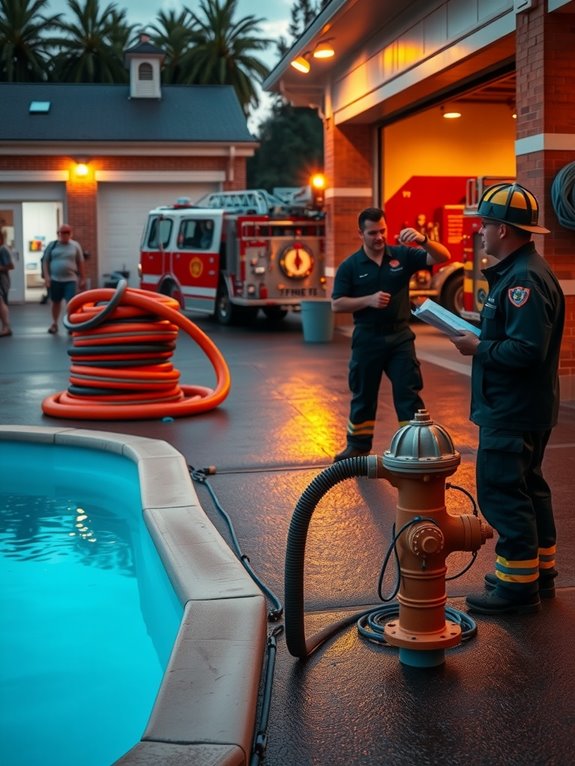
Making the Initial Contact
Start by calling your local fire department’s non-emergency line to ask about pool filling services. For Jacksonville residents, that number is 910-455-8080. When you call, keep your questions simple: Does your department fill pools, and what types do they accept?
Most fire departments that offer this service fill in-ground pools without vinyl liners within city limits. Some won’t fill above-ground pools or those outside their service area. Ask about these specifics when you call so you know whether your pool qualifies.
Understanding Costs and Scheduling
Pool filling isn’t free in most places. You’ll coordinate payment and scheduling through your city’s Utility Billing department. Fees vary by location—some departments charge set amounts while others accept donations or use the service as a fundraising effort for the station.
The timeline works like this: you pay first, then scheduling happens after your payment processes. This typically takes a few days to a week, though it depends on your local department’s workload.
What You Should Know About Availability
Your fire department might say no to your request. When firefighters get emergency calls for fires or urgent situations, pool filling stops immediately. These services only happen when the department has available trucks and personnel. This isn’t personal—it’s about keeping your community safe during actual emergencies.
This service lets you tap into community resources while getting help with a practical task. Just remember that availability depends on what else is happening in your area on any given day.
Payment and Donation Structures When Services Are Available
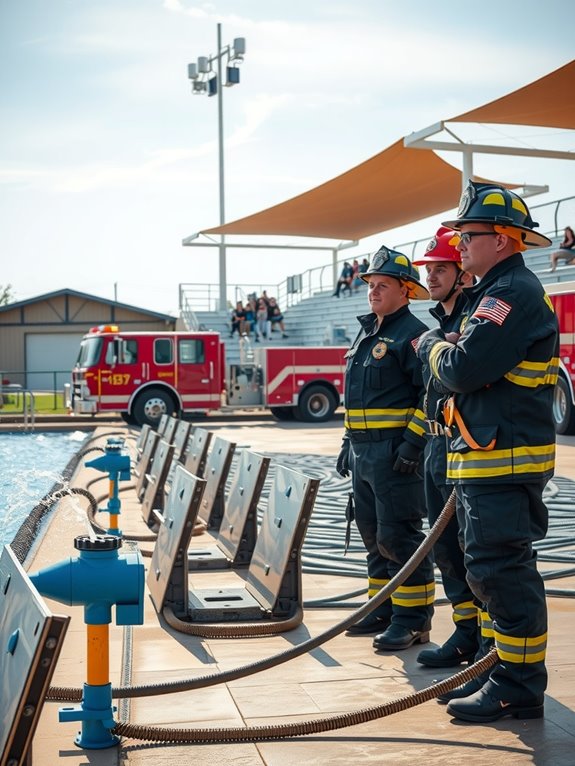
How much you’ll pay for pool filling depends on your fire department’s specific setup. Some departments charge flat fees that range from $50 to $200, while others prefer donations to support their equipment and programs. You’ll want to call ahead and ask directly about your local department’s policy, since fees vary significantly by location and budget constraints.
When you contact them, request specific pricing information and ask about their equipment. Some departments use stainless steel water tanks that require five to six trips to fill a standard 15,000-gallon residential pool, and this influences their charges. Understanding whether your department accepts donations, flat fees, or both helps you prepare appropriately.
Keep in mind that pool filling isn’t guaranteed. Availability depends on staffing levels and emergency calls that take priority. If your department gets a call while filling your pool, they’ll need to leave immediately. Treating this as a community partnership rather than a guaranteed service strengthens your relationship with your local fire department and sets realistic expectations for what they can provide.
Why Fire Departments Prioritize Emergencies Over Pool Filling
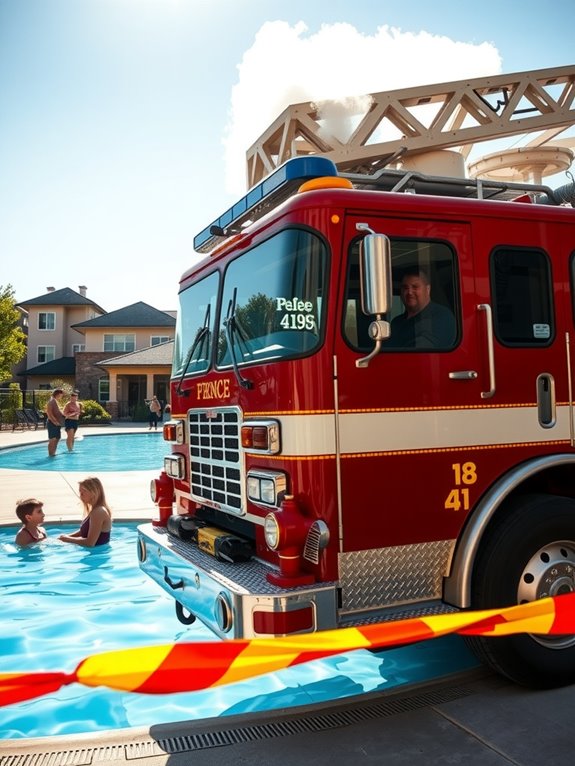
When a fire department gets called away from a pool-filling job, it’s not because they’ve changed their minds about helping. A medical emergency, house fire, or car accident demands an immediate response. Someone’s life might depend on firefighters arriving in the next few minutes, so everything else stops.
Think about what’s at stake. A person having a heart attack needs help within minutes. A house fire spreads fast—temperatures can reach 1,100 degrees Fahrenheit. A car accident victim might be bleeding. These situations can’t wait for the next available crew.
| Priority Level | Task Type | Response Time | Why It Matters |
|---|---|---|---|
| Critical | Medical emergencies | Under 5 minutes | Lives depend on fast arrival |
| Critical | Structure fires | Under 5 minutes | Fire spreads quickly |
| Critical | Vehicle accidents | Under 5 minutes | Injuries can worsen fast |
| Non-emergency | Pool filling | Flexible scheduling | Can be rescheduled |
| Non-emergency | Other requests | Flexible scheduling | Can be rescheduled |
A fire truck or tender weighs about 23 tons and takes up significant road space. When that vehicle is sitting at a pool, it’s not available to roll out for emergencies. Removing it from the station means one less unit protecting your neighborhood. If a critical call comes in and that apparatus is occupied, response time increases for everyone.
Firefighters understand their primary job: protecting people from danger. Pool filling is helpful work, but it ranks below life safety. That’s how fire departments decide what comes first.
Alternative Water Sources for Filling Your Pool
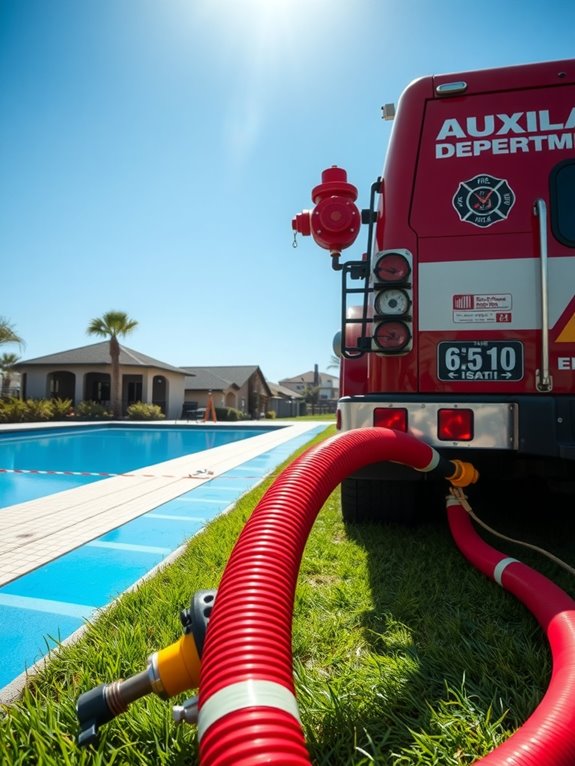
Since your fire department won’t fill your pool, you have other reliable options. Renting a water meter directly from your local utility is one straightforward path. You’ll attach it to your outdoor spigot, then track how much water you’re using as you fill. This method gives you control over your timeline and lets you see exactly what the water costs.
Another option involves renting a hose connection from a fire hydrant. Your water department can coordinate this for you. This approach works well because you bypass the fire department entirely and avoid any risk of non-potable water mixed with firefighting foams.
Contact your water department first to ask about availability and pricing. Most communities charge reasonable rates for residential pool filling—often between $25 and $75 for a single rental, depending on your location. Some areas even offer seasonal rental programs just for homeowners who need to fill pools during summer months.
Planning ahead matters here. Summer is peak season for equipment rentals, so call your utility company at least two weeks before you need the meter or hydrant connection. This gives them time to prepare and ensures the equipment will be available when you want to start filling.
Cost Comparison: Fire Department vs. Water Meter Rental
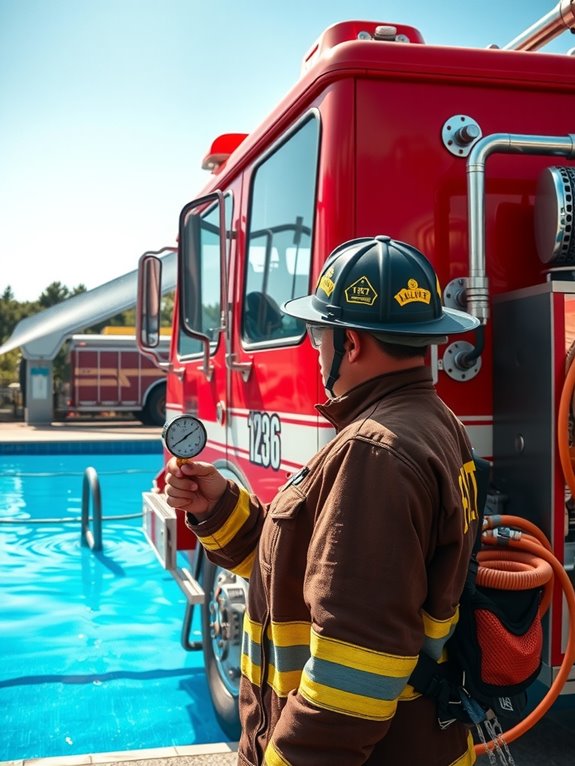
Filling a pool requires choosing between two main options, and the costs differ more than you might expect. Fire departments sometimes offer pool-filling services, though this varies by location. When available, they typically ask for a donation or fee ranging from $50 to $200, depending on your area. This money supports their equipment and training programs. The catch is that availability isn’t guaranteed since fire trucks respond to emergencies first.
Water meter rental works differently. You rent equipment directly from your local water utility or municipality, paying a one-time fee of $25 to $75 for the meter and hose setup. Once you have the meter, you pay only for the water you use. This approach gives you flexibility because you control when the water flows, without waiting for emergency services to have availability.
To decide which option works for your situation, contact your local fire department and ask about their pool-filling program and current fees. Then call your water utility and ask about meter rental costs in your area. Compare the total price for each method, factoring in how much water your pool holds. A typical residential pool holds 15,000 to 25,000 gallons, and water costs roughly $0.02 to $0.05 per gallon depending on your region. The choice often comes down to what’s actually available where you live and which method fits your timeline and budget better.
Will Firefighting Water Damage Your Pool?
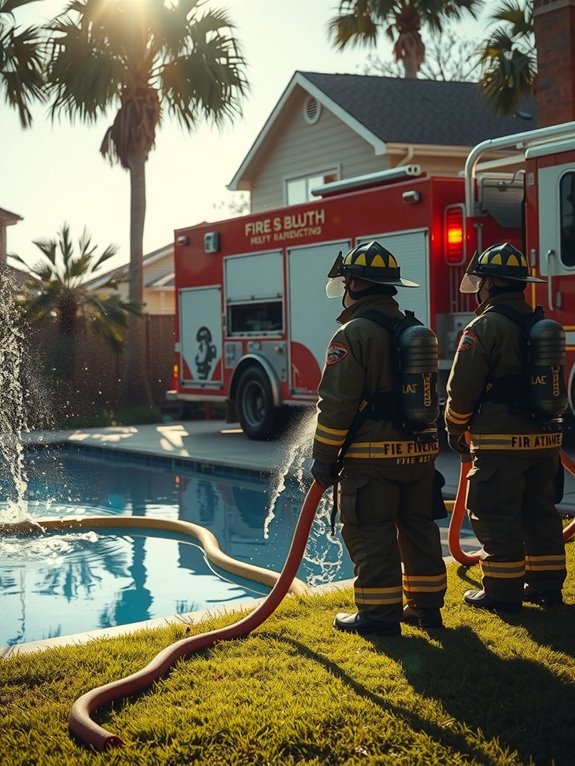
While fire department water might seem like a quick fix, you need to understand what’s actually entering your pool. The water from firefighting equipment contains additives and foams designed to suppress flames. These substances leave behind froth, discoloration, and chemical residue that cloud your pool’s water and throw off its chemistry balance.
There’s a physical problem too. Fire trucks weigh over 23 tons. When they drive across your property to reach a fire, their weight can crack your driveway, compress your yard, and damage your pool’s vinyl liner or interior coating. The damage happens quickly—sometimes during just one emergency response.
The cleanup afterward takes time and money. You’ll need to drain your pool completely, scrub the interior surfaces to remove chemical buildup, and refill it with fresh water. This process typically takes several days and requires chemicals to rebalance the water before you can safely swim again. Planning ahead by knowing where fire trucks can access your property without crossing your pool area helps prevent this damage before an emergency occurs.
Water Contamination Risks
Firefighting water differs significantly from tap water. Fire department water tenders carry non-potable water that may contain harmful additives such as foam residue and rust particles from equipment interiors.
What Happens When Foam Residue Enters Your Pool
Foam from firefighting agents behaves differently than regular pool water contaminants. When this foam enters your pool, it surfaces and clings to the water’s top layer. Standard pool filters cannot remove it easily, so you’ll notice persistent bubbling that stays around for days or weeks. The foam resists normal filtration because its chemical structure doesn’t break down like typical debris.
Additional Contamination Sources
Firefighting apparatus interiors contain metal components that rust over time. As water moves through these tenders, rust particles shed into the water supply. These particles create visible debris that settles on pool surfaces and can scratch liners during cleanup attempts.
What You’ll Face After Filling Your Pool This Way
If your pool has already been filled with firefighting water, cleanup takes considerable time and money. You’ll need multiple filtration cycles—typically 48 to 72 hours of continuous running—combined with chemical treatments to restore water safety. Some pools require liner replacement if particles have caused damage, or coating work on pool surfaces. Budget between $500 and $2,000 depending on pool size and contamination severity. The process demands patience, as rushing chemical treatments can create additional water balance problems.
Equipment Damage Concerns
A 23-ton water tender weighs as much as three full-size dump trucks. When your fire department pulls into your driveway to fill your pool, that vehicle will compress soil, crack pavement, and damage landscaping in ways that take months or years to repair.
These vehicles operate on roads and highways, not residential properties. Your concrete driveway—which probably cost $3,000 to $5,000 to install—can buckle under concentrated weight. Grass dies from soil compaction. Underground sprinkler lines crack. Landscape beds get flattened.
The repair costs typically run between $2,000 and $8,000 depending on what gets damaged. Here’s the problem: your homeowner’s insurance won’t cover these repairs because you requested the water delivery service. The damage happens because you asked for it, which means you pay for it.
Before you contact your fire department about pool filling, walk your property and think about where the tender would need to park. Could it fit on your driveway without touching landscaping. Does your property slope in ways that might make a 23-ton vehicle sink into soft ground. What underground utilities run beneath where the tender would sit.
If your driveway is narrow, older, or made of original concrete, the risk increases significantly. If your yard has mature trees, irrigation systems, or septic lines, you’re looking at potential problems that cost real money to fix.
Why Your Pool Turns Rusty and Foamy After a Fire Truck Fills It
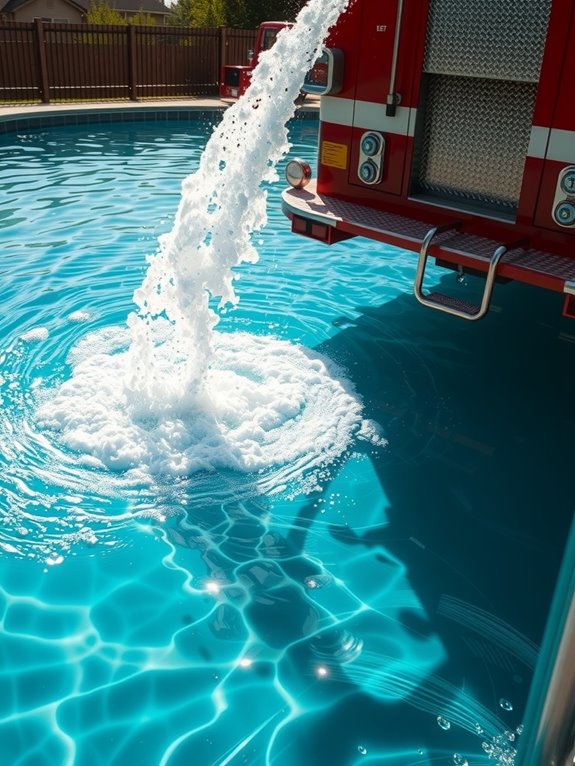
Ever wondered why your pool water looks rusty or foamy after a fire department tanker fills it. The answer comes down to what’s actually in that truck. Fire apparatus carries non-potable water—meaning it’s not safe for swimming or drinking. This water contains firefighting additives like light water or foam designed to extinguish flames, not fill pools.
Where the Problems Start
Inside the tender’s pipes, rust accumulates over time and sheds into your pool water. The metal interior of these trucks corrodes from repeated use and exposure to different water sources. When that rusty water combines with foaming agents, you’re left with discolored, frothy water that needs serious cleanup.
Understanding Each Issue
| Issue | What Causes It | What You’ll See | How to Fix It |
|---|---|---|---|
| Rust particles | Corroded pipes inside the truck | Orange or brown tint to water | Drain completely and refill with clean water |
| Foam buildup | Firefighting chemical additives | Froth on the surface that won’t disappear | Run your filter system for 24-48 hours continuously |
| Cloudy appearance | Metal particles and sediment | Hazy or murky water | Use a pool vacuum and professional cleaning service if needed |
| Water chemistry problems | Non-potable water sources | pH imbalance or algae growth | Test your water with a kit and adjust chemicals accordingly |
The Recovery Process
After a fire truck fill, plan to spend about 2-3 days restoring your pool to usable condition. Drain the water within the first few hours if possible, then refill from your regular water source. Run your filter system continuously for at least 24 hours to remove particles and foam. Test your water chemistry using a basic pool testing kit to check pH levels, chlorine, and alkalinity before allowing anyone back in the water.
How Fire Trucks Damage Your Yard and Driveway
A fire truck weighs about 23 tons—roughly the same as four elephants. When that much weight sits on your driveway or rolls across your lawn, damage happens. Your driveway, designed to handle regular car traffic of 3,000 to 4,000 pounds, suddenly faces pressure it wasn’t built for.
Water tenders carry thousands of gallons of water, which adds extra weight on top of the truck itself. The combination creates forces that crack asphalt and concrete. You’ll see ruts form where the heavy tires pressed down, sometimes creating grooves an inch or two deep. These cracks and ruts let water seep underneath, which leads to more damage over time.
Your yard suffers similar problems. Soft ground compacts permanently under the truck’s weight. This creates sunken areas that collect standing water during rain. The water sitting in these low spots kills grass and promotes mold growth. You might not see full recovery in these spots for several months, even with lawn repair work.
The truck’s massive tires also crush plants and compress soil around landscaping features. Trees, shrubs, and flowers near the driveway area can experience broken branches or damaged root systems. The soil compaction around trees makes it harder for roots to absorb water and nutrients.
Most homeowners’ insurance policies don’t cover damage from municipal services during non-emergency calls. If you request a fire department vehicle for something like pool filling, you’re responsible for any yard or driveway damage that results. Repair costs for driveway cracks and ruts typically range from $500 to $2,000 depending on the damage extent. Landscaping repairs add to that bill.
Before calling for heavy equipment, think about whether your yard can handle it. The short-term convenience often costs more than you expect in repairs afterward.
What to Ask Your Department: Pool Type, Fees, and Timeline
You’ve decided to call your fire department about filling your pool. Before you pick up the phone, know what questions will get you the answers you need.
Start with Pool Type
Ask whether they fill vinyl-lined pools, in-ground concrete pools, or both. Some departments have equipment designed for one type but not the other. This is your first filter—if they don’t service your pool type, you’ll need to find another solution.
Ask About Costs and Payment
Departments handle payment differently. Some charge a flat fee that supports their operations. Others accept charitable donations instead. A few request no payment at all. Get specific numbers before you commit. Ask what the cost is per 1,000 gallons or if they charge a single rate regardless of pool size. Write down the exact amount so there’s no confusion later.
Understand the Timeline
Pool filling isn’t an emergency, so wait times can be weeks or even months depending on your area. Ask for a realistic completion date based on their current schedule. If you need your pool filled by a specific date—say mid-June for summer—mention that upfront so they can tell you whether it’s possible.
Clarify Access and Scheduling
Find out exactly where they’ll park their truck and how they’ll run the water line to your pool. Ask about any yard obstacles like gardens, deck furniture, or gravel that might be in the way. Then identify which office handles bookings—this is often Utility Billing or Fire Prevention, not the fire station itself. Scheduling through the right department saves time.
Document the Details
Write down every detail they give you: fees, dates, access instructions, and the contact person’s name. This creates a clear record and prevents misunderstandings when the truck arrives.
Pool Filling During Droughts and Water Emergencies
When your area declares a water emergency or drought, filling a pool becomes complicated. Fire departments need to keep water tenders available for actual firefighting, which means they can’t spare resources for recreational use.
Before you fill your pool, check your local water authority’s emergency policies. Many communities ban non-essential water use during shortages. Some places allow filling only during certain hours or with specific permits. Call your city or county water department to learn the current rules in your area—they can tell you what’s allowed and what carries penalties.
If restrictions are in place, consider these water sources instead. Rainwater collection works well if you install gutters and storage tanks. A 1,000-gallon tank captures roughly 600 gallons from one inch of rainfall on a 1,000-square-foot roof. Greywater from washing machines and showers (excluding toilet water) can fill pools gradually over several weeks. Some people use water from dehumidifiers or air conditioning units, though these sources provide only small amounts.
The practical approach is waiting. Water restrictions typically last from a few months to a year depending on drought severity. Using that time to check your pool equipment, repair leaks, and plan can actually help. When restrictions lift, your pool will be ready to fill properly without conflict with community needs.
Water Restrictions And Policies
What Happens to Pool-Filling Requests During Droughts
When your area faces a drought or water emergency, your fire department has to make difficult choices about water use. The shift happens because water becomes a limited resource that affects everyone in your community.
How Priorities Change
Life safety comes first. Firefighting readiness becomes the only focus. Your fire department needs to keep water tenders—large trucks that carry water—completely full and ready to respond to actual emergencies. They can’t use those trucks to fill pools because that water might be needed to fight a house fire or protect someone’s life.
Why Pools Stay Empty
During droughts, city guidelines restrict all non-essential water use. Your fire department follows these rules just like every household does. When water restrictions are in place, pools fall into the non-essential category. A typical residential pool holds 15,000 to 30,000 gallons of water. That amount matters when a community is rationing water. Your department needs emergency reserves to handle multiple fires or medical situations that might occur over several days.
Understanding the Tough Calls
These policies exist because your community’s safety depends on having the right resources available. When an emergency happens at 2 a.m., your fire department can’t drive back to fill a water tender. They need to respond immediately with full capacity. Knowing why your department makes these decisions helps you understand how water restrictions protect everyone, not just individual households.
Emergency Response Priorities During Shortages
Why Fire Departments Decline Pool-Filling Requests During Water Shortages
When a drought hits or your community declares a water emergency, your fire department stops filling pools. This isn’t about being unhelpful. It’s about priorities that protect everyone’s safety when water becomes scarce.
During these periods, fire departments shift their focus completely. Water tenders—those large trucks that carry thousands of gallons—become reserved for fighting fires and protecting homes. A single water tender weighs over 23 tons and holds the water supply that could mean the difference between a controlled fire and one spreading through your neighborhood.
Understanding the Real Conflict
Your pool request competes directly against genuine community needs. When water restrictions are in place, every gallon counts. A standard residential pool requires 15,000 to 25,000 gallons to fill. That same amount could supply drinking water to multiple households for weeks or support firefighting efforts during peak fire season.
The decision isn’t personal. It reflects what departments must do when resources become limited. Firefighters know that turning down your request means they’re keeping those resources available for actual emergencies.
What Happens at Different Shortage Levels
During an active drought, departments deny non-emergency services outright. When fire season peaks in summer months, all available apparatus gets redirected to potential emergencies. If your local government declares a water emergency, pool filling stops entirely—no exceptions.
Recognizing why departments make these choices helps you understand that protecting your community during water shortages requires saying no to non-emergency requests.
Alternative Water Sources Available
If your fire department can’t fill your pool, you still have options. They’ll take some effort on your part, but they’re worth exploring.
Rent a water meter and hose from your municipal water utility. This is usually the most affordable choice if you’re comfortable handling the setup yourself. You’ll attach the meter to an outdoor faucet, run the hose to your pool, and monitor the flow. Most utilities charge a flat rental fee—typically $15 to $40 for the meter—plus the cost of water by the gallon. A standard residential pool holding 15,000 gallons might cost $30 to $60 in water charges alone, depending on your area.
Arrange water delivery through a tanker truck service. Companies in this business bring large trucks to your home and pump water directly into your pool. A single truckload usually holds 5,000 to 6,000 gallons and costs between $200 and $400. For a 15,000-gallon pool, you’d need three deliveries. This option costs more but saves you time and physical work.
Contact your water utility about temporary filling rates or emergency programs. During droughts or water shortages, some utilities offer special arrangements. They might reduce per-gallon costs or extend service windows. Ask whether your area has any current restrictions that could affect pool filling.
Call ahead to each option and ask about fees, how far in advance you need to schedule, and what paperwork they require. Getting these details early means you won’t face delays when you’re ready to start filling.
What to Expect When a Fire Truck Fills Your In-Ground Pool
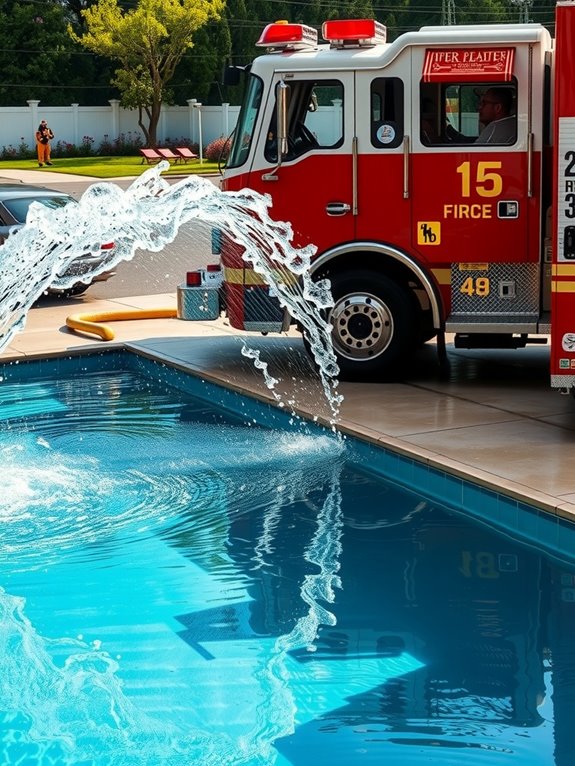
Getting a fire truck to fill your in-ground pool requires knowing several important details before you make the call. This isn’t a standard service like hiring a pool company. You’re asking your local fire department to use equipment and resources meant for emergencies, so understanding what happens helps you prepare properly.
The Vehicle and Property Damage
Expect a heavy tender truck weighing over 23 tons to arrive at your property. That weight matters because it can crack or damage driveways, especially older concrete or asphalt. Before scheduling, walk your driveway and note any soft spots or existing damage. If you have concerns about the weight, ask the fire department about the specific truck they’ll send and whether they can position it on a particular area of your property.
The Water Quality Issue
The water from a fire truck isn’t drinking water. Departments use firefighting additives like foam in their tanks, and this residue comes out with the water. You’ll see surface froth on your pool and some level of contamination. Plan to run your filter system for several hours after filling to help clean the water, though some foam may remain for a day or two.
Pool Type Matters
Your pool works best for this service if you don’t have a vinyl liner. Fire departments worry about punctures or damage during the filling process when water pressure and hose movement can stress delicate liners. Concrete or fiberglass pools handle the process more safely. If you have a vinyl liner, call your department first to ask whether they’ll still assist.
Scheduling and Payment
Contact your local fire department directly to request this service and ask about advance notice requirements. Most departments only serve within city limits and need several days notice. You’ll coordinate with your utility billing department for payment and scheduling details. Ask what the fee is, how payment works, and whether they need access to a water outlet on your property.