Picking the right A-frame swing comes down to three main factors: how your yard is laid out, how much weight it needs to hold, and how much time you want to spend maintaining it.
Understanding Your Material Options
Cedar has genuine appeal. The wood ages gracefully and smells pleasant, but you’ll need to re-stain it every 2 to 3 years to keep it from graying and deteriorating.
Powder-coated metal requires almost no maintenance beyond an occasional wipe-down.
Plastic costs the least initially, though it fades quickly and becomes brittle within a few years of sun exposure.
Weight Capacity Matters
Most family-sized models handle between 800 and 1,200 pounds total.
This matters because when two adults swing together, you’re putting real stress on the frame.
Cheap frames with inadequate anchoring can tip, creating a safety problem.
Installation and Anchoring
Setting up your swing typically takes 4 to 6 hours.
On grass, you’ll use ground spikes that drive deep into the soil.
On concrete patios, you’ll bolt the frame down with anchors that won’t shift over time.
The difference between a stable swing and a wobbly one often comes down to how well you secure the base.
Thinking About Your Actual Use
Consider your schedule and how often your family will actually use the swing.
If you’re rarely outside, spending extra money on cedar probably doesn’t make sense.
If you’re out there several times a week, a low-maintenance material saves you real work down the road.
A-Frame, Pergola, or Tree: Which Setup Fits Your Space?
How to Know Which Mounting Option Works Best for Your Yard
Your choice depends on what you already have and what you’re willing to build.
A-Frame Swings
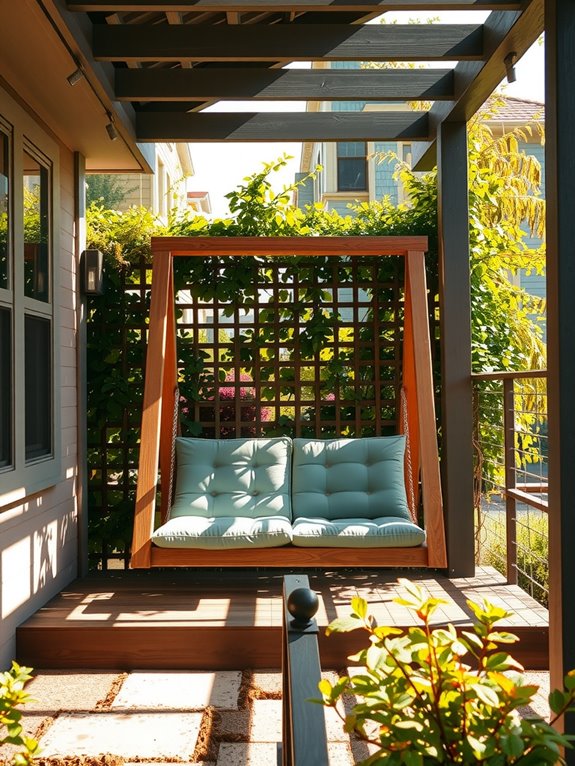
An A-frame swing stands alone without needing trees or existing structures. You can install it anywhere on grass or patio, making it the most flexible option. Its self-supporting design means stability comes from proper ground anchoring. For grass, use spikes that drive into the soil. For patios, use concrete anchors that bolt into the surface.
This setup requires minimal preparation. You don’t need to inspect tree branches or reinforce joists. Most people can have an A-frame installed and ready within a day.
Pergola Mounts
Pergolas hang from structures you already have—usually attached to a house or freestanding pergola. The key requirement is that your joists can handle the weight. A swing puts concentrated stress on those connection points, so reinforced joists rated for at least 500 pounds are necessary.
Before hanging anything, have someone check your pergola’s construction. Weak joists can fail suddenly.
Tree Mounts
Tree mounts work if you have a healthy branch at least 8 inches thick. The branch should be 12 feet or higher from the ground and show no signs of disease or splitting. Avoid branches that appear dead or hollow inside.
The advantage here is that you don’t build anything new. The disadvantage is that you can only swing in one location, and tree health can change over time.
Consider your yard layout and what you’re comfortable maintaining. Your best choice fits both your space and your comfort level.
Which A-Frame Stands Deliver the Best Value for Your Budget?
Once you’ve decided that an A-frame swing is right for your yard, your next decision comes down to price and materials.
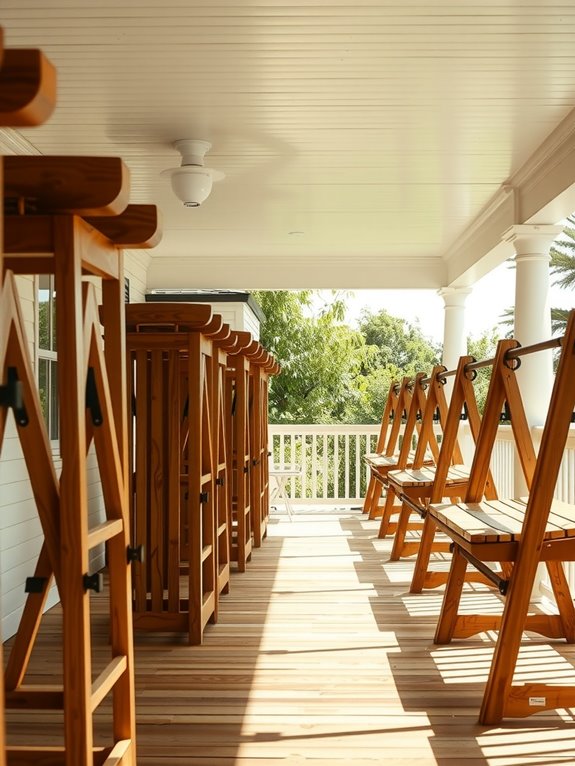
A-Frame Swing Stands range from budget options to high-end choices. Here’s how they compare:
| Product | Price | Best For |
|---|---|---|
| Hershyway A-Frame | $355.99 | 4 & 5 foot swings |
| Cedar 4 Traditional | $935.99 | Traditional wood style |
| Poly A-Frame Stand | $2,099.99 | Durability focus |
| LuxCraft Vinyl Stand | $2,494.99 | Premium materials |
The Hershyway delivers solid value at the lowest price point, making it a practical choice if you want a working swing without spending much. If you prefer cedar’s classic wood appearance, the Cedar 4 offers reasonable pricing for traditional construction. The Poly option costs more upfront but requires minimal maintenance and lasts longer, which means fewer repairs over time. The LuxCraft vinyl stand sits at the top of the price range for those who want premium materials and long-term durability.
Think about how long you plan to keep your swing. A less expensive stand might need replacement or repairs within five to ten years. A higher-quality stand can last fifteen to twenty years or more with basic care. When you spread the cost across those years, the expensive option sometimes costs less per year than replacing a cheaper stand twice.
A-Frame Weight Limits and Safety Specs
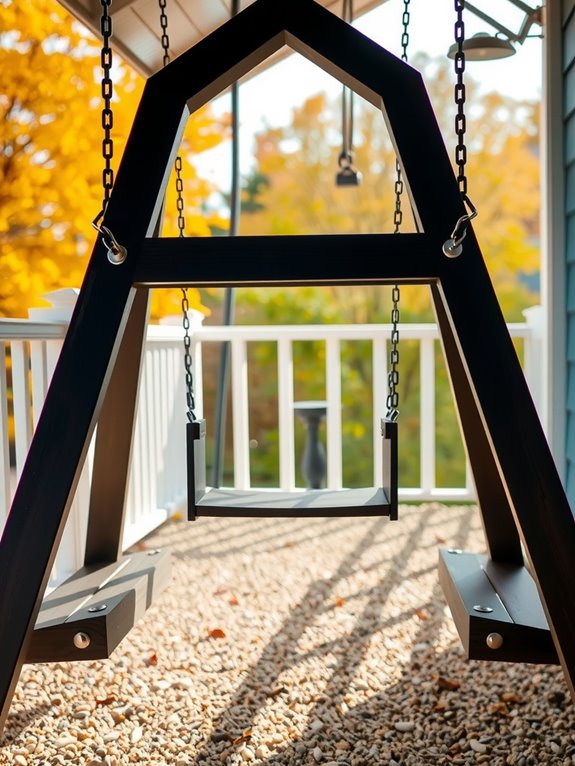
Before setting up your A-frame swing, you need to know its weight capacity. Family models typically support 800 to 1,200 pounds, while adult-only porch swings handle 600 to 900 pounds. The difference comes down to how well the frame was built and what materials the manufacturer used.
Anchoring is where safety really happens. For grass, you’ll use ground spikes driven deep into the soil. For patios or decks, you’ll need concrete anchors that bolt into the surface. Without proper anchoring, the frame can tip when two adults swing with momentum. The surface you’re installing on matters just as much as the anchors themselves—packed earth works better than loose soil, and solid concrete works better than cracked pavement.
Before you buy or install any A-frame, look up the specific weight limits and mounting requirements from the manufacturer. Read through their documentation even if it seems like a lot of pages. This protects your family and means your swing will work safely for years without problems.
Anchoring Your A-Frame: Spikes, Concrete, and Solid Ground
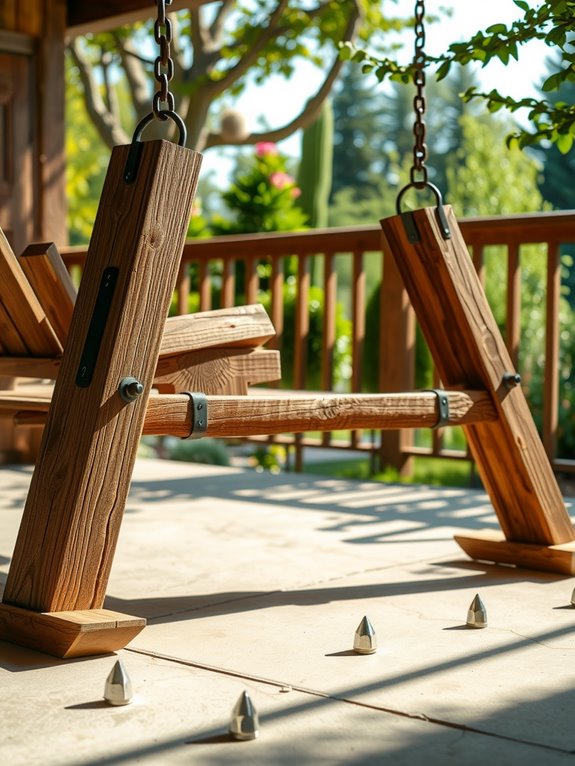
Why does your A-frame swing tip over when two adults pump their legs in unison? Improper anchoring. When two people swing vigorously together, they create lateral forces—the sideways push that makes the whole structure want to tip. A rock-solid foundation stops that from happening.
Improper anchoring causes A-frame swings to tip when two adults pump together. Lateral forces require rock-solid foundations for stability.
Your ground surface determines your anchor choice. On grass or soil, ground spikes drive 12 to 18 inches deep, creating stability through friction with the earth. On patios or concrete, you’ll need concrete anchors that bolt directly into the solid surface. Both methods work well when installed correctly.
Before you install anything, prepare your ground. Remove debris and rocks, level uneven spots, and compact the soil with a hand tamper if you’re using spikes. The flatter your base, the better your anchors will work. Check your product specifications—they list the exact weight limits and required anchor types for your model. A typical residential A-frame handles two adults swinging together when properly anchored.
Skipping the anchoring step leads to movement, wobbling, and eventual damage to the frame. Installation takes about 30 to 45 minutes per anchor point. Getting it right from day one keeps your family safe.
A-Frame Materials: Cedar, Metal, and Plastic Maintenance
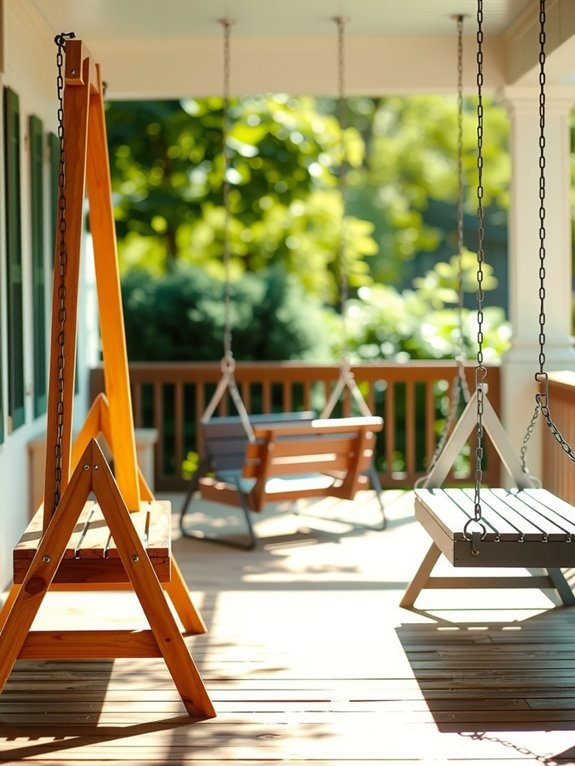
How much time are you willing to spend maintaining your swing frame?
Your material choice directly affects upkeep and longevity. Consider these options:
- Cedar offers natural beauty but requires re-staining every 2-3 years to protect against weathering and keep the wood from graying. This means setting aside a weekend every couple of years for the job. Many families decide the rich grain patterns and warm tones are worth the effort.
- Powder-coated metal frames need very little attention. You’ll do occasional checks for rust spots where the coating might have scratched, and wipe down with a dry cloth after rain. This works well for busy households.
- Plastic frames have the lowest upfront cost but fade noticeably within 1-2 years under intense California sun. The material becomes brittle faster than other options.
Your decision comes down to this: Will you commit to regular maintenance, or would you rather pick a material that handles itself. Cedar rewards your attention with lasting character and appearance. Metal gives you reliable performance without constant work. Plastic offers budget-friendly simplicity, though it won’t last as long. Think about your actual schedule and what fits your lifestyle before you decide.
Installing Your A-Frame Swing: DIY vs. Professional Help
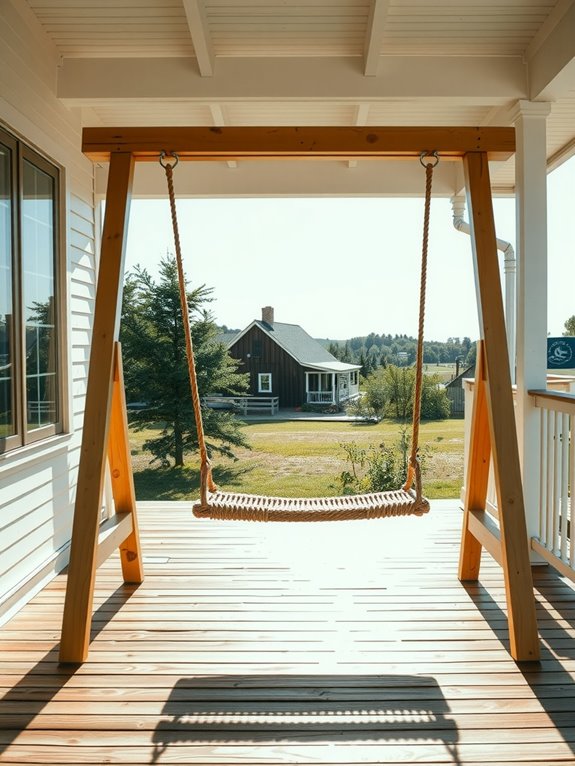
You have two main paths: doing the installation yourself or hiring someone experienced to handle it. Each choice comes with different demands on your time and different levels of risk.
Going the DIY Route
If you decide to install it yourself, you’ll need to learn two key skills. First, you must anchor the swing securely to the ground. For grass areas, ground spikes work well—they drive into soil about 12 to 18 inches deep. If you’re setting up on a patio or concrete surface, concrete anchors are what you need. These bolt directly into the concrete for a strong hold.
Second, you need to prepare your surface properly. An A-frame swing can wobble or tip if the ground isn’t level or prepared well. Before installation, check the ground with a level tool. If you’re on grass, remove any rocks or roots. Compact the soil so it’s firm and even. This prevents movement when two adults swing hard at the same time.
The whole process typically takes 4 to 6 hours, depending on your experience level and how firm your ground is. You’ll need basic tools: a drill, wrench, level, and shovel.
Hiring a Professional
Professional installers bring experience and speed. They know how to read ground conditions and handle unusual situations—sloped yards, rocky soil, or tight spaces. They also stand behind their work with a warranty. If something fails, they fix it at no cost. You pay more upfront, but you get peace of mind knowing the swing is installed correctly and safely.
DIY Assembly Requirements
Installing an A-frame swing yourself is absolutely doable—but there’s a critical difference between simply assembling the frame and anchoring it properly so it won’t tip.
Here’s what you’ll need to tackle:
- Ground preparation – Clear debris, level the surface, and determine whether you’ll use ground spikes for grass or concrete anchors for patios
- Anchor kit assembly – Attach chains, hardware, and fasteners according to your A-frame model’s specifications
- Weight capacity verification – Check that your setup handles your family’s combined weight (800–1,200 lbs for family swings)
You’ll spend 2–4 hours on assembly and anchoring. Have a helper present—two adults swinging can destabilize an improperly secured frame. Follow every manufacturer guideline precisely. This groundwork prevents dangerous tipping and keeps your swing working well for years.
Professional Installation Benefits
While DIY assembly works fine for those with time and carpentry confidence, hiring a professional installer brings genuine peace of mind that your swing won’t tip or fail.
Professionals handle the groundwork that matters most. They check that your ground is level and stable before any installation begins. If you’re setting up on grass, they’ll drive ground spikes deep into the soil. On a patio, they use concrete anchors that hold firm even when two adults swing hard together. This attention to surface preparation prevents the wobbling and shifting that can happen with rushed DIY setups.
A workmanship guarantee covers their installation work. If something goes wrong with how they installed your A-frame, they fix it at no extra cost. DIY efforts don’t include this protection. Professional installers also verify that your swing meets all product specifications and safety standards before they leave your property.
Many California-based services package their installation with anchor kits and add-ons, so you’re not hunting down parts separately. Your choice comes down to three things: whether your space requires specific anchoring methods, how comfortable you feel assembling outdoor equipment, and whether you want documented proof that the work was done correctly.
Common A-Frame Swing Questions Answered
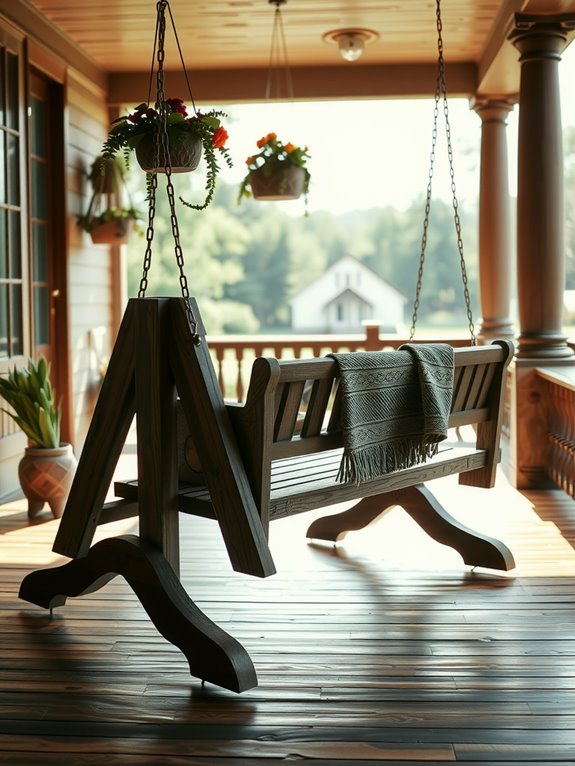
What Makes an A-Frame Swing Different from Other Outdoor Swing Setups
A-frame swings stand on their own without needing trees or pergolas. This self-supporting design opens up possibilities for yards that lack large trees or covered structures.
Stability and Safety
Your A-frame’s safety depends heavily on how well you anchor it to the ground. Different surfaces require different approaches. If you’re installing on grass, ground spikes driven 12 inches deep work well. For patios and concrete, use concrete anchors that bolt through the frame feet. Two adults swinging at the same time increases tipping risk considerably, so check your model’s guidelines about simultaneous use.
Weight Limits by Style
Family A-frames typically support 800–1,200 pounds total, allowing multiple children or a mix of adults and kids. Adult-only models handle 600–900 pounds. Always check your specific product’s weight capacity before buying, since these numbers vary by manufacturer and frame design.
Material Considerations
Cedar wood has a premium appearance but needs re-staining every 2–3 years to stay protected from weather. Powder-coated steel resists rust well, though scratches in the coating can eventually allow surface rust to develop. Plastic components fade over time, particularly in areas with intense sun exposure. Your climate and maintenance willingness should guide this choice. Someone in a rainy region might prefer steel over wood, while a low-maintenance preference might lean toward plastic despite eventual color changes.