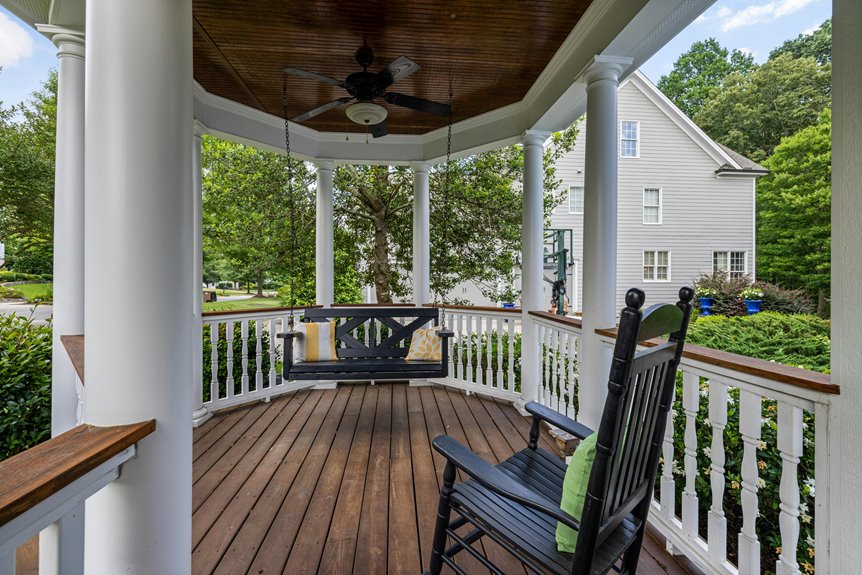
Your porch railing needs to meet a minimum height of 36 inches, measured straight up from the deck surface. Some states have stricter rules. California and Washington, for example, require 42 inches for homes in those areas. This extra height adds a safety buffer, especially when protecting young children from falls.
If you’re building a railing along stairs, the measurement works differently. You’ll measure from 34 to 38 inches starting at the edge of each step, not from the deck itself. This variation matters because stairs already provide some protection from their structure.
Before you build, contact your local building department. Building codes vary significantly depending on where you live and what type of property you own. A quick phone call or website visit can save you from installing a railing that doesn’t meet code and needing to rebuild it later. That correction can cost hundreds of dollars and take several weeks.
Building taller than the minimum height makes practical sense for many households. If you have young children or older family members in your home, a 42-inch railing gives everyone more confidence on the porch. The extra 6 inches costs very little in materials but adds noticeable peace of mind.
Take time to review your specific local requirements before purchasing materials. Different neighborhoods within the same city sometimes have different rules, so getting the details right from the start means your project will pass inspection on the first attempt.
When Do You Need a Porch Railing?
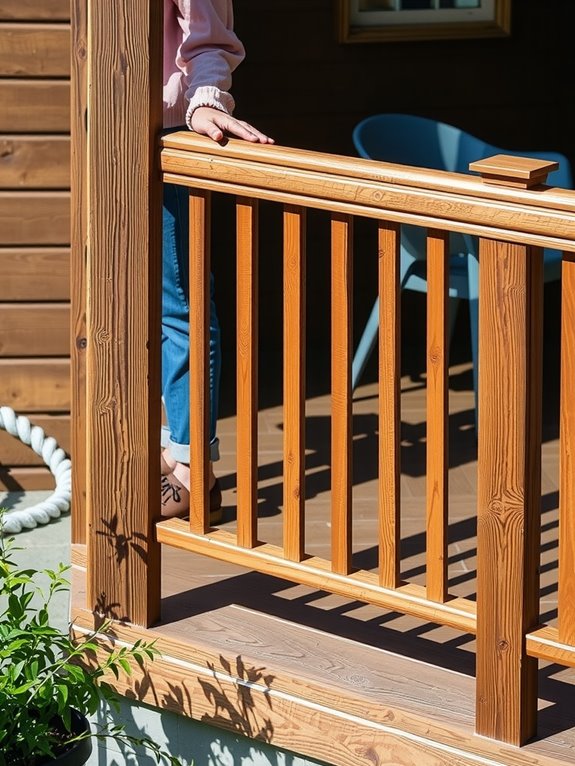
Your porch height determines whether a railing is required. If your porch sits 30 inches or less above ground level, many jurisdictions don’t require guardrails. Once you go higher than 30 inches, building codes require you to install a porch railing.
Porches 30 inches or higher require railings according to most building codes in your jurisdiction.
For residential decks, the minimum railing height is typically 36 inches. California and Washington have stricter codes and require 42-inch railings instead. Stair railings follow a different measurement—they must be 34 to 38 inches high, measured from the edge of each step.
Local building codes vary by location. Before you start building, contact your local building department. They’ll tell you the exact height requirements and guardrail specifications that apply to your area and project.
Why Railing Height Varies by State and Region
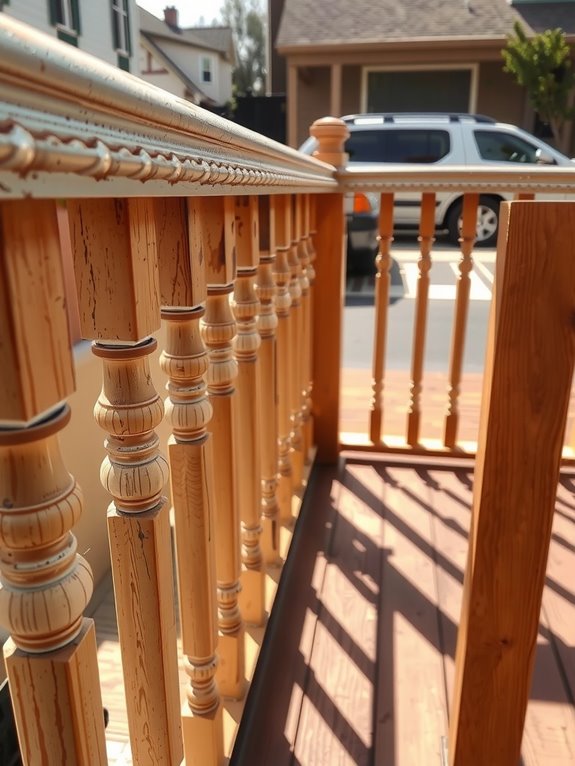
Railing heights vary from state to state and even from city to city because building rules work in layers. The International Building Code, or IRC, sets a baseline minimum of 36 inches for residential railings. However, your state can say “that’s not enough for us” and require something taller. California and Washington both demand 42-inch railings on residential decks, which is 6 inches higher than the IRC standard.
Your local city or county might add their own rules on top of what your state requires. If you live in a historic district, there could be additional height restrictions. Commercial buildings often have different requirements than homes. A deck in one neighborhood might need a certain height while a deck across town has different rules.
Before you start building, contact your local building authority. They’re the ones who will inspect your work when you’re done, so they need to approve your railing height first. Call ahead or check your city’s website to find out exactly what measurement you need to meet. The difference between 36 and 42 inches might seem small, but using the wrong height means your project won’t pass inspection and you’ll have to rebuild it.
IRC Guidelines vs. Local Codes
Why Porch Railing Heights Vary by Location
Building codes aren’t the same everywhere, and that’s why a porch railing in California looks different from one in neighboring states. The International Building Code sets a baseline: guardrails on decks higher than 30 inches need to be at least 36 inches tall. California and Washington, however, commonly require 42 inches for residential deck railings, which is 6 inches higher than the baseline standard.
Your state or local jurisdiction might have its own rules that go beyond these minimums. Before you build anything, you need to check what your specific area requires. This isn’t just about following rules—it’s about safety for people using your porch.
For stairs, the IRC specifies guard heights between 34 to 38 inches, measured from where your foot lands on each step. This range differs from deck railings because stairs have a different angle and purpose. Local authorities may have set their own requirements here too.
The bottom line: contact your local building department or planning office and ask for their specific railing height requirements. Get the answer in writing if possible. This step takes maybe 15 minutes on the phone but saves you from having to rebuild later. Your location determines what you can build, not what a general guideline says.
State-Specific Height Requirements
Different states have their own railing rules. What’s legal in one place might not work in another. California and Washington commonly mandate 42 inches for residential decks, while many other states follow the IRC baseline of 36 inches. Your local building codes might require even stricter standards than these minimums.
The type of property matters too. Residential and commercial properties often have different guardrail height standards. Commercial decks typically need that higher 42-inch measurement. Your neighbor across state lines could follow completely different rules based on their jurisdiction.
Before you build anything, contact your local building department. They’ll tell you the exact requirements for your area, since interpretations vary even within the same state. Getting this right protects your family and keeps you compliant with local laws.
Regional Safety Considerations
Building a porch railing means following rules that differ depending on where you live. Your state’s building codes matter because they account for local weather patterns, common accidents in your area, and how homes are typically built in your region.
California illustrates this point well. The state requires railings to be 42 inches tall on residential decks, which is higher than the standard 36 inches set by the International Residential Code (IRC). Many other regions also have stricter requirements than the federal baseline, particularly in areas with older homes or properties protected by historic preservation rules.
Commercial buildings need different specifications. They typically demand 42-inch guardrail heights and include additional handrail requirements beyond what residential codes require.
Before you start your project, contact your local building department or check your city’s code office online. Ask specifically about height requirements for your property type and location. Some areas have unique rules based on terrain, weather patterns, or past safety issues that residents have experienced. These height requirements exist because your community has identified specific risks that the standard measurements alone don’t address. Getting this detail right at the planning stage prevents costly mistakes later.
Standard Railing Heights: What Your Local Code Requires?
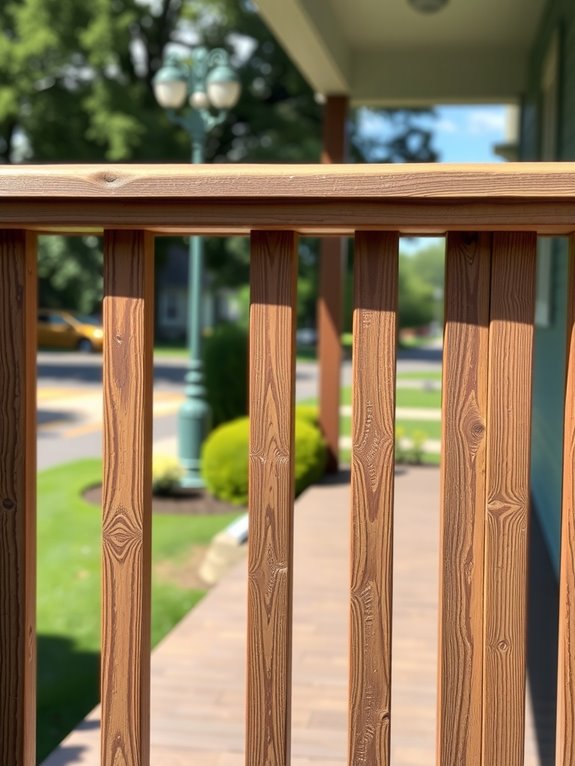
Your porch railing height isn’t just about what looks good—it’s governed by building codes that vary by location.
Different places have different rules for how tall your railing needs to be. The standard measurement across most of the country comes from the International Building Code, which requires 36 inches for residential decks built more than 30 inches above the ground. This measurement starts at the decking surface and goes straight up to the top of the rail, including any posts.
Some states set stricter limits. California and Washington typically demand 42 inches for residential decks, which is 6 inches higher than the national baseline. If you’re building stairs with railings, those get measured differently—they need to be 34 to 38 inches tall, measured from the stair nosing line upward.
Your local building codes might also add extra requirements beyond these minimums. Height rules are just one part of it. You may face additional restrictions about how far apart the balusters (the vertical pieces) can be spaced, or how much force the railing must withstand before it fails.
Before you buy materials or hire someone to install a railing, contact your local building department. Tell them what you’re planning to build and ask for the specific measurements and materials your area requires. This step takes about a week and saves you from having to rebuild later if an inspector finds a problem.
Porch Stairs vs. Level Surfaces: Different Height Rules
Once you’ve nailed down your local code requirements, you’ll notice that railings on stairs follow a completely different rulebook than those on flat decks. For porch stairs, your railing height gets measured from the nosing line—the leading edge of each tread—up to the handrail top. This measurement must fall between 34 to 38 inches, which differs from level surfaces that require 36 inches minimum.
When a stair guard doubles as your handrail, it still needs to stay within that 34 to 38 inch range. Your balusters must follow strict spacing too: gaps can’t exceed 4-3/8 inches on stairs.
Some regions like California and Washington impose stricter minimum height standards for residential guardrails. Always verify these code requirements with your local authorities before you build, since what works in one area might not meet standards in another.
Should You Build Higher Than Code Minimum?
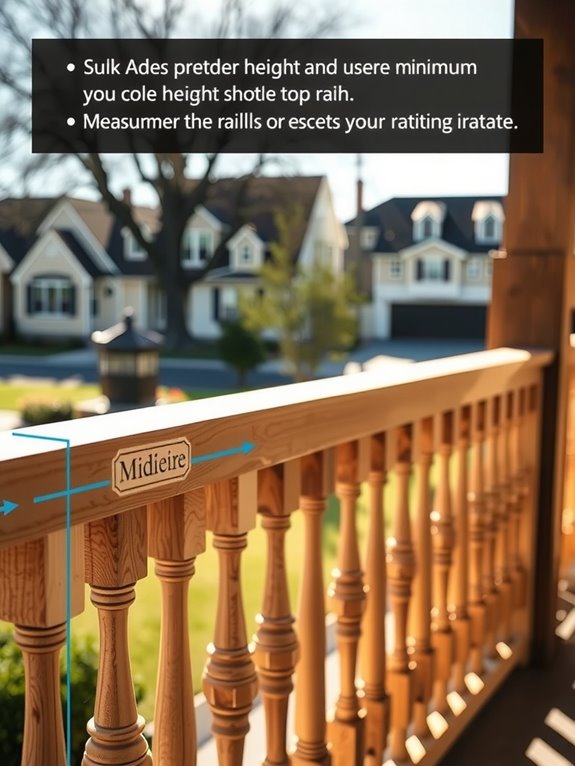
Should You Build Higher Than Code Minimum?
Meeting the minimum code requirement of 36 inches for a porch railing does satisfy legal standards. However, going beyond that baseline might make sense for your particular situation.
A 42-inch railing offers two practical benefits. First, it creates a physical barrier that’s harder for small children or pets to climb over or squeeze through. Second, the added height often looks more proportional to a full-size porch, creating better visual balance with your home’s overall architecture.
Whether to build higher depends on several factors specific to your household. Consider the ages of your children—younger kids need more protection. Think about how you’ll use the space. Will you be watching toddlers play on the porch, or is it mainly a spot for adults to relax? Your local climate matters too. In areas with heavy snow or ice, a taller railing provides better wind resistance and stability.
The construction difference is straightforward. You’ll use longer balusters (the vertical posts) and adjust your top rail accordingly. The materials cost increases modestly, usually by 15 to 20 percent compared to a standard 36-inch railing. The additional labor time runs about 4 to 6 extra hours, depending on the complexity of your design.
If safety concerns are present in your home, the investment in a 42-inch railing pays off in peace of mind.
Safety Beyond Minimum Standards
Why settle for the bare minimum when you’re building a structure meant to protect your family. Building higher than code minimum shows your commitment to genuine safety.
Consider these situations where extra railing height makes sense:
Young children climbing on railings or nearby planters. Kids are naturally curious and will test boundaries. A standard 36-inch railing might seem tall to an adult, but a determined child can climb higher.
Elderly family members needing additional stability and protection. As people age, balance becomes harder. An extra 4 to 6 inches gives them more surface to grip if they stumble.
Decks with stairs where 34-38 inch stair guards need coordination. Your deck railings and stair guards work together as a system. If they’re different heights, they create awkward transitions and weak points.
Areas near benches or built-in features that create climbing hazards. A bench placed near a railing gives children a boost. A planter box or deck box does the same thing.
Your residential deck’s standard heights are 36 inches or 42 inches, depending on local requirements. However, you’re not locked into those numbers. Always verify what your building authority requires first, since some areas already mandate taller heights. Adding 4 to 6 inches costs little in materials and labor yet significantly improves protection for anyone using your deck.
Design and Aesthetic Benefits
A taller railing changes how your deck actually looks in person. When you build guardrails higher than code minimum, you create visual weight that matters. A 42-inch railing instead of the standard 36 inches sits better proportionally on raised decks and works well with larger post designs.
The increased height affects how balusters and the overall railing system look together. Properly spaced balusters (where a 4-inch sphere cannot pass through) combined with taller rails feel protective rather than confining. This spacing detail matters because it keeps the railing functional while maintaining visual openness.
Your deck becomes an architectural feature rather than just a safety box. Consider three things when deciding whether to exceed railing height requirements: your deck’s actual size, how high it sits above ground, and what the surrounding architecture of your home looks like. These factors together determine whether the taller railing serves your design vision or feels out of proportion.
Practical Considerations for Families
Most families find themselves asking the same question: does meeting code minimum actually keep their kids safe enough.
Weigh these practical safety factors:
- Your children’s ages and climbing abilities when evaluating baluster spacing and handrail height
- The frequency guests visit your porch and whether they know your layout
- Your neighborhood’s weather patterns, which affect how slippery surfaces become
- Your porch’s location relative to driveways or steep grade changes
Code compliance gives you legal protection. Your guardrail height choice, though, depends on what your family actually needs. A 36-inch stair railing meets minimum standards in most places. Many families choose 42 inches because some local codes require it and the extra 6 inches provides additional security for younger children. Before you decide, check your local building department’s specific requirements.
Consider adding a handrail alongside your porch railing for extra grip and stability. This is especially helpful if someone in your household has balance difficulties or if your porch gets wet frequently. A handrail typically measures 1.25 to 1.5 inches in diameter, which fits most adult hands comfortably.
Meeting minimum regulations keeps you from legal problems. Building something stronger than the minimum keeps your family safer.
Baluster Spacing and Opening Requirements You Can’t Ignore
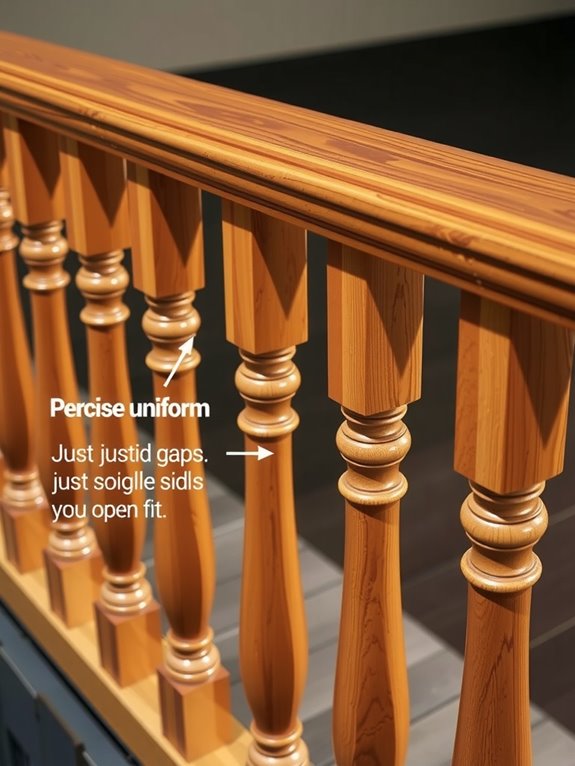
When you’re building a railing, the spacing between balusters—those vertical posts you see—matters more than you might think. The 4-inch sphere rule is the standard you need to follow. This rule prevents openings large enough for a small sphere to pass through, which protects children and pets from getting stuck or falling through gaps.
The 4-inch sphere rule is the baluster spacing standard that protects children and pets from dangerous gaps in railings.
Stair railings work a bit differently. They permit slightly larger 4-3/8 inch openings because of how stairs are shaped. However, guard openings on the open side of stairs must stay tighter for safety reasons. You’ll also need to block any triangular opening beneath the bottom rail using a 6-inch sphere test.
Cable railing systems need tighter spacing than other infill components because cables are flexible and can move more easily. This means the gaps between cables must be smaller to meet code requirements. Meeting these spacing standards keeps your porch railing safe for everyone who uses it while maintaining the look you want.