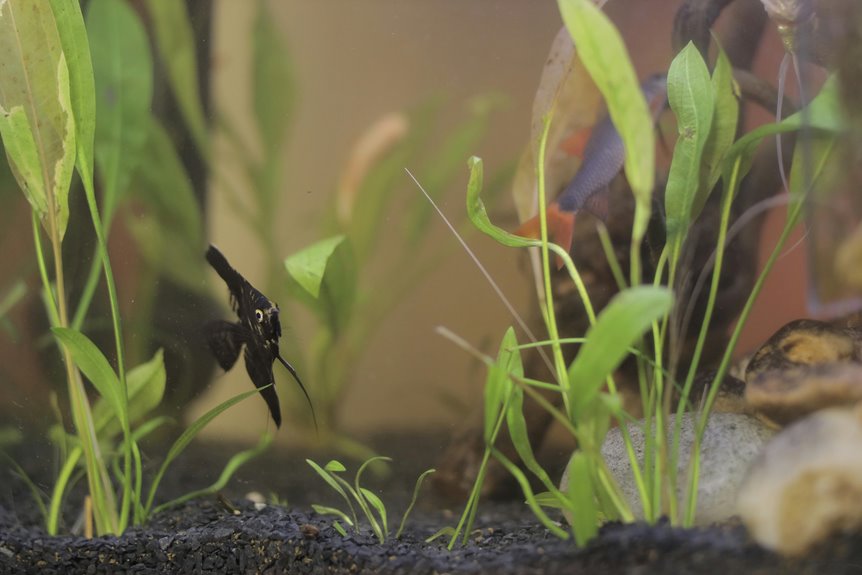
You can grow many aquarium plants in gravel. Low-maintenance species like Anubias and Java Fern attach to rocks or driftwood without needing soil, so you don’t have to worry about them uprooting. Root feeders such as Amazon Sword pull nutrients from the gravel itself, but they need a boost. Add fertilizer tablets once a month to give these plants what they need to grow well.
Floating plants like duckweed and guppy grass work differently. They absorb nutrients straight from the water, so you won’t need to add anything special to your gravel for them. Spread two to three inches of medium-grain gravel across your tank bottom and check that the edges aren’t sharp enough to damage plant roots.
Light matters just as much as nutrients. Your plants need eight to ten hours of light each day to photosynthesize and grow. If your plants look pale or stop growing after a few weeks, nutrient deficiency is likely the problem. Try using two fertilizing methods at once—tablets in the gravel for root feeders plus liquid fertilizer in the water column for all your plants. Most people see improvement within two to three weeks with this approach.
Plants That Thrive in Gravel Alone
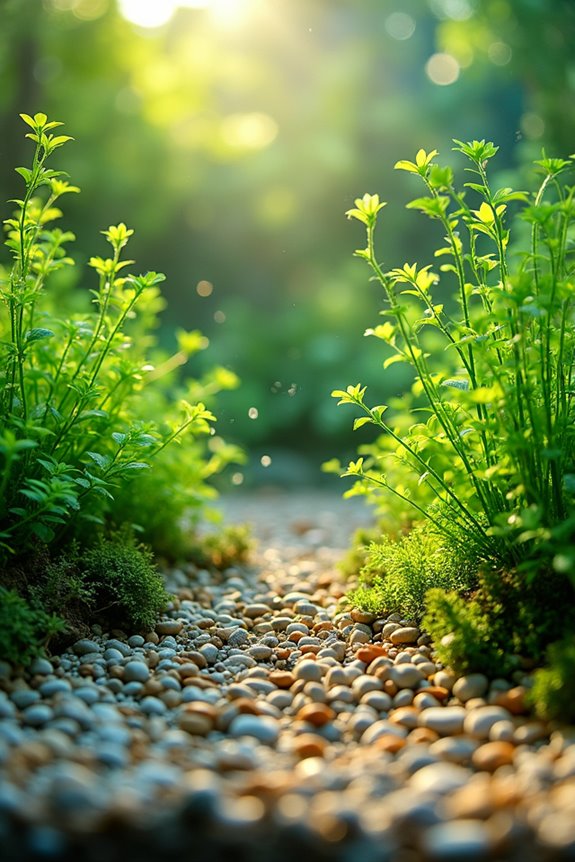
When you’re working with just gravel as your substrate, you have several solid options. Hardy aquarium plants like Anubias and Java Fern adapt well to gravel without needing soil underneath. Rather than burying these plants, attach them to rocks or pieces of driftwood using fishing line or plant weights. They’ll develop normally as long as you keep your water quality stable through regular water changes and proper filtration.
If you want plants with roots that dig into the substrate, Amazon Sword is your best choice. This plant is a heavy root feeder that does well in gravel, particularly when you add root tabs—small fertilizer pellets you push into the gravel near the plant’s base. Cryptocoryne wendtii varieties and Jungle Val also root successfully in gravel alone. Most rooted plants will establish themselves within 2 to 4 weeks if conditions are right.
Java Moss is another option that works because it doesn’t need a deep substrate at all. You can let it float freely or tie it to hardscape with fishing line. These plants give you flexibility while keeping your setup straightforward, and together they create a working ecosystem with minimal fuss.
Root-Feeding Plants for Gravel Tanks
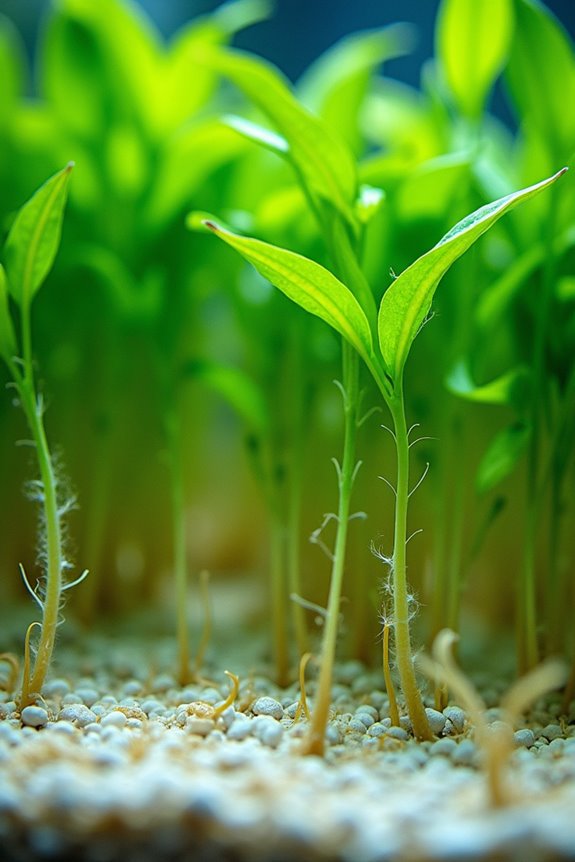
Root-feeding plants get most of their nutrients from the substrate, not from the water itself. This means gravel alone won’t always give them everything they need. The good news is that several plants work well in gravel tanks when you give them a little extra support.
Good choices for gravel tanks include Cryptocoryne, Amazon Sword, Anubias, and Wisteria. These plants have root systems that pull nutrients directly from the substrate, so they depend less on what’s dissolved in the water around them.
To help these plants grow properly, add root tabs to your gravel every 1 to 2 months. When you plant them, dig small holes into the gravel, position the roots carefully so they point downward, and cover them while leaving the base of the plant visible at the surface. Delicate plants like Wisteria may need weights or anchors to keep them from floating or shifting around.
This method gives you steady growth without having to add nutrients to the water constantly. Gravel has lots of surface area where beneficial bacteria live and break down waste into nutrients. These bacteria create an environment where root-feeding plants can get what they need from below, making your tank setup work with nature rather than against it.
Floating Plants for Algae Control in Gravel Setups
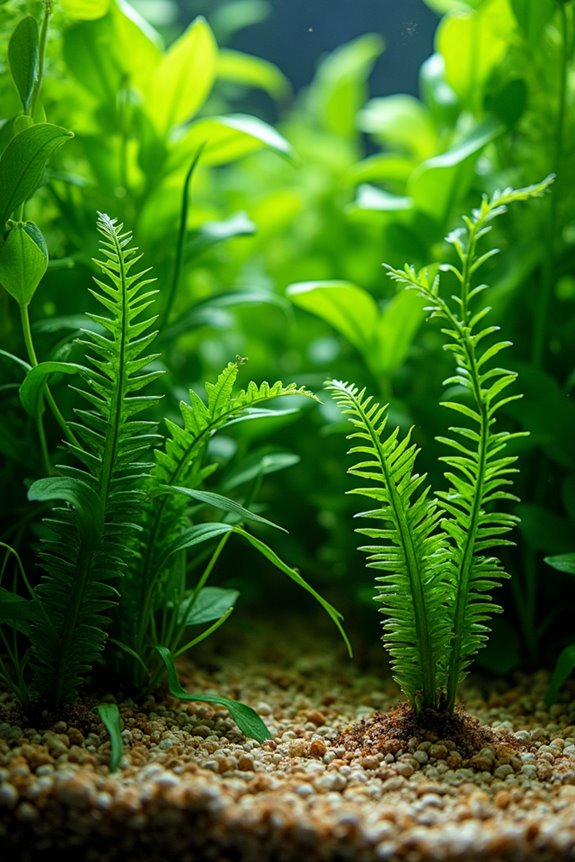
Floating plants work from above the water surface to fight algae by using up nutrients and blocking sunlight. Unlike root-feeding plants that draw from the substrate below, floating plants absorb what they need directly from the water column. This means they work well in gravel tanks without needing special substrate nutrients.
Floating plants absorb nutrients directly from water, making them ideal for gravel tanks without requiring special substrate fertilizers.
Duckweed spreads quickly and handles algae control effectively, but you’ll need to trim it regularly to keep it from taking over your tank. If money is tight, guppy grass gives you a reliable choice as a single-plant option. Water lettuce, hornwort, and red root floaters all pull nutrients from the water at strong rates, which starves algae of the resources it depends on.
These floating plants work especially well in open tanks without lids. They absorb nutrients passively while you handle less maintenance overall. Start by adding just one species to your setup. Watch how your tank responds over two to three weeks, then decide if you need to add more plants or remove some growth.
Preparing Gravel: Depth, Grain Size, and Nutrients
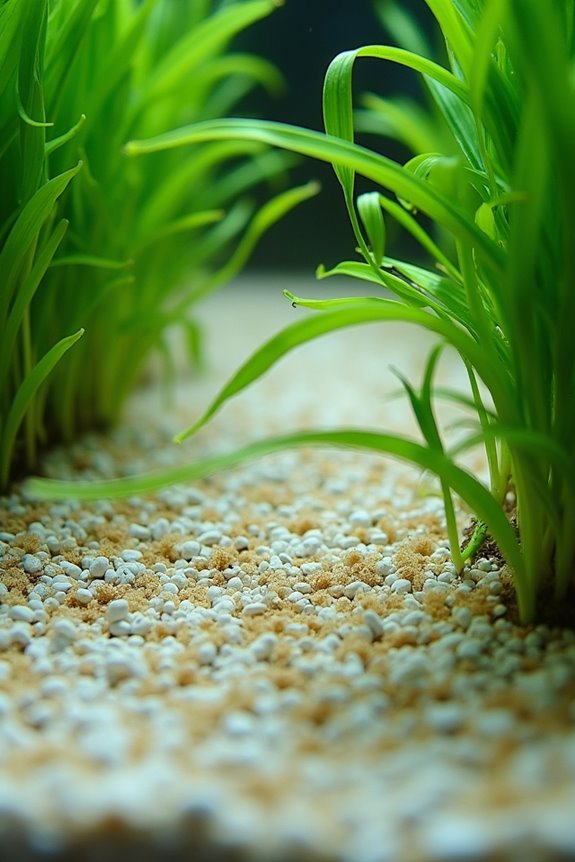
Getting the Depth Right
Aim for two to three inches of substrate depth in your tank. This amount gives rooting plants enough room to anchor properly and develop strong root systems without taking up excessive space.
Choosing the Right Grain Size
Medium-sized grains work best for aquarium plants. Fine substrates pack down too tightly and restrict water flow, while coarse grains don’t hold roots in place effectively. Avoid sharp-edged gravel, which cuts delicate root tissue and causes damage over time.
Adding Nutrients Your Gravel Can’t Provide
Gravel by itself contains few nutrients that plants can use. You’ll need to supplement with root tabs—small pellets you push into the substrate—or liquid fertilizers added to the water column. Look for products labeled as substrate nutrients or fertilizers containing trace minerals like iron and magnesium that make other nutrients available to plant roots.
The combination of proper grain size, adequate depth, and supplemental nutrients creates a foundation that supports healthy plant growth in your tank.
Why Your Gravel Plants Are Growing Slowly (and How to Fix It)
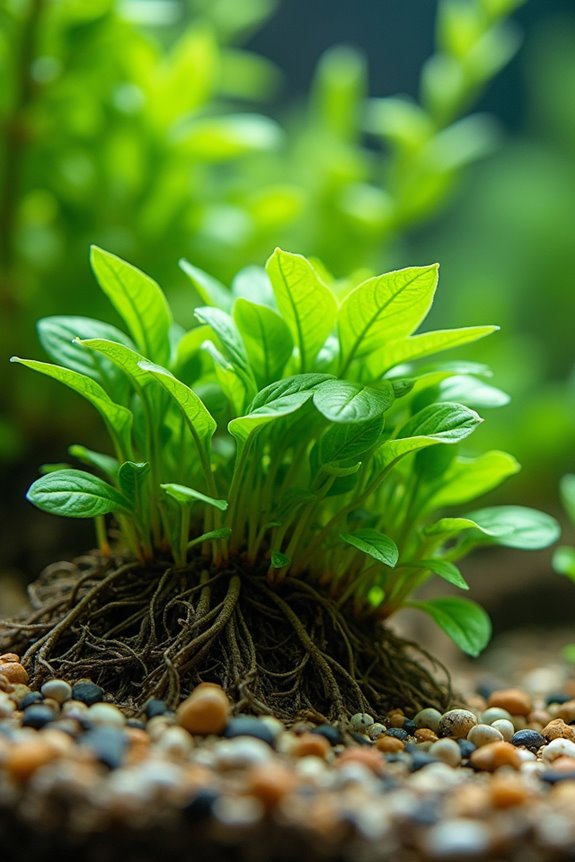
You’ve set up your gravel correctly with proper depth and grain size, but your plants still aren’t taking off like you’d hoped. The problem comes down to nutrition. Gravel alone doesn’t provide the nutrients plants need to grow. You’ll need to add root tabs or liquid fertilizers to fuel growth.
| Problem | Solution |
|---|---|
| Nutrient deficiency | Add root tabs monthly |
| Weak lighting | Increase light to 8–10 hours daily |
| Slow growth rate | Combine root and water-column fertilizer |
Check your lighting as well. Even nutrient-rich gravel won’t help if your plants aren’t getting enough light. Aim for eight to ten hours daily. This matters because plants need both food and light to grow properly.
Monitor your plants weekly and watch for changes. When you feed both the roots and the water column—meaning you use root tabs and add fertilizer to the water itself—you’ll notice improvement within two to three weeks. Start by adding root tabs once a month and using a water-column fertilizer according to the product instructions. This two-part approach gives your plants the resources they need from multiple sources, which is how they grow best.