Patio doors come in standard widths from 60 to 192 inches and heights of 80 to 96 inches. Measuring your opening accurately before ordering prevents costly custom orders and installation delays.
How to Measure Your Patio Door Opening
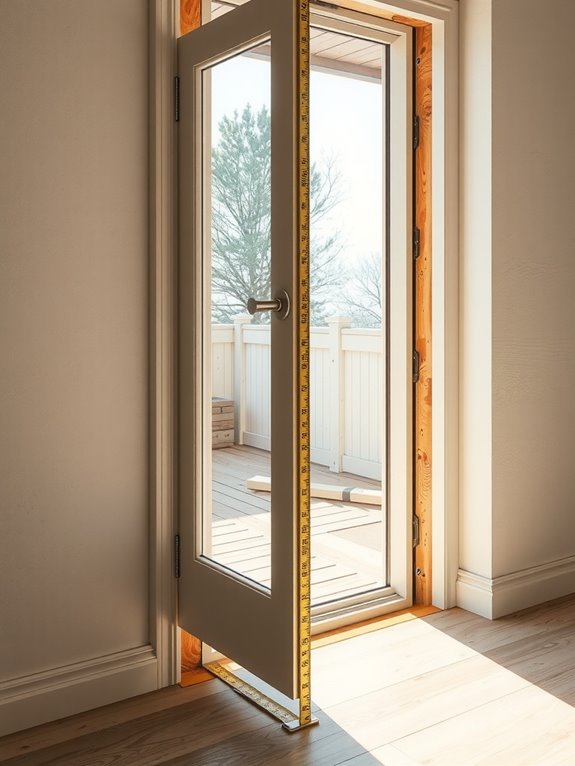
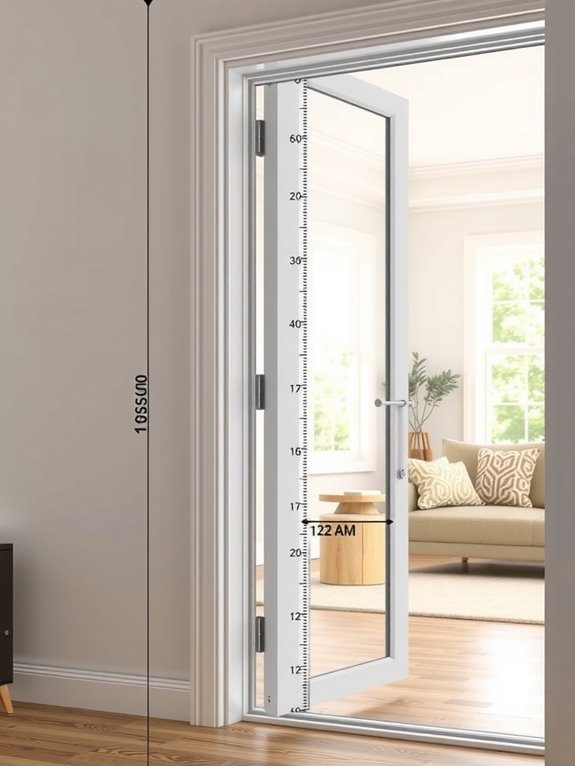
Measure inside the frame — not the outside opening. Take each measurement at three points and record the smallest number.
- Width — measure jamb to jamb at the top, middle, and bottom of the opening
- Height — measure from the threshold to the head jamb on the left, center, and right
- Rough opening — your rough opening must be 0.5 to 1 inch larger than the door frame on all sides to allow for installation and adjustment
- Wall thickness — measure your frame and wall depth to confirm standard door frames will fit
A quarter-inch error requires a custom order. Custom orders take 4 to 8 weeks and cost significantly more than standard sizes.
Measure jamb-to-jamb width and threshold-to-head height for accurate interior dimensions — outside measurements ignore the frame itself.
Rough Opening and Frame Depth
Frame depth depends on your wall thickness and which direction the door swings or slides. Thicker walls need deeper frames. Differences of more than 1/4 inch between your three measurement points indicate an out-of-square opening that requires shimming during installation.
Choosing the Right Patio Door Style
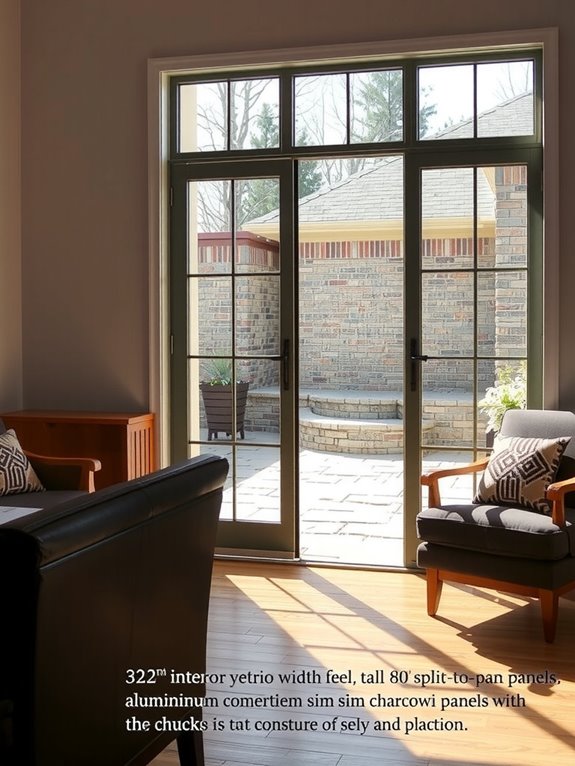
The two main patio door types are sliding doors and French doors. Each operates differently and fits different opening sizes.
Sliding Doors
Sliding doors move horizontally along a track. They work well for larger openings and save floor space because they don’t require swing clearance.
- Two-panel — 60, 72, or 96 inches wide
- Three-panel — 108, 120, or 144 inches wide
- Four-panel — 144 or 192 inches wide
- All heights — 80 or 96 inches standard
French Doors
French doors use hinges and swing inward or outward. They have a classic appearance but require clearance space on both sides for the door panels to open fully.
- Single French door — 24 to 36 inches wide
- Double French doors — 4 to 6 feet total width (each panel 24 to 36 inches)
- All heights — 80 to 96 inches standard; some configurations reach 108 inches
Standard patio doors come in preset dimensions. You can also add sidelites — narrow windows beside the door — or adjoining windows to increase light without changing the door size.
Standard Sliding Glass Door Widths and Heights
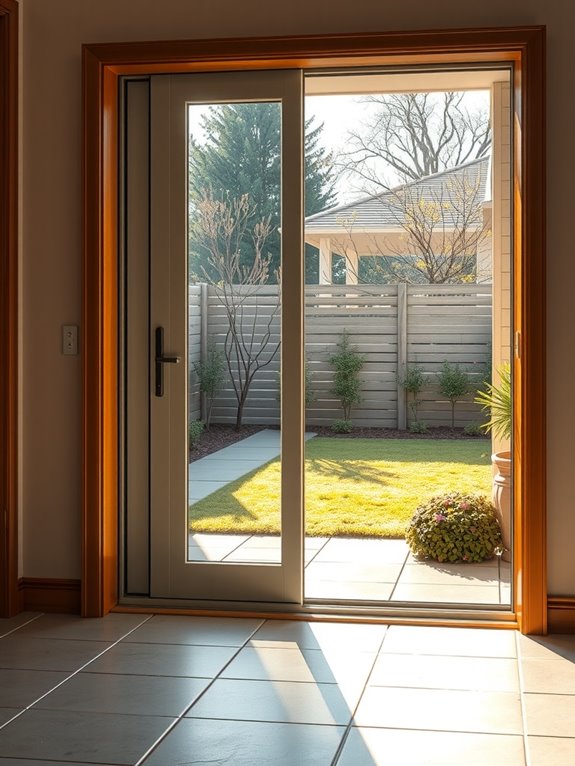
Two-Panel Sliding Doors
Two-panel doors fit most standard residential openings up to 8 feet wide. Common configurations:
- 5-foot width (60 inches) — 80 or 96-inch height
- 6-foot width (72 inches) — 96-inch height (most popular)
- 8-foot width (96 inches) — 80 or 96-inch height
Two-panel sliding doors come in three standard widths — 60, 72, or 96 inches — with heights of 80 or 96 inches.
Three-Panel Sliding Doors
Three-panel doors have a fixed center panel with two sliding side panels. Standard widths and heights:
- Widths — 108 inches (9 ft), 120 inches (10 ft), 144 inches (12 ft)
- Heights — 80 inches, 82½ inches, or 96 inches
Wider openings allow more natural light. A 144-inch door delivers maximum daylight exposure compared to a 108-inch option. Height affects view quality — 96-inch doors create a more panoramic sight line than 80-inch models.
Four-Panel Sliding Doors
Four-panel doors provide the widest standard opening available. Two outer panels slide toward the center while two center panels stay fixed. Standard sizes:
- Widths — 144 inches (12 ft) or 192 inches (16 ft)
- Heights — 80 or 96 inches
Four-panel doors require adequate wall space on both sides for panels to slide fully. Installation complexity and cost increase with panel count.
French Patio Doors: Dimensions and Size Comparison
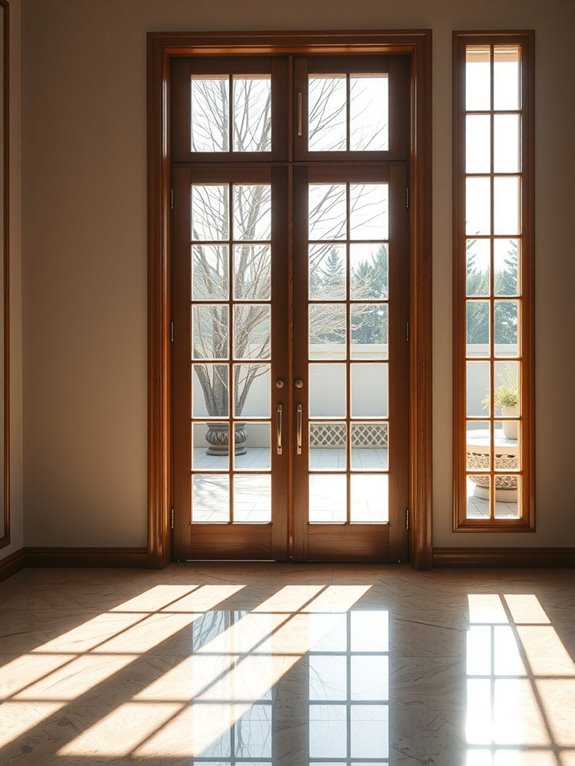
| Feature | Single Door | Double Doors |
|---|---|---|
| Width | 24–36 inches | 4–6 feet total |
| Each panel | N/A | 24–36 inches |
| Height range | 80–96 inches | 80–96 inches |
| Opening type | One active panel | Both panels swing |
Swing Clearance Planning
French doors require clearance space to open fully. Plan your furniture placement and traffic routes before ordering.
- Measure available wall space where the doors will go
- Identify the swing direction — inward or outward
- Check that furniture, patios, or balconies won’t block door movement
- Verify full 80 to 96-inch height clearance has no obstructions
Double doors allow you to move larger furniture through the opening and provide faster patio access than single doors. Single doors need only 36 inches of width — double doors require 4 to 6 feet.
How Frame Material Affects Sizing
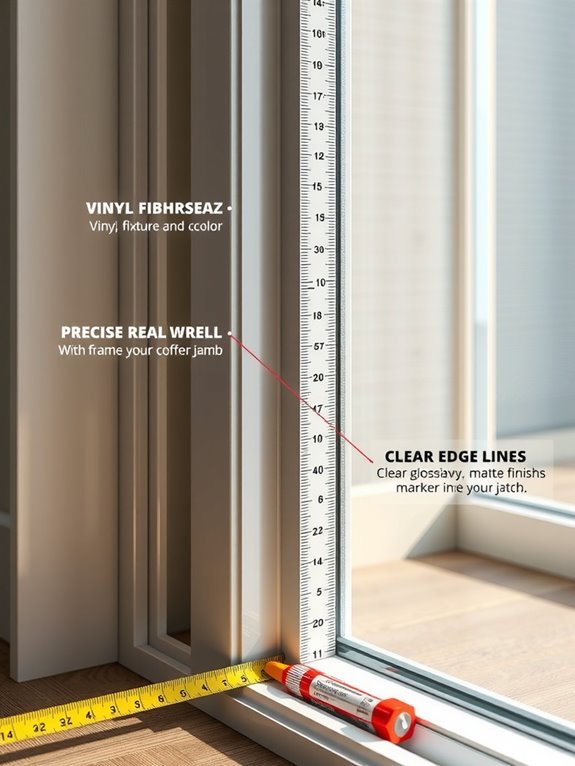
Your frame material — vinyl, fiberglass, or aluminum — directly affects how much clearance to leave in your rough opening.
Vinyl Frames
Vinyl expands and contracts about 0.3 inches per 10-degree temperature swing. Size your rough opening 0.5 inches larger than the frame on all sides and leave 0.5 to 0.75 inches of jamb clearance for insulation.
Fiberglass Frames
Fiberglass resists warping and holds its shape across temperature ranges. Use tighter sizing with 0.25-inch tolerance and reduce clearance to 0.25 to 0.5 inches on all sides.
Aluminum Frames
Aluminum frames are thin and rigid. Follow manufacturer width specifications within 0.125 inches. Account for thermal break depth — usually 0.5 to 1 inch — and check glazing weight requirements for your specific model.
Custom Patio Door Options for Non-Standard Openings
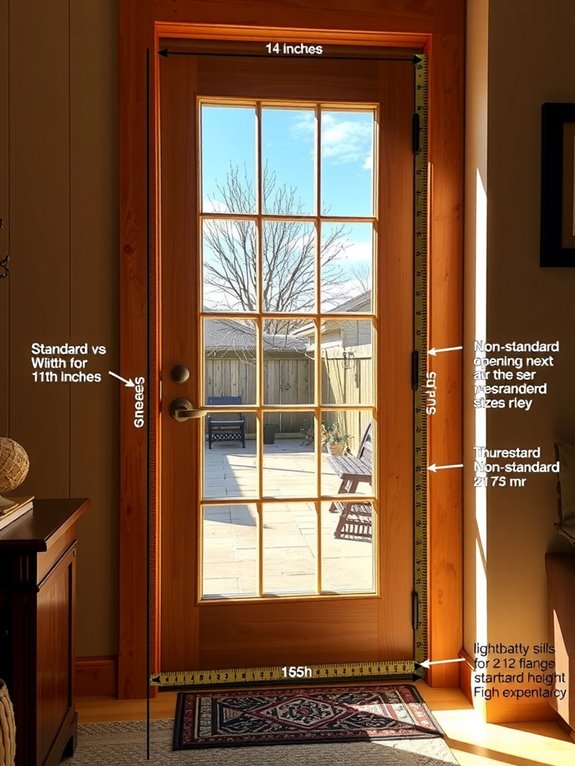
When your rough opening does not match standard sizes, custom doors provide a solution. Manufacturers can build doors to unusual measurements like 95 3/4 or 97 1/2 inches tall. Custom options include more than four panels, integrated adjacent features, and architectural-specific designs.
Custom prices increase based on larger dimensions, glass and frame material choice, labor requirements, and structural adjustments. Work with a professional to measure accurately, confirm specifications, and arrange installation — this prevents costly mistakes and confirms the door will operate properly.
Patio Door Costs: What Size Determines Price
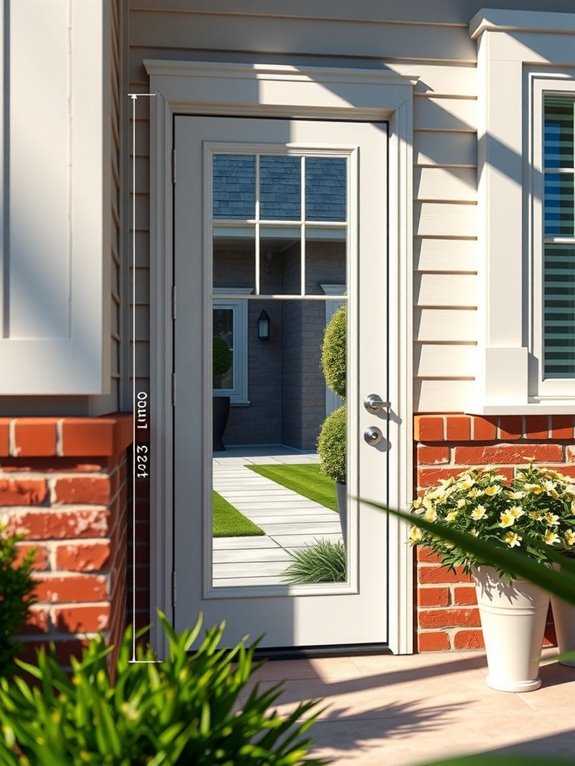
Bigger doors cost more because they require additional materials, heavier framing, and more complex installation. Standard sizes (60 to 192 inches wide, 80 to 96 inches tall) cost less than custom options. Four-panel doors command the highest prices due to extra panels and hardware. Adding sidelites or picture windows increases costs further through extra glass, framing, and alignment work.
Five Mistakes That Derail Patio Door Replacement
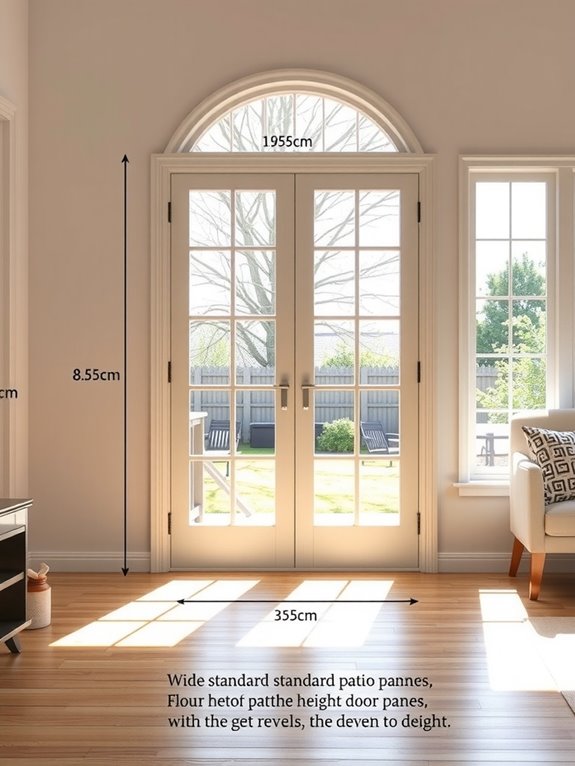
- Skipping inside measurements — outside measurements do not account for the frame itself. Measure jamb to jamb and threshold to head jamb only
- Ignoring frame thickness — door frames and tracks occupy 1.5 to 2 inches depending on frame type. Gaps from unaccounted thickness reduce sealing quality and energy efficiency
- Confusing brand sizing — a “5 ft” door from one manufacturer differs slightly from another brand’s “5 ft” model. Verify exact specifications from the manufacturer before ordering
- Forgetting rough opening allowance — rough openings are typically 0.5 to 1 inch larger than finished dimensions on all sides. Always measure the actual rough opening, not just the finished frame
- Selecting standard sizes without verification — standard sizes may not match your space. If they don’t fit, order custom doors early — custom orders take 4 to 8 weeks for delivery
Installation Checklist: Proper Fit and Weatherproofing
- Rough opening — confirm it is 0.5 to 1 inch larger than your door dimensions on all sides
- Track dimensions — measure where your track will sit and account for frame thickness (typically 1 3/4 inches) plus any mounting hardware
- Sealing strategy — cold climates need closed-cell foam sealant rated below 20°F; wet climates need water-resistant barriers
- Out-of-square check — differences of more than 1/4 inch between your three measurement points require shimming during installation
- Drainage — slope your threshold or sill 1/4 inch per 12 inches of depth to direct water away from the frame
- Manufacturer specs — compare your final measurements against the manufacturer’s tolerances and weight limits before placing your order