
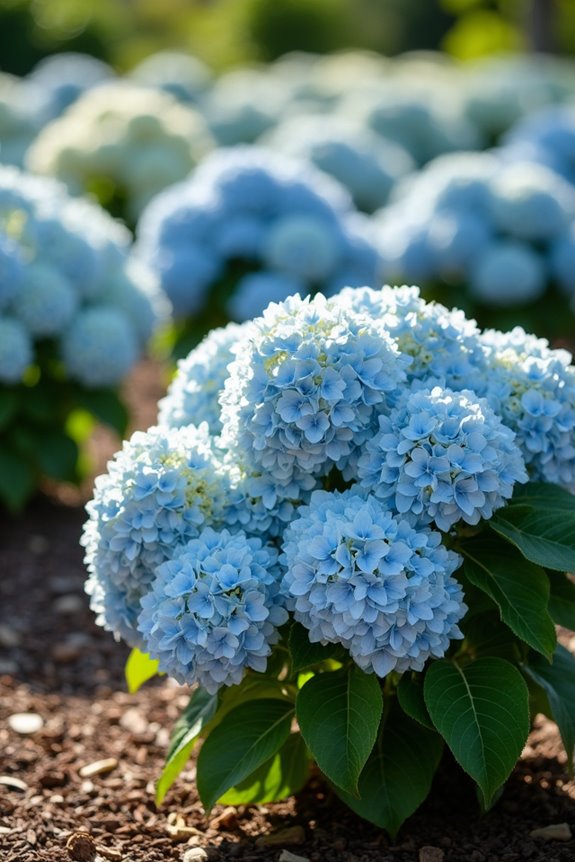
Space your hydrangeas at their mature width plus one foot—not the nursery size. A 4-foot-wide variety needs 5 feet center-to-center spacing. This prevents crowding, which weakens blooms, traps moisture, and invites fungal disease.
For hedges, plant 3–5 feet apart. If you’re using hydrangeas as accent plants in your landscape, space them 8–12 feet apart instead. The wider distance lets each plant stand on its own and get plenty of air around it.
Proper spacing takes 4–5 years to fill in completely. During those years, your plants develop stronger stems and produce more flowers because they’re not competing for water and nutrients. Better airflow between plants also reduces the chance of mildew and other diseases that thrive in damp, crowded conditions.
When you first plant hydrangeas at the correct spacing, the garden bed might look sparse. This is normal and actually works in your favor—it gives you time to add mulch, adjust soil pH if needed, and watch how light moves across your yard before the plants reach their full size.
Space Hydrangeas by Mature Width Plus One Foot
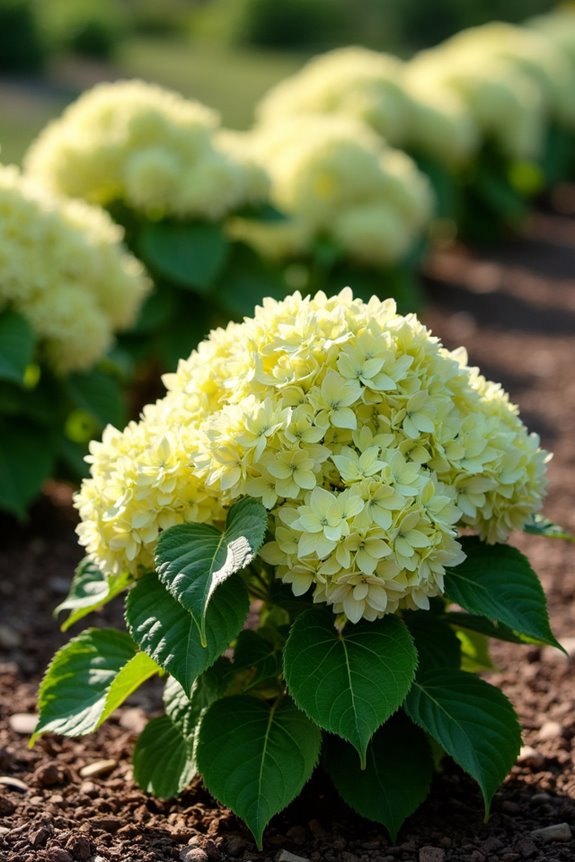
When you’re ready to plant hydrangeas, the spacing you choose now matters for how well they develop over time. The approach is straightforward: measure your hydrangea’s mature width, then add one foot for space around the plant.
Measure your hydrangea’s mature width, then add one foot for optimal spacing around each plant.
Here’s the process. If your hydrangea grows to four feet wide at maturity, you’ll space plants five feet apart, measuring from center to center. That extra foot of spacing allows roots to develop without competing for nutrients and water in the soil.
Good spacing does more than fit plants into your garden. It creates room for air to move freely around each plant, which reduces moisture buildup on leaves and stems. This air circulation helps prevent fungal diseases and keeps your hydrangeas healthy. Over several seasons, your plants will fill in and develop into full, vigorous specimens with the room they need to grow properly.
Why Mature Width Matters More Than Plant Size
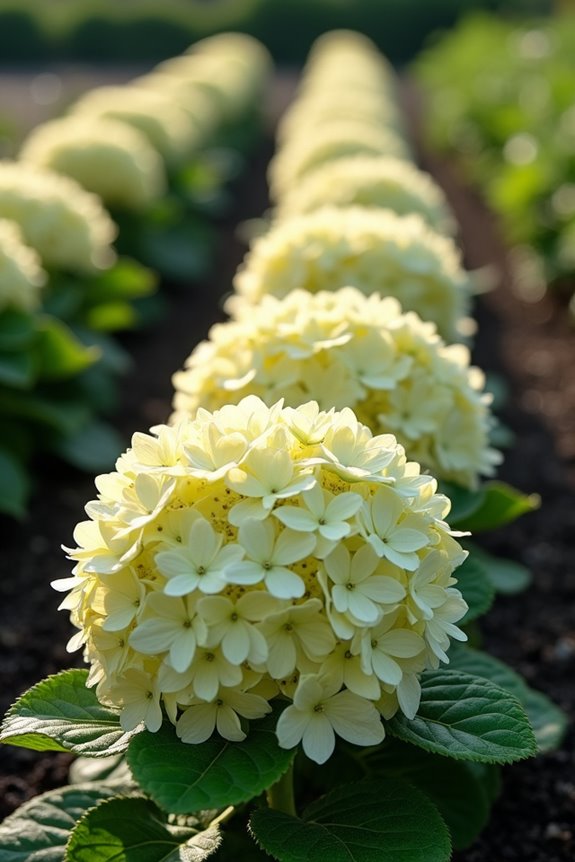
How big will your hydrangea actually get. That’s the real question guiding your planting spacing, not the size of the plant you bring home from the nursery.
You’re planning for the mature width your hydrangea will reach in several years. A small plant today becomes a large shrub tomorrow. When you ignore mature width, you’ll plant too close together. This creates crowding that invites disease and weak growth, and your hedge density suffers.
Instead, check your variety’s maximum width before digging holes. A Limelight panicle hydrangea spreads 6 to 8 feet wide, so space them about 8 feet apart. This approach prevents future problems by designing the healthy, full hedge you’ll enjoy for decades.
Hedges vs. Accent Plants: How Spacing Changes
When you’re planting hydrangeas, spacing depends on what you want them to do. Are you building a hedge or showcasing individual plants. The answer changes your spacing strategy.
For hedges, plant them close together—about 3 to 5 feet apart, which matches their mature width. This spacing lets them grow into one another and form a thick, continuous wall of leaves and blooms. The plants essentially become neighbors that eventually touch and merge into a unified screen.
Accent plants work differently. Space these 8 to 12 feet apart so each one stands alone and gets noticed. When hydrangeas aren’t crowded, they develop better shape, receive more air circulation, and display their flowers without competing visually with their neighbors. You’re letting each plant be the focal point rather than part of a larger structure.
Think of it this way: hedge hydrangeas are meant to work together as a team, while accent hydrangeas are meant to be individual performers. The spacing you choose at planting time determines which role they’ll play in your yard for years to come.
Hedge Density Requirements
Where you plant your hydrangeas shapes how you’ll space them. You might create a solid hedge or scatter them as accent plants throughout your yard.
Your hedge density depends on how wide your hydrangea variety grows at maturity. For continuous hedges, use the mature width as your center-to-center spacing. This creates that steady line you’re looking for. If you want a denser wall effect, you can plant closer—but not more than 1 foot under the minimum mature width, or the branches will rub together and you’ll spend extra time pruning.
| Hedge Type | Spacing | Result |
|---|---|---|
| Continuous | Mature width | Solid line |
| Dense wall | 1 foot under minimum | Crowded risk |
| Undulating | Maximum width | Gentle curve |
When you space hydrangeas at their mature width, each plant has room to reach its full size without competing with neighbors. Planting them closer than 1 foot under the minimum creates problems. Branches tangle together, air doesn’t flow between plants, and you’ll need to prune more often to manage the crowding.
If you prefer an undulating pattern instead of a straight hedge, use the maximum width as your spacing. This creates a gentle, rolling effect rather than a solid wall. Planning your spacing before you dig makes the difference between a healthy, manageable hedge and one that demands constant attention.
Accent Plant Flexibility
Unlike hedges that demand precise spacing to form a unified line, accent plants work differently. You don’t need strict mature width calculations. Instead, space accent hydrangeas about 12 inches apart at planting time, focusing on how they look in that moment rather than exact measurements.
This flexible approach has real advantages. You can plant closer together without the air circulation problems that plague dense hedges. As your plants grow, they’ll naturally expand beyond their original footprints and fill in the gaps. You’re building a layered, organic look instead of a formal barrier.
Because you have this freedom, you can adjust your spacing based on what your specific landscape needs. Plant tighter if you want coverage in two or three years. Plant looser if you’re willing to wait longer for a fuller appearance. The choice depends on your timeline and conditions rather than following one rigid rule.
Spacing Guide for Popular Varieties
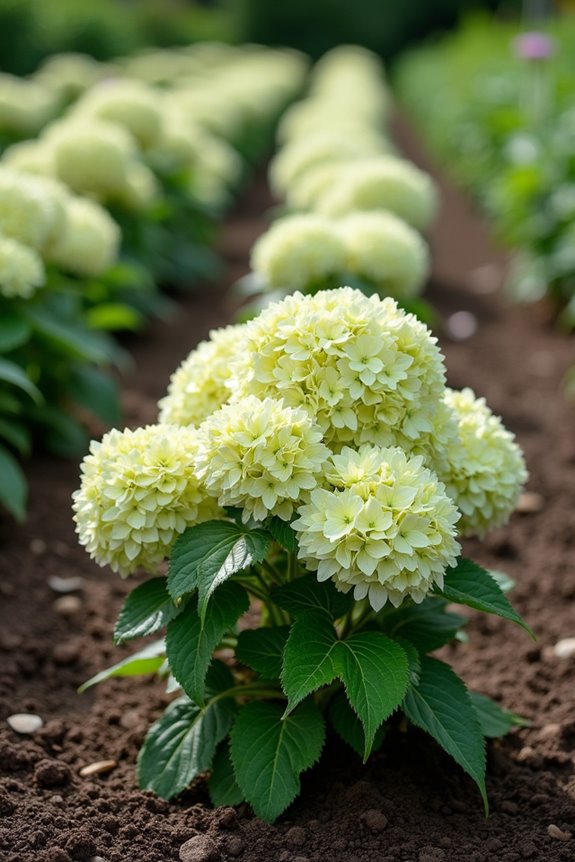
How you space your hydrangeas depends on what look you’re after. Your hydrangea spacing directly affects how quickly your plants fill in and what your garden will feel like when they mature.
Think about these spacing strategies based on your mature width and the appearance you want:
- Dense wall effect: Plant 3 feet apart for tight, full coverage
- Standard hedge: Use 4 feet center-to-center as your baseline distance
- Undulating style: Space at maximum mature width for flowing, natural lines
- Curved arrangements: Follow your garden’s contours while keeping spacing consistent
- Specimen placement: Allow full mature width between individual showcase plants
Your planting distance choice shapes everything. Closer spacing creates fullness faster but requires more plants and higher costs. Wider spacing reduces what you spend upfront and gives each hydrangea room to develop its complete form.
The first step is measuring your mature width. This measurement becomes your foundation for all spacing decisions. Once you know how wide your variety grows, you can pick the spacing style that matches your goals. A hydrangea that reaches 6 feet wide, for example, would need 6 feet between plants for specimen placement, but only 3 feet between plants for a dense wall effect. The difference in timing matters too—dense spacing gives you a finished look in 2 to 3 years, while wider spacing takes 4 to 5 years to fill in completely.
Straight Lines and Curves: How to Measure and Stake Layout
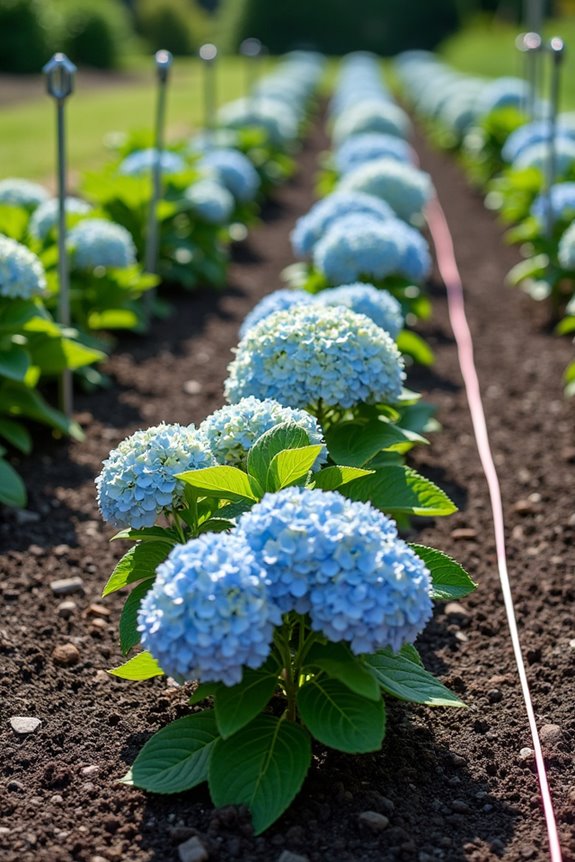
Once you’ve decided on your spacing strategy, you’ll need to map out exactly where each hydrangea goes. For straight hedges, place end stakes just beyond where your hedge will start and finish. Tie a tight string between them as your guide—this gives you a clear line to follow.
Mark each plant location at half of the mature width from the ends. Then space the remaining plants using the mature width as your center-to-center distance. This method keeps everything evenly distributed along the line.
Curved hedges work differently. Shape your desired curve with a flexible garden hose first, then position stakes along it. This approach lets you see the bend before you commit to planting. Maintain at least your minimum spacing distance around bends. Good spacing prevents plants from crowding together, which stops branches from rubbing against each other and makes pruning work easier down the road.
Common Spacing Mistakes That Kill Blooms and Airflow
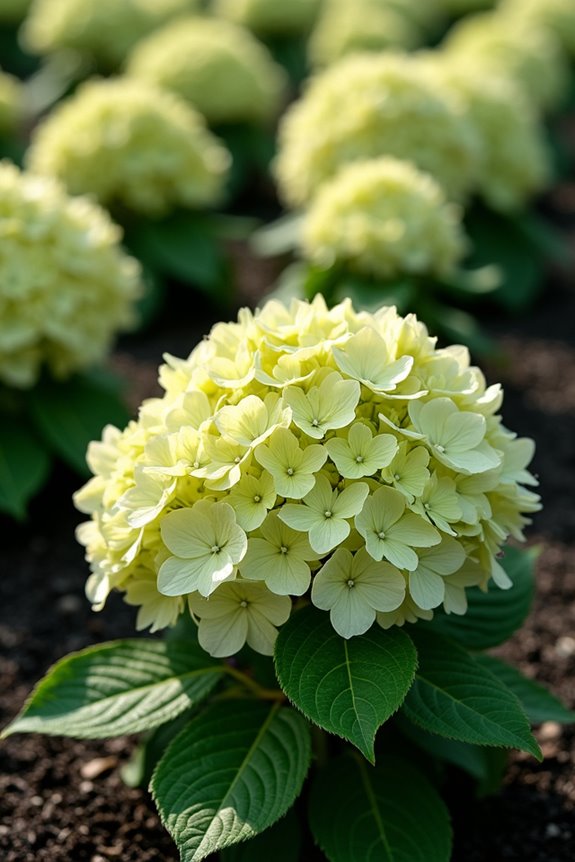
What Happens When Hydrangeas Are Planted Too Close
Spacing mistakes with hydrangeas create real problems that affect both blooms and plant health. When you squeeze plants closer than their mature width allows, you’re setting up conditions that lead to constant maintenance work.
The Problems Crowded Plants Create
Branches rub against each other when plants are too close, causing physical damage and stress to the stems. Poor air circulation traps moisture around the leaves and stems, which encourages fungal diseases like powdery mildew. Intertwined plants become difficult to prune effectively, and you’ll find yourself struggling to reach the interior branches. As plants compete for the same nutrients and light, blooms get smaller and fewer. Disease spreads faster through dense foliage because the moisture stays trapped longer.
Getting the Spacing Right
Plant hydrangeas at least one foot apart under their mature width. This isn’t a luxury—it’s a practical need. The space allows air to move freely around the stems and leaves, which keeps moisture from lingering and prevents mildew from taking hold. Plants with proper spacing stay healthier and require less work to maintain.
Think of it this way: when you give each hydrangea its own space to occupy, you’re building a garden that manages itself better over time. The spacing you choose today directly affects how much work you’ll do five years from now.
Spacing Hydrangeas for Undulating Hedges
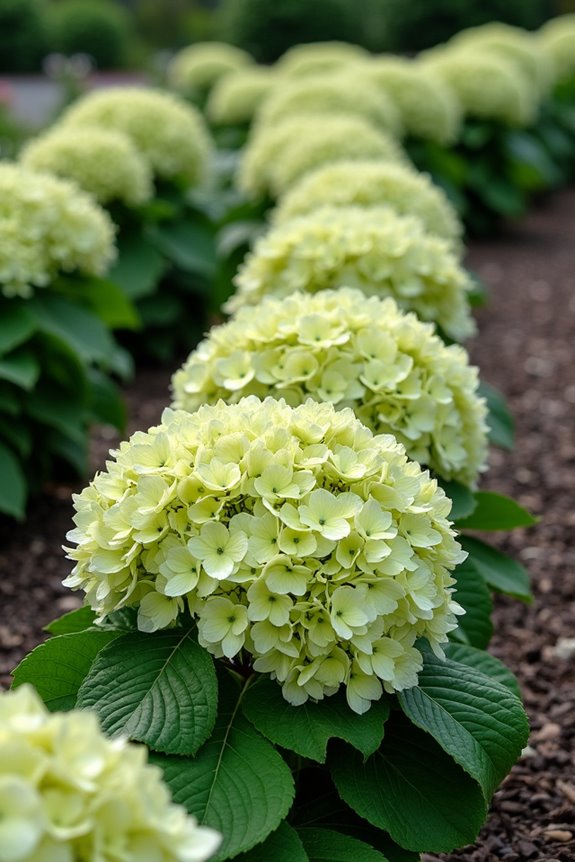
Creating an undulating hedge—those gentle waves of shrubs that flow across your landscape—requires a different spacing strategy than planting individual hydrangeas. For Hydrangea macrophylla varieties, use the maximum mature width as your center-to-center spacing guide.
Here’s how to calculate it. If your hydrangea reaches 5 feet wide at maturity, space plants 5 feet apart center to center. This measurement comes from the middle of one plant’s root ball to the middle of the next plant’s root ball.
Want to adjust the look. You have options. Plant them up to 1 foot closer together if you prefer branches touching slightly and a denser appearance. Space them 1 foot farther apart for visible gaps between plants and a more relaxed, open look.
When designing curved sections of your hedge, maintain this consistent spacing while following your hedge’s natural flow. The key is working with the shrub’s growth pattern rather than against it. This approach supports good airflow between plants and allows each hydrangea room for blooms.
Planning your spacing ahead of time takes extra effort, but the result is a polished hedge design that looks intentional. The plants have what they need to grow well, and your hedge develops the flowing appearance you’re aiming for.
Fixing Overcrowded Plants: Transplanting and Spacing Adjustments

How to Tell If Your Hydrangeas Are Crowded
Watch for these warning signs that your plants need more space:
Watch for stunted growth, poor air circulation, overlapping leaves, uneven development, and yellowing foliage—signs your hydrangeas need more space.
- Stunted growth or smaller blooms than expected
- Poor air circulation leading to fungal problems like powdery mildew
- Leaves touching or overlapping between plants
- Uneven development across your hedge or bed
- Yellowing foliage from nutrient competition
Spacing Your Hydrangeas Correctly
When crowding occurs, transplanting becomes necessary. Start by measuring your hydrangea’s mature width—this tells you how much space it needs. Most varieties should be spaced four feet or more apart, measured from center to center. If plants are too close, you might move the middle plant outward or gradually increase distances between all of them.
When to Transplant
Spring and fall offer the best timing for moving hydrangeas. During these seasons, plants establish roots more easily than in summer heat or winter cold. Don’t wait if you notice crowding. Overcrowded plants weaken over time, and early adjustments prevent larger problems down the road. Your garden’s health depends on giving each hydrangea adequate breathing room.