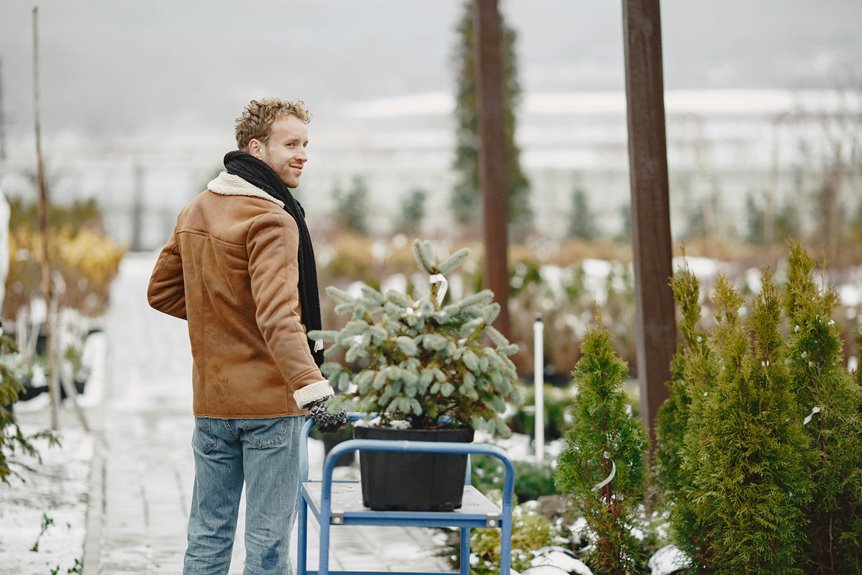
Can You Plant Trees in Winter?
Yes, you can plant trees in winter, but you need to work with your climate and timing. The ground must not be frozen solid, and you’ll want to plant early enough that roots can take hold before the hardest freezes arrive.
Timing and Temperature Matter
You need roughly six weeks before a hard freeze hits your area for roots to establish themselves in the soil. Check your soil temperature before you dig. Deciduous trees need soil around 50°F, while evergreens prefer closer to 60°F.
The planting window depends on where you live. In zones 5 through 7, fall is your best bet. If you’re in zones 8 through 10, you can extend planting into December and sometimes beyond. Your local extension office has specific freeze dates for your area, which tells you exactly when to stop planting.
Planting and Care
Dig a hole slightly wider than your root ball and just as deep. Place the tree, backfill with soil, then add 3 to 4 inches of mulch around the base. Keep the mulch a few inches away from the trunk so it doesn’t trap moisture against the bark.
Water deeply right after planting. Then water once a week during the dormant season if you haven’t had rain. Winter rains often handle this for you, but check the soil before watering—it should feel slightly moist, not soggy or bone-dry.
Yes, You Can Plant Trees in Winter: If Conditions Are Right
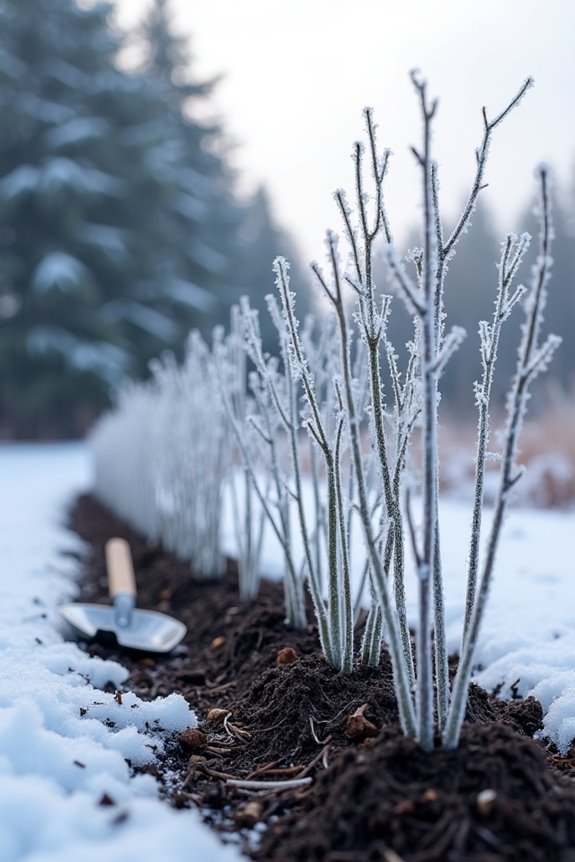
When’s the best time to plant a tree—spring or fall? Winter works too, if you understand ground conditions and soil temperature. You can plant trees in winter when the ground isn’t frozen solid and remains diggable. Bare-root planting is possible in very early spring before the freeze returns.
Your tree needs about six weeks of root establishment before a hard freeze hits. This timeline matters because roots that haven’t had time to settle won’t survive the cold. Check soil temperature before digging: deciduous trees thrive around 50°F, while evergreens prefer closer to 60°F.
Geography makes a big difference. In zones 8–10, winter planting is realistic since freezing is brief or absent. Zones 3–6 face frozen ground that blocks winter planting entirely. If you’re in a middle zone, pay close attention to your local weather patterns rather than relying on the zone alone.
Success depends on these ground conditions aligning with your planting timeline. If the soil is workable, the temperature is right, and you have six weeks before the next hard freeze, you’re ready to plant this winter season.
Soil Temperature for Winter Tree Planting Matters Most
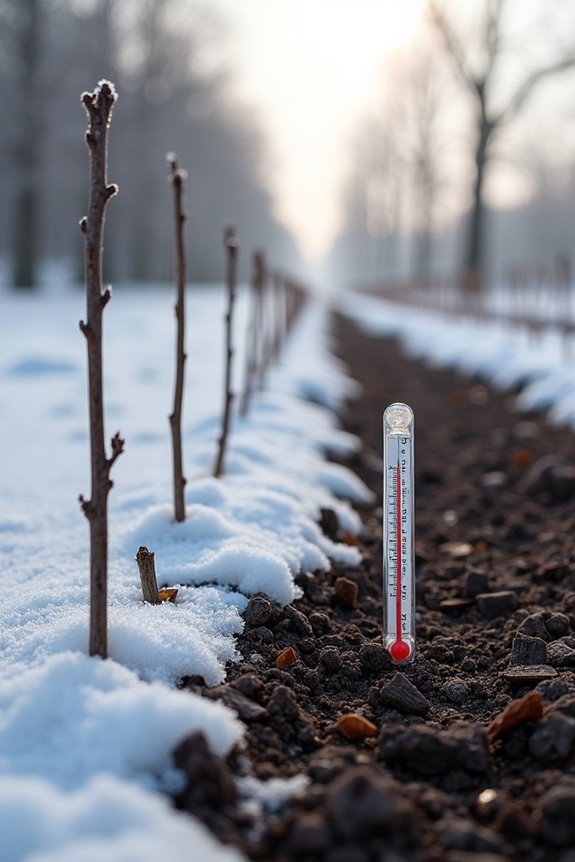
Check your soil temperature before digging—not the calendar date. This single factor determines whether your tree survives the winter.
Deciduous trees need soil that stays at 50°F or warmer, while evergreens require about 60°F for their roots to establish properly. Push an instant-read thermometer as deep as you can into the ground to get an accurate reading.
Timing works like this: plant about 6 weeks before a hard freeze hits your area. The ground must remain unfrozen for 4 to 6 weeks after planting, giving roots time to settle without freezing damage. Skip planting when temperatures drop below 20°F, since this cold harms young roots that haven’t anchored themselves yet.
Check your soil temperature every few days as winter approaches. Once the numbers match what your trees need and your timing lines up, you’re ready to plant.
Which Trees Thrive in Winter: Deciduous vs. Evergreen
Now that your soil temperature is ready, you need to choose the right trees for winter planting. Deciduous trees—the ones that drop their leaves—work best for winter planting because their roots need less time to establish before freezing weather arrives. Evergreens, on the other hand, demand more time and deeper root systems to manage winter’s moisture stress, which makes them riskier choices when temperatures drop.
Your location changes what you can plant. In warmer zones like Alabama or Georgia where the ground stays unfrozen most of the season, evergreens become a reasonable option. However, if you live in zones 3 through 6, stick with deciduous varieties instead.
After planting either type, deep watering and a thick layer of mulch—about 3 to 4 inches—protect newly planted roots through winter’s hardest months. Your trees need 4 to 6 weeks of unfrozen ground to settle properly before the coldest part of winter arrives.
Your USDA Zone Determines Winter Planting Windows (Zones 5–9)
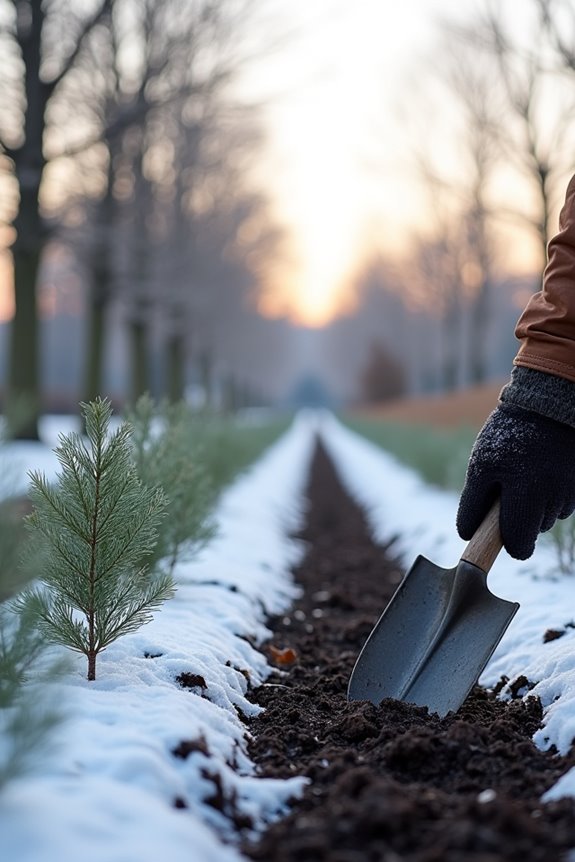
Your USDA zone is your most reliable guide for when you can actually plant trees in winter. Each zone has its own timing for when the ground freezes and thaws, which directly affects whether your trees will survive.
In zones 5–7, fall planting before winter arrives works better than waiting until winter. Zones 8–9 give you a longer window that might stretch into December. Zone 7b sits in the middle—it can behave like the cooler zones above it, so pay attention to your specific location rather than relying solely on your zip code.
The real work is checking your soil temperature before you plant. Deciduous trees need soil that stays around 50°F, while evergreens prefer closer to 60°F. Ground freeze timing varies enough within your area that this step matters more than guessing based on the calendar. Take a soil thermometer and measure a few inches down in your planting spot. If the temperature matches what your tree needs, you’re ready to dig.
Zone-Specific Planting Windows
When you plant trees in winter depends on where you live. Your USDA zone determines both when you can dig and how much success you’ll have.
In zones 5, 6, and 7, fall gives you the best window for planting. Early winter works too, but only if the ground stays soft enough to dig. Zones 8, 9, and 10 have longer planting seasons that stretch into December when you take the right steps.
The reason zone matters comes down to soil temperature. Evergreen trees need soil around 60°F to establish their roots properly. Deciduous trees are more flexible—they’ll accept soil at 50°F or warmer. Ground freezing patterns change dramatically depending on your location. In zones 8 and 9, soil seldom freezes solid, which means winter planting becomes more realistic. Colder zones require you to finish planting before hard freezes lock the ground.
Before you start digging, call your local extension service. They know your specific region and can tell you exactly when your planting window opens and closes. This step takes maybe 15 minutes and removes the guesswork about whether your trees will settle in successfully.
Ground Freeze Timing Varies
Can you plant trees this winter where you live. The answer depends on how frozen your ground gets and when it freezes, which changes dramatically from zone to zone. What matters most is knowing your soil temperature right now.
If you’re in zones 5–6, winter planting becomes nearly impossible because the ground stays frozen too long. But zones 7–9 offer real options since soil may stay unfrozen or freeze only briefly. After you plant, you need at least 4–6 weeks of non-frozen ground so roots can grow and anchor into the soil.
Different trees handle cold differently. Deciduous trees, which lose their leaves in winter, tolerate cooler conditions better. Plant these when soil reads 50°F or higher on a basic thermometer. Evergreens are pickier and need warmer soil closer to 60°F, which makes them riskier choices unless your specific conditions line up well.
Here’s what to do: Buy a simple soil thermometer from any garden center. Check your ground temperature where you plan to plant, not just in a sunny spot or under a tree. Look up your zone on a USDA hardiness map. Match your tree choice to what your ground actually does in winter, not what you assume it does. This straightforward approach gives you the best chance of success in your region.
Planting Trees in Winter: Step-by-Step
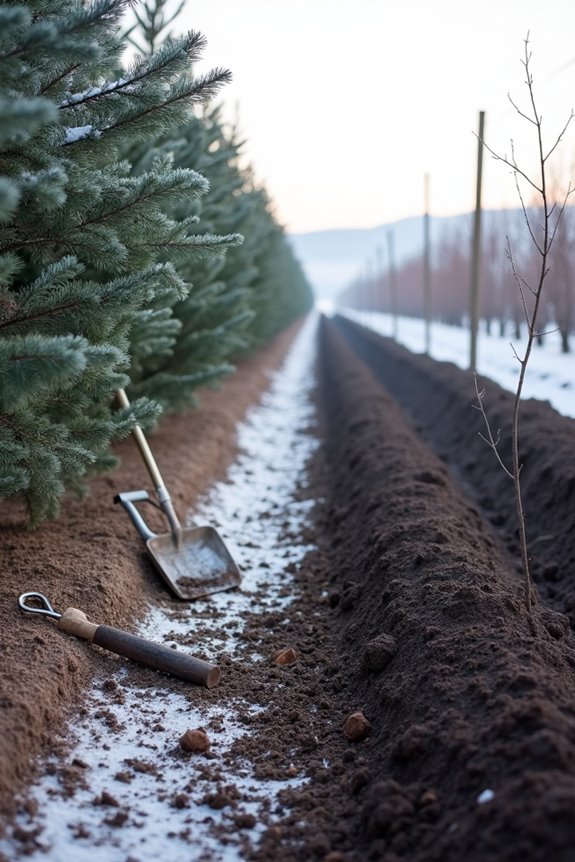
Successfully planting trees when temperatures drop requires careful timing and strategy. You’ll want to choose deciduous trees over evergreen varieties, since evergreens struggle without frozen ground protection. Before you dig, check your soil temperature—you need at least 6 to 8 weeks before a hard freeze for proper root establishment.
Start by digging a hole slightly wider than your root ball. Place the tree carefully in the hole, backfill with native soil, and water deeply. Apply 3 to 4 inches of mulch around the base for protection and moisture control.
Water once or twice weekly for at least one month after planting. This consistent moisture supports root establishment during dormancy. Winter planting demands dedication, but you’re building a stronger foundation for spring growth.
Winter Tree Care: Watering and Mulching Essentials
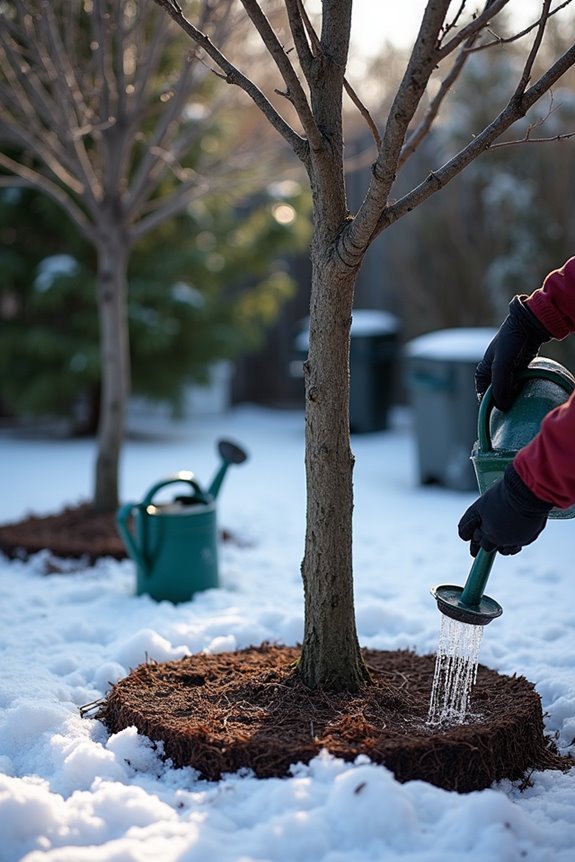
Winter tree care matters because what you do right after planting determines how well your tree survives the cold months. During the first weeks in the ground, your tree needs steady attention to develop roots before freezing temperatures arrive.
What you do right after planting determines how well your tree survives the cold months ahead.
Water deeply once or twice each week for at least one month after planting. This helps roots grow into the soil while the ground is still soft. Before the hard freeze hits, water deeply one more time. Wet soil around the roots actually resists freezing damage better than dry soil does.
Add a thick mulch layer—about 3 to 4 inches deep—around your newly planted tree, keeping it a few inches away from the trunk itself. Mulch acts like a blanket over the soil, keeping temperatures more stable underground and protecting roots from extreme cold swings.
Trees need roughly six to eight weeks to establish roots before a hard freeze arrives. Your watering and mulching work during this window determines whether your tree struggles or settles in well when spring comes around.
Best Trees for Winter Planting (by Growing Zone)
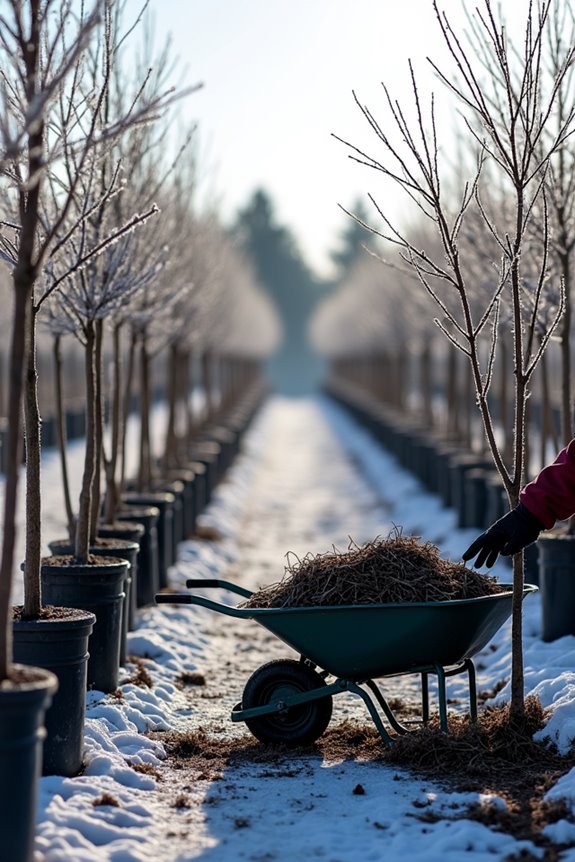
Your planting success depends heavily on where you live, since different zones have different windows for getting trees in the ground during cold months. If you’re in zones 5–7, fall planting works best. If you reside in zones 8–10, you can plant into December. Keep in mind that Alabama, Florida, Georgia, Louisiana, and Tennessee follow their own rules, so check your state’s specific guidelines before you dig.
Cold-hardy deciduous trees like oaks and maples handle winter planting well in northern areas. Evergreens, though, need warmer zones where soil doesn’t freeze solid. Here’s why: evergreens require several weeks to establish roots before freezing weather arrives. If the ground freezes before those roots develop, the tree won’t survive the winter. In zones where soil stays above freezing for at least 4 to 6 weeks after planting, evergreens can get the time they need to settle in.
The key is matching the tree type to your zone and the time remaining before hard freeze. Plant deciduous trees in northern zones during fall, when the ground is cool but not frozen. Plant evergreens in warmer zones where you have enough frost-free weeks for root development. This simple pairing of tree type and timing gives you the best chance of success.
Cold Hardy Tree Selection
Because winter planting works differently depending on where you live, choosing the right tree for your zone changes everything. In zones 8–10, the ground rarely freezes hard, so winter planting works well for most species. If you’re in zones 3–6, you’ll face frozen ground that makes digging impossible, so stick with spring planting instead.
Deciduous trees are your safest bet for winter planting because they need about 6 weeks to establish roots before a hard ground freeze hits. Evergreens require warmer soil temperatures around 60°F, making them riskier choices during colder months.
Always check zone guidance specific to your region and contact your local extension office. They’ll give you the most accurate root establishment timeline and cold hardy tree recommendations for your exact location.
Zone-Specific Planting Windows
Your hardiness zone determines when you can actually plant trees and shrubs outdoors during winter. In zones 3–6, frozen ground often prevents digging, making winter planting risky or impossible. Zone 5 offers safer conditions than zones 3–4, while zone 7a resembles zones 8–10 with better winter planting options. Zones 8–10 provide ideal windows extending into December.
Soil temperature matters because different plants need different conditions. Deciduous trees tolerate soil at 50°F, while evergreens need ground closer to 60°F. Before you dig, check your specific zone’s ground thaw and freeze dates so you plant at the right time.
Fall through early winter works best for zones 5–7. This timing gives roots a chance to establish before heavy freezes arrive. Higher zones enjoy more flexibility and can plant over a longer stretch of time. Look up your exact zone’s requirements before you break ground.
Regional Growth Recommendations
Which trees will do well in your area depends on your local winter conditions. This is where the guide becomes practical and helpful.
In hardiness zones 3-6, frozen ground makes winter planting difficult because tree roots struggle to establish themselves when soil stays hard. Zone 5 offers better winter conditions than zones 3-4, though zone 8 gives you the easiest time since the ground freezes briefly or not at all.
To plant successfully in winter, check your ground temperature regularly. Deciduous trees can handle soil around 50°F, but evergreens need warmer conditions—closer to 60°F—to survive the season. This difference matters because evergreens stay active year-round, even when temperatures drop.
In colder zones, add a thick layer of mulch around your trees. A 3-4 inch layer of wood chips or bark insulates the roots and protects them from extreme cold. This simple step improves survival rates noticeably.
Your hardiness zone tells you when you can actually plant and which species will last in your regional climate. Knowing this information helps you pick a planting window that works and select trees suited to where you live, rather than guessing or choosing plants that won’t survive your winters.
Indoor Fruit Trees: When Outdoor Winter Planting Isn’t Feasible
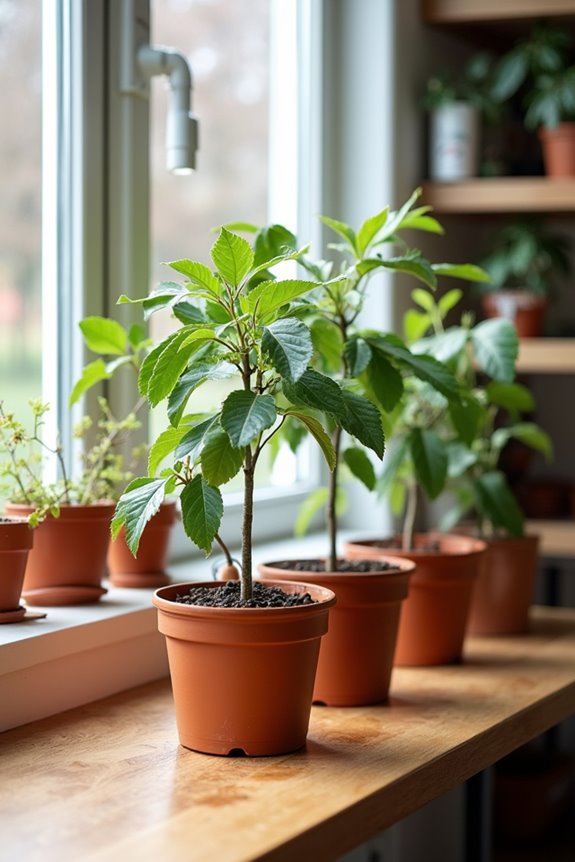
If waiting until spring feels too long, you can grow fruit trees indoors during winter and move them outside when it gets warmer. Meyer lemons and naval oranges are good choices for this approach. Starting them indoors lets you begin while snow still covers your garden, and you’ll protect young trees from freezing temperatures until conditions allow transplanting.
Start by repotting your seedlings into containers filled with quality soil. Find a spot near a bright window or place them under grow lights. Your trees need 12 to 14 hours of light each day. Keep the room between 65 and 75 degrees Fahrenheit, with moderate humidity levels. Water when the soil feels dry about one inch down from the surface.
Watch your outdoor nighttime temperatures. Once they consistently stay above 50 degrees Fahrenheit and your region’s last frost date has passed, your trees are ready to move outside. This indoor winter strategy gets your fruit production started several months earlier than spring planting would.