

Possums don’t nibble or sample your tomatoes—they carry away whole ripe fruits at night, leaving you with missing plants instead of partially eaten ones.
You’ll find entire tomatoes vanished or relocated to nearby bushes after dark, contrasting sharply with rat gouges or squirrel puncture marks.
These animals are strictly nocturnal foragers. They hit your garden hardest from August through September when fruit ripens on the vine. If you notice tomatoes disappearing during these months, possums are likely your culprits.
Understanding their feeding patterns helps you time protective measures effectively before damage escalates. Once you know when and how they feed, you can set up barriers or deterrents before peak season arrives.
Install Protective Netting: Your First Line of Defense

When possums start raiding your tomato plants at night, protective netting becomes your most effective defense. Drape the netting directly over your plants and secure it firmly to supports or railings. This method allows sunlight and air to reach your tomatoes while blocking nocturnal visitors from the ripening fruit.
Mesh size matters. Look for netting with holes around 1/4 inch to 1/2 inch—small enough to keep possums out but large enough that pollinators can still move through and air circulates properly. You can combine netting with raised beds or cages for complete coverage around your plants.
The real work comes after installation. Check your netting every two to three days and reposition it as needed. Possums learn quickly and will test weak spots or gaps they find. One possum I dealt with spent a week finding the same loose corner until I secured it properly with garden clips. That kind of persistence means your vigilance keeps your garden protected all season.
Dig Deep: Fence Installation With Ground Penetration
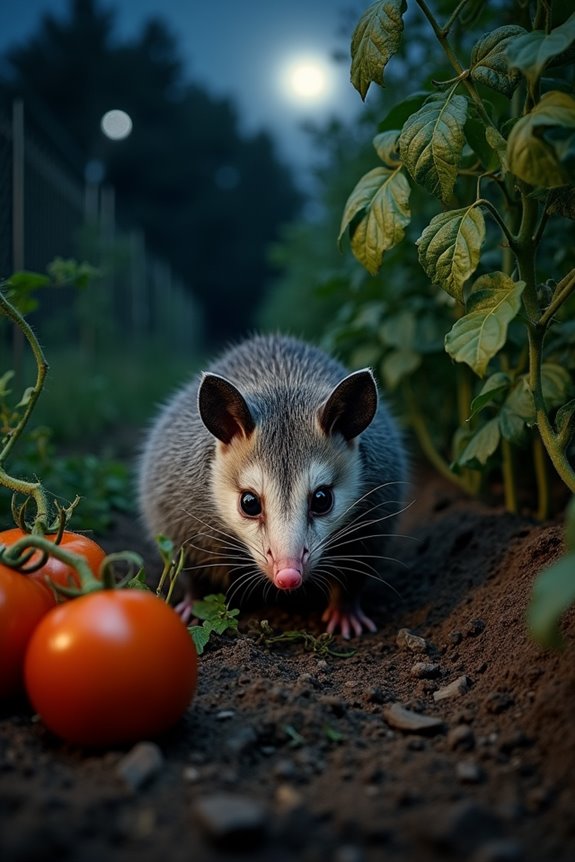
Possums will dig under a standard fence to reach your tomato plants, so a surface barrier alone won’t stop them. You need to extend your fence into the soil itself.
Installing the Underground Barrier
Install a fence that goes six inches into the ground. This depth stops possums and raccoons from burrowing beneath it. Here’s how to do it: dig a trench around your tomato area, set your fence posts in place, then backfill with soil and pack it down firmly so there are no air pockets.
Reinforcing Your Defense
Fill any holes near the fence line. Possums are active diggers at night and will work hard to find a way under your barrier, especially if your garden sits next to fields or unprotected ground. In those situations, dig your trench deeper—eight to ten inches—for added protection.
The combination of a buried fence with above-ground netting creates a complete barrier. Possums can’t get in from above or below once both layers are in place.
Layer Your Defenses: Combining Nets and Fences
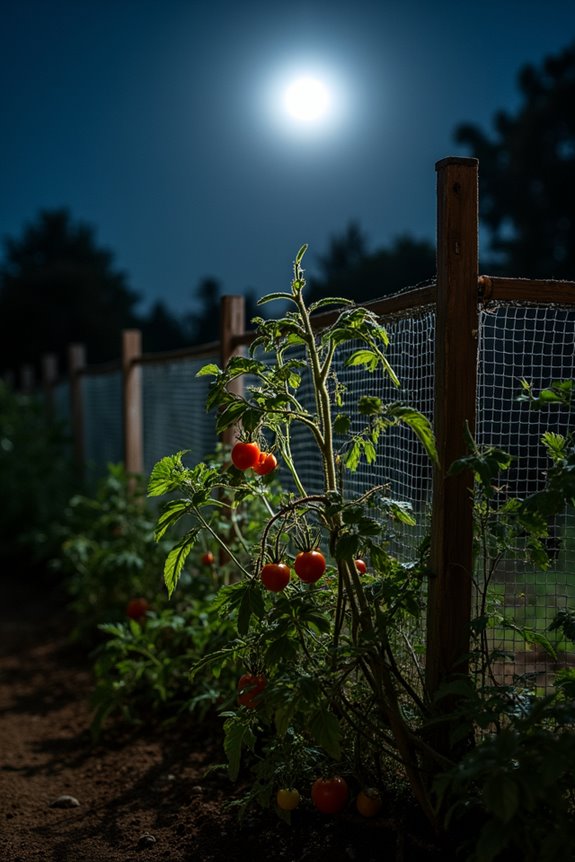
Combining netting and fencing creates two separate barriers that possums struggle to navigate. Netting positioned over your tomato plants blocks access from above, while fencing around the perimeter prevents ground-level entry. Since possums must overcome both obstacles simultaneously, they’re more likely to move on to easier food sources.
The layering method works because possums rely on finding quick entry points. When you eliminate obvious routes—both overhead and at ground level—they face significantly more work. A possum might slip through a single gap in fencing or find its way under unsecured netting, but it rarely bothers trying when both defenses are properly installed.
Here’s what a basic two-layer setup looks like. Use bird netting or garden netting with openings no larger than half an inch across the top of your plants. Install fencing at least 3 feet tall around the perimeter, burying it 6 inches deep or bending the bottom 6 inches outward along the ground to prevent digging underneath. Check the installation every week during possum season, paying special attention to corners and seams where gaps form.
The timing matters too. Set up your double defense before possums discover your garden. Late spring through early fall is when they’re most active in vegetable patches, so installation in May gives you a full season of protection. If you notice damage starting in June, add the second layer immediately—don’t wait to see if a single barrier holds.
Multiple Barriers Work Together
Possums and other nocturnal foragers are clever and persistent. They’ll test your defenses repeatedly, so combining multiple protective methods works far better than relying on just one approach. When you layer your defenses, you address different entry points that possums exploit.
Start with netting around individual plants, securing it tightly to prevent gaps where pests can squeeze through. A sturdy fence or cage at ground level blocks both climbing and digging attempts. Choose medium-mesh netting—roughly ¼-inch openings—that deters mammals while allowing pollinators and beneficial birds to move freely through your garden.
This multi-layered approach creates redundancy. If a possum bypasses one defense, others remain active. You’re removing multiple pathways simultaneously, which frustrates persistent foragers and directs them toward easier food sources elsewhere.
Inspect and reposition barriers regularly as your plants grow and animals adapt their behavior. A fence that worked well when tomatoes were 12 inches tall may need adjustment once plants reach 24 or 30 inches. Your consistent effort throughout the growing season—especially during peak ripening in late summer—keeps possums from establishing habits around your garden.
Strategic Fence And Netting Placement
Layering two different barriers works best when you understand how each one stops possums at different stages of their attack. Start with fencing around your garden’s perimeter, pushing it at least 6 inches into the soil. This depth stops digging, which is how possums access plants from below. Once the fence is secure, drape netting directly over your tomato plants and fasten it tightly to rails or supports, leaving no gaps where animals can squeeze through.
For added protection on individual plants or small clusters, use cylindrical netting. This addresses the multiple ways possums approach your garden—they climb, dig, and forage at ground level. The fence handles the digging threat while the netting blocks climbing and direct access to your plants.
Understand that possums adapt quickly to static defenses. Check your barriers every few days for damage or loosened sections. Reposition nets occasionally so animals don’t learn patterns in your setup. A fence that worked perfectly in week one might have a gap by week three if you don’t inspect it regularly. Your attention to these details matters more than any single barrier alone.
How to Identify Possum Damage vs. Other Nocturnal Pests?
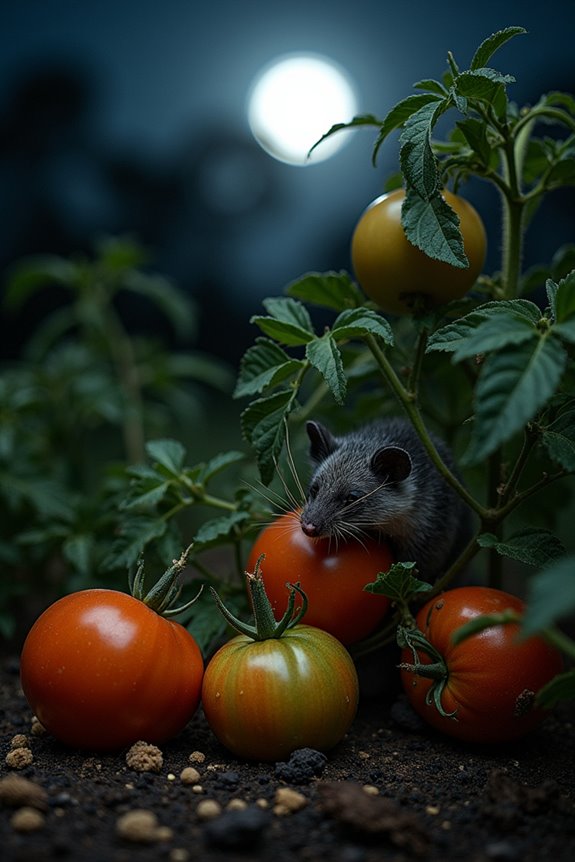
When you find damaged tomatoes in your garden after dark, knowing which pest caused the damage helps you choose the right protection method. Different animals leave different signs. If you’re dealing with possums, watch for these specific patterns:
Whole fruit removal – Possums carry entire tomatoes away to eat them in hidden spots rather than munching on the plant. This differs from other pests that feed where they attack.
Clean edges on damaged fruit – Rats leave puncture marks from their front teeth, but possums make smoother damage. If you see jagged or pecked damage instead, you’re probably looking at a different pest.
Moved tomatoes nearby – Check the ground around your garden. You’ll find relocated fruit rather than scattered damage from birds pecking at multiple spots.
Lower fruit targeted first – Possums reach tomatoes at the base of plants and on lower branches where they can grab fruit easily.
These patterns work together to confirm you have a possum problem. Once you identify the pest, you can pick the right solution, whether that’s netting, fencing, or another method designed for that specific animal.
Possum Bites vs. Rat and Squirrel Damage

Look at the bite marks and damage patterns on your tomato plants to figure out which animal is eating them. Each pest leaves different clues.
Possums make small, clean punctures when they bite. Rats, by contrast, create jagged marks and nibble on fruit while it’s still attached to the plant, often leaving half-eaten tomatoes behind. Possums tend to take whole tomatoes away to eat somewhere safer. Squirrels cause much larger, messier damage because their teeth are stronger. If you’re seeing small puncture marks or missing fruit rather than shredded pieces, you can rule out squirrels.
Think of it this way: possums are neat eaters, rats are messy nibblers, and squirrels are destructive chewers. By comparing what you actually see on your plants to these patterns, you’ll narrow down which animal is visiting your garden.
Identifying Possum Bite Patterns
Identifying Possum Bite Patterns
Determining whether a possum has been raiding your tomato plants comes down to recognizing a few telltale signs that differ from damage caused by rats or squirrels. Once you know what to look for, the patterns become fairly easy to spot.
What Possum Damage Looks Like
Possums tend to remove entire tomatoes rather than leaving partial remains behind. A rat will leave precise, small bite marks where it nibbled, while a squirrel typically gnaws more aggressively at the fruit it finds. Possums, by contrast, carry away whole tomatoes to eat elsewhere. This means you might find fruit missing from your plants with no visible bite evidence on the remaining tomatoes.
Possum bites also create wider, less jagged damage patterns compared to the sharp incisions rats make. The feeding style centers on removal and relocation rather than feeding in place.
When to Expect the Damage
Possum activity happens after dark, which matches their natural feeding habits. If you notice tomatoes disappearing overnight but your daytime inspections show no fresh damage, a possum is likely your culprit. Check your garden in the early morning, within a few hours after sunrise, to see the clearest picture of what happened during the night.
Once you understand how possums feed differently from other animals, their damage pattern becomes uniquely identifiable on your plants.
Distinguishing Rat Damage Signs
How can you tell if a rat’s been eating your tomatoes instead of a possum? Once you know what to look for, the damage patterns become clear. Rats create irregular, sharp-edged holes with visible incisor bite marks. Possums, by contrast, remove whole fruits cleanly without leaving these telltale gouges.
Rats typically feed near ground level or the plant’s center, leaving gnawed remains scattered nearby. Their work appears messy with distinct tooth marks, while possums take entire fruits in one piece. Check your plant’s lower sections first—that’s where rats feed.
| Damage Type | Location | Bite Pattern | Timing |
|---|---|---|---|
| Possum | Upper branches | Whole fruit removal | Nocturnal |
| Rat | Ground level | Sharp incisor marks | Night feeding |
| Bird | Plant edges | Partial pecks | Daytime |
Your ripe tomatoes tell the story through their damage. A rat-damaged tomato shows distinct tooth gouges scattered across the surface. A possum-damaged tomato is simply gone, removed whole from the branch. Birds leave small, partial pecks on the plant’s outer edges, usually during daylight hours when you might spot them.
When you find damaged fruit on the ground below your tomato plant, look closely at the bite marks. Rat teeth create sharp, angular gouges about 2 to 3 millimeters apart. The fruit stays on the plant or falls nearby, half-eaten. Start your inspection at the base of the plant and work upward about 2 feet. This is the zone where rats feed most often.
Squirrel Versus Possum Marks
When squirrels raid your tomato plants, they leave evidence that looks completely different from what possums leave behind. Learning to spot these damage patterns helps you figure out which pest is causing the problem.
Squirrel damage has a particular look. Squirrels create small holes in individual tomatoes and scatter bite marks across multiple fruits on the vine. They tend to eat where they stand, so you’ll find damaged fruit still hanging on the plant. The damage appears messy, with visible gnaw marks and puncture holes showing where the squirrel sampled the fruit.
Possums work differently. Instead of puncturing fruit, possums remove whole tomatoes or large sections and carry them away to eat in safer locations. A possum typically works at night and takes entire fruits rather than sampling many different ones. You might find your tomatoes missing completely or discover them relocated to nearby bushes or ground areas where the possum felt more protected while feeding.
The practical difference matters for your garden. If you see multiple tomatoes with small puncture holes scattered across several plants, squirrels are your problem. If whole tomatoes disappear or you find them in piles away from the plant, a possum has been visiting. Once you know which pest you’re dealing with, you can choose the right protective measures to keep your harvest safe.
Spotting Dropped Tomatoes and Possum Activity Patterns
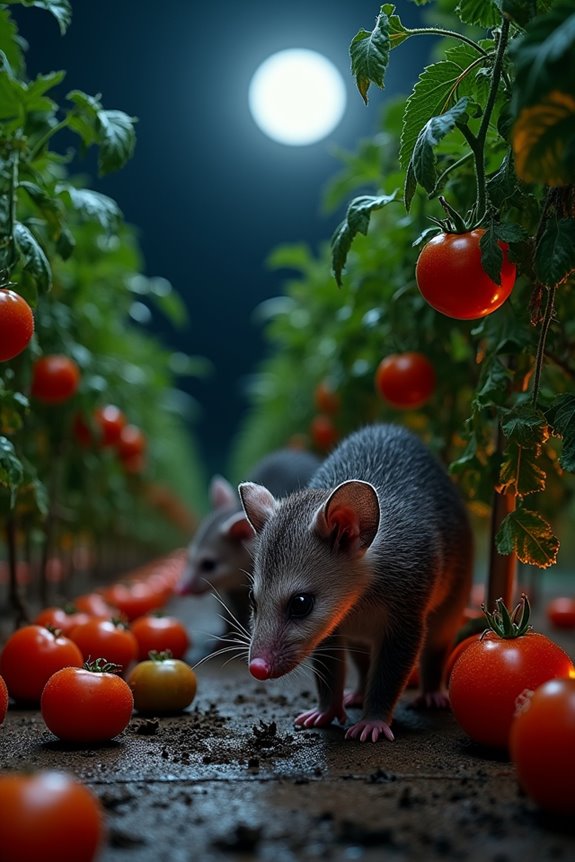
Possums leave behind a distinct pattern of damage that sets them apart from other nighttime garden visitors. The key sign is whole tomatoes missing from plants or dropped on the ground nearby, sometimes relocated several feet from your garden bed. This happens because possums carry fruit away to eat in safer spots rather than feeding where they find it.
Check your plants during morning inspections, especially after noticing activity the night before. You’ll notice that ripe and semi-ripe tomatoes positioned low on plants or near ground level disappear first. This preference for easily accessible fruit is consistent across possum populations.
The way possums eat differs noticeably from other pests. Unlike rats, possums don’t leave jagged puncture marks or incisor gouges on remaining fruit. Instead, you’ll see clean removal without obvious bite patterns. There are no torn edges or scattered fruit pieces around the plant—just gone.
These nighttime feeding habits reveal possum activity clearly once you know what to look for. A possum visiting your garden three nights in a row will take most accessible fruit, leaving you with 60 to 80 percent crop loss on low-hanging tomatoes in just one week. Once you recognize this pattern, you can implement protective netting to deter access and protect your harvest.
Why Possums Raid at Night (And When to Expect Peak Damage)?
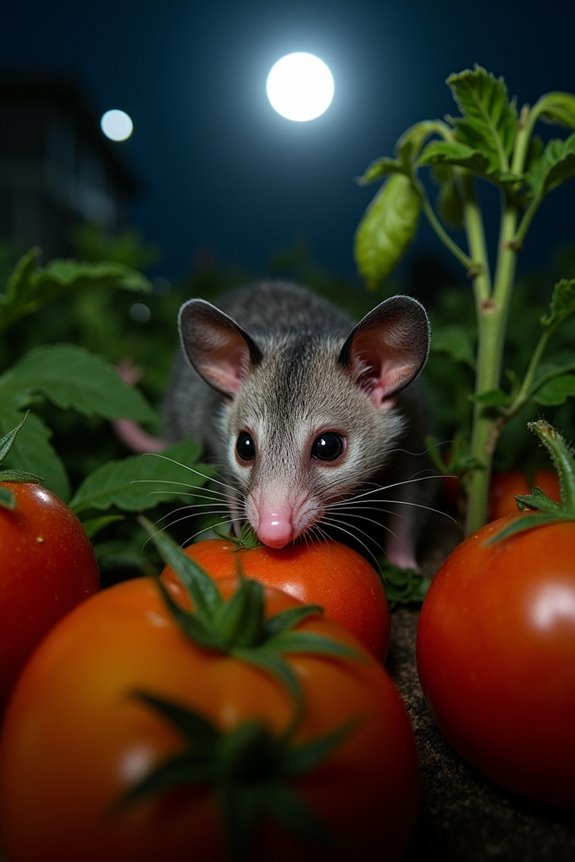
Why Possums Raid at Night (And When to Expect Peak Damage)
Possums are strictly nocturnal foragers. This means they hunt for food only between dusk and dawn when you’re sleeping, so you won’t see them damaging your plants. By the time you walk out to your garden in the morning, the damage is already done.
Peak damage happens during late summer and early fall. This is when tomatoes ripen fastest and become most appealing to possums. You’ll notice fruit disappearing overnight during August through September, which makes these months your highest-risk period.
The reason possums return again and again is simple: if they find an easy meal once, they’ll come back for more. To stop this cycle before it starts, set up physical barriers like netting or wire cages around your tomato plants before dusk arrives. A standard garden cage measuring 4 to 5 feet tall works well for most tomato varieties. Install these barriers in late July, before the peak feeding season begins. Once possums have established a feeding route through your garden, breaking the habit becomes much harder.
Nocturnal Foraging Patterns
Have you noticed your tomatoes vanishing overnight when they looked fine just hours earlier? Possums follow predictable patterns when they hunt for food. Learning when and how they forage helps you protect your garden effectively.
Possums are most active during these peak periods:
- Twilight hours — when daylight fades and shadows grow deeper
- Midnight to early morning — when distractions are fewer and they can forage undisturbed
- Times when fruit ripens — possums notice when your plants produce their best meals
- Nights when tomatoes are easiest to reach — ripe fruit hanging low on vines appeals to them most
Possums don’t raid gardens randomly. They learn which plants offer reliable food and return to the same spots night after night. Most damage happens between dusk and dawn while you sleep. By recognizing these patterns, you can time your deterrents to catch problems before you lose significant amounts of fruit.
The pattern typically repeats every night for 2 to 3 weeks during peak growing season, then moves elsewhere once your plants are stripped bare. Setting up barriers or removing ripe fruit before sunset takes about 10 to 15 minutes daily and breaks this cycle before damage becomes severe.
Peak Damage Timing Seasons
Possums cause the most garden damage from late spring through early fall, when temperatures stay warm at night and food becomes harder to find elsewhere. During these months, possums visit your garden most actively between dusk and predawn—exactly when they hunt for food.
Ripe tomatoes attract possums more than unripe ones because they’re softer and easier to carry away. As your tomatoes ripen throughout the season, possum visits increase. A tomato at full ripeness draws more attention than one still turning from green to orange.
Watch your garden closely during these peak months. Check plants in early evening, around 6 to 7 p.m., before possums become active. A quick nighttime check around 10 p.m. helps you spot fresh damage and adjust your protection methods before you lose significant fruit. The timing matters because catching problems early gives you chances to add barriers or remove already-damaged fruit that might attract more visitors.
Your defense strategy should match the season. In late spring when possums first become active, start your protective measures before damage begins. By midsummer, when fruit ripens fastest, increase your monitoring frequency. As fall arrives and temperatures drop, possum activity naturally decreases, though cool nights can still bring occasional visitors hunting for remaining ripe fruit.
Eliminate Possum Attractants: Water, Shelter, and Food

Possums visit your tomato garden because they find something they need there. Remove what attracts them, and they’ll move on to easier options elsewhere.
Possums visit your garden because they find what they need. Remove the attractants, and they’ll move elsewhere seeking easier options.
Focus on these four main attractants:
Remove fallen fruit promptly. Fruit left on the ground overnight signals an easy meal. Pick up dropped tomatoes and any other fallen produce within a few hours of sunset, before possums emerge to feed.
Secure your compost bin. A tight-fitting lid is your first line of defense. Metal bins with locking mechanisms work better than plastic containers with loose-fitting tops, which possums can pry open with their dexterous front paws.
Fix water problems. Possums need water just as much as food. Check your irrigation lines for leaks and dripping connections. Remove standing water from containers, birdbaths, or low spots in your yard where water collects after watering or rain.
Clear shelter spots. Dense brush piles, stacked wood, old structures, and overgrown vegetation give possums daytime hideouts nearby. Trim back branches within 6 feet of the ground around your garden perimeter. Remove debris piles and move unused equipment to storage areas away from your plants.
When you remove these four things, possums find less reason to establish a nightly routine in your garden. They’ll search for food and water sources that require less effort to access.
Possum-Resistant Spacing and Companion Planting Strategies
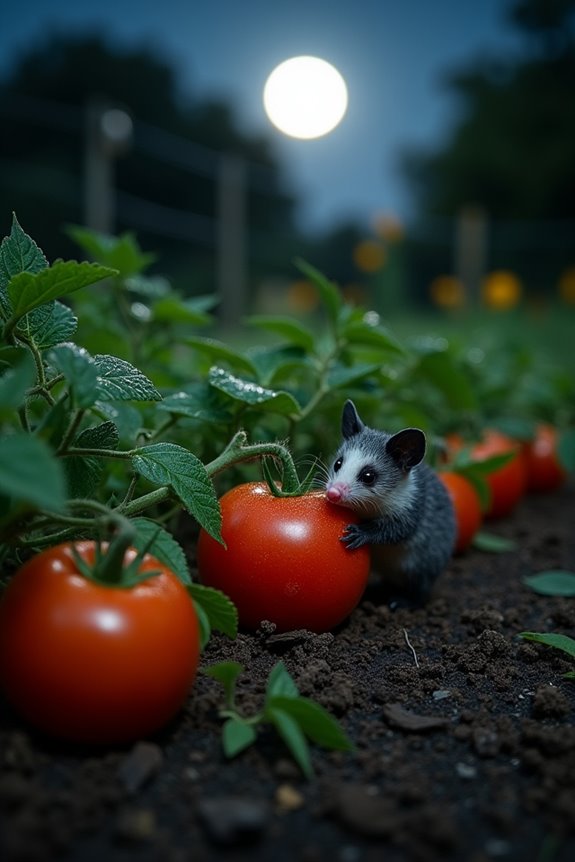
How you arrange your tomato plants matters when keeping possums away. Space plants at least 24 to 36 inches apart, depending on the variety. This generous spacing prevents the dense, crowded conditions that make possums feel hidden and secure while they forage at night. Better air circulation around your plants also removes the shelter possums seek during their nocturnal visits.
Companion planting works alongside your spacing plan to discourage possum activity. Plant basil, marigolds, and mint near your tomato beds. These plants naturally deter certain pests and create an environment possums find less appealing. The combination of open space and these specific plants means possums have fewer reasons to stop by your garden.
Position alternative food sources away from your tomato beds. Place fruit scraps, vegetable trimmings, or fallen produce at least 15 to 20 feet from where you grow tomatoes. This redirects nocturnal foragers to other areas of your property. Inspect your garden layout every two weeks during growing season and adjust spacing or plant positions based on where you actually see possum activity. This regular attention keeps your arrangement working through summer and into fall.
Harvest Timing: Beat Possums to the Ripest Fruit

Why Pick Tomatoes Early When Possums Hunt at Night
Possums are active foragers after dark, and they’re after the ripest fruit on your vines. If you wait for tomatoes to fully mature outdoors, you’re leaving them vulnerable to nighttime raids. The solution is straightforward: pick tomatoes before they reach peak ripeness, then finish the job indoors where possums can’t access them.
Pick tomatoes before full ripeness to protect them from nighttime possum raids, then ripen them safely indoors.
The Breaker Stage Harvest Method
Start picking tomatoes when they show their first color change—this is called the breaker stage. At this point, the tomato has begun shifting from green to its mature color but isn’t fully ripe yet. Gently twist and lift each tomato from the vine, or use pruning shears if the stem resists.
Bring harvested tomatoes inside to a warm, dark location like a kitchen counter or pantry. Keep the temperature between 68 and 72 degrees Fahrenheit for best results. Over the next three to five days, the tomatoes will complete their ripening process safely away from possums and other nighttime foragers.
Evening Garden Checks and Netting
Check your plants about 30 minutes before sunset each day. This timing lets you catch any fully ripe fruit still hanging on the vines before possums emerge. Apply protective netting immediately after your inspection, securing it tightly around the base and sides of plants so possums can’t work their way underneath.
Remove any remaining ripe tomatoes from the vines each evening before darkness falls. This prevents possums from eating directly on the plant and leaving scattered pieces and partially consumed fruit behind.
Check Regulations Before Trapping Possums
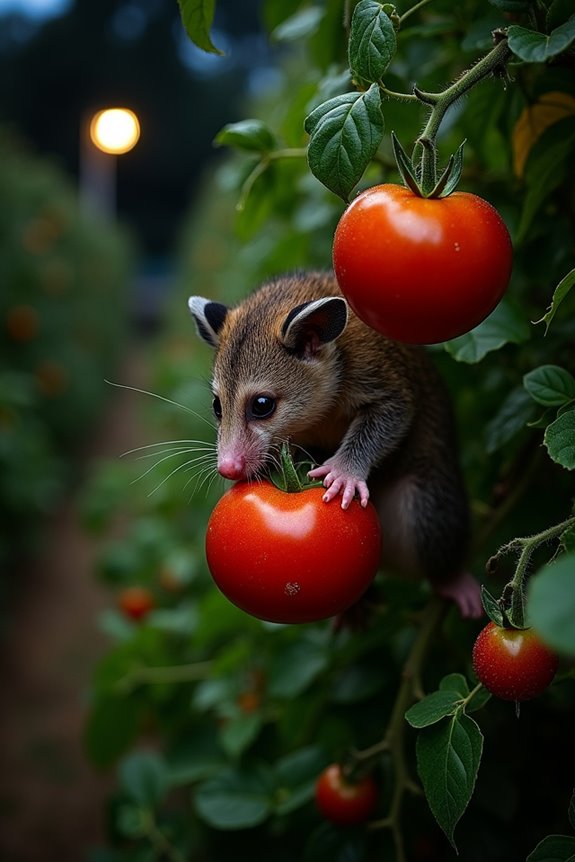
Check Regulations Before Trapping Possums
If netting and early harvesting aren’t stopping the damage, trapping might seem like the next step. Before you set any trap though, you need to check your local wildlife regulations. Possums are legally protected in many areas, and trapping without permission can lead to fines.
| Action | Requirement |
|---|---|
| Contact local wildlife agency | Required first step |
| Obtain trapping permit | Usually necessary |
| Learn legal trap types | Varies by region |
| Understand relocation rules | Often restricted |
Call your county extension office or wildlife department. They can tell you whether you need a permit, which trap styles are allowed where you live, and if relocation is legal in your area. Different regions have different rules. Some places let you trap and relocate possums a certain distance away, maybe 5 to 10 miles. Others require you to contact a professional. Most regions still prefer netting as your first choice anyway, so you stay within the law while keeping your tomato crop safe.
When Barriers Fail: Relocation Permits and Local Wildlife Laws
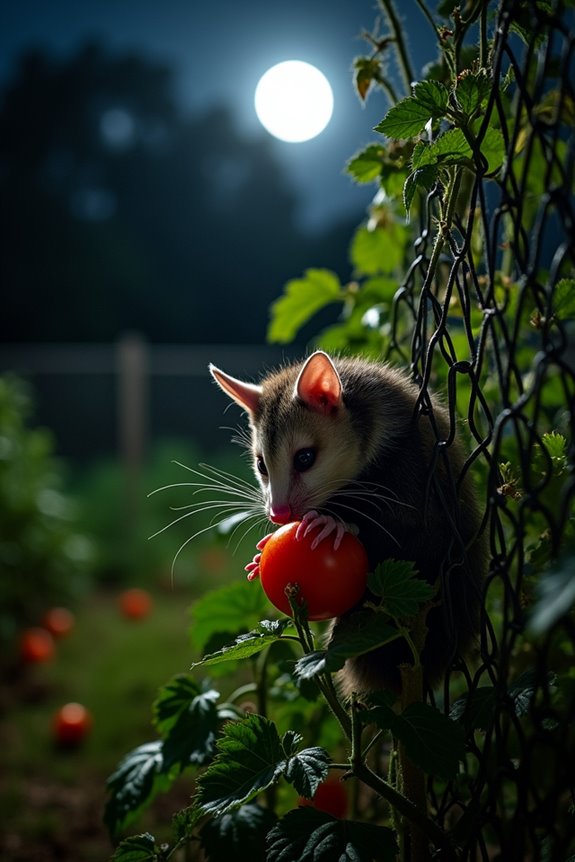
If your barriers aren’t stopping the possums from reaching your tomatoes, you need to know that relocating wildlife on your own isn’t legal in most places. Your local wildlife authority requires a relocation permit before you can trap and move any animal. Some regions go further and prohibit relocation altogether because moving a possum can injure it or upset the local ecosystem balance.
Before you trap anything, check your state or county wildlife laws. Different areas have different rules. A few states allow relocation with a permit. Others ban it completely. Some require you to hire a licensed wildlife professional instead of doing it yourself. Violating these laws can cost you real money in fines, sometimes $100 to $500 or more depending on your location.
The reason for these restrictions matters. When you move a possum away from its home territory, it often doesn’t survive. The animal doesn’t know where to find food or shelter in an unfamiliar place. Other possums already living in that area may attack the newcomer. Plus, you’re removing a local predator that actually helps control ticks, insects, and other pests.
Start by contacting your local wildlife department or animal control office. Ask them what methods are legal in your area. They can tell you whether relocation permits exist, what the process costs, and how long it takes to get approval. They may also suggest other solutions that work better for your situation, like improving your barriers or using different deterrents instead.
Relocation Permit Requirements
When barriers and deterrents haven’t stopped possums from eating your tomato plants, relocation might seem like your next move. Before you catch and relocate a possum, though, you’ll need to understand the permitting process in your area.
Most states and local wildlife authorities require a relocation permit before you can move any possum. This requirement protects both the animal and your community. Here’s how the process typically works.
Start by submitting an application to your local wildlife control office. The application asks for details about the possum species, your garden’s exact location, and your reason for relocating. You’ll likely need to pay a fee, which varies by jurisdiction—anywhere from $25 to $150 depending on where you live.
Once approved, your permit specifies where you can relocate the possum. Wildlife authorities usually designate particular habitats at set distances from your property, often 5 to 10 miles away. The permit also includes a timeframe for completing the relocation, typically 30 to 60 days, to prevent problems for local wildlife populations.
Breaking this rule carries real consequences. You could face fines up to several hundred dollars, legal liability if the possum causes problems elsewhere, or even confiscation of the animal. Contact your local wildlife control office before taking action. They can walk you through options that follow the law and actually work for your situation.
Local Wildlife Protection Laws
Before You Move That Possum: Understanding Wildlife Laws
You’ve found a possum in your garden, and your first thought might be to catch it and move it away. Before you do that, stop and check your local wildlife laws. Possums are protected species in many areas, which means catching and relocating one without permission is illegal.
Here’s what you need to know. Contact your local wildlife agency before taking any action. They’ll tell you whether you need a permit and what that permit requires. Most permits specify exactly where you can move the animal, what time of day you can do it, and sometimes even which habitats are off-limits.
The timing matters. Wildlife officials usually require moves to happen at night because daylight movement stresses the animal more. Some areas also restrict where you can release a possum. Moving it to the wrong habitat—say, an area already crowded with possums or lacking food sources—can create ecological problems that hurt both the possum and the local ecosystem.
Breaking these laws comes with real consequences. You could face fines that range from a few hundred dollars to several thousand, depending on your region and the specifics of what happened. Different states handle this differently, so local knowledge is important.
Your wildlife agency can guide you toward solutions that work for your situation. They might suggest exclusion methods to keep possums out of your garden, or they might approve a specific relocation plan. Getting permission first protects both you and the animal.
Possum Season Planning: Monitoring and Adjusting Defenses Year-Round

Your tomatoes ripen at different times throughout the season, and possums know this. They hunt at night when you can’t see them, so a year-round defense plan keeps damage to a minimum.
Monitor nightly activity. Each morning, walk through your garden and look for fresh damage on your ripening tomatoes. Possum damage typically shows as smooth, clean bites on the fruit without jagged edges—this differs from rat damage, which leaves ragged tears. Fresh damage means possums visited recently and know where your tomatoes are.
Install barriers before possums discover ripe fruit. Don’t wait until you see damage. When early-ripening varieties start to turn color in mid-summer, add netting or wire cages around those plants. Standard bird netting with 1-inch mesh works well, or use sturdy tomato cages made from 6-foot stakes and horizontal supports spaced 6 inches apart. Possums are climbers, so your barriers need to extend from ground level at least 4 to 5 feet high.
Adjust your setup as the season progresses. As later-ripening varieties begin producing fruit in late summer and early fall, shift your protective barriers to those plants. If netting has sagged or cages have loosened from weather, tighten everything before new damage occurs. This seasonal rotation keeps your defenses working without protecting empty plants.
Consistency throughout the growing season prevents most possum damage. By paying attention to which plants are ripening and adjusting your barriers accordingly, you’ll keep possums out of your tomatoes from summer through fall.
When to Call Wildlife Control vs. DIY Prevention

Your seasonal barrier system handles most possum problems well, but these animals can be clever about finding gaps or returning after you’ve discouraged them once. Before you pick up the phone to call wildlife control, try strengthening what you’re already doing: pick tomatoes a week or two earlier than usual, push your netting edges deeper into the soil or secure them with landscape staples every 12 inches, and collect fallen fruit each morning and evening. Possums work because they want the easiest meal available—removing that option often works.
If you’re out protecting your tomatoes multiple nights in a row without results, professional help starts to make sense. Look up your local laws first. Many areas protect possums by law, and what you can do about them depends on where you live. Wildlife control specialists know these rules and can tell you whether removal is even allowed in your region.
Call a professional when the damage gets worse each week, your DIY methods haven’t worked after two to three weeks of trying, or possums show no fear around your house—like walking toward you instead of away. A specialist will look at your property, understand your specific situation, and explain what options are actually available to you.