
Yes, you can lay landscape fabric directly over grass to kill it. The fabric blocks sunlight, water, and oxygen, which gradually weakens the grass over two to three months when conditions are warm.
Start by mowing your grass as short as possible. This gives the fabric better contact with the soil. Next, lay your landscape fabric across the area and secure it with landscape pins spaced every foot along the seams. Overlap each seam by twelve inches to prevent grass from sneaking through the gaps.
Add three inches of mulch on top of the fabric. This layer speeds up the process by blocking even more light and helping the fabric stay in place. The mulch also breaks down over time, enriching your soil underneath.
Timing matters more than you might think. Warmer months work faster than cooler seasons because grass dies back quicker in heat. In summer, you could see results in six to eight weeks. In spring or fall, plan for two to three months.
The main advantage of this method is that you don’t have to dig up the grass or use chemicals. The fabric and mulch do the work for you while you wait. Just check occasionally to make sure the fabric stays flat and the mulch hasn’t shifted.
Understand Landscape Fabric and How It Kills Grass
How Landscape Fabric Kills Grass
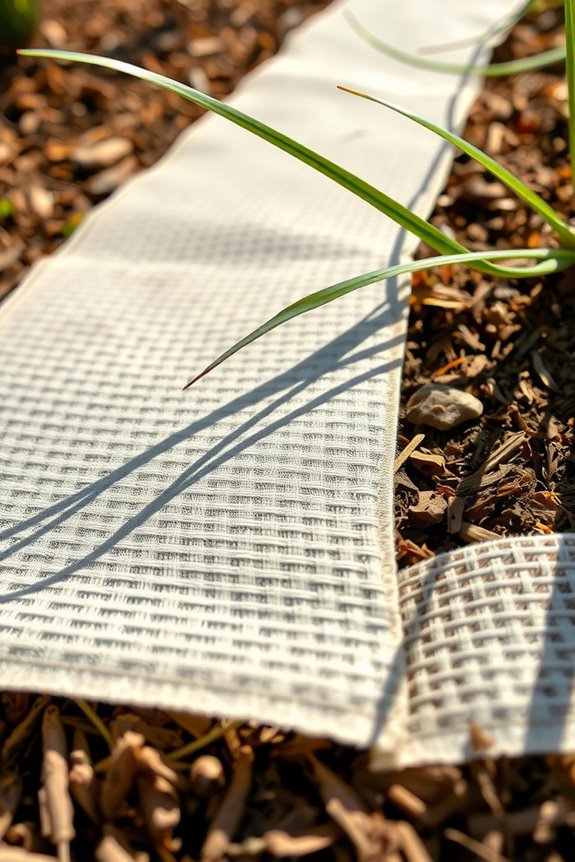
Landscape fabric works by blocking the three things grass needs to survive: sunlight, water, and oxygen. When you lay the fabric over grass and leave it in place for several months, the plants beneath gradually weaken and die from lack of these resources.
Grass depends on light to photosynthesize and moisture to stay alive. The fabric creates a barrier that stops both from reaching the plants below. Without access to these basic needs, the grass dies off completely.
Getting Started
Before laying fabric, mow the grass down to about half an inch. Short grass has fewer energy reserves to draw from, which speeds up the killing process. The timing matters too. During hot, sunny months, you might see results in 6 to 8 weeks. Cold, wet weather can stretch this to 3 or 4 months.
Use standard landscape fabric that’s 3 to 4 ounces in weight. Heavier fabric blocks light more effectively but costs more. Once you’ve mowed, unroll the fabric across your target area and secure the edges with landscape pins, stakes, or heavy rocks spaced every 12 inches. Make sure the fabric sits flat against the ground with no gaps where light can slip through.
The process requires patience. Check under the fabric every few weeks to see how the grass is breaking down. When the vegetation underneath turns brown and crumbly, the fabric has done its job and you can remove it.
Can Landscape Fabric Actually Smother Grass?
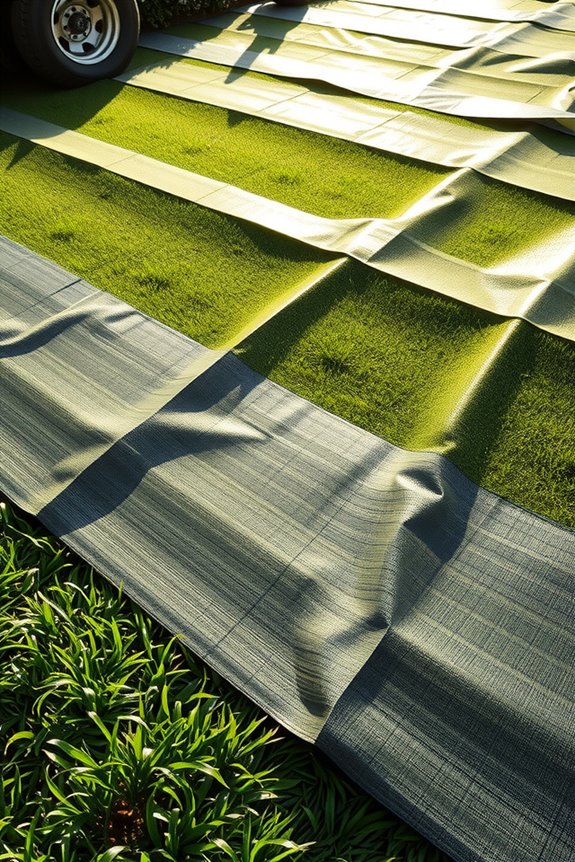
Does landscape fabric truly smother grass, or is it just slowing down its demise? It actually works. When you place landscape fabric over grass, you block two critical things: sunlight that grass needs for photosynthesis and oxygen flow to the roots below.
The fabric creates a barrier that gradually kills your grass by cutting off light and air. How fast this happens depends on conditions. In warm, sunny months, you’ll see dead grass within two to three months. During cold or wet seasons, the process takes longer—sometimes four to six months or more. Secure the fabric tightly and seal the edges carefully, because light sneaking in underneath will definitely slow progress.
Some people speed things up by layering two pieces of fabric or adding mulch on top, which blocks even more light. If you go this route, use at least 3 inches of mulch over the fabric. With proper pinning and full coverage, you’re looking at several months for complete grass death. It’s not instant, but landscape fabric does smother grass when you give it time and the right conditions.
Prepare Your Grass Area Before Installation
Prepare Your Grass Area Before Installation
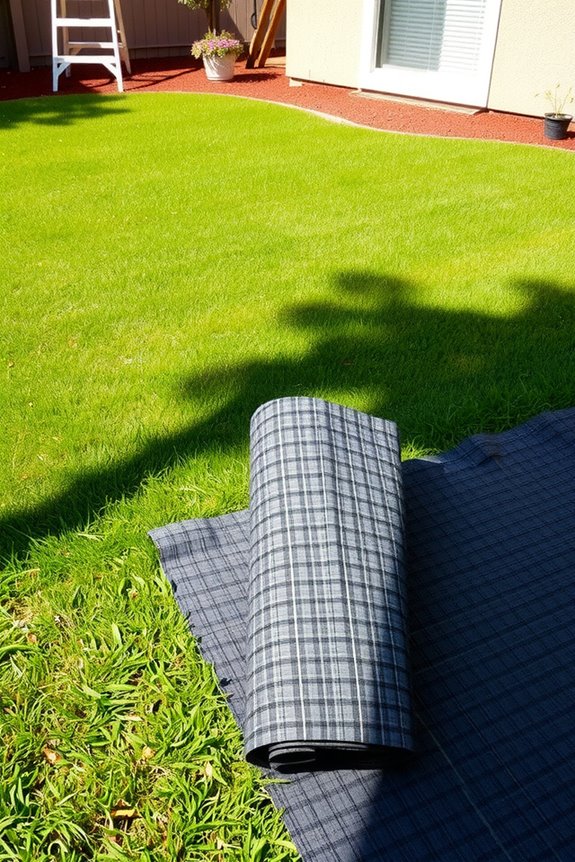
You’ll want to get your lawn ready before laying down any landscape fabric. Start by mowing your existing grass to about 1 to 2 inches—this prevents blades from getting trapped underneath the material. Next, clear the area completely of all plants and flowers.
Amend your soil with 2 to 3 inches of compost or composted manure to create a nutrient-rich base. This step takes time but pays off because good soil underneath means better drainage and fewer problems down the road.
Smooth and level your soil surface carefully, removing large clumps and uneven spots. A flat, even bed ensures your fabric sits properly without wrinkles or gaps. Rough areas cause mulch to slide and create drainage problems later, so spend time on this part. Once your ground is ready, you’re prepared for successful installation.
Lay Fabric Over Grass: Step-by-Step
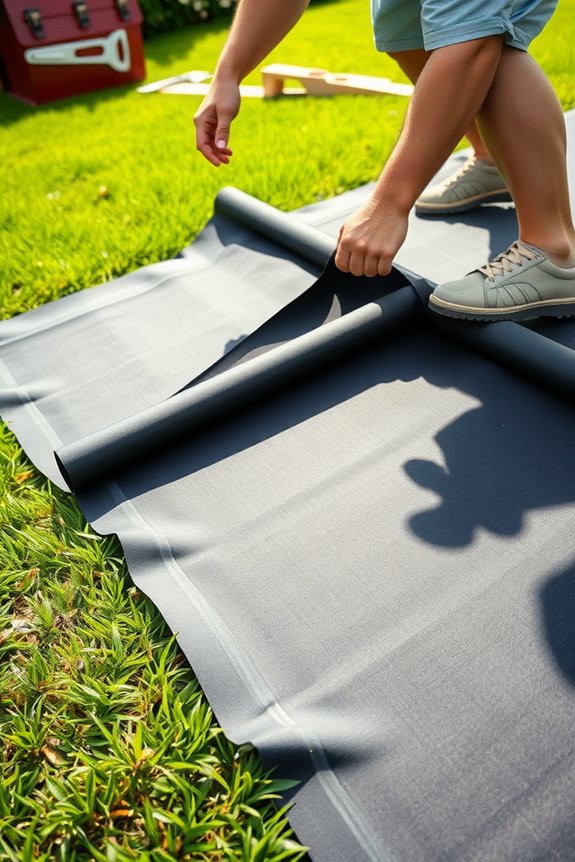
Before you lay fabric down, mow your grass short. A few days ahead, consider applying herbicide to weaken the existing plants—this gives the treatment time to work before you cover everything. When you’re ready to position the fabric, lay it tightly over the prepared surface, making sure it contacts the soil directly and crushes any remaining grass blades to prevent regrowth underneath.
Once positioned, secure the fabric every foot along edges and overlaps using landscape pins. This keeps wind and foot traffic from shifting it out of place. The spacing matters—too far apart and the fabric will buckle and move, too close and you’ve used more pins than necessary. One foot is the sweet spot.
Prepare Grass Surface
Prepare Grass Surface
Getting your landscape fabric to work properly starts with preparing the ground beneath it. Taking a few hours now to do this right prevents weeds from poking through later and saves you from having to pull the fabric up and redo the job.
Follow these steps to ready your lawn:
- Mow your grass short – Cut it down to about half an inch high. This removes the tall grass and lets the fabric sit flat against the soil instead of bridging over the grass blades.
- Clear away debris – Pick up sticks, rocks, and dead leaves scattered across the area. A clean surface underneath means the fabric can make contact with the ground everywhere.
- Level the ground – Fill in any holes and smooth out bumps and uneven spots. When the ground has high and low points, gaps form between the fabric and soil, and light gets through those gaps where it shouldn’t.
Once your lawn is prepared this way, laying down landscape fabric becomes straightforward. The fabric will lie flat, stay in place, and do what it’s meant to do—block sunlight from reaching seeds and preventing weeds from growing.
Secure Fabric Installation
Once your grass is mowed short and the debris is cleared away, you’re ready to roll out the landscape fabric. This material forms a barrier between soil and weeds, but only if you secure it properly.
Drive landscape pins through the fabric every 2 to 4 feet. Space them closer together if your area gets windy. The pins hold the fabric flat against the ground so weeds can’t find gaps underneath.
At the edges, place heavier materials like rocks, wood edging, or metal landscape borders. Wind will lift loose corners and create openings where weeds escape. Weight down all four corners and along the perimeter where the fabric ends.
When you overlap sheets where they meet, aim for about 12 inches of overlap. This prevents weeds from creeping up through the seams between pieces. Fold the fabric neatly along all edges to keep the bed surface smooth and even.
These steps work together to create a solid foundation. The pins prevent shifting, the weights stop wind from lifting edges, and the overlaps seal off pathways for weeds. Done correctly, landscape fabric will suppress weeds for several seasons before it begins to break down.
Stake and Pin Fabric to Prevent Shifting
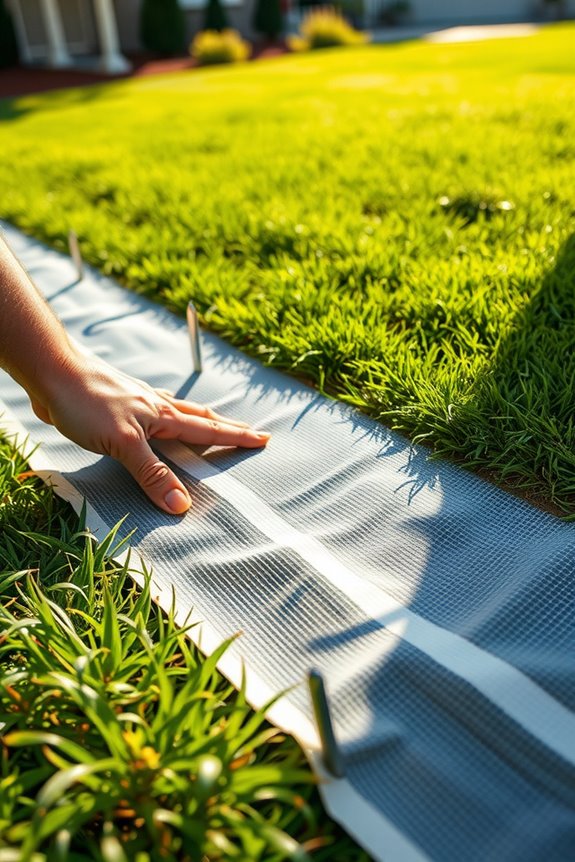
Space your landscape pins about 1 foot apart along the edges and overlaps. In windy conditions, place pins closer together—every 6 inches works well—for better hold.
When you overlap two pieces of fabric, pinning down those seams matters most. This is where fabric starts to shift if you’re not paying attention. Getting your pin spacing right from the beginning saves you from adjusting loose fabric later as you work.
Pin Spacing and Density
Wind and foot traffic can shift landscape fabric if it isn’t pinned down properly. The spacing and number of pins you use directly affects how well your fabric stays in place.
For standard conditions, pin your fabric every 1 foot along the edges and anywhere sheets overlap. This close spacing prevents the fabric from bunching or sliding when you walk across it or when light breezes push at the edges.
In windy locations, reduce that spacing to every 2–4 feet. This might sound backward, but closer pins mean more points holding the fabric against gusts. If your yard sits on a hill or near open areas where wind flows freely, plan for denser pinning throughout the entire installation, not just at the edges.
Along long runs of fabric, add metal or plastic edging to the perimeter. The edging provides an extra barrier that holds the fabric down and prevents it from shifting at the margins where wind gets the strongest grip.
Use 6-inch landscape pins as your standard fastener. They’re long enough to penetrate soil firmly without bending. When you overlap two sheets of fabric by 12 inches, pin through both layers in several spots across that overlapped section so the seam won’t separate under stress.
The pin density you choose now determines how much maintenance your landscape fabric needs later. Adequate pinning at installation saves you from having to go back out and adjust loose corners repeatedly throughout the season.
Securing Overlapped Seams
Where two sheets of landscape fabric meet, weeds will find their way through—so overlapping those seams properly is your strongest defense against gaps. Overlap each seam by about 12 inches to create a barrier that stops weeds from sneaking through the weak spots.
Pin your landscape fabric seams every foot along the overlapped section using edging and pins to hold everything steady. This spacing prevents shifting during installation and keeps your barrier intact. In windy areas, increase your pin density and add heavier edging or ballast like rocks to anchor seams more securely.
Fold fabric edges along your edging to hide seams completely. This finishing touch creates a polished transition between your bed and pathway while keeping the seams concealed and effective over time.
Single or Double Layer: Which Kills Faster?
Single or Double Layer: Which Kills Faster?
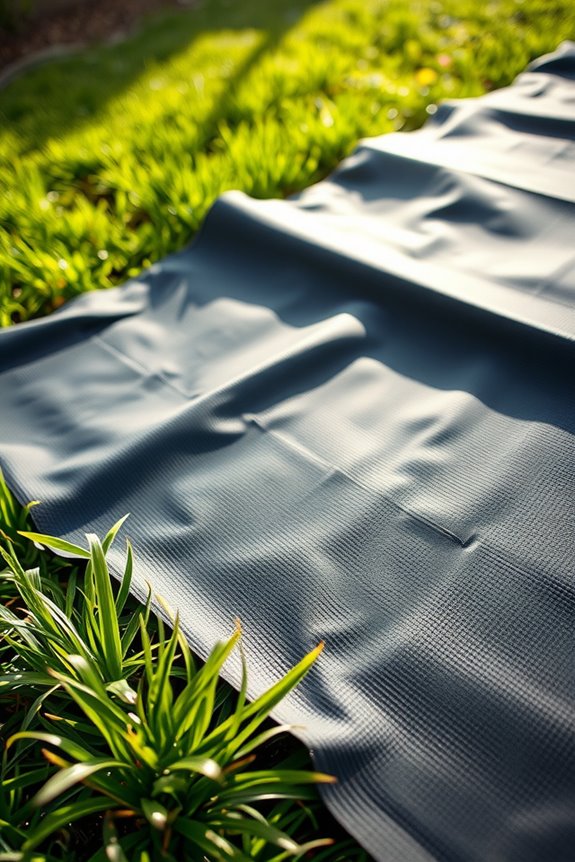
When choosing between one or two layers of landscape fabric for killing grass, the difference in speed matters. Understanding your options helps you pick the right approach for your situation.
Single Layer
One layer of landscape fabric takes several months to kill grass beneath it. The fabric blocks some light and slows water penetration, but grass can still access moisture from the sides and even find small gaps. If you’re covering the fabric with mulch or gravel and aren’t in a hurry, a single layer works fine.
One layer of landscape fabric takes several months to kill grass, but works fine if you’re not in a hurry.
Double Layer
Two layers, such as two sheets of Dewitt Pro 5 mil fabric, create a denser barrier that blocks light and water more effectively. The grass-killing process speeds up because the doubled material leaves fewer weak points. Many gardeners find the extra effort of laying two layers worthwhile when they want results in weeks rather than months instead of several months.
Silage Tarps as an Alternative
If speed matters most, silage tarps deliver faster results than fabric alone. These heavy-duty plastic tarps create an almost complete seal that kills grass in 4 to 6 weeks, compared to several months for fabric. The trade-off is that tarps require more effort to anchor and manage, but they work well when you need a cleared area quickly.
The choice between one and two layers depends on your timeline. If you can wait, one layer under mulch works. If you want faster results, doubling up or using a silage tarp makes sense.
Top Your Fabric With Mulch, Gravel, or Rock
Top Your Fabric With Mulch, Gravel, or Rock
Once you’ve picked your fabric layers, covering them properly comes next—and this step really matters. You need to add a protective layer on top of your landscape fabric to keep it from shifting and blowing around in the wind.
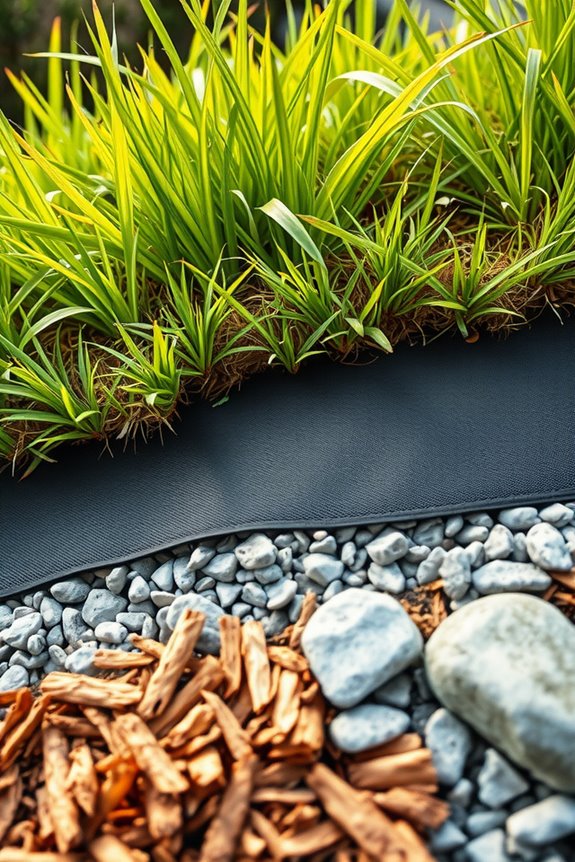
A solid approach is spreading at least 3 inches of wood chip mulch across the fabric. This layer blocks sunlight from reaching the soil underneath, which cuts down on weed seeds sprouting. The mulch also helps prevent soil from washing away during heavy rain.
If you plan to use gravel or rocks instead, consider laying down two fabric layers for added strength. Rocks and gravel are heavier materials, so they naturally hold your fabric in place without needing pins or stakes. This works especially well on slopes or in areas where wind picks up regularly.
The key point: fully cover your fabric from edge to edge. Any exposed sections can get damaged by sun over time, and uncovered spots give weed seeds a chance to land and grow on the surface itself.
How Long Until Grass Dies? Timeline and Expectations
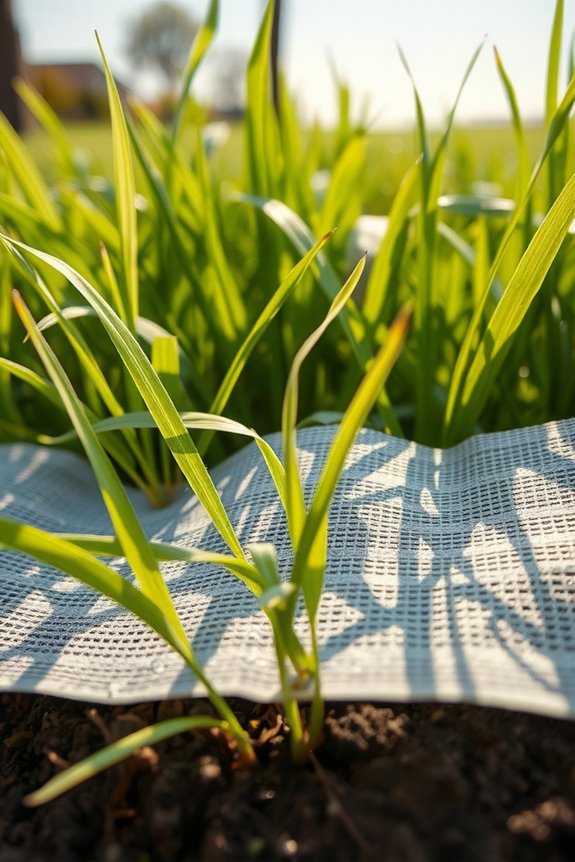
Killing grass under landscape fabric is not a quick fix—it usually takes several months to complete the process. The timeline shifts based on your local weather patterns. Hot, sunny periods speed up grass death considerably, while cold and wet seasons slow everything down. Understanding how grass breaks down and what affects that speed helps you plan realistically and decide whether herbicides, silage tarps, or other faster methods make sense for your project.
Grass Death Timeline Stages
Landscape fabric blocks sunlight, water, and oxygen simultaneously, which means your grass will die underneath it. The exact timeline depends on your regional climate and the time of year you apply the fabric.
Three Distinct Stages
Initial stress (weeks 1–2)
Your grass yellows as light becomes blocked. The blades lose their vibrant green color first because photosynthesis stops. You’ll see this discoloration before any other changes happen.
Active decline (weeks 3–8)
Grass weakens considerably during this period. Hot, sunny months speed up this stage dramatically—sometimes grass can be nearly gone by week 5 or 6. During cold, wet periods, this stage stretches longer, potentially reaching week 8 before significant deterioration occurs.
Complete death (weeks 8+)
Roots deteriorate fully once oxygen depletion becomes severe. What remains is decomposing organic matter, which actually prepares your soil nicely for new planting. At this point, the grass won’t recover if you remove the fabric.
How Weather Affects Your Timeline
Warmer conditions accelerate grass death considerably. In mid-summer with temperatures above 80°F, expect faster results than spring or fall applications. Cooler seasons slow the process because grass needs less water and nutrients when growth naturally slows. Knowing your region’s typical conditions helps you plan when to apply fabric and how long before you can replant.
Factors Affecting Decomposition Speed
How quickly grass dies under landscape fabric depends on several conditions working together. Sun exposure matters most. Sunny, hot months accelerate the process, while cold, wet weather slows it down significantly. Moisture levels also play a role. Too much retained moisture can extend the timeline by insulating soil and keeping grass alive longer.
You can speed things up by using two layers of fabric instead of one. The extra layer creates deeper darkness and increased oxygen deprivation. Adding heavy mulch or gravel on top—about 2 to 4 inches—enhances this effect. Pin fabric tightly to eliminate air pockets, preventing grass from sneaking oxygen underneath.
During optimal conditions with good sun exposure and warm temperatures, expect dead or severely weakened grass within 2 to 3 months. Cold seasons require more patience. Plan for a full growing season or longer if you’re working through fall and winter months.
Should You Use Cardboard Instead of Fabric?
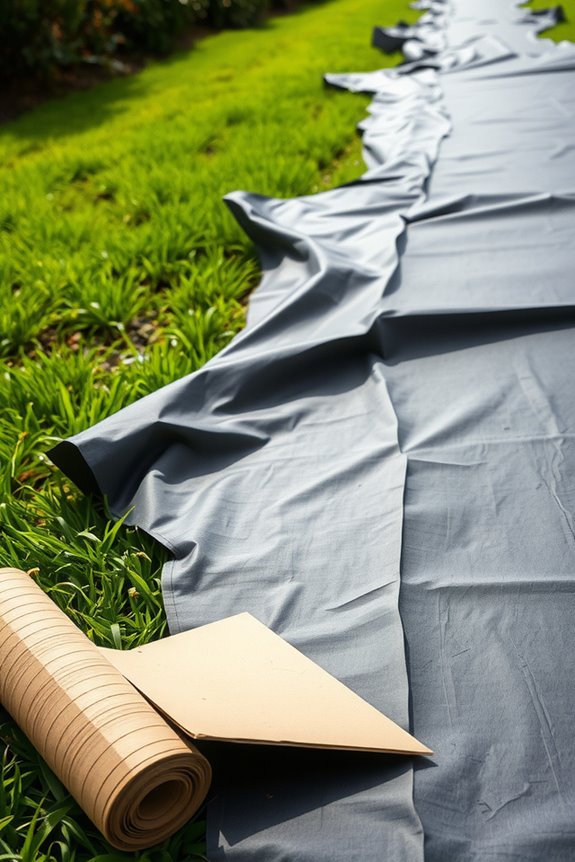
When you’re deciding between cardboard and landscape fabric for suppressing weeds over grass, cardboard is worth serious consideration.
Cardboard has clear advantages that appeal to many gardeners:
- Easier removal – You can pull it up without struggle when you’re ready to plant or work the soil
- Temporary suppression – It breaks down naturally over 6-12 months, so it won’t block future gardening work
- Better soil access – You can amend soil or add plants without fighting embedded fabric
Landscape fabric lasts longer, but cardboard won’t create obstacles for later projects. When you need to renovate a bed or plant new items, you won’t be stuck wrestling with fabric that’s worked its way into the ground. Gardeners often prefer cardboard because it gives you flexibility without permanent commitment.
If you plan to change your planting layout within a year or two, cardboard handles that better than fabric. You get temporary weed control without the long-term complications.
Five Installation Mistakes That Kill Fabric Performance
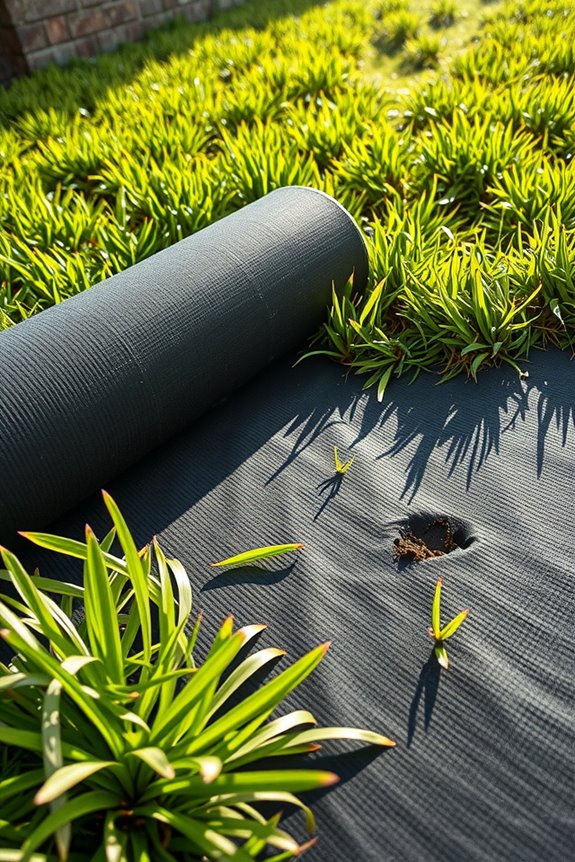
Even with good intentions, you can install landscape fabric in ways that actually work against you. Learning what goes wrong helps you get better results.
Mistake 1: Skipping proper pinning
Landscape fabric needs to stay in place. Pin it down every 12 inches along edges and wherever two pieces overlap. Without these pins, the fabric shifts when you add mulch or water the garden. Once it moves, gaps open up and weeds find their way through. You’ll spend more time pulling weeds than you saved by skipping this step.
Mistake 2: Installing over existing grass
Laying fabric directly on grass seems faster, but it creates problems. The grass underneath doesn’t die immediately. It keeps growing, pushing against the fabric and lifting it. When you eventually want to remove the fabric or plant something new, you’ll find the grass tangled underneath, making removal messy and time-consuming. Clear away the grass first. It takes an extra hour or two, but saves you headaches later.
Mistake 3: Ignoring uneven ground
Soil preparation matters more than people think. If your ground is bumpy or sloped, mulch will slide downhill and fabric edges will lift up. Before laying fabric, rake the area smooth and remove rocks that stick up. Take time to level low spots. This simple work prevents the fabric from developing gaps where weeds sneak in.
Mistake 4: Layering fabric and gravel incorrectly
When you place gravel directly on fabric without securing it properly, the stones shift and create spaces underneath. Weeds exploit these spaces completely. Use landscape staples to hold the fabric taut, then add a 2- to 3-inch layer of gravel. The combination works when each layer sits flat against the ground.
Mistake 5: Forgetting about soil compaction
Compacted soil lets water move through it more slowly and evenly. Loose, fluffy soil lets water run off the surface instead of soaking down where plant roots need it. Before laying fabric, water the area and walk over it to settle the soil. This takes 15 minutes and makes a real difference in how well your plants receive water throughout the season.
When to Hire a Professional Landscaper
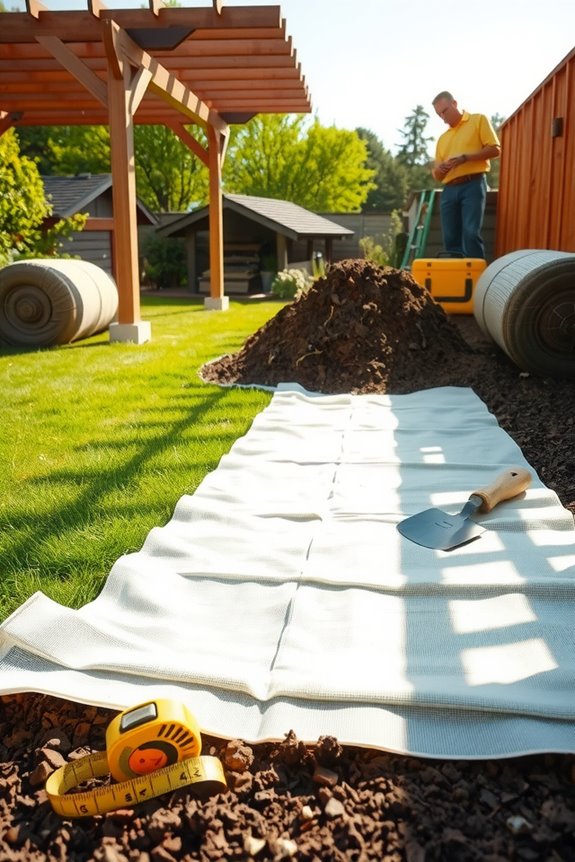
When to Hire a Professional Landscaper
You’ve now learned the five biggest installation mistakes that wreck fabric performance, and you might be thinking you can handle it all yourself. But some situations call for professional help instead.
Situations where a professional makes sense:
Challenging terrain. Slopes, poor drainage, or heavy clay soil need specialized handling. If your yard sits on a grade steeper than 15 degrees or water pools in certain spots after rain, a contractor can assess whether your soil will work with fabric or needs amendment first.
Complex layouts. Large areas with multiple plantings benefit from an on-site assessment. A professional visits your yard and evaluates your specific conditions—they’ll check soil type, identify existing roots, and review your planting plans. This hands-on evaluation prevents costly errors that remote advice can’t catch.
High-stakes situations. Steep banks, erosion-prone spots, or zones with serious weed problems require experience. A landscape contractor knows which fabric weight works best for these conditions and how to install it so it actually stays in place.
A professional will tailor fabric choice to your actual needs, protecting your investment long-term. They see details on the ground that photographs and descriptions can’t reveal. The visit typically takes 30 to 60 minutes and may cost $75 to $150, but it often saves hundreds in mistakes.