

A landscape rake handles large yard work in ways that hand tools simply can’t match. This wide tool spans up to 8 feet across and features rigid teeth designed to break apart compacted soil, remove rocks and leaves, and level ground before you plant or build. You push or pull it across your yard, covering significantly more area with each pass than you would with smaller implements.
The tool’s effectiveness depends on your yard size. For spaces under a quarter acre, you can operate a landscape rake manually without much strain. Anything larger benefits from attaching the rake to a tractor, which lets you complete the job in a fraction of the time. When I worked on a half-acre property last spring, manual raking would have taken several full days. With a tractor, the same work finished in about two hours.
The rigid teeth are what set this rake apart from lighter versions. They dig into soil rather than gliding over the surface, which means they actually break up hard ground instead of just moving loose debris around. This makes the landscape rake especially useful after winter or in areas where soil has become compacted from foot traffic or equipment use.
What Is a Landscape Rake and How Does It Work?

A landscape rake is a practical tool that levels and spreads materials across large areas. Think of it as a wide comb designed specifically for your yard work. The head typically spans 4 to 8 feet wide, with rigid teeth that dig into soil, gravel, and mulch to break up clumps and move material efficiently.
When you operate a landscape rake, the teeth penetrate the ground as you pull it forward. This action breaks apart compacted soil and displaces rocks and debris. The width of the rake means you cover significantly more ground with each pass compared to smaller hand tools, reducing the time you spend on preparation work.
You have two main options for using this tool. For larger projects covering a quarter-acre or more, you can attach the rake to a tractor and work systematically across the space. For smaller areas like garden beds or a 500-square-foot section of yard, manual operation works well. A person can typically handle a 3 to 4-foot rake by hand without excessive strain.
The design makes operation straightforward. You position the rake at the surface and pull or push it through the area you’re working on. The teeth dig in just deep enough to level uneven spots while gathering loose material toward you. This process takes about 15 to 20 minutes per 1,000 square feet depending on how compacted the soil is.
Landscape rakes work best for specific tasks. Use one to clear rocks and sticks before planting or laying down new mulch. Use it to level soil after grading work or to spread gravel evenly across a driveway area. The rigid construction allows the teeth to penetrate hard-packed ground where softer-tined rakes would bend or skip across the surface.
Common Uses: Clearing, Grading, Distribution, and Prep Work
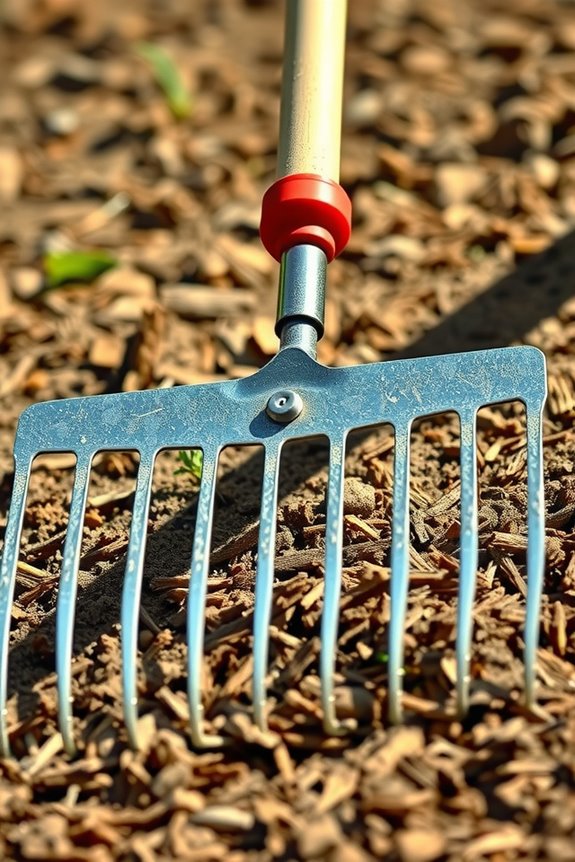
With adjustable angles and depths, your landscape rake works well on different ground conditions. You can set the tines at angles from shallow to steep, which helps you handle clay, gravel, and sandy soil without breaking it apart too much.
Adjustable angles and depths let your landscape rake tackle any soil type—clay, gravel, or sand—without excessive breakdown.
Here’s how the tool works. When you push the rake across compacted ground, the tines dig in and break up hard clumps. This loosens the soil so water and air can move through it better. The adjustable depth means you control how deep the tines go, so you won’t churn up more soil than you need to.
Use this rake when you’re clearing a new area or fixing an existing one. If you’re starting from scratch, you might spend two or three passes breaking up a heavily packed yard. For maintenance work on areas you’ve already prepared, one careful pass usually does the job. The angle adjustment lets you work at a pitch that feels comfortable and lets the tool do the heavy lifting without wearing you out.
The result is ground that’s ready for planting or further work. Rough patches become level, workable surfaces in less time than raking by hand alone would take.
Clear Debris and Leaves Efficiently

After a storm, a landscape rake can reduce cleanup work from several hours to 20 or 30 minutes for a typical suburban yard. The tool has multiple steel tines spread across a wide head—usually 24 to 48 inches—that gather leaves, twigs, and small branches in single passes without digging into the soil underneath.
You adjust the spacing between tines and the angle of the rake head depending on what you’re clearing. Wider spacing works better for heavy branches, while closer tines catch fine debris like pine needles. This means you don’t need to switch between different tools as your cleanup job changes.
For properties larger than an acre, the time savings become substantial. A tractor-mounted landscape rake can clear several acres in less than an hour, compared to the full day or more that manual raking would require. If you’re managing seasonal leaf cleanup or dealing with storm debris regularly, this tool handles both tasks with the same basic technique.
Level and Grade Soil, Gravel, and Other Materials
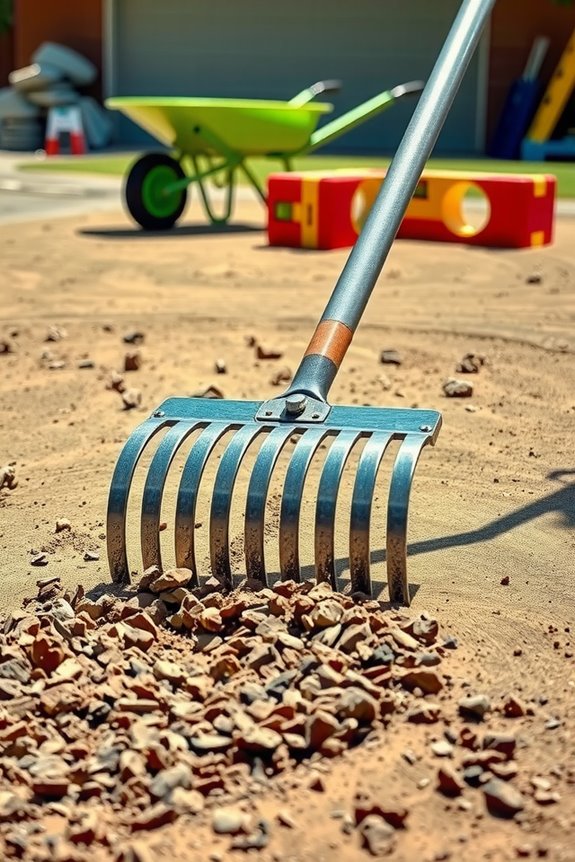
When you’re ready to level and grade soil, gravel, or mulch, the landscape rake becomes your main tool. Its adjustable angle and depth settings let you control how materials spread across your work area. Most landscape rakes have heads that measure 4 to 8 feet wide, depending on your project size. This width means you can cover more ground with each pass, cutting down on the time and physical effort you’d spend if you used a smaller tool.
The technique is straightforward. Pull the rake toward you using steady, controlled strokes. This motion distributes materials evenly and creates the flat surface you need for driveways, garden beds, or foundation prep work. The key is maintaining consistent pressure as you work—not too heavy, which can compact the material unevenly, and not too light, which leaves lumps behind.
One detail worth remembering: the angle of the rake head matters. By tilting it slightly, you can break up compacted spots or smooth out high areas in a single motion. If you’re working on a typical residential driveway, you might spend 30 to 45 minutes raking and leveling a 200-square-foot area, depending on how uneven the base surface is. Wet materials take longer to spread than dry ones, so plan your work for days when the ground conditions are manageable.
Even Material Distribution
A landscape rake excels at spreading materials evenly across your yard. When you’re preparing ground for planting or paving, uniform coverage matters. The rigid teeth of the rake break up clumps while you pull it across gravel, mulch, or sand, distributing everything consistently. With a wide head that spans four to eight feet, you cover substantial ground with each pass, which saves time and physical effort.
Control comes from adjusting the rake’s angle and depth as you work. A shallower angle spreads material thinner, while a steeper angle lets it settle deeper. These small changes determine whether you end up with bare spots or thick patches. The result is a smooth, level surface ready for planting, paving, or whatever task comes next.
Surface Preparation Techniques
Before you lay down sod, seed, or pavement, you need a solid, even foundation. A landscape rake does this work well. Surface preparation takes rough ground and makes it into a smooth base ready for your project.
Landscape rakes break up stubborn clumps and remove debris that could get in the way. When you use one, you accomplish several things at once:
- Break up compacted soil to loosen tight ground and improve drainage
- Remove rocks and debris that would interfere with seeding or sodding
- Create uniform grading across your entire project area
When leveling material like soil or gravel, you’re smoothing out the high spots and filling the low areas. This takes patience. Work in passes across your space, adjusting your rake’s depth as needed. For example, if you’re working with 2 to 3 inches of topsoil, you might need three or four passes to get everything level. Most landscape projects benefit from this step because it gives you a reliable, even foundation. When the base is flat and firm, everything you add on top—whether it’s grass seed or pavers—sits properly and lasts longer.
Prepare Ground for Seeding, Sodding, and Construction
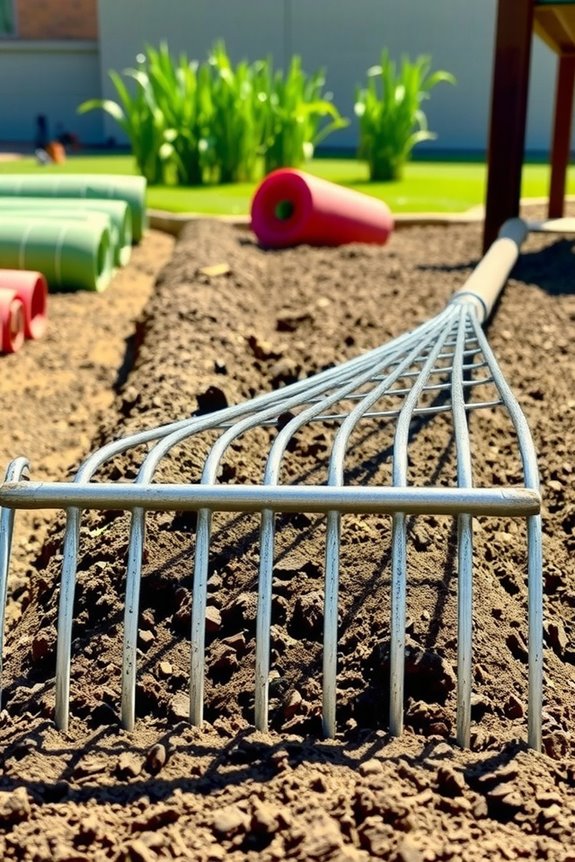
A landscape rake is a practical tool for preparing ground before seeding, sodding, or building. It does three main jobs at once: breaking up compacted soil, leveling the surface, and removing unwanted materials.
When you’re planting grass seed or laying sod, the rake works the soil into a fine, crumbly texture. This loose surface lets seeds or sod roots make direct contact with the earth below, which they need to grow. You’re aiming for a bed that feels almost like coarse sand under your hand—not dusty, but definitely breakable with light pressure.
For construction sites, the same raking technique serves a different purpose. You’re clearing away rocks, sticks, and debris while creating a level base. This matters because foundations, pavement, and other layers need stable, flat ground to sit on properly. Uneven ground can cause settling problems later, so taking time to grade correctly at the start prevents headaches down the road.
The process is straightforward: work in overlapping passes across your area, pulling the rake toward you with steady pressure. On most residential plots, this takes a few hours of steady work. You’ll know you’re done when the surface looks relatively smooth and you spot no major stones or clumps remaining.
Seedbed Preparation and Leveling
When you’re preparing soil for new grass or a construction project, a landscape rake becomes your primary tool for getting the ground ready. This tool works by breaking up compacted soil and spreading materials like gravel, mulch, or sand evenly across your work area.
A landscape rake handles the main jobs you’ll need done:
- Breaking up clumps – The rigid teeth dig into soil and shatter hard spots that would block roots from growing down into the ground
- Distributing materials – You’ll spread materials uniformly by adjusting how you hold the rake and how deep you work it into the soil
- Creating level surfaces – Multiple passes with the rake eliminate low spots and high ridges, leaving you with even ground
The process typically takes one to two hours for a standard yard space of 1,000 square feet, depending on how compacted your soil is. Start by raking in one direction across your entire area, then make a second pass at a right angle to catch any spots you missed. If you’re working with clay soil that’s particularly hard, you may need a third pass to break apart stubborn chunks larger than a golf ball.
Construction Site Ground Readiness
Once your seedbed is level and ready, the landscape rake becomes just as useful for larger construction projects. You’ll need it when preparing ground for building foundations, parking areas, or extensive landscaping work.
Start by using the rake to spread aggregate and base materials evenly across the area. The wide head—up to 38 inches—covers significant ground in fewer passes, which reduces how much labor and time you need. Adjustable tines let you work with different material sizes while keeping the ground at the right level for construction.
Spread gravel, crushed stone, and compacted fill in uniform layers. This creates the stable surfaces that contractors depend on for foundations and parking surfaces. The landscape rake’s width means you avoid spending unnecessary hours doing repetitive passes over the same spots.
Pay attention to how you distribute materials. Even spreading matters because it affects how well the foundation will sit or how long a parking area will last. The rake handles this placement work efficiently, so you can move on to the next phase of your project without delays.
Remove Rocks, Roots, and Surface Obstacles
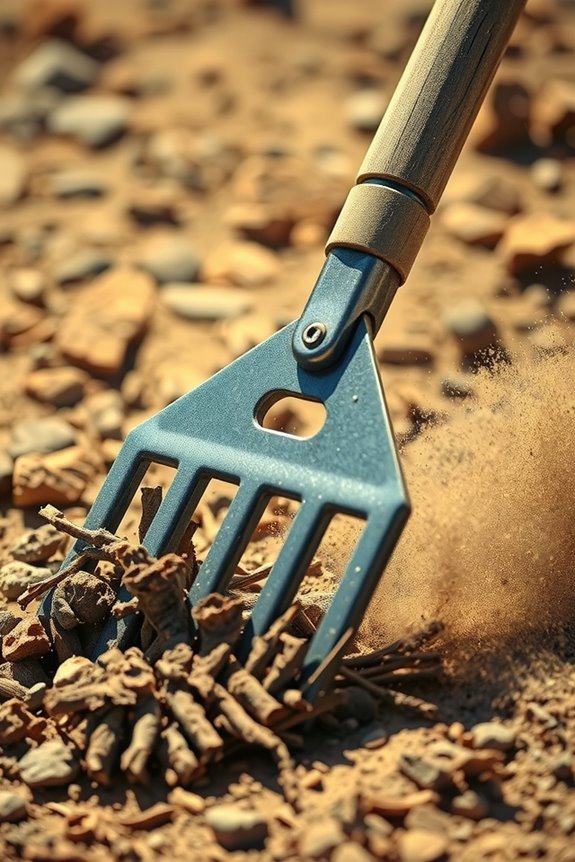
Why does clearing surface debris matter before you start any landscaping project? A clean foundation sets you up for success. That’s where your landscape rake becomes invaluable.
Your landscape rake lifts and separates rocks, twigs, and shallow roots from the soil surface. This tool creates a uniform base that’s ready for whatever comes next—planting, seeding, or construction work.
When you rake, pull surface obstacles to one side with the rake’s wide head and rigid teeth. This removes debris efficiently while also leveling uneven ground so you have a consistent seedbed for plants or a stable foundation for structures. A landscape rake can clear shallow roots and medium-sized stones without digging deep into the earth.
The process takes patience more than speed. Work at a low-to-moderate angle and avoid rocky slopes to protect your equipment. In about 30 to 45 minutes, you can prepare a 500-square-foot area to workable condition, depending on how much debris you’re dealing with. The goal is rough ground ready for the next step, not perfection.
Break Up Clumps and Dethatch Compacted Lawns
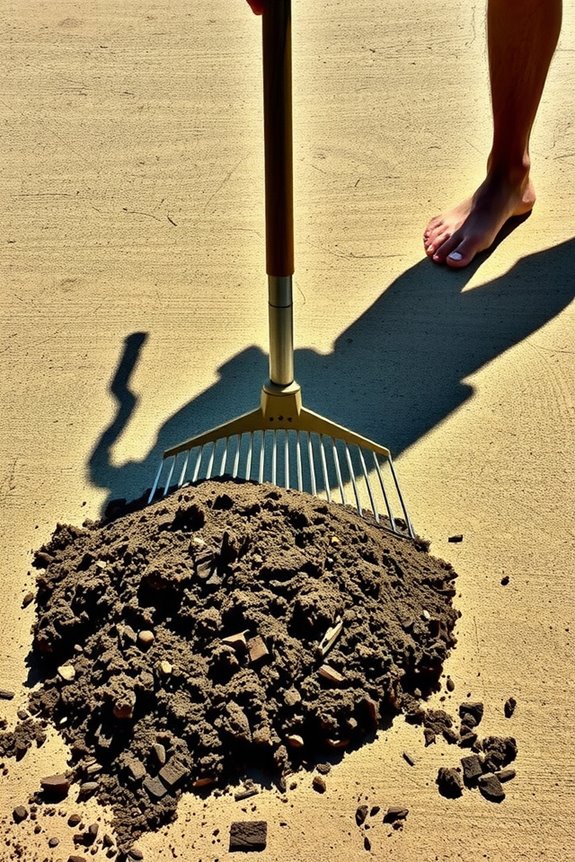
After you’ve cleared surface debris, you’ll likely notice another problem: your soil’s packed down tight, and clumps of matted thatch sit on top of your lawn like a suffocating blanket. Your landscape rake tackles both issues effectively. The rigid teeth penetrate compacted soil and break apart stubborn clumps that prevent water and nutrients from reaching grass roots. You’ll dethatch by raking in overlapping passes, pulling up dead organic matter that’s accumulated over seasons.
| Task | Depth | Passes |
|---|---|---|
| Break clumps | 2-3 inches | 2-3 |
| Dethatch lawn | 1-2 inches | 3-4 |
| Level surface | Surface level | 1-2 |
When you rake, work methodically across your lawn in one direction, then repeat in a perpendicular direction. This overlapping pattern catches debris you might miss on the first pass. You’ll notice the thatch coming loose—dead grass and organic buildup that’s been sitting there for months or even years. Don’t worry if your lawn looks roughed up after this step. That’s normal and temporary.
This preparation creates the ideal seedbed for new growth. Within a few weeks after dethatching, you’ll see improved drainage and healthier grass as water and nutrients reach the roots more easily.
Distribute Materials Evenly With a Landscape Rake
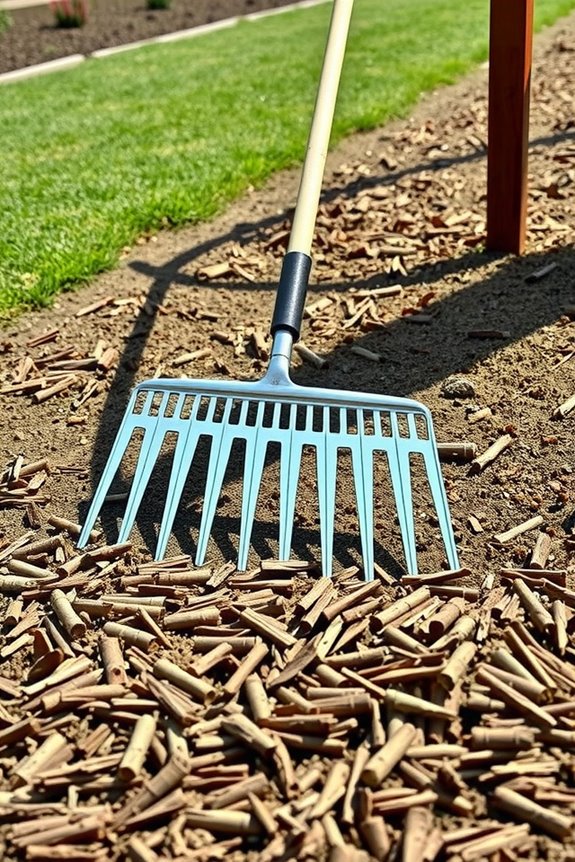
How do you get gravel, mulch, or fresh soil to lie flat and uniform across a large area? A landscape rake makes this job straightforward and efficient. The wide head and rigid teeth work together to spread materials evenly across your project space without creating uneven piles or bare spots.
What a Landscape Rake Does
With this tool, you can spread materials uniformly while creating an even surface ready for seeding, sodding, or laying pavers. You’ll also cover expansive areas quickly—typically finishing a 500-square-foot garden bed in about 2 to 3 hours instead of 6 to 8 hours with hand-raking methods.
How to Use It Effectively
The rake’s adjustable settings let you control depth and coverage based on your material. As you pull it across your lawn or garden bed, the teeth comb through materials, breaking apart clumps while positioning everything level. This creates the solid foundation your landscaping project needs.
Start by spreading your material in rough piles across the area. Then make multiple passes with the rake, working from one end to the other. With each pass, you’ll notice the material becoming more evenly distributed. For deeper materials like mulch—typically 2 to 3 inches—you may need 3 to 4 passes. For thinner layers of soil, 2 passes usually suffices.
Cleaning, Storage, and Seasonal Care

Cleaning, Storage, and Seasonal Care
After finishing your landscaping project, keeping your rake in good condition means it will last for years. Start by cleaning debris from the tines right after you use the rake—this prevents buildup that slows down your work. Spend just two or three minutes on this step, and you’ll notice a real difference in how smoothly the rake works next time.
Cleaning debris from rake tines immediately after use prevents buildup and keeps your tool working smoothly for years.
For storage, hang your rake on a wall rack or tool organizer rather than leaning it in a corner. A dedicated spot prevents the tines from getting bent and keeps your tool area safer. When you store different rake types together on the same wall, you’ll know exactly where each one is and won’t waste time looking.
Metal parts need attention before winter storage. Dry them thoroughly to stop rust from forming, which can weaken the rake over time. If your rake has a wooden handle, apply linseed oil or a wood sealant once a year to keep the wood from cracking. Before each season begins, check for bent tines or loose bolts that might have developed. These small habits keep your rake working well season after season.