
Using a patio heater under a covered space requires careful planning. This guide covers the key safety steps — heater type selection, clearance distances, ventilation requirements, and warning signs to watch for.
Start With Your Patio Heater’s Owner’s Manual
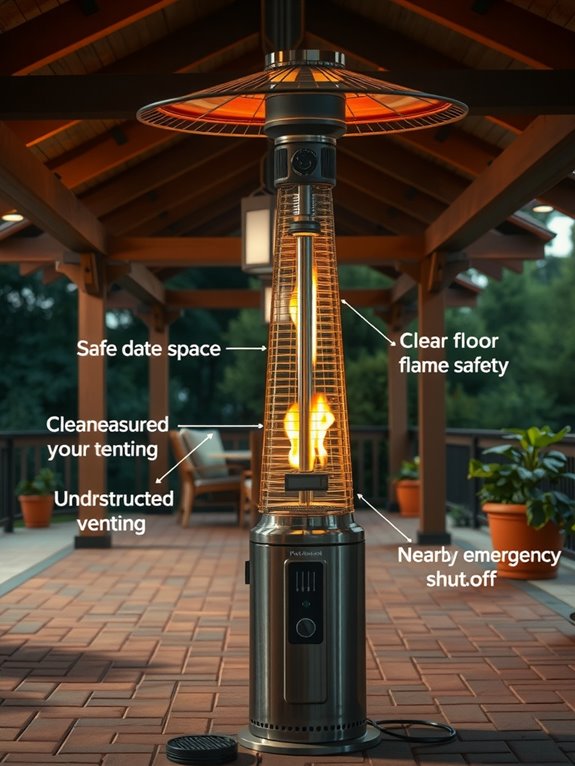
Before you set up or use your patio heater, read the owner’s manual from start to finish. This document contains safety information specific to your model — clearance distances, ventilation requirements, and installation steps that differ between units.
- Heat output in BTU or watts
- Safe operating temperature ranges
- Model-specific clearance distances — measured in feet or inches
- Ventilation rules for gas heaters
- Step-by-step installation instructions
The manual tells you the exact distances your heater must stay from walls, furniture, and overhead structures like pergolas or awnings. These measurements are not suggestions — they prevent fire hazards and gas buildup. Contact the manufacturer or a professional if instructions are unclear or pages are missing.
Know Your Local Rules Before You Buy
Where you live affects what you can do with a patio heater under a covered patio. Check these requirements before purchasing or installing anything.
Where you live directly impacts patio heater regulations under covered patios — different jurisdictions enforce varying rules.
- Local codes — Contact your city or county building department to learn regulations for outdoor heating devices
- HOA rules — Review your homeowners association guidelines before purchasing
- Permits — Confirm whether you need written approval before installation
- Gas heaters — Some areas require professional installation or prohibit certain models
- Ventilation standards — Your jurisdiction may mandate specific airflow requirements — typically a minimum of 10 feet of clearance on all sides
- Safety clearance — Learn minimum distances needed from walls, ceilings, and structures — usually at least 3 to 10 feet depending on heater type
Call your local fire department or building department. Ask about regulations for gas heaters and ventilation under covered patios. Request written guidelines. Consult a licensed professional if you are uncertain about any requirement.
Choose the Right Patio Heater Type for Your Covered Space
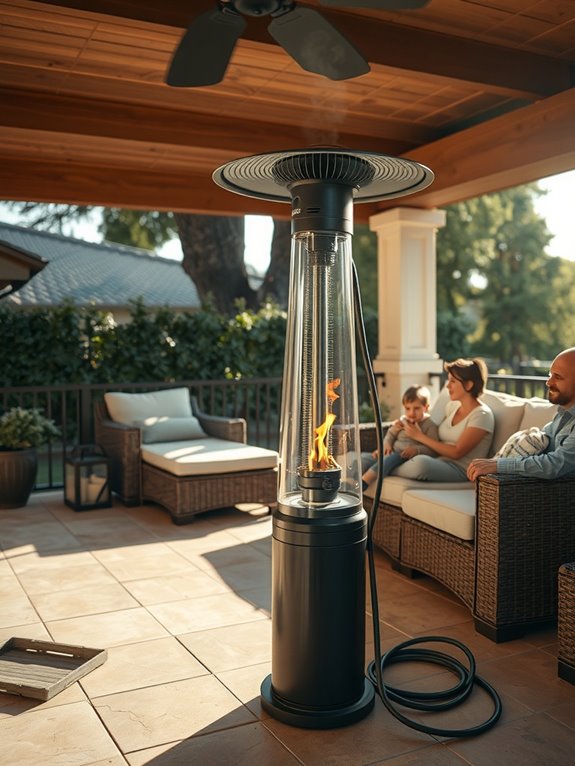
Electric and gas heaters have different safety requirements. Electric heaters do not produce combustion byproducts, which makes them safer for most covered patios. Gas heaters — propane or natural gas — require more planning, professional installation, and specific clearance distances.
Electric Heater Requirements
- Need a dedicated electrical circuit
- Require a ground fault circuit interrupter (GFCI) outlet
- Keep 10 feet from flammable materials
- Require less clearance space — typically 25 cm on the sides and 15–25 cm above the unit
- Include tip-over protection and overheat shutoff features
Gas Heater Requirements
- Need 3 feet of clearance from the ceiling minimum
- Need 10 feet of clearance from walls and flammable items
- Require a licensed professional for installation and annual inspection
- Need continuous fresh air supply — at least 1 square foot of ventilation opening per 3,000 BTU of heat output
- Release carbon monoxide during operation — proper ventilation is non-negotiable
Select an electric heater if your covered patio has a nearby outlet and you want simpler installation. Select a gas heater if you prefer higher heat output and have room for proper ventilation and clearances.
Measure Clearance From Ceiling and Walls
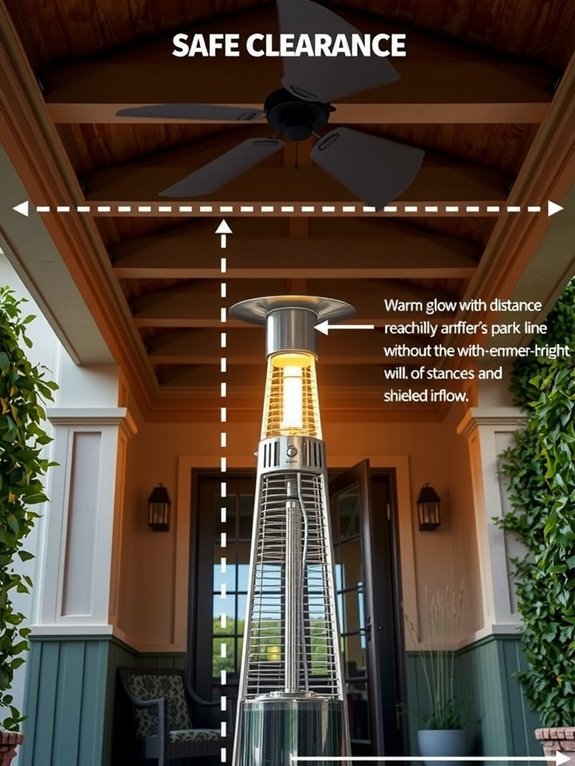
Before installing a patio heater under a covered space, measure the distance between the heater and nearby surfaces. Use the clearance numbers below as a starting point, then verify against your specific model’s manual.
Always consult your heater’s manual for model-specific clearance requirements — the numbers below are general minimums only.
- Gas heaters — 3 feet minimum from ceilings, 3 feet minimum from walls
- Electric heaters — 15 to 25 centimeters from the ceiling, 25 centimeters (10 inches) from walls
- Heat deflectors — can reduce required clearance distances, but only if your manufacturer approves this use
Measure the height of your covered patio to confirm it meets ceiling clearance requirements. Take measurements at multiple points around where you plan to place the heater to account for angles and obstacles.
Make Sure You Have Enough Ventilation Before Lighting
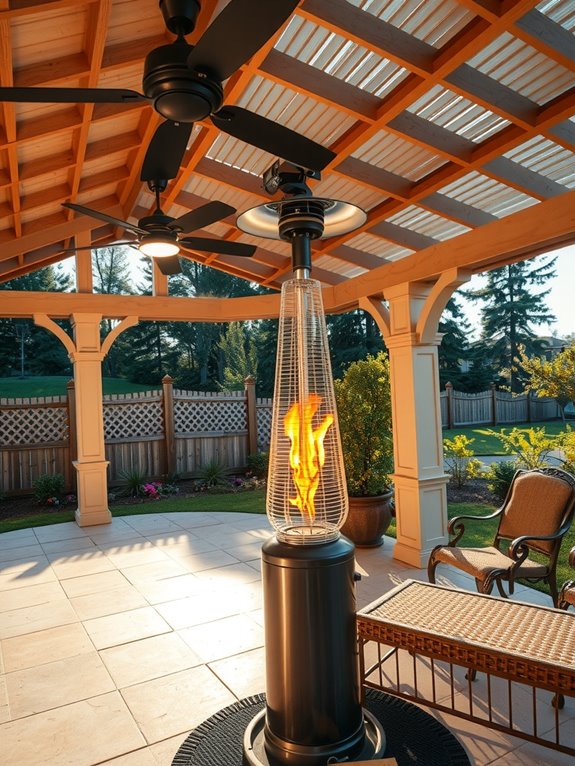
Open-sided patios and pergolas allow air to move freely. Fully enclosed structures trap dangerous gases that build up from the heater’s combustion process. Assess your patio’s airflow before lighting any gas heater.
Check These Openings
- Side openings — Keep these clear so air flows around your heater
- Top openings — Leave these unblocked to allow ventilation to work correctly
- Pathways near your unit — Remove anything that stops air movement
What to Measure
Know your ceiling height and the square footage of the area you plan to heat. Your heater’s manual will specify the airflow your space requires based on these two factors. Do not light the heater if you are unsure whether your patio meets the minimum ventilation requirements — contact the manufacturer or a professional first.
Place Your Heater on Level Ground
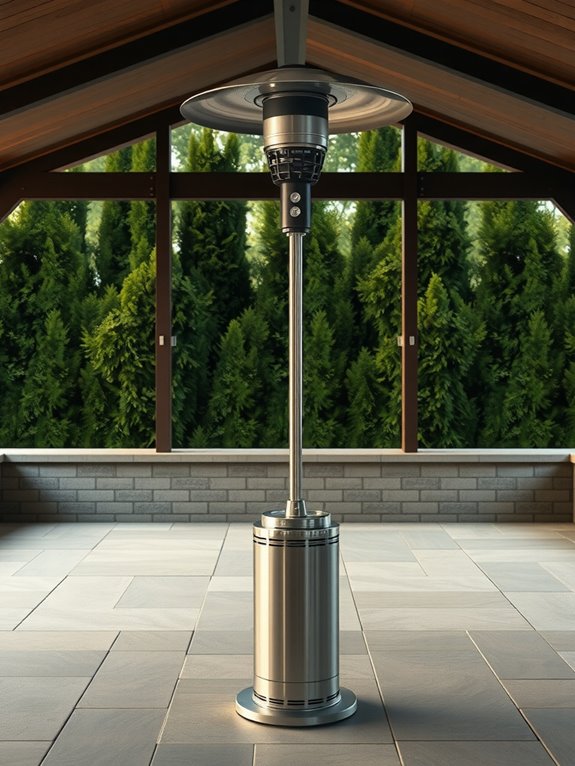
A level surface prevents tipping and keeps your patio heater working safely. Position your heater on a flat, non-combustible surface — concrete or pavers work well. Avoid wood decking or mulch directly under the unit. Uneven ground compromises ventilation clearance and allows heat to concentrate in certain areas instead of spreading evenly.
Recheck levelness periodically. Ground shifts from weather or traffic can affect stability over time. Keep all sides of your heater clear of objects to prevent overheating and carbon monoxide buildup.
Stop Using Your Heater: Red Flags to Watch
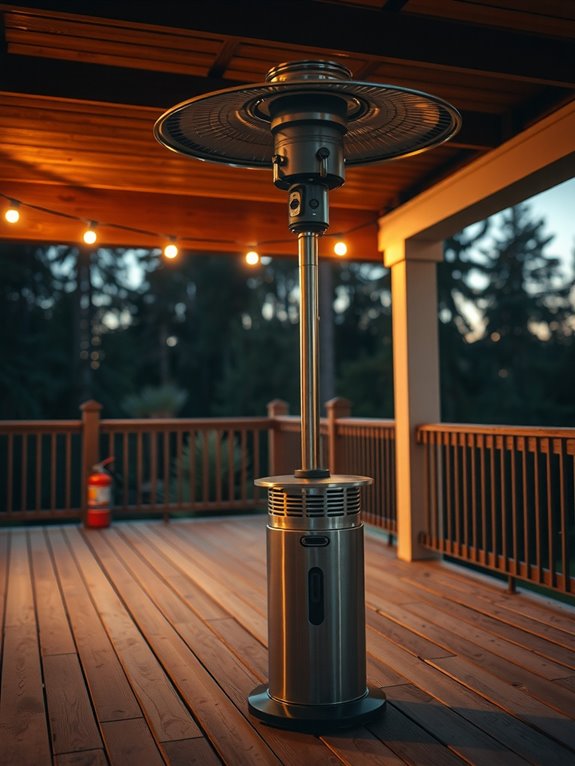
Stop using your heater immediately if you notice any of the following. Do not attempt to fix the heater yourself — contact a qualified technician before operating it again.
Immediate Shutdown Signals
- Gas odor — Leave the area right away
- Ventilation issues — Covered spaces need open airflow to prevent gas buildup
- Flame instability — Flames that flicker, change color, or behave oddly
- Abnormal operation — Unexpected shutoffs, unusual sounds, or excessive heat
Physical Warning Signs
- Missing or damaged tip-over switch
- Unit placed on uneven or unstable ground
- Loose or corroded connections
- Soot buildup near the burner or vent opening
- Water droplets forming on the outside of the unit