A 20×20 patio cover costs between $6,000 and $32,000. Material choice, roof style, labor rates, foundation prep, and add-on features all affect your final bill. This guide breaks down each factor so you can plan your budget accurately.
Material Type: Aluminum, Wood, Vinyl, and Steel Price Differences
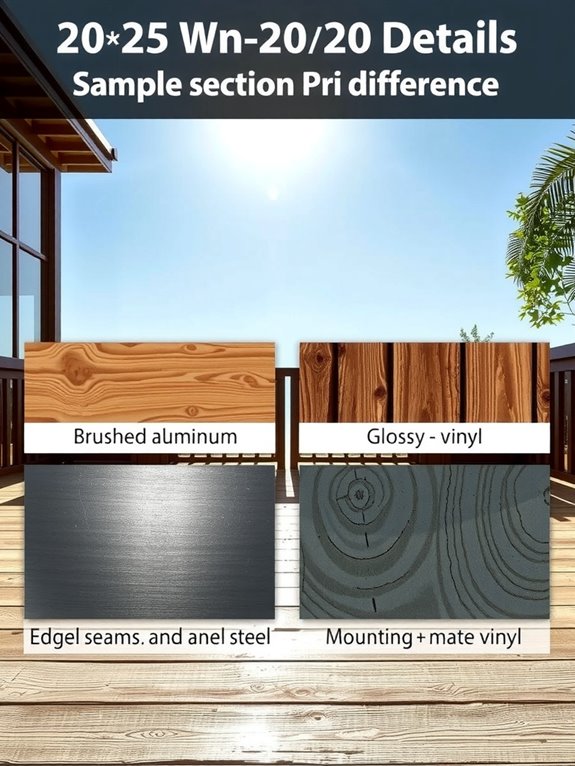
Material choice shapes both your upfront cost and what you’ll spend keeping the structure in good condition over time.
- Vinyl — $15–40 per sq ft — lowest upfront cost, minimal maintenance, lasts 10–15 years
- Aluminum — $20–50 per sq ft — low maintenance, resists rust and corrosion, lasts 20–30 years
- Wood — $25–75 per sq ft — natural look, requires staining or sealing every 2–3 years, lasts 15–20 years
- Steel — $30–80 per sq ft — strongest option, highest upfront cost, lasts 25–40 years with proper maintenance
For a 400-square-foot cover — the size of a 20×20 space — total material costs range from $6,000 for basic vinyl to $32,000 for steel. Select based on how much you can spend upfront and how much maintenance work you want to take on long-term.
Long-Term Maintenance Costs by Material
| Material | Annual Maintenance | Long-Term Cost Impact |
|---|---|---|
| Aluminum | Minimal upkeep | Lower overall expenses |
| Wood | Staining, sealing every 2–3 years | $200–500 yearly, higher repair costs |
| Vinyl | Occasional cleaning | Potential color fading over 10–15 years |
| Steel | Rust prevention treatment | Higher upfront, lower repair frequency |
Selecting Materials by Climate
- Hot, dry climates — Aluminum or insulated panels reduce cooling costs
- Wet, humid climates — Vinyl or aluminum resist moisture damage better than wood
- Regions with temperature swings — Insulated panels help maintain stable temperatures year-round
Roof Style: How Solid, Lattice, and Insulated Designs Change Cost
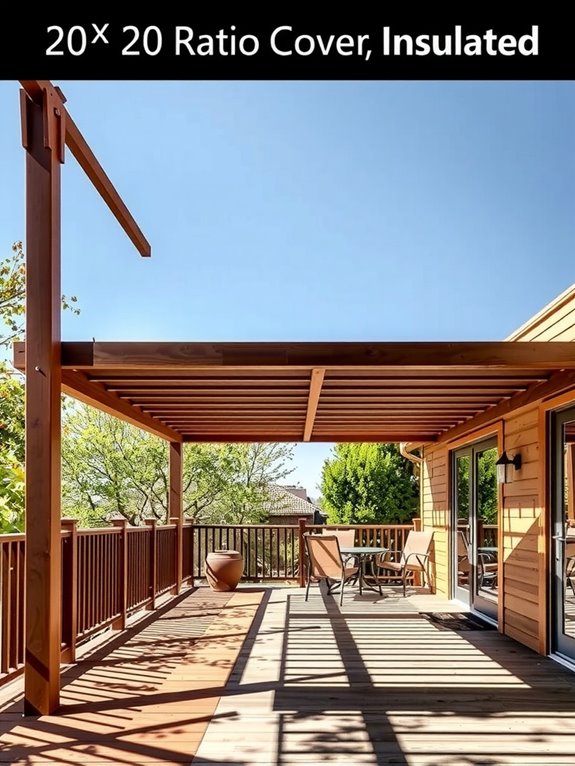
Your roof style affects both price and structural requirements.
- Lattice — open spaces between wood or vinyl strips, filters sunlight, lowest cost. Needs standard 4×4 or 4×6 posts
- Solid — blocks all direct sunlight and rain, mid-range cost. Requires stronger posts, thicker framing, and extra structural support for wind loads
- Insulated — solid panels with foam or air gaps inside, best temperature control, highest cost. Requires same heavy framing as solid roofs plus thermal panel installation
Solid and insulated roofs both require heavier framing and larger posts — typically 6×6 or 8×8 wood or steel columns — compared to standard 4×4 or 4×6 posts for lattice designs. Insulated roofing panels cost more initially but lower cooling loads year-round, reducing energy expenses over 20 years.
Labor Costs and Regional Market Rates
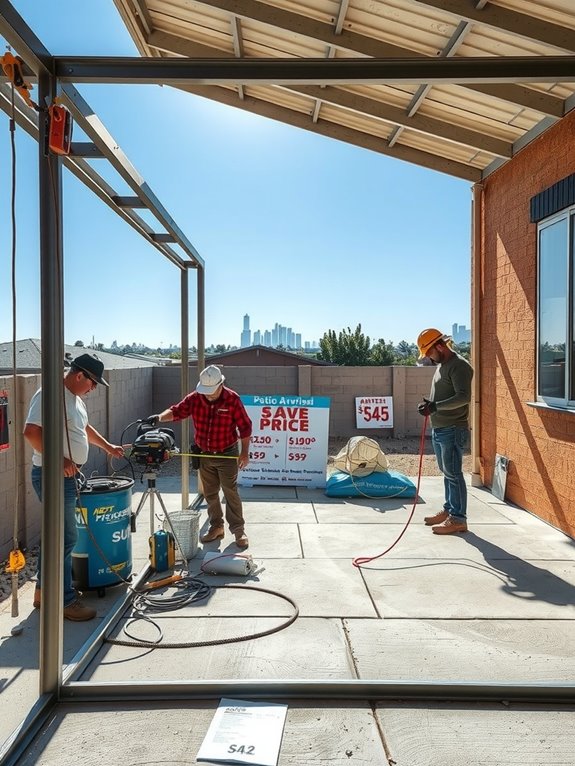
Contractor rates range from $50 to $100 per hour. High-wage areas like coastal cities can add $1,000–$3,000 to your total compared to rural markets. Project complexity, second-story attachments, and uneven ground all increase installation hours.
Project Timeline and Complexity
- Standard installations take 1 to 3 days
- Complex projects with permits and electrical work extend to 5 to 7 days
- Intricate designs with custom rooflines, multiple angles, or curved elements add 20 to 40 percent to labor costs
- Premium materials like composite beams or specialty roofing panels require skilled installation and precision cuts
How to Estimate Your Labor Costs
- Identify your region and typical wage rates
- Assess your project’s difficulty — ground level, second story, or sloped terrain
- Multiply your contractor’s hourly rate by the estimated installation hours
- Add $1,000–$3,000 if you live in a high-wage coastal area
Foundation and Site Preparation: Why Pre-Build Work Adds Up
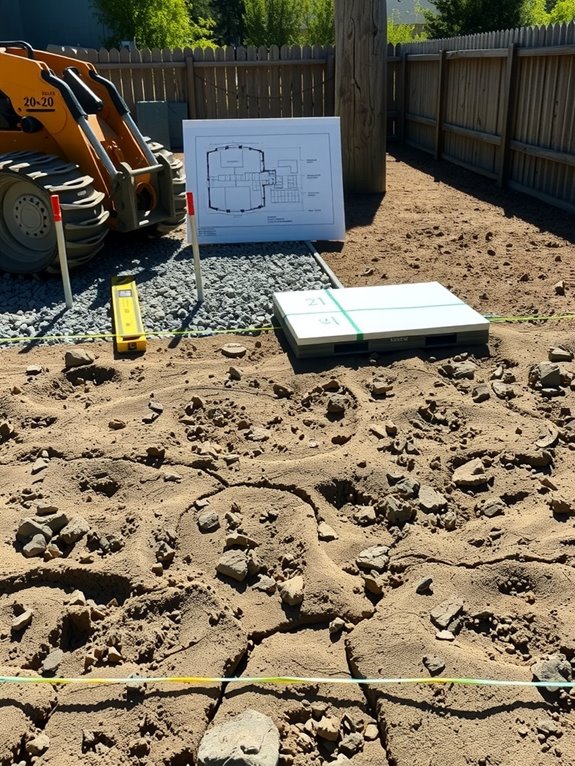
Before installing a patio cover, you need to prepare the ground underneath. This preparation work costs $2,000–$5,000 and includes leveling the soil, adjusting drainage, and creating proper slope grading.
- Footing depth — Slabs thinner than 4 inches require deeper footings, adding $1,500–$3,000 to your budget
- Electrical work — Heaters, fans, or lights need dedicated circuits and electrical sub-panels, costing $800–$1,200
- Local building codes — Wind-load resistance and coastal requirements may require engineered foundation designs, adding time to both design and installation phases
Installation Complexity: Attached vs. Freestanding and Wind Load Requirements
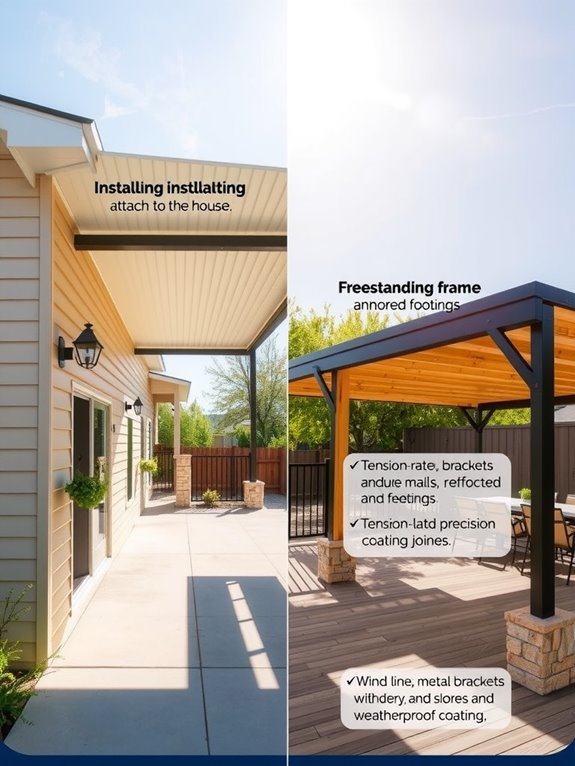
Attached structures cost less in labor because they connect to your existing home frame, reducing framing and foundation work. Freestanding covers require complete independent foundations and support systems, which increases expenses.
Wind-load compliance demands structural engineering and reinforced designs. Your local building code specifies the wind speed your structure must withstand — typically 90 to 150 miles per hour depending on your region. Attached, wind-load compliant structures typically require permits and approvals that add fees and extend your project timeline by 2 to 6 weeks.
- Engineering documentation
- Inspector visits
- Permit application fees — $100 to $1,000 or more
- Plan review time
Cost of Customization: Lighting, Fans, Insulation, and Smart Controls
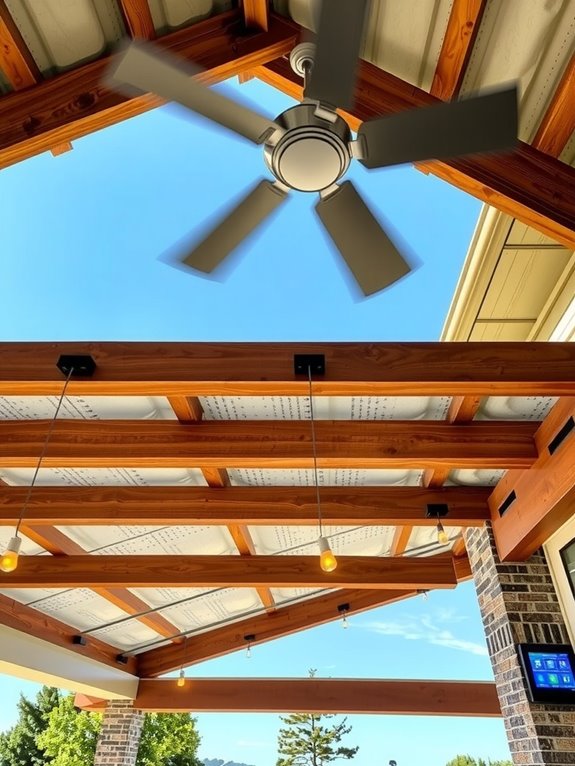
- LED lighting — $800–$1,500. Recessed wiring keeps wires hidden inside the structure
- Ceiling fans — $300–$800
- Smart controls and infrared heaters — $1,200–$2,500 per unit
- Retractable screens — $1,000–$3,000
- Motorized privacy screens — $3,000–$5,000
- Insulated panels — $1,500–$4,000
- Gutter systems — improves drainage and protects the structure
- Electrical outlets — adds power access for devices and tools
Finishes and Paint: How Premium Colors and Coatings Affect Price
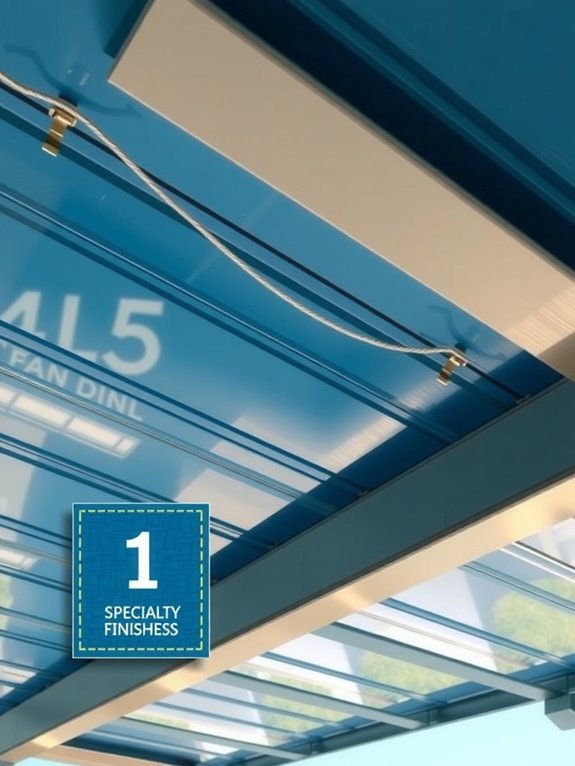
Premium finishes add $300 to $3,000 or more to your project. Paint or stain finishes add $500–$2,000. Premium finishes last 5–7 years versus 2–3 years for basic finishes.
Powder coatings with UV protection resist fading longer than standard paint, though custom color matching and textured finishes require additional labor and manufacturing costs.
Powder coatings resist fading and abrasion better than standard paint. Color matching to your home’s exterior requires extra labor and materials. Textured finishes and wood-grain effects on aluminum need special equipment, which increases manufacturing costs. These upfront investments reduce maintenance over the years because the coating breaks down more slowly.
How to Budget Across All Factors
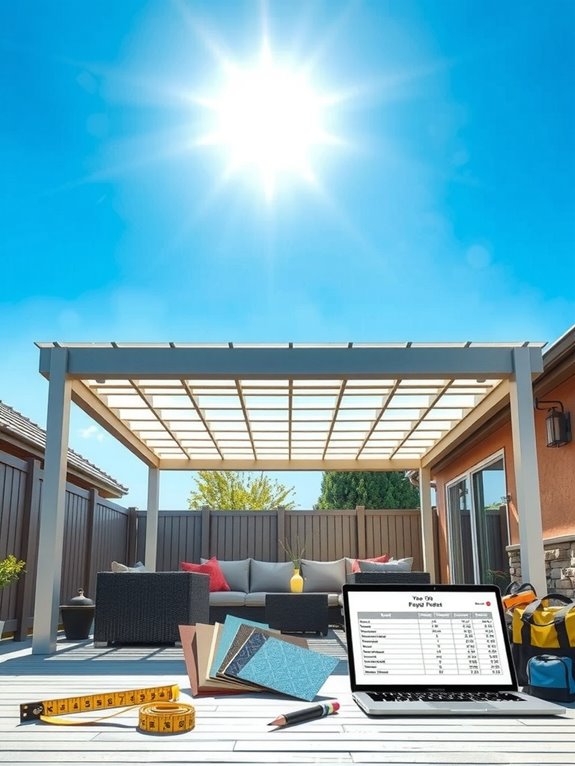
A basic 20×20 patio cover starts around $8,000. Adding multiple features can push costs to $18,000 or higher. Use this process to build your final number.
Step 1 — Choose Your Material
Aluminum typically costs $8,000 to $12,000 installed and requires minimal upkeep. Vinyl ranges from $10,000 to $15,000 and resists rot and insects. Wood costs $9,000 to $14,000 but needs regular staining or sealing every 2 to 3 years. Steel runs $12,000 to $32,000 but delivers the strongest, longest-lasting structure.
Step 2 — Identify Your Add-Ons
Each feature adds $500 to $3,000 depending on complexity and quality. List the features you want most, then rank them by priority. This helps you stay within budget while getting what matters most.
Step 3 — Account for Hidden Costs
- Location — high-wage regions add $1,000–$3,000 to labor costs
- Electrical work — requires a licensed electrician
- Concrete leveling — needed if the ground is uneven
- Permits and site prep — add $100–$5,000 depending on local codes
Step 4 — Build Your Final Number
- Materials cost
- Permits and site prep
- Labor
- Location add-ons
- Chosen upgrades
For example, vinyl with gutters and basic lighting costs less than steel with fans, lighting, and gutters. Review the total cost for each combination before committing to a final selection.