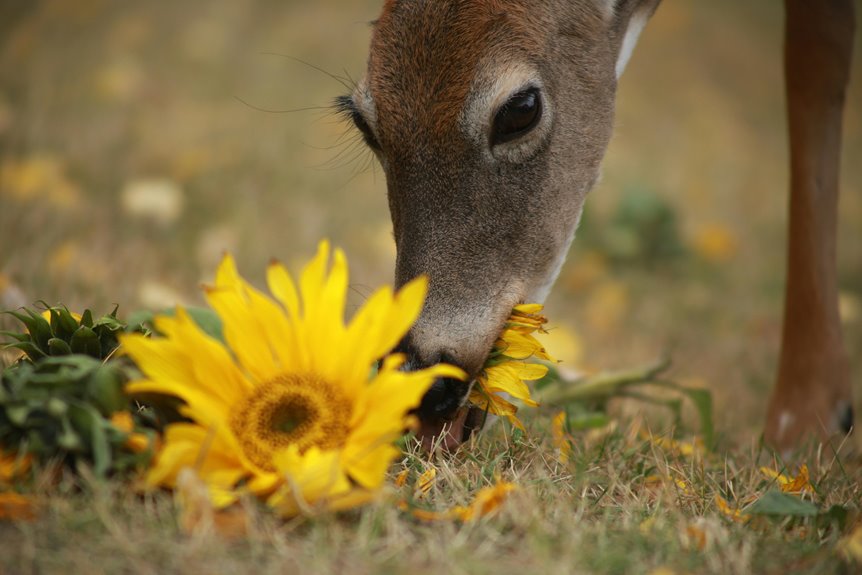
Yes, deer eat sunflowers at every growth stage—from leaves to mature flower heads—making your garden a reliable food source they’ll return to repeatedly. You’ll spot jagged leaf edges and missing blooms as telltale signs of deer damage.
To protect your plants, your best option is installing an 8-foot sturdy fence. This height works because most deer won’t jump over barriers that tall. If a permanent fence isn’t practical for your space, polywire electric fencing offers another approach. Deer learn to avoid it after a few encounters with the mild shock, though this takes time and consistent setup.
Natural deterrents provide a cheaper alternative if you prefer avoiding physical barriers. Mint and lavender sprays can discourage deer, though you’ll need to reapply them every 2 to 3 weeks or after rain. These work by creating tastes and smells deer dislike rather than blocking access to your plants.
When damage does occur, trim the affected stems back to healthy growth points. Apply a balanced fertilizer—something with equal nitrogen, phosphorus, and potassium numbers like 10-10-10—to help your sunflowers recover. Most plants bounce back within 3 to 4 weeks with proper care and watering.
Why Deer Eat Sunflowers
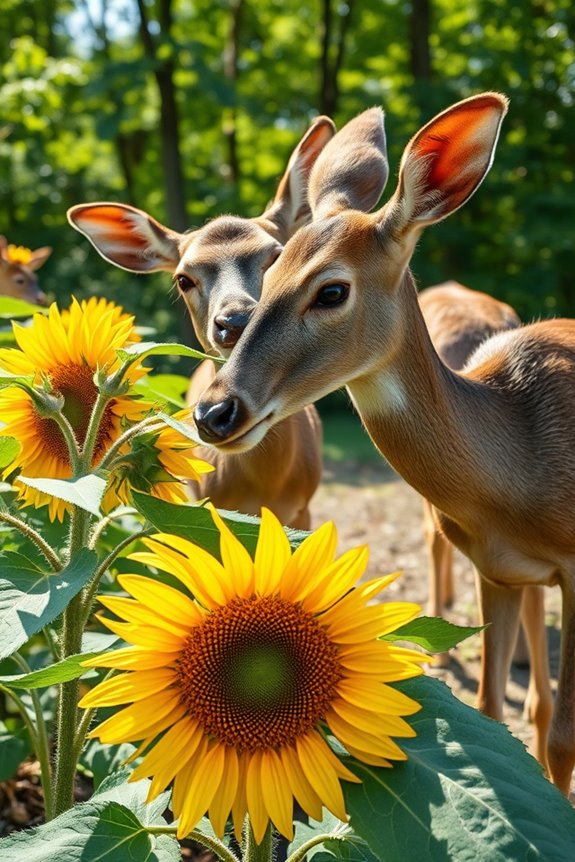
Deer return to your sunflower garden because these plants offer nutrients they need. Sunflowers contain protein and phosphorus that deer seek especially during fall and winter when other food sources become scarce. Your garden becomes a reliable food station once deer discover it.
Sunflowers contain the protein and phosphorus deer need, making your garden a reliable food station year-round.
Sunflowers attract deer at every stage of growth. Deer start by eating the leaves, then move to flower heads whether they’re fully open or still developing. This feeding damages your plants in multiple ways. The deer nibbling stops blooms from opening properly, keeps plants from reaching their full height, and cuts into your harvest. When deer walk through the garden, they trample and break plants you’ve spent weeks growing.
Recognizing this pattern helps you understand why protecting your sunflowers matters. Deer don’t visit by chance. They come back because sunflowers meet their nutritional needs reliably throughout the year.
How to Identify Deer Damage to Your Sunflowers
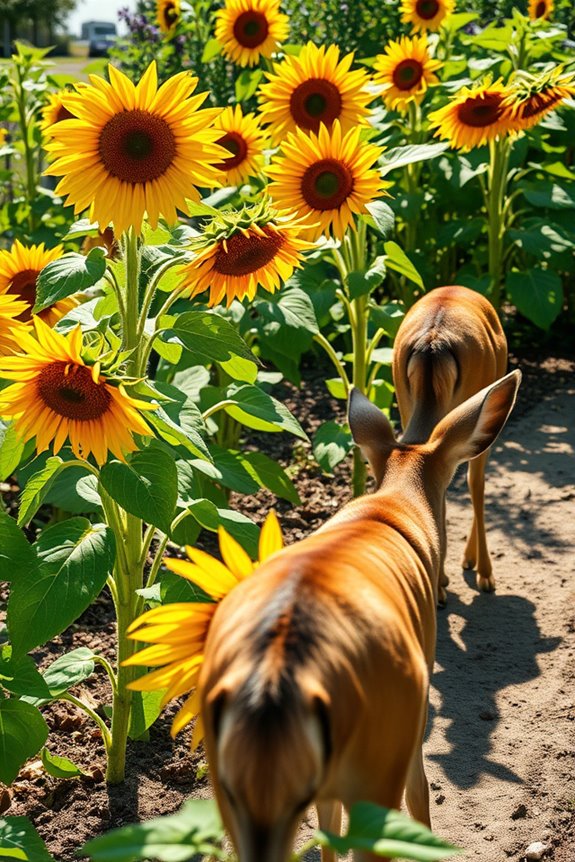
Deer leave behind telltale signs when they feed on sunflowers. Start by examining the leaves closely—you’ll see jagged, torn edges where deer have stripped foliage away. The damage looks different from a clean cut you might make with scissors. Their teeth create a ragged appearance because deer lack upper front teeth and tear plants against their lower teeth.
Check for missing flower heads and blooms eaten entirely from the plant. Deer often target the flowering tops since these parts are more nutritious and tender than older leaves. You might find half-eaten heads or flowers stripped of their seeds and petals.
Walk through your patch and look for trampled, flattened areas where the ground is compressed from hoofprints. Deer typically weigh between 100 and 300 pounds depending on the species, so their weight crushes plants as they move through. The damage pattern usually starts at lower leaves and moves upward toward the flower head, so scan each plant from bottom to top.
The timing of damage matters for determining how much your plants can recover. Early-season damage, appearing in June or July, allows sunflowers several weeks to regrow damaged foliage. Late-season damage occurring in August or September happens when plants are already matured and have little time to bounce back. Intensive browsing removes entire leaf sections or whole plants, while lighter feeding shows only partial leaf loss.
These visible clues help you confirm whether deer are responsible for the damage and when the feeding occurred, allowing you to plan appropriate protection for the rest of your crop.
The Best Fences to Keep Deer Away
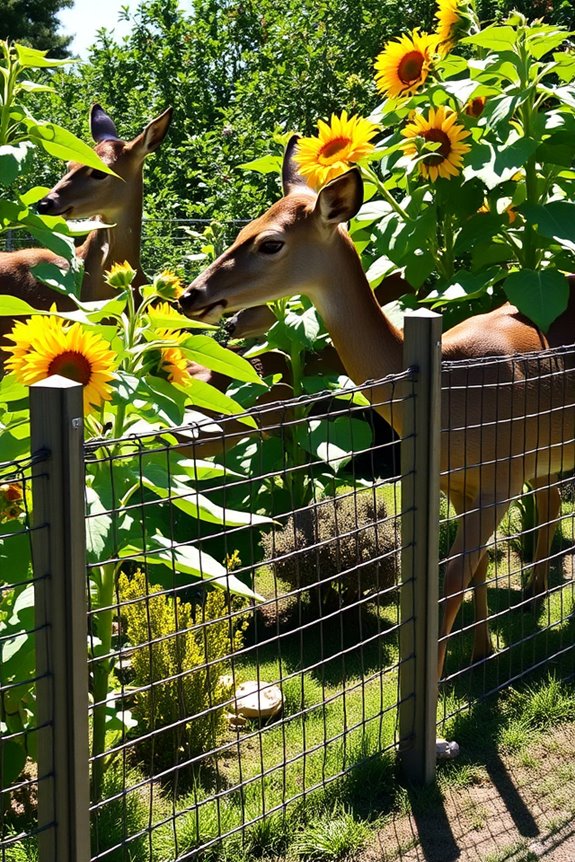
When you’re serious about protecting your sunflower patch, a sturdy fence becomes your most reliable defense. You’ve got several solid options depending on your budget and property size.
| Fence Type | Cost Level | Effectiveness |
|---|---|---|
| Polywire Electric | Low | High |
| Chicken Wire | Low | Moderate |
| Field Fence | Medium | High |
You’ll want fencing at least 8 feet tall to stop determined deer. Polywire electric fencing works well because deer learn quickly to avoid the shock. If budget’s tight, chicken wire or standard field fences still deter most visitors. The real advantage comes from combining fencing with strategic placement around water sources on your property. Deer visit those areas regularly, so protecting those spots reduces pressure on your sunflowers significantly. This one-time investment pays dividends across multiple seasons and crops.
Using Sprays and Scent Deterrents
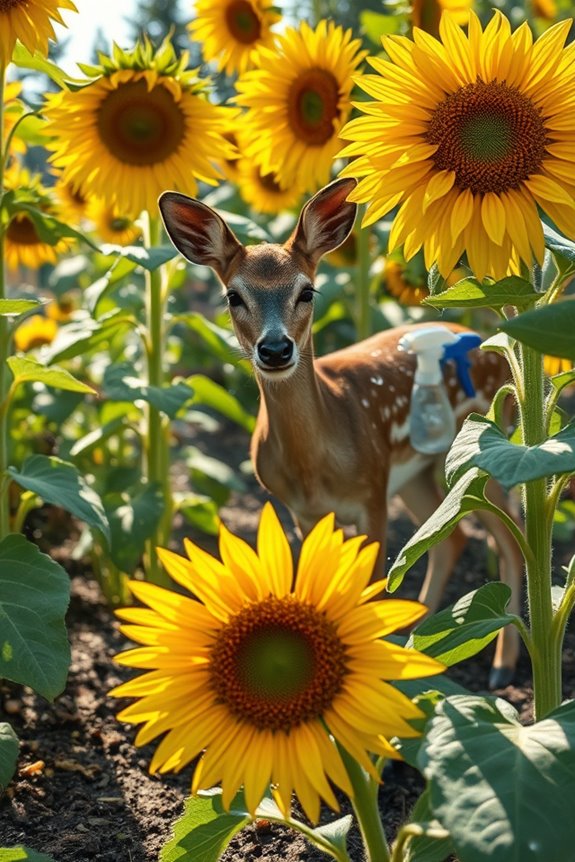
Once deer start eating your sunflower leaves and moving up to the flower heads, sprays and scent deterrents become your next defense option. These products work because deer dislike certain smells like lavender, mint, and cinnamon, which makes them look elsewhere for food.
You have choices when picking a spray. Natural formulas exist alongside stronger chemical options. Natural scent-based deterrents cost less money and avoid the environmental and safety worries that chemicals bring. If you want stronger results, plant mint and lavender directly around your garden beds. The plants themselves add another layer of protection on top of any sprays you use.
Timing matters with these products. Reapply sprays every two to three weeks, and always reapply after rain washes them away. When you combine multiple scent methods—using both sprays and planted deterrents together—you create enough of a barrier that deer find it easier to eat somewhere else.
How to Recover Damaged Sunflowers
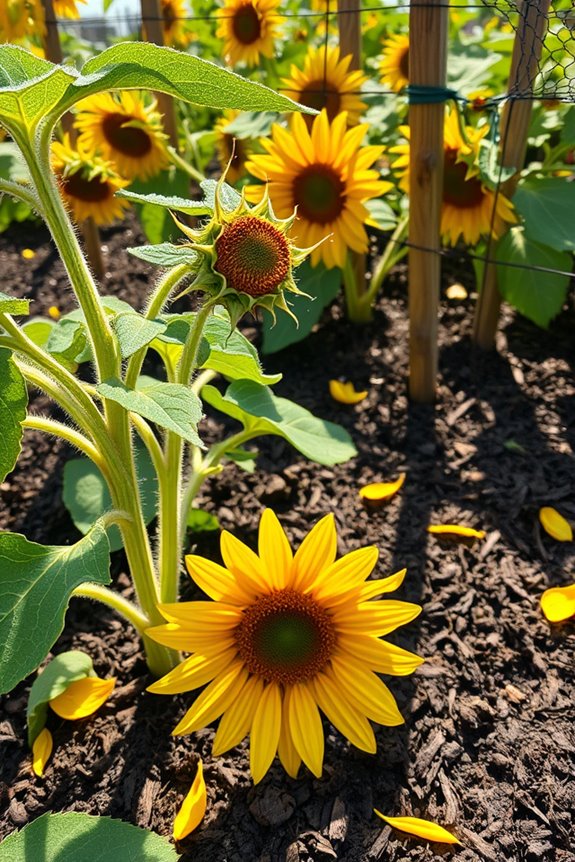
When deer get to your sunflowers before you can stop them, don’t assume the plants are finished. Recovery is possible with the right steps.
Start by using clean scissors to trim any broken stems and damaged leaves. This simple action signals to the plant that it should grow new tissue from the base. Afterward, apply a balanced fertilizer, something like a 10-10-10 blend, to support this new growth.
Timing matters quite a bit. If deer feed on your sunflowers early in the season, you have more time for recovery, though your final harvest will likely be smaller and the plants won’t reach their full height. Late-season damage is trickier because your growing window is already shrinking. For potted sunflowers damaged late in the year, move them indoors and focus on encouraging new leaves rather than expecting a full recovery before frost.
The success of your recovery depends on two things: how badly the plants are damaged and whether you’re growing annual or perennial varieties. Annuals that lose most of their leaves in late summer probably won’t produce much, while perennials may bounce back better next year if the roots stay healthy.