

Most municipalities require fence permits to check that your fence meets safety standards and local rules. You’ll typically need a permit for fences taller than four feet, though some areas have different height limits.
Start by calling your local city or county building department. They’ll tell you the specific rules for your area, including how tall your fence can be, how far it needs to be from your property line, and what documents you’ll need to submit. A single phone call usually gives you everything you need to know.
Skipping the permit process creates real problems. You could face fines, be required to remove the fence, or run into complications when you sell your property. The permit itself takes time to obtain—usually anywhere from a few days to a few weeks depending on where you live—so planning ahead helps you avoid delays.
Getting these details straightened out at the beginning makes the rest of your fence project straightforward. You’ll know exactly what you can and cannot do before you start building.
Do You Need a Fence Permit? Here’s How to Find Out?

Why You Need a Fence Permit
Most municipalities require fence permits before installation to check that your project follows local building codes and safety standards. Permit requirements differ depending on where you live—factors like height, placement, and how close your fence sits to property lines all play a role.
Most municipalities require fence permits to ensure your project follows local building codes and safety standards.
Contact your local building department or zoning office before you start building. They’ll explain the specific rules for your area. Many places require permits for fences taller than four feet. Your fence’s location matters too, especially if it’s near streets or your neighbor’s property.
Getting answers upfront prevents expensive problems and arguments down the road. A site survey shows exactly where your property lines are and confirms your fence will be placed legally. Taking this step protects what you’re spending and keeps you following community rules.
What Your Local Code Says About Fence Permits

Once you’ve decided a fence permit is necessary, you need to understand what your specific local code actually requires. Your local requirements vary significantly based on where you live.
Some municipalities focus on fence height. They typically allow four feet in front yards and six feet in backyards. Others emphasize setbacks, meaning you must position your fence a certain distance from property lines or sidewalks. The setback requirement might be three feet from a property line or five feet from a sidewalk, depending on your location.
Check your city or county building department’s website first. You’ll find their specific fence permit guidelines, required documents, and fee schedules there. If the information isn’t clear, call the department. Many staff members can explain exactly what you need without the confusing language that sometimes appears on websites.
Understanding these local requirements upfront saves you time and money. It also prevents the frustration of starting work only to find out you need to change your plans or remove what you’ve built.
Where to Find Your Local Fence Rules (and Who to Ask)
How to Find Your Local Fence Rules (and Who to Ask)
Start by calling your local city or county planning and building department. These offices handle fence permits and local codes, and staff members can answer your questions over the phone, through their website, or in person.
Next, look up your municipality’s zoning ordinances. These documents spell out setback rules—how far your fence must sit from your property line—and height restrictions. Setbacks often range from 5 to 10 feet depending on where you live, and height limits typically max out at 6 feet in residential areas.
If you belong to an HOA community, check those guidelines as well. Homeowners associations frequently set stricter limits than local codes do. You might find that your HOA allows only certain materials or colors, even if the city would approve something different.
Many jurisdictions post checklists or guides online. Websites like PermitFlow and your AHJ (Authority Having Jurisdiction) site offer searchable databases where you can look up your specific address or neighborhood. Getting these details now, rather than after you’ve already built or ordered materials, saves you weeks of delays and prevents having to rebuild sections that don’t meet code.
Fence Types, Heights, and Locations That Require Permits
Now that you know where to look for rules, it’s time to understand which fences actually need permits in your area. Most municipalities require a fence permit for privacy fences exceeding six feet in height. Your backyard typically allows up to six feet, while front yards usually cap out at four feet.
Most municipalities require fence permits for privacy fences exceeding six feet in height, with backyards allowing up to six feet and front yards capping at four feet.
Location matters significantly. Fences near property corners, intersections, or public rights-of-way almost always need permits because visibility is necessary for safety. If you’re planning a fence in these spots, expect the permit process to take two to four weeks in many areas.
New construction projects often include mandatory fence permits as part of the overall building requirements. Beyond height and location, certain materials like barbed wire face bans in many areas. Check your local ordinances for specific material restrictions before you purchase supplies.
If you’re in an HOA community, additional restrictions may apply beyond city codes. These communities sometimes require specific fence styles, colors, or materials that go stricter than what your city allows. Understanding these specifics prevents costly mistakes and keeps your fence project compliant from the start.
What Documents You’ll Need Before You Apply

Before heading to your local planning department, gather the right paperwork. This step takes a few hours but saves you from rejected applications and wasted trips.
Start with a property survey. This document shows your lot lines and exact dimensions. Most permit applications require this because it proves where your fence will sit relative to your property boundaries. If you don’t have a recent survey, your county assessor’s office can usually provide one, though there may be a small fee.
Next, prepare documentation about your fence itself. Write down the material (wood, vinyl, metal, etc.), the height in feet and inches, and exactly where it will be placed on your property. This matters because setback distances from property lines vary by location. A fence might need to sit 5 feet from one line but 10 feet from another, depending on local codes.
If you live in a community with an HOA or have CC&Rs (Covenants, Conditions, and Restrictions), gather those documents too. These agreements sometimes have their own fence rules that differ from city requirements.
Your planning department has a specific checklist for your area. Call them or check their website before gathering everything. Many departments list exactly what they need, sometimes including photos of your lot or a hand-drawn sketch showing fence placement. Getting these details right from the start means your application moves forward without delays, and you can schedule installation sooner.
How to File Your Permit Application
Once you’ve gathered your documents, you’re ready to submit your formal application. This step stays straightforward when you keep everything organized.
Head to your local permitting office with all materials prepared. You’ll need to bring your completed application form, site plan, property survey, and payment for fees. The process typically works like this:
- Submit your completed application form with all required signatures
- Include your site plan showing property lines and dimensions, along with your property survey documents
- Provide material specifications for your fence, such as the type of wood or vinyl, post spacing (typically 6 feet apart), and height measurements
- Pay the applicable permit fees, which usually range from $50 to $300 depending on your location and project scope
Many people hire licensed fence contractors to handle the entire process. A contractor knows what your specific jurisdiction requires, files everything correctly, and handles the paperwork on your behalf. This approach saves you time and reduces the chance of mistakes that could delay your project by weeks or months.
Whether you submit the application yourself or work with a contractor, you’re staying compliant with local codes from the beginning. That compliance matters because it prevents problems later when you sell your property or if a neighbor questions your fence.
What to Expect: Approval Timelines and Next Steps
Approval Timelines and Next Steps
After you submit your application, you enter the review phase. This is where waiting becomes part of the process. Your local Authority Having Jurisdiction (AHJ) will look at your site plans, property lines, and fence height specifications. How long this takes depends on how busy the office is and whether your HOA needs to approve the fence too.
After submission, your application enters the review phase—a waiting period where your local AHJ examines site plans, property lines, and fence specifications.
What Happens at Each Stage
Initial Review (3–7 days)
Staff members check whether your application is complete. They look for all required documents, signatures, and fees. Missing information here means delays later.
Plan Examination (1–2 weeks)
The detailed review begins. Inspectors measure your drawings against local codes. They verify that your fence height stays within limits—usually 4 to 6 feet for front yards and up to 8 feet for side or back yards, depending on your jurisdiction. They also confirm material choices meet neighborhood standards.
Possible Delays (Variable)
Sometimes the office asks for changes. You might need to adjust your fence line by a few inches or switch materials. When this happens, you resubmit your plans with updated measurements and material specifications. One homeowner had to move her fence line 18 inches because it encroached on a utility easement. It took two resubmittals but eventually cleared.
Approval Decision (Up to 4 weeks)
You receive your permit documentation. This paperwork proves you have permission to build.
After Approval (Ongoing)
Post the permit at your job site where inspectors can see it. Keep it visible during construction and any required inspections.
If Your Application Gets Denied
Read the rejection letter carefully. It will state exactly what doesn’t meet code. Common issues include fence height exceeding limits, materials not approved in your zone, or placement too close to property lines. Gather the required corrections and resubmit with precise measurements and material names. This straightforward approach moves the process forward without unnecessary back-and-forth.
Why Skipping a Permit Is Costly
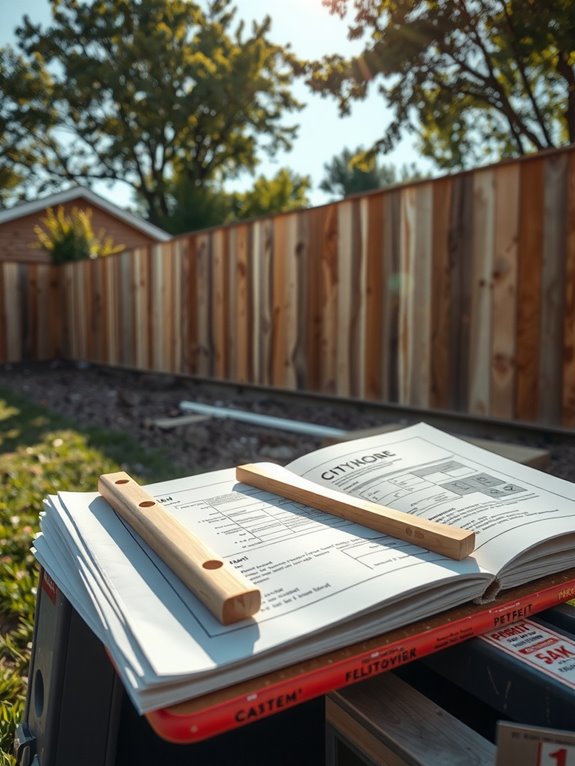
Why Skipping a Fence Permit Is Costly
Skipping a fence permit might seem like a shortcut, but it creates serious problems that cost far more than the permit fee itself. You’ll face hefty fines, stop-work orders, and legal penalties that damage both your wallet and your property records.
When you sell your home or refinance, unpermitted fencing becomes a major obstacle. Lenders and buyers require proof that work was done correctly and legally. An unpermitted fence can lower your property value and cause inspections or financing to fall through entirely.
In some cases, you may have to tear down the entire fence and rebuild it to code. This means paying twice for the same project—once for the unpermitted fence and again for removal and proper reconstruction. You also lose weeks or months to the removal and rebuild process, which adds frustration and delay on top of the extra expense.
A fence permit typically costs between $50 and $200 depending on your location and fence size. Compare that to potential fines that can reach $1,000 or more, plus the cost of demolition and rebuilding a 6-foot privacy fence, which can run $3,000 to $5,000 or higher. The permit is the least expensive part of the equation.
Legal Penalties And Fines
What happens when you install a fence without getting the required permit? You’re exposing yourself to serious legal consequences that can derail your project and drain your wallet.
When you skip the permitting process, you’re inviting several problems. Municipal inspectors can issue citations, demand removal of the structure, or escalate enforcement actions. These fines aren’t minor amounts—they compound quickly and can reach thousands of dollars depending on your local codes and fence specifications.
Financial and Work Penalties
Substantial fines get levied directly against you or passed to your contractor. Stop-work orders can halt construction immediately, creating costly delays. If you’re working with a contractor and an inspector finds unpermitted work, you may be responsible for their fines as well as your own.
Longer-Term Problems
Beyond the immediate financial hit, unpermitted structures create complications down the road. When you apply for permits on future projects—whether it’s a shed, deck, or addition—inspectors review your property history. A record of unpermitted work makes them scrutinize new applications more carefully. Property transactions also face obstacles when title searches or inspections uncover unpermitted structures. A buyer’s lender might require you to remove the fence or obtain retroactive permits before closing the sale.
Liability Issues
If safety problems emerge from your unpermitted fence—a post that wasn’t set properly causes it to fall and injures someone—you’re personally liable for damages. Your homeowner’s insurance may not cover incidents involving unpermitted work.
Spending 2 to 4 weeks on the permitting process upfront costs far less than correcting violations or dealing with removal orders later.
Property Value Impact
When you skip the permit process for a fence, you create real problems that affect your home’s sale down the road. Lenders won’t approve mortgages for properties with unpermitted structures. This is a straightforward fact that stops deals before they start.
During the appraisal process, inspectors find these issues. When they do, your home’s value drops immediately. A fence that costs $2,000 to $5,000 to install can reduce your property value by $10,000 or more if it lacks permits.
Permitted fences tell a different story. The paperwork shows your fence follows local building codes and safety standards. Buyers see this documentation and feel confident about their purchase. They know the structure meets zoning requirements and won’t create problems later.
Without permits, you might face unexpected costs later. Local code enforcement could require you to bring the fence into compliance, which takes time and money. In some cases, you’ll need to remove the fence entirely. If you have a homeowners association, violations add another layer of problems that can delay your sale by months.
These hidden costs eat into what you make when you sell. A 6-month delay while fixing compliance issues means carrying mortgage payments longer. Removal and reinstallation of a 40-foot fence section can run $3,000 to $8,000.
Getting the permit upfront takes 2 to 4 weeks and costs between $100 and $500 depending on your location. This small investment protects your property’s marketability and keeps your investment solid for the years ahead.
Costly Removal And Redo
Costly Removal And Redo
Beyond affecting your home’s resale value, skipping a fence permit creates a direct financial problem. If code enforcement discovers your unpermitted fence, you’ll pay to fix or remove it.
Here’s what happens when inspectors find violations:
Removal and reconstruction costs. Tearing down an entire fence structure typically costs more than the original installation. A 6-foot privacy fence removal might run $1,500 to $3,000, depending on the fence length and material. If your fence violates building codes—perhaps it’s too tall or sits too close to the property line—you’ll pay again to either modify it or rebuild it completely to meet local standards.
Fines from code enforcement. Citations come directly to you, and these penalties add up quickly on top of removal and reconstruction expenses.
Damage to your permit record. Unpermitted work stays on file. When you apply for future projects—whether another fence, a deck, or a garage addition—inspectors scrutinize your applications more carefully. This means longer approval timelines and higher costs for each subsequent project.
Stop-work orders and tight deadlines. Once violations are discovered, inspectors issue orders to stop immediately. You then have a limited window, often 10 to 30 days depending on your jurisdiction, to correct the problem. Missing these deadlines brings additional fines.
Getting the fence permit upfront costs far less than paying for removal, redesign, fines, and future complications combined.
Tools to Speed Up Your Permit Application
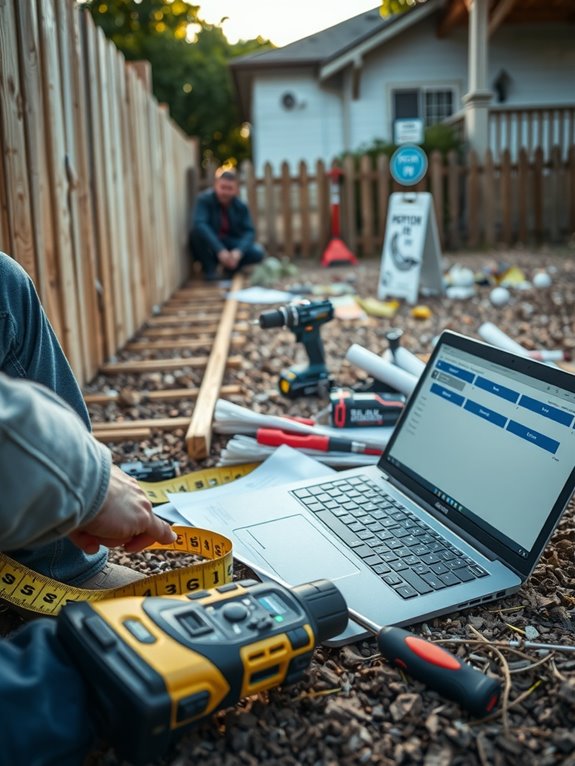
Once you’ve gathered your site plan, property survey, and material specifications, centralized permitting platforms help you organize everything in one digital location. These systems let you upload your site plan showing property lines and dimensions, attach material specs listing fence height and materials, and track your application status without making repeated calls to your planning department.
The main benefit is clarity. You know exactly what documents are needed, where your application stands in the review process, and when approvals arrive. Digital organization reduces the confusion that comes from juggling paper forms and verbal updates. Contractors who use these platforms report cutting their permit timelines by two to three weeks on average.
Here’s how the process typically works. You log into the platform, upload each required document in the specified format, and the system creates a checklist showing what’s complete and what still needs attention. If the planning department requests additional information—say, a revised fence height measurement or clarification on material grade—you receive a notification and can upload the correction immediately. This back-and-forth happens in days rather than weeks.