
Start by measuring your fence height. Taller fences—say, 6 feet or more—need posts closer together because they catch more wind and put stress on the structure. A 4-foot fence can handle 8-foot spacing, but a 6-foot fence works better at 6-foot intervals.
Next, look up your local frost line depth and building codes. These rules exist because ground freezes differently depending on where you live. In cold regions, the frost line might be 3 or 4 feet deep, which means you’ll dig deeper and may need to adjust your spacing accordingly. Call your local building department or check online—they’ll tell you exactly what applies to your area.
Think about your climate and weather patterns. Windy regions call for tighter spacing, maybe 4 to 6 feet apart, because wind pressure on the fence panels increases the load on each post. In mild, calm areas, you can stretch to 8 feet without worry.
If you’re adding privacy slats or fabric to your fence, reduce your spacing to 6 to 8 feet. The extra material adds weight and wind resistance, so your posts need to work harder and closer together to handle it.
Plan your terminal posts—the ones at corners and gates—to be stronger and set deeper than your line posts. You can space these main posts like your regular line posts, but they need thicker material, like 4×4 wood instead of 2×4, because they handle turning forces and gate weight.
Determine Chain Link Fence Post Spacing by Height and Use
Chain Link Fence Post Spacing by Height and Use
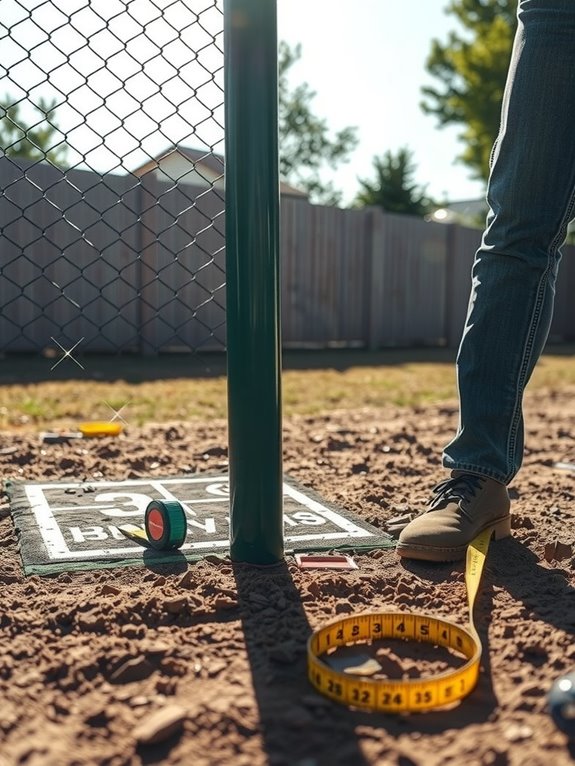
The spacing between your fence posts comes down to two main factors: how tall your fence stands and what job it needs to do.
Residential Fences
For a typical home fence between 4 and 6 feet tall, space your line posts 8 to 10 feet apart. This distance gives you a good balance. You get enough support for the fence to stay upright and handle normal weather, while keeping your material costs reasonable. The posts don’t need to be closer together unless your situation calls for it.
Commercial and High-Stress Installations
Commercial fences often use tighter spacing at 8 feet between posts. This closer spacing increases stability and helps the fence resist damage from daily wear and weather exposure. When your fence climbs above 6 feet or when you live in an area with strong winds, move your posts closer together—about 6 feet apart works well. The added height catches more wind, and closer posts distribute that force more evenly along the fence line.
Corner and Gate Posts
Terminal posts at corners and gates take more punishment than line posts. Build them with heavier material and set them deeper in the ground, typically 3 feet down instead of 2 feet. They follow the same spacing pattern as your line posts, but the extra strength prevents your fence from sagging or twisting at these stress points.
Your local climate and fence height determine the final spacing you should use. Windier areas and taller fences both benefit from closer post placement.
Check Local Frost Line and Code Spacing Requirements
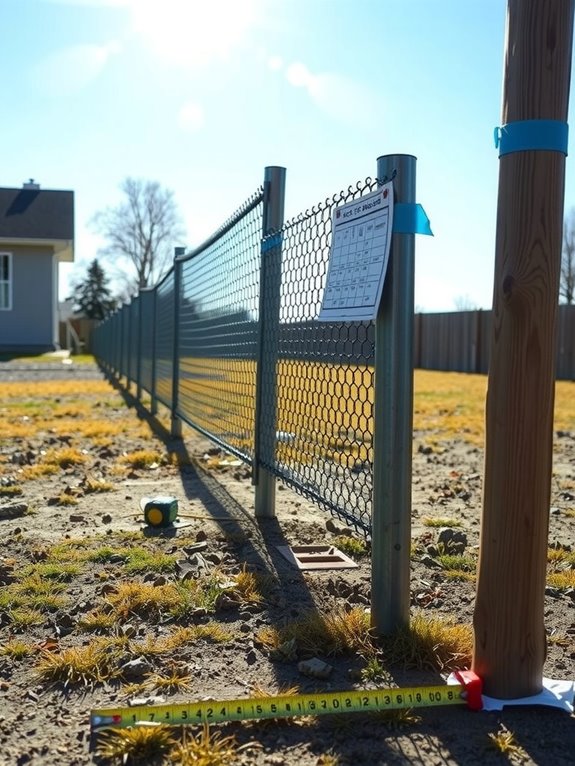
Why does your local frost line matter so much for fence post spacing? Your region’s frost depth directly determines how deep you’ll dig and how closely you’ll space posts. When soil freezes, it expands—a process called frost heave—that shifts your chain link fence posts upward if they’re not anchored properly below the frost line.
Building codes mandate specific fence depth requirements based on your area’s frost penetration. Frost-prone regions typically require 6–8 foot post spacing with deeper concrete footings, while milder climates allow 8–10 foot spacing. These regulations account for wind load and ground movement.
Before you dig a single hole, consult your local codes and HOA rules. They’ll specify exact frost line depths and spacing mandates for your area. This research prevents costly repairs and keeps your fence stable year-round.
Adjust Post Spacing for Privacy Slats and Fabric Weight
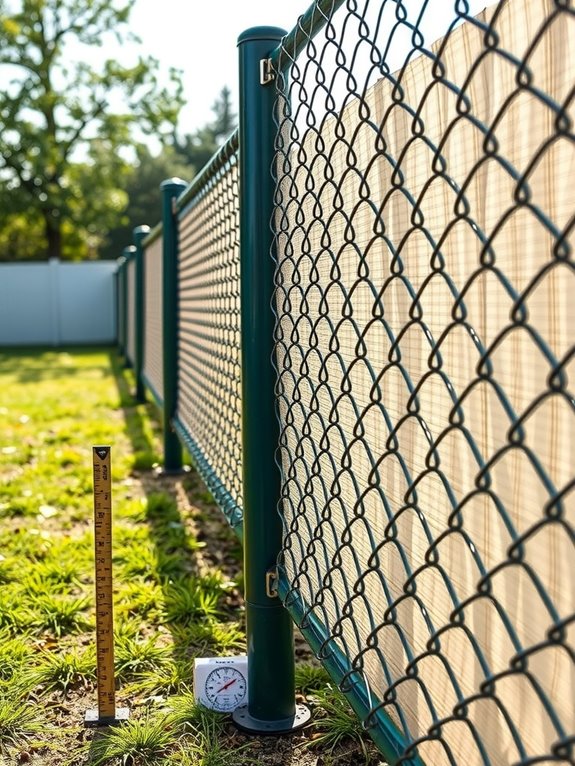
Once you add privacy slats or heavier fabric to your chain link fence, the standard 8–10 foot post spacing needs adjustment. The added weight and wind resistance require closer support points between posts.
Reduce your post spacing to 6–8 feet, particularly for mid-run posts and terminal posts that carry extra load. In high-wind areas or on taller fences, aim for 6-foot spacing. This closer distance distributes the fabric weight more evenly and prevents the outward pull that heavier materials create.
Without adequate post support, you’ll see sag and deflection develop over months. Heavier fabric creates constant tension that works against your posts. The tighter spacing keeps this tension under control and maintains the fence’s straight appearance and structural integrity over time.
Plan Terminal Posts at Corners and Gates
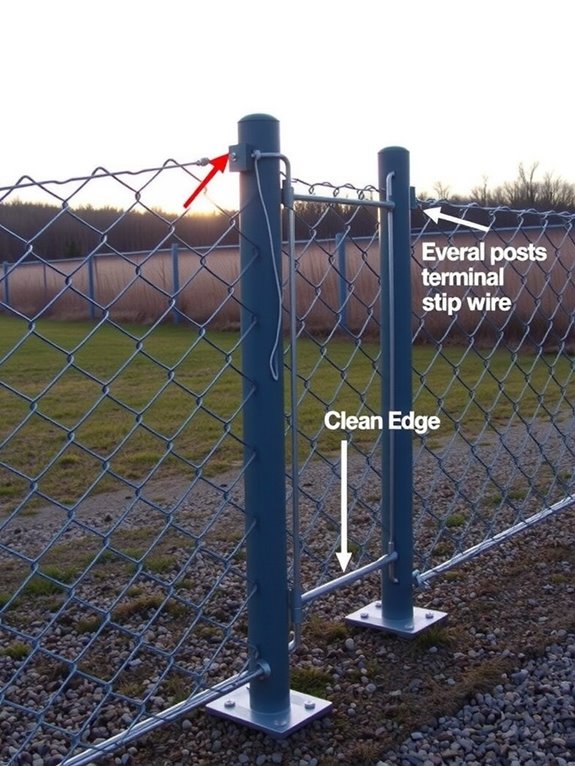
Terminal Posts at Corners and Gates
Terminal posts are the anchor points where your fence corners and gates sit. These posts handle more stress than the regular posts along your fence line, so they need to be stronger. Use posts that are heavier-gauge or larger in diameter for these locations. The difference matters because corner and gate posts resist pulling and wind forces in ways that line posts do not.
Install your terminal posts before you put in any line posts. This step keeps everything aligned correctly and makes it easier to space your middle posts evenly. Starting with terminals gives you a solid framework to build from.
At corners and gates, dig deeper holes and set these posts in concrete footings rather than soil alone. A standard line post might go 24 to 30 inches deep, but terminal posts should go 36 to 42 inches into the ground with concrete support. The concrete needs to extend at least 6 inches above ground level to shed water away from the post.
In areas where wind picks up speed regularly, space your posts closer together near the terminal points and consider footings that go even deeper—sometimes 48 inches or more. Wind creates a lever effect on tall posts. The higher your fence, the more force the wind applies at the top. A deeper footing at the corners and ends prevents this sideways push from pulling your posts loose.
Your corner and end posts hold the whole fence together. Pay attention to the quality of materials you choose and the depth of your footings. These decisions protect your investment over time.
Calculate Line Post Spacing and Verify Compliance
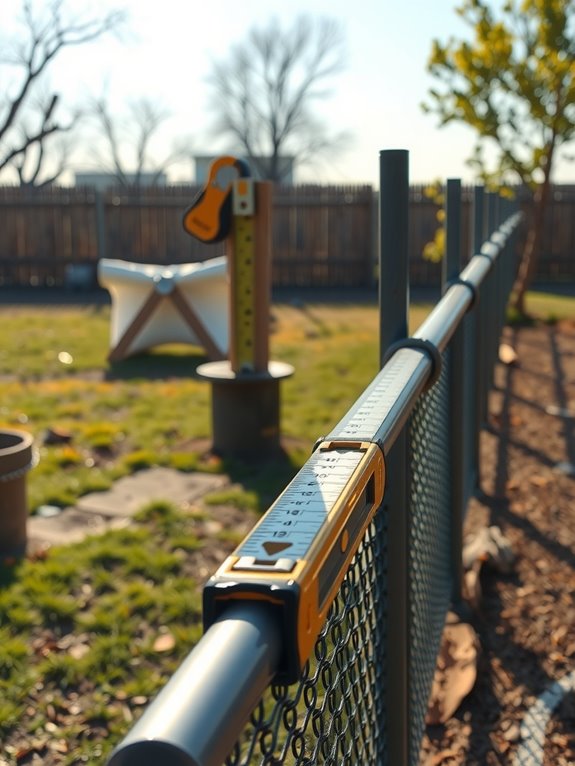
Calculate Line Post Spacing and Verify Compliance
Finding the right spots for your line posts comes down to simple math. Measure your total fence length, subtract the space taken up by your two terminal posts, then divide what’s left by your chosen spacing distance. Most fences use 8-foot spacing, though 6 feet works better if you want privacy slats or live where wind pushes harder against the fence.
Let’s say you have 100 feet of fence. Your two terminal posts sit at the ends, so you work with 100 feet. If you choose 8-foot spacing, you divide 100 by 8, which gives you about 12 line posts needed between the terminals. The math tells you exactly how many posts to buy and where to dig.
Before you drive the first post into the ground, check your local building codes. These rules exist for a reason—they tell you how deep to set your footings based on where you live. Areas with strong winds need deeper holes and stronger support, often 3 to 4 feet deep instead of 2 feet. Sand and loose soil need deeper footings than clay or rock.
Look at your specific site too. Notice how wind moves across your property, whether the ground slopes, and what kind of soil you have. Rocky ground might crack if you drive posts too hard. Wet, marshy soil needs different handling than dry dirt. These details matter when you’re planning for a fence that will still stand straight 10 or 15 years from now.