
Start by Finding Your Last Frost Date
Look up your last frost date through your local cooperative extension office or an online frost date calculator. This date tells you when the final spring freeze typically happens in your area. Once you have that date, count backward eight weeks on a calendar. That backward count gives you your indoor seed-starting date.
Match Your Tomato Type to Its Timeline
Different tomato varieties need different amounts of time indoors before moving outside. Determinate varieties—the compact, bush-type tomatoes—need 6 to 8 weeks of indoor growing before your frost date arrives. Indeterminate types, which grow tall and produce fruit all season, require 8 to 10 weeks indoors. Dwarf varieties are faster and need only 4 to 6 weeks before transplanting.
Knowing your tomato type before you start prevents you from either rushing seedlings outdoors too early or keeping them indoors too long, where they become spindly and weak.
Prepare Your Indoor Growing Setup
Before sowing any seeds, gather your supplies: seed-starting mix (a light, sterile blend designed for seedlings), small containers with drainage holes, grow lights, and a heating mat set to around 70 to 75 degrees Fahrenheit. Seed-starting mix differs from regular potting soil—it’s lighter and won’t compact around delicate young roots.
Position your grow lights 2 to 3 inches above the soil surface, and adjust them as seedlings grow. A heating mat warms the soil gently, which speeds up germination without overheating the room. Having everything ready before planting day means your seeds get consistent conditions from the moment they sprout.
Find Your Last Frost Date and Count Back 8 Weeks
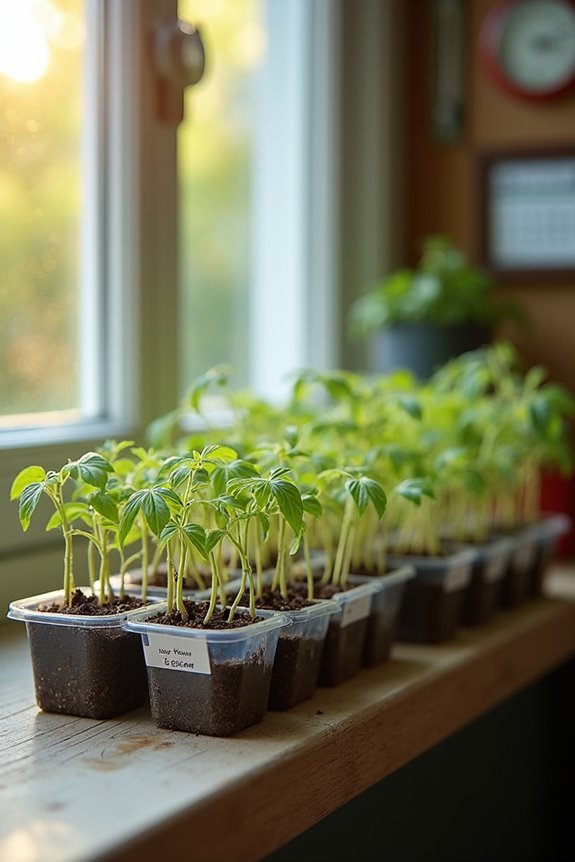
When should you start tomato seeds indoors? The answer depends on one piece of information: your last frost date. This is the final day in spring when freezing temperatures typically occur in your area. Once you know this date, transplanting seedlings outside becomes safe.
Here’s the straightforward approach. Count backward exactly eight weeks from your last frost date. This eight-week period lets your seeds germinate, develop into sturdy plants, and go through hardening-off before you move them outside.
Let’s use a concrete example. If your last frost date is May 26, you’d begin sowing seeds indoors around March 31. Those eight weeks cover each growth phase—sprouting takes about 7 to 10 days, seedling growth takes another 4 to 5 weeks, and hardening-off (getting plants used to outdoor conditions) takes the final 1 to 2 weeks. This timing keeps seedlings from being too fragile or overgrown when transplant day arrives.
If you plan to use row covers, cold frames, or a greenhouse, you can adjust this schedule earlier. These tools extend your growing season by protecting young plants from late frosts. Start by finding your specific frost-free date through your local agricultural extension office or a frost date calculator. Everything else follows from that single date.
Pick Your Tomato Type and Shift Your Start Date
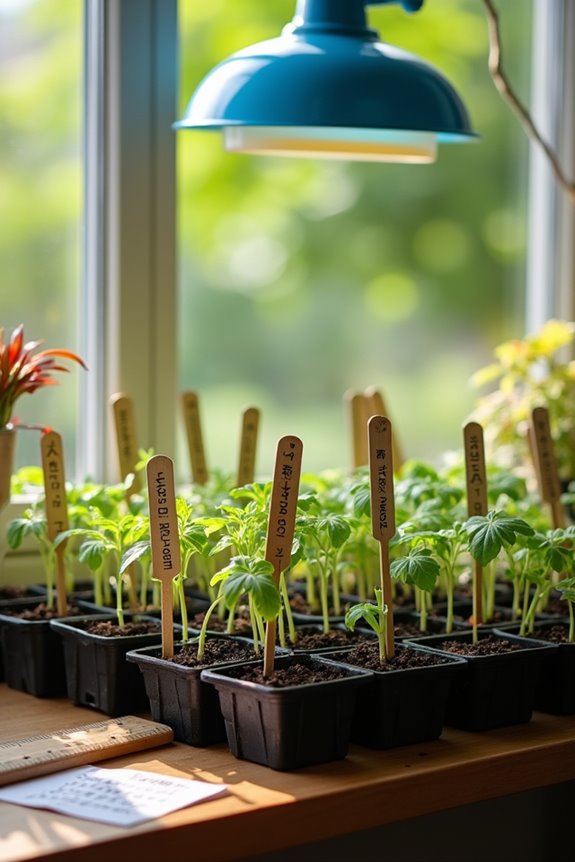
How you grow your tomatoes matters just as much as when you start them. Different tomato varieties need different amounts of time indoors before they’re ready to move outside.
| Tomato Type | Start Indoors | Growing Season |
|---|---|---|
| Determinate | 6-8 weeks before last frost | 60-80 days |
| Indeterminate | 8-10 weeks before last frost | 70-85+ days |
| Dwarf/Tumbler | 4-6 weeks before last frost | 50-70 days |
| Early varieties | 6 weeks before last frost | 50-65 days |
| Standard varieties | 7-8 weeks before last frost | 70-80 days |
Understanding Your Tomato Type
Determinate tomatoes produce all their fruit at once, usually within 60 to 80 days. This means you should start seeds indoors 6 to 8 weeks before your last frost date. If your region typically has frost until May 15, you’d count back and start seeds around March 20.
Indeterminate varieties work differently. They keep producing fruit throughout the entire growing season, which can last 70 to 85 days or longer. These plants need more time indoors—about 8 to 10 weeks before your last frost date—so they’re strong enough to produce continuously once transplanted outside.
Dwarf and tumbler types are compact plants that fit well in containers and shorter growing seasons. Start these 4 to 6 weeks before your last frost date. They mature faster than standard types, typically within 50 to 70 days.
Early varieties were bred to produce quickly in regions with brief growing seasons. Begin these 6 weeks before your last frost date. Standard varieties need a bit more time, so start them 7 to 8 weeks before your last frost date.
Counting Backward From Your Frost Date
Once you know your last frost date and your tomato variety, count backward on your calendar. Write down the date you’ll start seeds indoors. This backward counting gives your plants enough time to grow strong indoors before hardening them off and moving them outside.
Prepare Your Indoor Setup Before You Sow
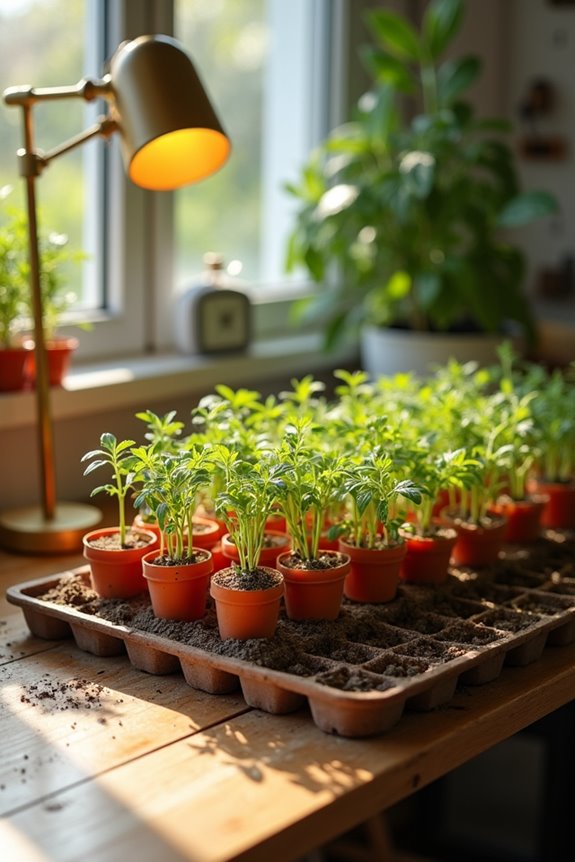
Before you plant a single seed, you’ll want to gather your supplies and create the right environment for germination. Collect sterile seed-starting mix, plastic containers with drainage holes, a humidity dome, and a heating mat. You’ll also need grow lights to provide the 12 or more hours of daily light your seedlings need.
Moisten your seed-starting mix thoroughly before sowing. Plant 2-3 tomato seeds per pot at the proper depth—just cover them lightly with soil. Place containers in a warm location, ideally between 70-80°F, to speed up germination.
Label each container right away with the variety name and planting date. This simple step helps you know exactly when to move your seedlings to larger pots later on. Once sprouts emerge, remove the humidity dome so air can move around the plants more easily. Your indoor setup is now ready to support healthy seedlings as they grow toward their next phase.