Black algae shows up when your pool isn’t getting the right care. Think of it like this: algae needs three things to grow, and if you give it even two of them, you’re in trouble.
The first issue is low chlorine. Your chlorine level should stay between 2 and 3 ppm (parts per million). When it drops below 2 ppm, you’ve basically removed the main thing stopping algae from spreading. The second problem is pH that’s too high—anything above 7.8 makes conditions better for algae to settle in. Poor water movement is the third factor. Stagnant corners, dead zones behind ladders, and places where your pump’s circulation doesn’t reach become perfect hiding spots.
Algae spores get into your pool in surprising ways. They hitch rides on contaminated swimsuits from other pools or hot tubs. Once inside, they look for rough places to grab onto. Cracked plaster and rough grout lines are ideal because algae cells can stick there and start colonies. Smooth surfaces are much harder for them to attach to.
Here’s what happens if you skip brushing your pool. Without regular brushing paired with proper chlorine levels (between 2 and 3 ppm), algae cells settle in and multiply. A week of neglect in warm weather can turn a small problem into a visible bloom. Brushing at least twice a week, combined with maintaining your chemistry, stops this before it starts.
What Makes Black Algae So Hard to Kill
Why Black Algae Resists Standard Treatment
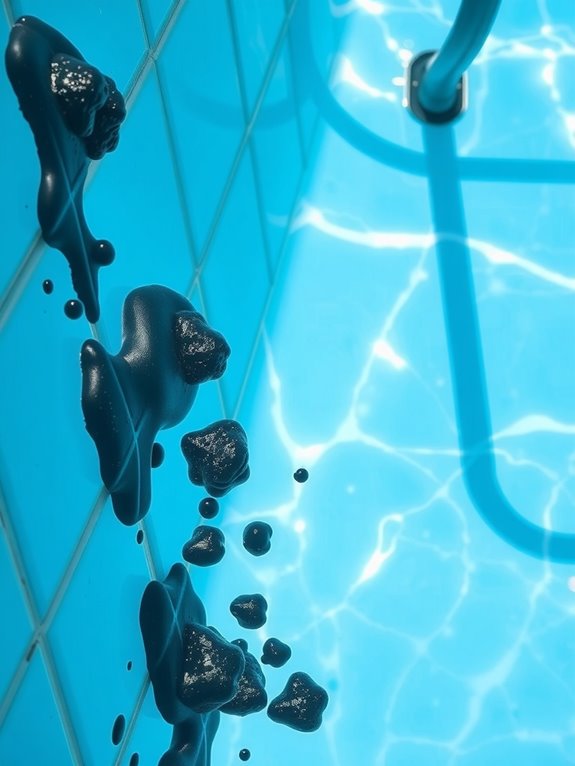
Black algae presents a different problem than other pool issues because it doesn’t respond to chlorine the way green or mustard algae do. The algae burrow deep into porous surfaces like plaster and grout, anchoring themselves with root-like structures that chlorine can’t reach. Think of it like trying to clean dirt out of a sponge—the particles hide inside the pores.
The algae’s outer layer works as a protective shield. Regular chlorine hits this barrier and stops. The disinfectant never penetrates to the living cells underneath, so the algae survive even when your chlorine levels are normal.
Where Black Algae Hides
These organisms settle in the hardest-to-reach spots: cracks along the pool floor, corners where circulation weakens, and rough grout lines. Water movement doesn’t carry sanitizer to these pockets effectively. You can raise your chlorine to 10 or 15 parts per million and still find black algae thriving in a crack you haven’t brushed.
The Two-Step Removal Process
You need physical removal first. Brush the affected areas aggressively with a stiff pool brush, breaking through that protective layer and dislodging the algae from the surface. Only after brushing does sanitizer actually have access to kill what remains. Without the brushing step, you’re fighting a battle you can’t win with chemistry alone. Once you’ve scrubbed the spots thoroughly, then raise your chlorine and let the sanitizer finish the job.
How Poor Water Chemistry Creates Ideal Conditions
When you don’t maintain proper water chemistry, you create conditions where black algae can settle in and multiply. Think of it like leaving your front door unlocked—algae spores are waiting for their chance to move in.
Low chlorine levels are the first problem. Your pool needs chlorine between 1 to 3 parts per million to fight off algae. When levels drop below this range, your pool’s defense weakens significantly. pH imbalance makes things worse. The ideal pH range is 7.2 to 7.6. Outside this range, chlorine loses its ability to work effectively against algae.
Poor circulation and filtration create another opening for trouble. Water that doesn’t move around develops dead zones—areas where algae spores can land and establish themselves without being swept away by the filter system. These stagnant spots are where algae problems often begin.
The connection between these factors works like this: weak chlorine levels combined with bad pH and poor water movement give algae everything it needs to take hold. You don’t need just one problem to have algae issues. Usually, it’s the combination of multiple chemistry failures working together that allows algae to gain a foothold in your pool.
Low Chlorine Levels
Low Chlorine Levels
Black algae takes hold when your chlorine drops below safe levels. Think of chlorine as your pool’s first line of defense. It stops algae spores before they can settle and grow. Without enough chlorine in the water, those spores land on pool surfaces and begin to establish themselves.
Your water chemistry directly affects how well chlorine works. When pH gets out of balance, your sanitizer becomes less effective. A pH between 7.2 and 7.6 keeps chlorine working at its best. If your pH climbs to 8.0 or higher, chlorine loses power even when you’re adding it regularly.
Circulation and filtration systems remove the nutrients and floating spores that feed algae. When these systems run poorly alongside low chlorine levels, black algae finds perfect hiding spots in cracks and textured areas around your pool. A working filter catches particles daily. A functioning pump moves water through the filter so nothing stagnates.
The timeline matters here. Black algae can appear within 3 to 7 days when conditions are right. Catching the problem early means less scrubbing later. Keep your chlorine at 1.0 to 3.0 parts per million during the swimming season, and test your water at least twice a week. This routine prevents the conditions that allow black algae to gain a foothold in the first place.
pH Imbalance Effects
Your pool’s pH level directly controls how well chlorine fights algae. When your pH drifts too high or too low, you’re undermining your chlorine’s ability to protect your pool, which is your main defense against algae invasion.
Here’s what happens at the chemical level: high pH reduces your chlorine’s disinfection power. This allows black algae to embed itself in cracks and rough pool surfaces where it can thrive. You need to maintain pH between 7.2 and 7.6 to keep chlorine working effectively.
Low chlorine combined with pH imbalance creates ideal conditions for algae to reproduce. This combination is why black algae becomes so stubborn and difficult to remove once established. The two problems feed each other—bad pH weakens your chlorine, and weak chlorine lets algae multiply.
Regular testing keeps you protected. Check your pH twice a week during swimming season, and more often if you’ve just added chemicals or had heavy rain. Testing takes about five minutes with a kit or test strips, and the small effort prevents weeks of fighting algae later.
Circulation And Filtration
Ever notice how leaves pile up in the shallow end while the deep end stays clear. That’s what happens inside your pool when water doesn’t move around properly. When circulation fails, certain spots develop into dead zones where black algae can grow without anything stopping it.
Why Poor Circulation Creates Problems
Stagnant water develops low chlorine levels, which weakens your pool’s ability to fight algae. Debris and algae spores accumulate in these still areas because the filter can’t reach them. Treatments like algaecides and shock chemicals won’t work effectively if the water isn’t moving them around to all surfaces. Black algae have another advantage in stagnant zones—they establish roots in cracks before you even see them.
The Turnover Rate Matters
Your pool turnover rate measures how quickly all the water cycles through your filter. Aim for complete turnover every 6 to 8 hours. This constant movement does two things at once. Filtration removes algae spores before they can settle and colonize, while circulation distributes your sanitizer evenly throughout the pool. Together, these processes prevent black algae from taking hold. Without both working together, you’re leaving your pool vulnerable to infestation.
Low Chlorine: The #1 Black Algae Enabler
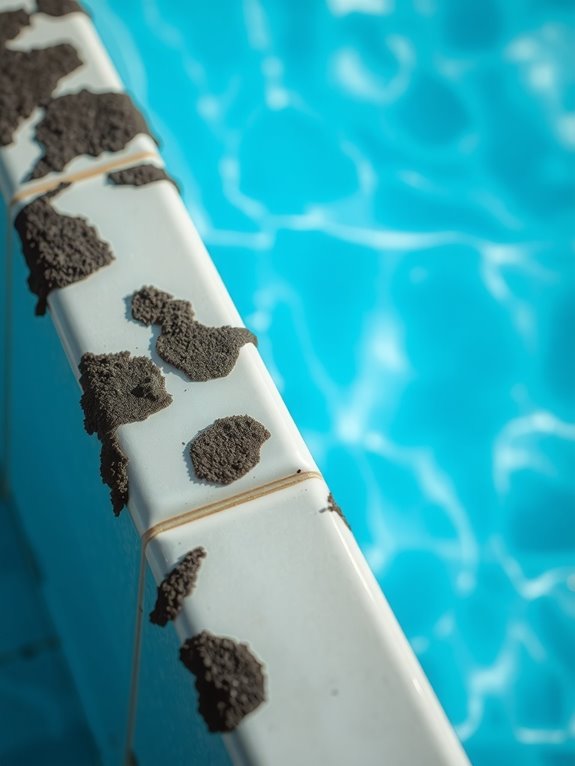
Chlorine is your pool’s main defense against algae. When levels drop below 1-3 parts per million (ppm), black algae can begin to take hold. Your sanitizer works by breaking down algae cell walls, but low chlorine means those cells survive and multiply, especially on rough pool surfaces where they can hide and thrive.
Here’s what many pool owners miss: the chlorine level is only half the equation. A pH reading above 7.6 or below 7.2 will neutralize your chlorine’s effectiveness, even when the chlorine number looks right on your test strip. You need both measurements working together. If your chlorine is at 2 ppm but your pH sits at 8.0, that chlorine won’t perform like it should. Check your chlorine level first, then check your pH. Both matter equally for stopping black algae before it starts.
Chlorine’s Disinfection Power
Why does black algae thrive in some pools but not others? The answer comes down to your chlorine levels and how well you’re protecting your water. When you keep chlorine at the right amount, you create conditions where algae can’t survive.
Here’s what chlorine does when it’s working properly:
- Kills existing algae before they can establish themselves
- Stops new algae spores from taking hold
- Keeps sanitizer spread throughout your pool water
- Allows water circulation to reach every area
You need to maintain 1–3 ppm (parts per million) of chlorine to prevent black algae from getting started. Below these levels, algae find shelter in cracks and rough surfaces where chlorine can’t reach them effectively. Your regular chlorine maintenance directly determines whether your pool becomes a place where algae can’t survive or where it spreads unchecked.
Recommended Chlorine Levels
Keep your pool’s chlorine between 2-4 parts per million, with 3 ppm being the target most pool experts recommend. Black algae thrives when chlorine drops below these levels, especially if your pH isn’t balanced at the same time.
Chlorine works more effectively when your pH stays between 7.2 and 7.6. This balance matters because chlorine alone can’t fight algae in dead zones—those are the corners and rough surfaces where water doesn’t circulate well. Black algae settles into these porous areas and becomes harder to remove.
Test your water twice each week during warm months when algae grows fastest. Keeping consistent chlorine levels prevents algae from getting started in the first place, which is much easier than treating an outbreak later. Regular testing and maintenance protect both your pool and the people using it.
pH and Chlorine Effectiveness
When your chlorine level drops below 2 ppm, algae finds conditions favorable to grow. pH plays a direct role in how well your chlorine works to prevent this problem.
How pH Affects Chlorine Power
High pH weakens chlorine’s ability to fight algae and bacteria. When your pH climbs above 7.8, your chlorine becomes less effective at disinfection even if the ppm level looks acceptable on a test strip. The reason comes down to chemistry: chlorine changes its form depending on pH, and at higher pH levels, it shifts into a weaker form.
The Right Balance Matters
Maintaining 1-3 ppm chlorine paired with a pH between 7.2-7.6 gives you the strongest disinfection impact. This combination works because both measurements support each other. When either one falls outside the proper range, your pool loses protection against algae growth.
Testing and Maintenance
Test both chlorine and pH once a week. This regular schedule keeps you ahead of problems before they develop. A typical pool test kit lets you measure both values in minutes. By staying consistent with these two measurements, you avoid the situation where chlorine and pH work against each other instead of together.
Porous Surfaces: Where Black Algae Take Root
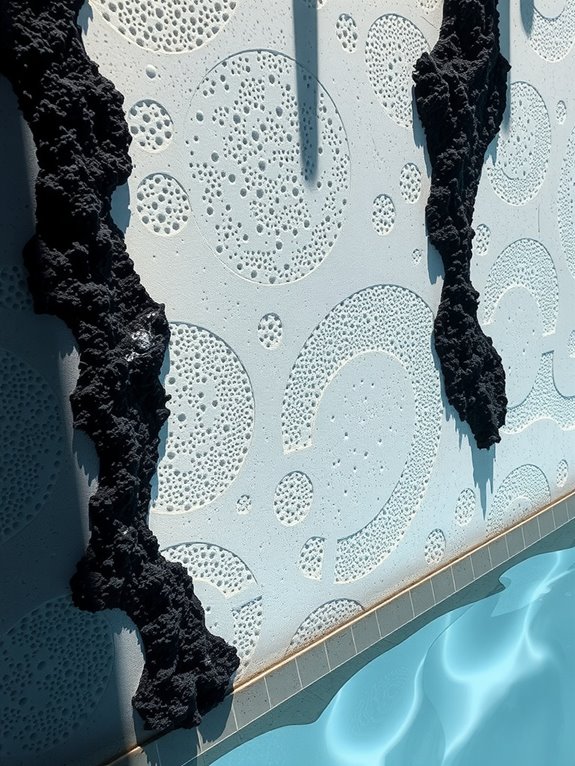
Ever noticed how black algae sticks stubbornly to your pool’s plaster or pebble finish instead of floating around like other algae types. That happens because rough surfaces give black algae exactly what it needs to survive.
Your pool’s textured walls and floor create tiny gaps called micro-crevices. These gaps trap water and hold algae spores in place. Once the spores settle, they develop roots that burrow deep into the material itself, making them hard to remove.
Understanding Your Pool’s Vulnerable Spots
Different pool surfaces trap water and algae at different rates:
| Surface Type | Moisture Retention | Algae Root Depth | Staining Risk |
|---|---|---|---|
| Plaster | High | Deep | Severe |
| Pebble finish | Very high | Very deep | Permanent |
| Smooth tile | Low | Shallow | Minimal |
| Cracked grout | Extreme | Extensive | Stubborn |
Worn plaster holds moisture longer than new plaster. Pebble finishes, with their bumpy texture, retain water even longer—sometimes staying damp for 6 to 8 hours after brushing. Smooth tile drains quickly, so algae struggles to gain a foothold. Cracked grout lines between tiles act like small channels, allowing water and spores to penetrate underneath the surface.
Items from lakes, rivers, or natural water sources introduce algae spores. A swimsuit that’s been in a lake, pool toys, or equipment can carry dormant spores directly into your pool. These spores settle into the textured areas and begin multiplying within 24 to 48 hours under the right conditions.
Fighting black algae means targeting these vulnerable areas first. Regular brushing of plaster and pebble surfaces prevents spores from taking hold. For grout lines, a weekly pass with a stiff brush removes trapped moisture and spores before they can establish roots.
Dead Zones: How Poor Circulation Spreads Colonies
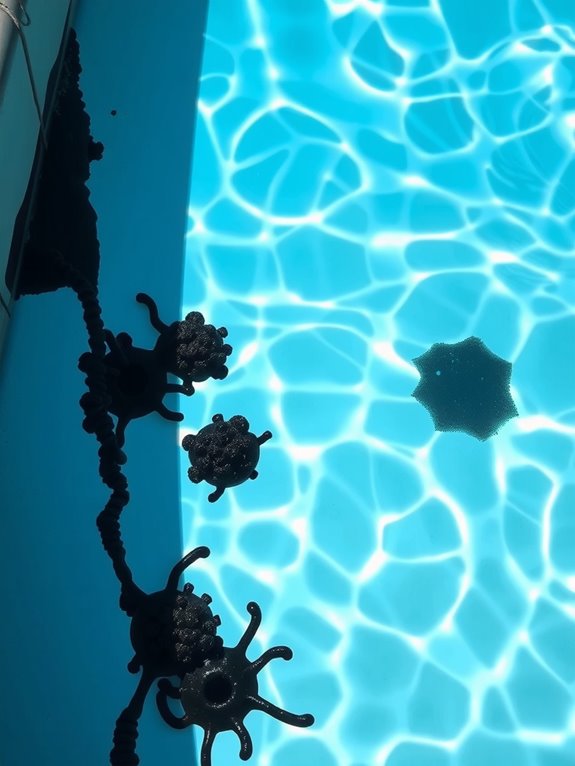
Why do some corners of your pool stay cloudy while others stay crystal clear. Poor circulation creates dead zones—areas where water sits motionless instead of moving through your pump and filter system. Black algae love these stagnant zones because they can establish colonies without disturbance.
When your pump doesn’t reach every section of your pool, you’re creating an ideal environment for algae to grow. In a 20-by-40-foot pool, dead zones typically form in corners, deep ends behind ladders, under rails, and along walls. Here’s what happens in these neglected spots:
- Water stalls completely, sometimes for hours between circulation cycles
- Chlorine can’t reach algae spores effectively because the chemical doesn’t travel to those areas
- Debris accumulates on pool surfaces and settles into crevices
- Black algae roots deepen into grooves where they become harder to remove
You’ll notice these spots first because they look different from the rest of your pool. Cloudy patches or dark discoloration are your warning signs that circulation isn’t reaching those areas.
Improving water movement throughout your pool prevents colonies from taking hold in the first place. Run your pump for 8 to 12 hours daily during swimming season, and position any return jets or circulation equipment to direct water toward corners and low areas. This simple approach stops black algae before they establish themselves in your pool.
Why Skipped Brushing Lets Algae Establish Itself
How much damage can skipping a few brushing sessions really do. When you skip brushing, you’re letting black algae build protective barriers that chlorine can’t penetrate. The algae’s roots dig deeper into surface cracks while their outer layer shields them from disinfection.
| Brushing Frequency | Algae Protection | Chlorine Effectiveness |
|---|---|---|
| Regular (2-3x weekly) | Minimal | High |
| Occasional (weekly) | Moderate | Medium |
| Skipped (2+ weeks) | Maximum | Low |
Think of black algae like a fortress with walls and a moat. Chlorine works well against exposed algae cells on the surface, but it can’t reach the roots that anchor beneath cracks and crevices. When you skip brushing sessions, those roots stay protected and keep feeding the colony growth. The algae cells on top act like a shield, blocking chlorine from doing its job.
Consistent brushing breaks down these defenses. By scrubbing walls and the pool floor 2-3 times per week with a nylon or stainless steel brush, you dislodge the protective outer layer and expose those roots. Once exposed, chlorine can reach and kill the algae more effectively. Start brushing your pool’s surfaces regularly to prevent colonies from getting a foothold in those vulnerable cracks where they thrive.
Shade, Heat, and Stagnation: The Perfect Storm
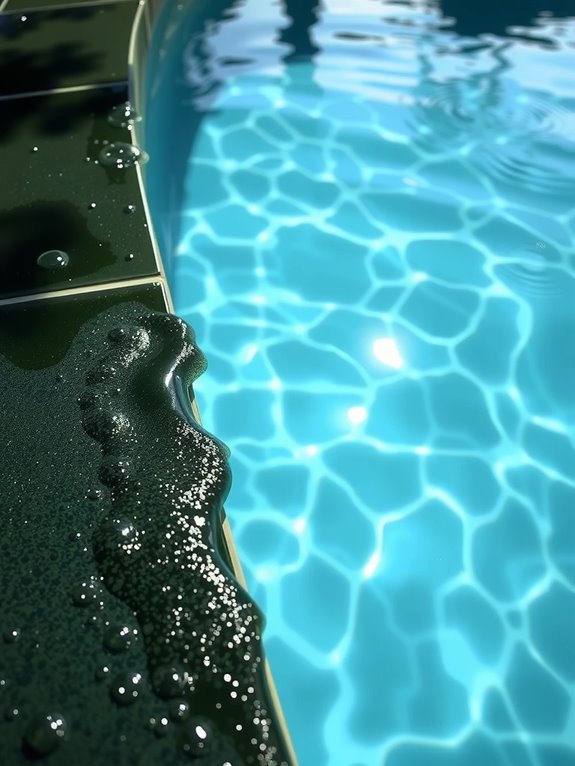
While regular brushing prevents algae from building thick, stubborn barriers, you still need to address the environmental conditions that attract black algae in the first place.
Three factors work together to create ideal conditions for algae growth:
- Shade reduces sunlight exposure, weakening your pool’s natural defense
- Heat accelerates algae metabolism, causing faster reproduction
- Stagnation prevents sanitizer from circulating to all areas
Here’s what happens when these conditions combine. Shaded areas trap warm water without any movement. When water sits still, chlorine can’t reach hidden cracks where algae spores hide. Poor circulation means your filter can’t remove cells that have already broken loose, and these cells reseed nearby surfaces. Your algae doesn’t just survive—it spreads quickly.
Breaking this cycle requires addressing each factor separately. You’ll need to improve water circulation by running your pump for at least 8 to 12 hours daily. Increase sunlight exposure where possible by trimming back trees or removing pool covers during daylight hours. Maintain consistent chlorine levels throughout your pool, testing levels every 2 to 3 days during warm months.
When Natural Water Introduces Contamination
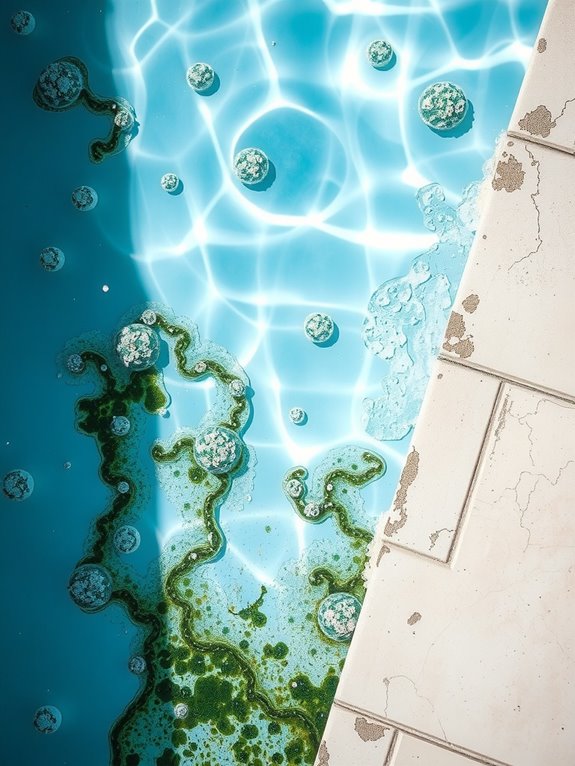
Black algae finds its way into your pool through a common path: visits to lakes, rivers, and oceans. Algae spores are microscopic and sticky. They cling to swimsuits, towels, and pool toys without you noticing anything unusual.
Think of pool accessories like inflatable floats and diving toys as unwilling carriers. A single contaminated item holds enough spores to start a black algae colony in your water. You don’t need many spores—just a few can establish themselves if conditions are right.
Your best defense involves two straightforward steps. First, rinse all pool accessories with fresh water immediately after visiting natural water sources. Run clean water over every surface of toys, floats, and equipment for about 30 seconds. Second, shower before getting into your pool. A quick rinse removes spores from your skin and hair before they reach the water.
These habits take only a few minutes but prevent contamination from taking hold in your pool. The work happens before you step into the water, making prevention far simpler than dealing with an active algae problem later.