No, you shouldn’t swim in algae-filled water. When algae appears in your pool, it means harmful bacteria and viruses are multiplying because your pool’s disinfection system isn’t working properly. Algae grows when chlorine levels drop below 1 ppm, which allows pathogens to spread unchecked.
Swimming in algae water puts you at risk for skin infections, stomach illness, and drowning from poor visibility. The murky water makes it hard to see the bottom or spot someone in trouble.
To fix an algae problem, start by adding shock treatment, which is a large dose of chlorine designed to kill algae quickly. After treatment, run your filter continuously and wait 12 to 24 hours before swimming. During this time, the water will gradually clear as dead algae settles and gets filtered out.
Once your chlorine levels stabilize between 1 and 3 ppm and the water becomes completely clear, your pool is safe again. You can confirm chlorine levels using a test kit from any pool supply store.
Figuring out what caused the algae helps you prevent it next time. Common causes include not running the filter enough, forgetting chlorine treatments, or leaving the pool uncovered in direct sunlight for extended periods. Keeping up with regular maintenance and weekly chlorine checks stops algae from coming back.
No, Swimming in a Pool With Algae Is Not Safe
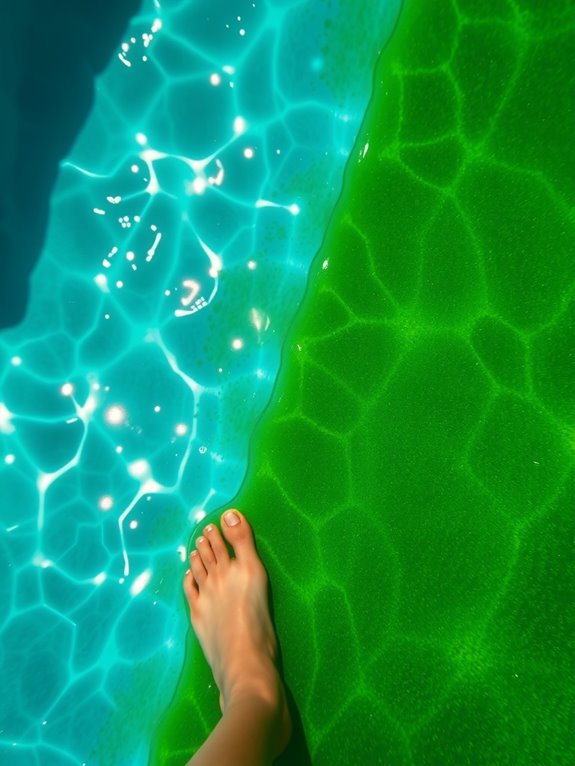
Why would you want to jump into a pool that’s turned green or cloudy? That discolored water signals poor pool sanitation and algae growth. When you swim in algae-filled water, you’re exposing yourself to harmful bacteria and pathogens that cause infections and illness.
Algae creates real safety hazards too. Slippery surfaces and obscured pool bottoms increase your drowning risk and slip-and-fall chances. You can’t see the bottom clearly, making it dangerous for everyone.
Safe swimming requires proper water chemistry. Your chlorine levels need to stay between 1–5 ppm with combined chlorine at near zero. pH balance matters equally. If your pool’s filtration isn’t working right or chlorine isn’t stabilized, you’ll need to wait until everything balances correctly before jumping in. This usually takes 24 to 48 hours once you’ve addressed the problem and the system starts running properly.
Where There’s Algae, There’s Bacteria and Poor Disinfection
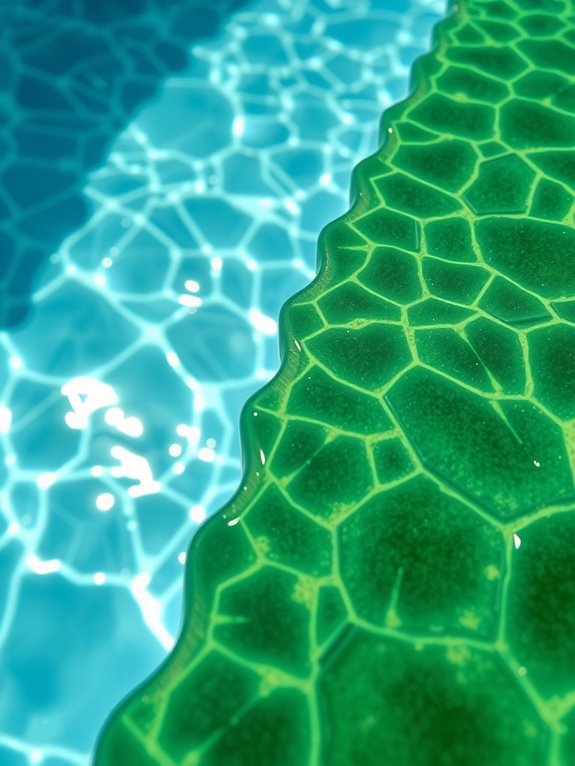
Algae itself isn’t what makes you sick, but it’s a reliable warning sign that your pool’s disinfection system has failed. When you see algae growing, you’re looking at a pool with serious underlying problems.
Algae signals a failed disinfection system—a warning sign of serious underlying water quality problems in your pool.
Low chlorine levels are the root cause. If chlorine can’t kill algae, it can’t kill bacteria or viruses either. At the same time, poor water circulation allows pathogens to concentrate in stagnant areas where they multiply unchecked. These conditions—low disinfectant levels and dead zones in the water—create an environment where harmful microorganisms thrive alongside visible algae growth.
The bacteria and viruses present in algae-filled water can enter your body through cuts on your skin or through your mucous membranes, increasing your infection risk. Think of algae as your pool’s red flag. Once you spot it, the water quality has already dropped to unsafe levels.
Stop swimming immediately and don’t enter the pool until it’s been treated. You’ll need to raise chlorine levels to proper ranges (typically 1 to 3 parts per million for residential pools) and improve circulation by running the pump continuously. This usually takes 24 to 48 hours of treatment. If the algae is thick or covers more than half the pool surface, call a professional. Attempting to treat severe algae blooms on your own often fails and wastes time while you’re exposed to contaminated water.
How Algae Spreads Faster in Pools Than in Lakes
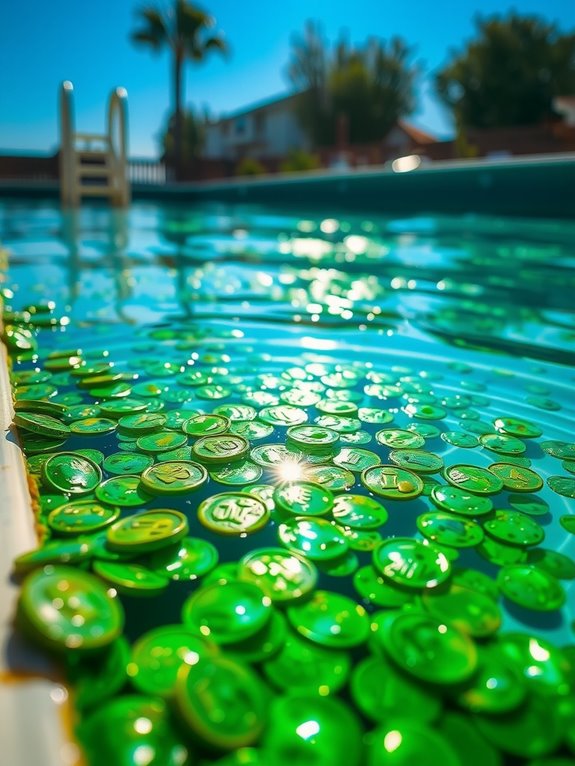
Have you ever noticed your pool turning green in just three to five days while a nearby lake stays clear for months? The reason comes down to how these two bodies of water work differently.
Pools are closed systems. Lakes have streams, rainfall, and natural water movement that constantly dilutes algae spores and carries them away. Your pool, by contrast, holds the same water day after day. When algae spores enter through wind or rain, they settle in and stay put, finding everything they need to multiply quickly.
Your pool’s conditions speed up algae growth in several ways. Low chlorine levels—typically below 1 to 3 parts per million—and incorrect pH balance create an environment where algae thrive. Stagnant areas form in corners, deep ends, and around fixtures where water doesn’t move much. These dead zones become colonies for algae to grow undisturbed.
Natural lakes have something your pool lacks: a balanced ecosystem. Fish eat algae. Plants compete for nutrients. Sunlight and temperature fluctuate. Your pool has none of these natural checks and balances, which means algae blooms can take hold without opposition.
Your filtration system and chlorine work hard, but they can’t keep pace with how fast algae multiply in still water. Maintaining chlorine levels between 1 and 3 ppm and running your circulation pump for 8 to 12 hours daily prevents blooms before they start. The key is consistency, not occasional treatment after green water appears.
When Is Your Pool Safe to Swim Again?
Once you’ve shocked your pool and started the treatment process, you’re probably wondering when you can get back in the water. Safe swimming requires patience and testing.
The Timeline and Basic Checks
Wait 12–24 hours after shock treatment before entering the water. During this waiting period, your filter should run continuously. After the algae disappears and the green tint fades, begin testing the water regularly.
What to Monitor
Free chlorine should stabilize between 1–3 ppm. Check that pH ranges from 7.2–7.6, and verify that alkalinity stays between 80–120 ppm. Combined chlorine should measure near zero. These numbers matter because they tell you whether the chemicals are balanced enough for swimming.
You’ll also need to confirm water clarity. You should be able to see the pool bottom clearly. Murky water means the treatment isn’t finished yet.
When It’s Safe
Only resume swimming after water clarity returns and all chemical levels match these guidelines. Testing the water takes a few minutes with a kit, and it’s the only reliable way to know your pool is ready. The wait between shock treatment and swimming might feel long, but it protects you from skin irritation and other problems that come from imbalanced water.
Prevent Algae Before It Becomes a Health Risk
Why wait until green sludge takes over your pool when you can stop it before it starts.
Keep your pool’s chemistry balanced as your first line of defense. Maintain free chlorine between 1–3 ppm and test your pH and alkalinity regularly. Think of these numbers as your pool’s immune system. Brush pool surfaces weekly to eliminate hidden algae spores before they spread, and run your filtration system consistently since poor water circulation creates quiet zones where algae thrives.
Balanced chemistry and consistent circulation form your pool’s immune system against algae growth.
Check your sanitizer levels twice a week. Low chlorine levels invite algae growth, so catching drops early matters. A preventative algaecide applied routinely during warm months works better than fighting cloudy water later on. Your filter needs cleaning promptly, and debris should be skimmed regularly, since nutrient buildup feeds algae growth.
These actions are straightforward but need to happen on schedule. You’re maintaining equipment, yes, but you’re really protecting your swimming space from the costly headache of major algae blooms. Small, consistent actions done twice weekly or every few days make the difference between clear water and the work of clearing a green pool.