Pour 4 inches of concrete for most residential patios. Increase to 6–8 inches for heavy loads, freeze-thaw climates, or unstable soil. Check your local building code for minimum requirements before pouring.
Why 4 Inches Is the Baseline for Most Patios
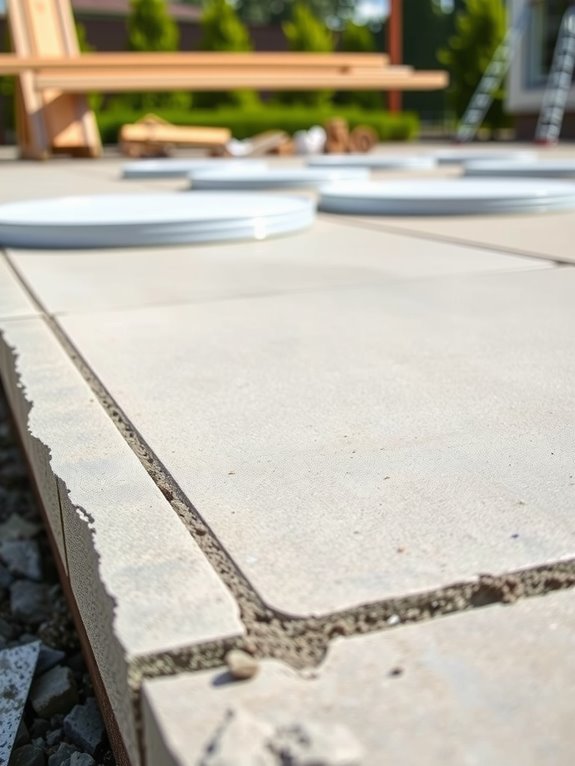
A 4-inch slab supports patio furniture, normal foot traffic, and everyday gathering areas. It costs less than thicker options and installs more quickly. Place control joints every 4 to 6 feet to manage cracking from expansion and contraction.
Your 4-inch baseline may not be enough if your soil is soft or unstable. In these cases, go thicker or add reinforcement — rebar or wire mesh — to prevent settling and cracking over time.
When to Go Thicker: Heavy Loads and High-Traffic Areas
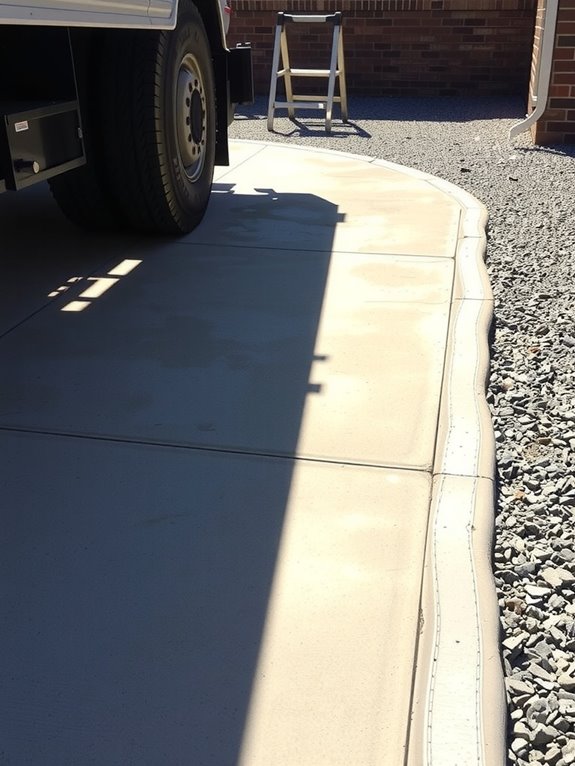
Use 6–8 inches of concrete when you have any of these conditions:
- Outdoor kitchens, fire pits, or hot tubs
- Vehicles or heavy equipment
- High-traffic zones
- Freeze-thaw climates
- Soft or expansive soil
Thicker slabs resist cracking under pressure. Combine thickness with reinforcement — rebar or welded wire mesh — for added strength. Thickened edge designs with turndown beams add support where the slab meets the ground.
Building Code Minimums: Know Your Local Requirements
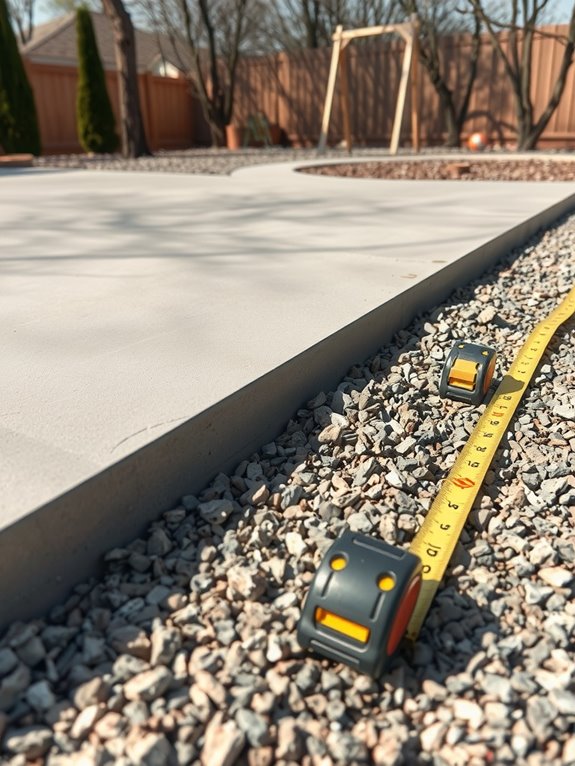
Your local building department sets the minimum standards for concrete patios. General industry guidelines do not replace local codes — your city or county rules apply. Contact your building department before starting work.
| Use Type | Minimum Thickness | Reinforcement | Notes |
|---|---|---|---|
| Light residential patios | 4 inches | Wire mesh optional | Standard for most homeowners |
| Heavy foot traffic areas | 5–6 inches | Rebar recommended | Increased durability needed |
| Flood-prone zones | 6+ inches | Rebar required | Extra base prep required |
| Expansive soil regions | 6 inches | Rebar required | Prevents soil movement |
What to Ask Your Building Department
- Minimum concrete thickness for residential patios
- Reinforcement standards — rebar or wire mesh requirements
- Base preparation depth and type
- Joint spacing and placement rules
- Permit costs and inspection schedule
Local codes account for your region’s climate, soil conditions, and ground stability. A freeze-thaw climate code differs significantly from one in a stable-temperature area. This step prevents costly mistakes and keeps your patio within legal standards.
How Soil Type Determines Your Ideal Thickness
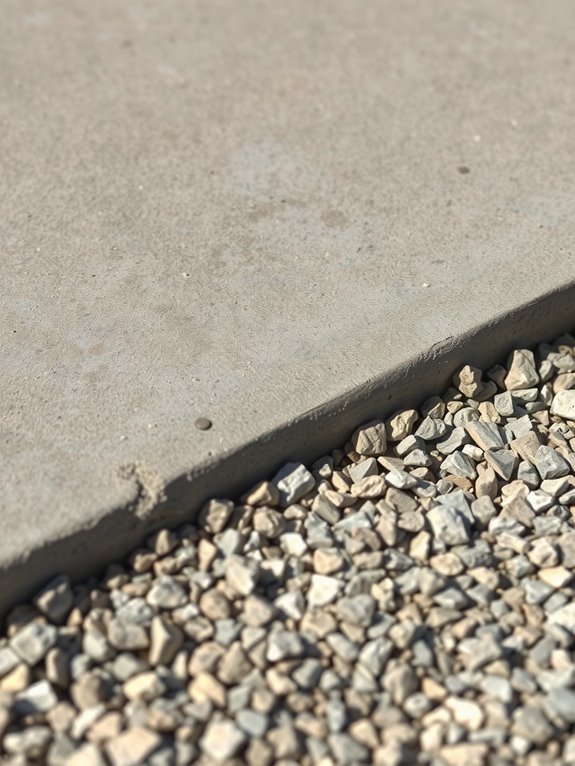
Your soil type directly affects how thick your concrete slab needs to be. Well-compacted soil handles a standard 4-inch slab with proper reinforcement and base preparation. Clay or loose sand require a 6-inch thickness plus 3 to 6 inches of compacted gravel as a base layer to prevent uneven settlement and cracking.
Get soil testing done before you pour. A soil test identifies your soil type and prevents costly repairs from settling or erosion later. For challenging soils, combine thicker slabs with reinforcement for better long-term performance.
Freeze-Thaw Cycles: Why Northern Patios Need Extra Depth
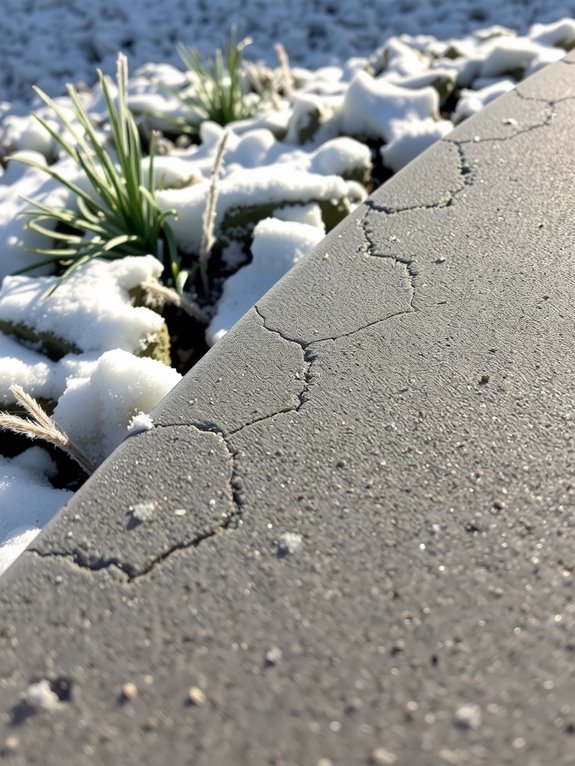
Water seeps into concrete and freezes when temperatures drop below 32°F. This expansion pushes your slab and causes cracks over time. A thicker slab resists this movement better than a thin one.
- Slab thickness — 6–8 inches for freeze-thaw regions
- Gravel base — 4 inches of compacted gravel with a drainage layer underneath
- Control joints — cut lines manage expansion and contraction as temperatures change
Thicker slabs, control joints, and proper drainage work together to minimize freeze-related damage and keep your patio stable through seasonal changes.
Gravel Base Depth: The Foundation for Thickness Success
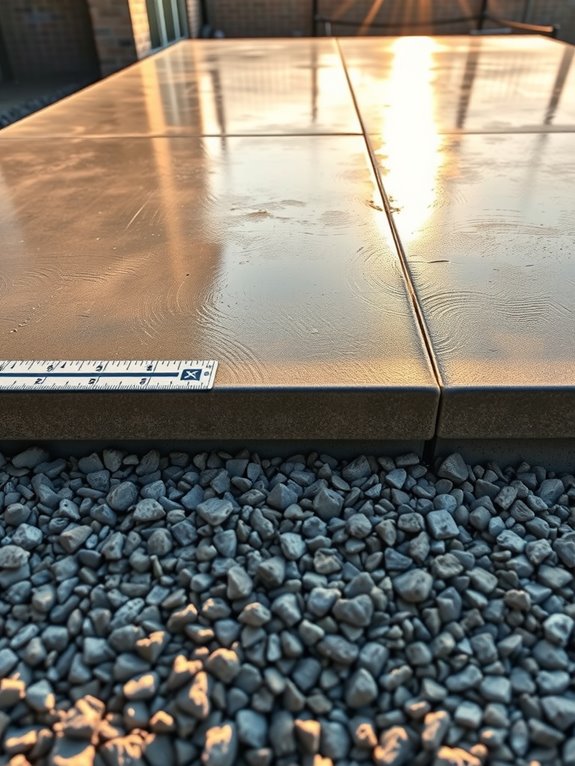
Your gravel base depth should match your concrete thickness. A 4-inch slab needs 4 inches of compacted gravel underneath. A 6-inch slab needs 6 inches of gravel. Add your gravel depth to your concrete thickness to calculate how deep to excavate.
A proper gravel base improves stability and drainage, prevents settlement, and protects against freeze-thaw damage. Soft soils or expansive clay require extra gravel depth and possibly reinforcement to keep the slab intact.
Wire Mesh vs. Rebar: Which Reinforcement Do You Need?
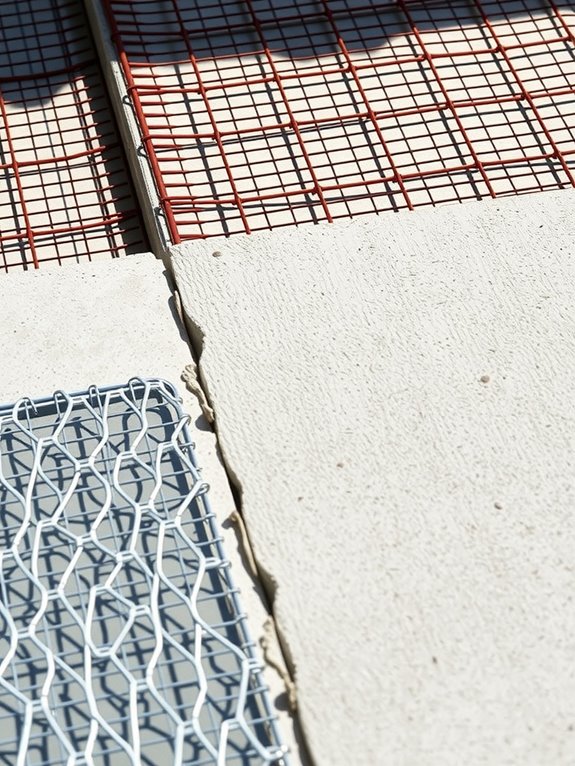
- Wire mesh — reduces small surface cracks and distributes weight for light foot traffic patios
- Rebar — provides stronger structural support for driveways, larger slabs, and heavy loads
- Fiber reinforcement — reduces surface cracking but does not replace steel in load-bearing zones
- Rebar dowels — used for driveways or high-traffic patios
Place reinforcement at the bottom of your slab with at least 2 inches of concrete cover above it. Tie wire mesh or rebar with wire to keep it in place during pouring. Check your local building codes for specific reinforcement types, spacing, and joint placement requirements before you begin.
Control Joint Spacing: How Thickness Changes Your Layout
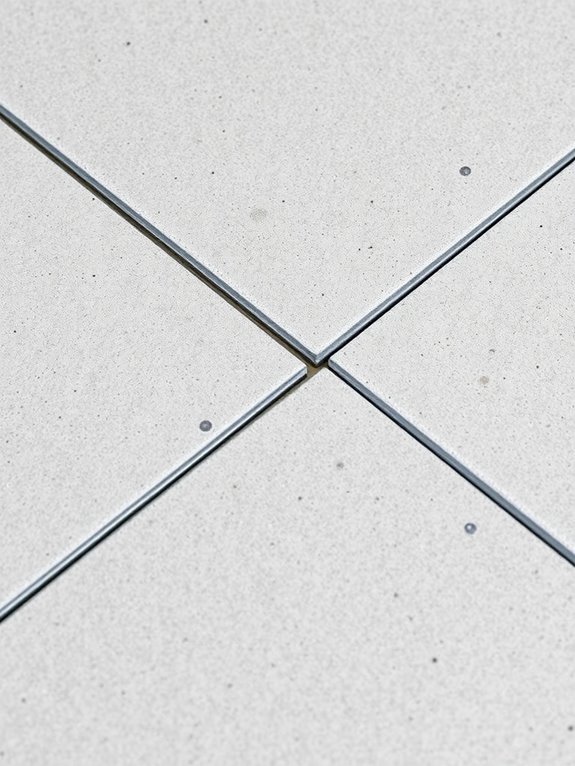
Thicker slabs move differently than thin ones. Adjust your control joint spacing to match your slab depth.
- 4-inch slabs — space joints every 4 to 6 feet, cut at least 1 inch deep (1/4 of slab thickness)
- 6-inch slabs — space joints every 8 feet, cut at least 1.5 inches deep (1/4 of slab thickness)
Place expansion joints where your slab meets other structures — walls, steps, or existing concrete. If your patio has sections with different thicknesses, add control joints at those transitions and create gradual depth changes rather than abrupt ones. Abrupt thickness changes create weak spots that lead to unwanted cracking.
Concrete Strength Standards (PSI) for Different Patio Uses
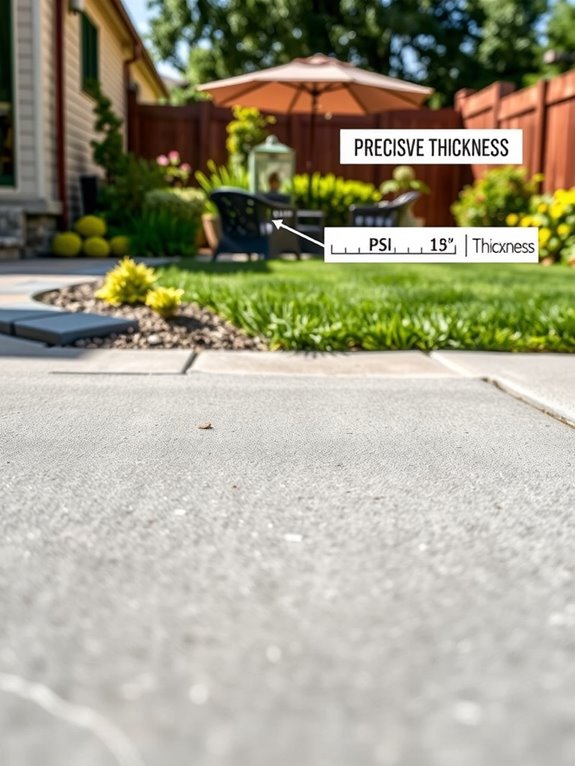
PSI — pounds per square inch — measures how well your concrete resists cracking, weather damage, and wear over time.
- Light foot traffic patios — 3,000–4,000 PSI with 4-inch thickness
- Heavy loads or freeze-thaw areas — 4,000+ PSI with 6-inch thickness
- Outdoor kitchens and fire pits — 4,000 PSI minimum
- Driveways and heavy-use zones — 4,000 PSI or higher
Stronger concrete works best when paired with proper thickness. Selecting the correct PSI for your patio’s intended use keeps it in good condition for years.
Thickness Trade-Offs: When Extra Cost Saves Money Long-Term
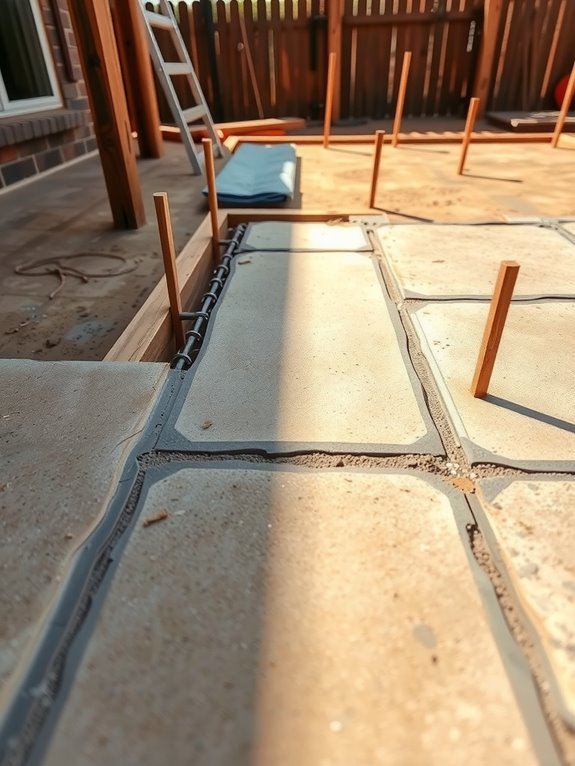
A 4-inch slab costs less initially than a 6-inch slab, but the 6-inch version avoids costly repairs within 5 to 10 years — especially in freeze-thaw zones or on soft soils. A thin slab cracks or settles as joints move naturally. Freeze-thaw cycles cause water to enter small gaps, expand, and break the concrete apart. Soft soil underneath shifts under weight, creating uneven surfaces.
- A stronger base — 4 to 6 inches of compacted gravel — prevents settlement and cracking
- Thickened edges reduce stress cracks where concrete meets the ground
- Rebar reinforcement handles heavier loads without failure
- Planning ahead allows space for future additions like hot tubs or outdoor kitchens
Should You Hire a Professional or DIY Your Patio?
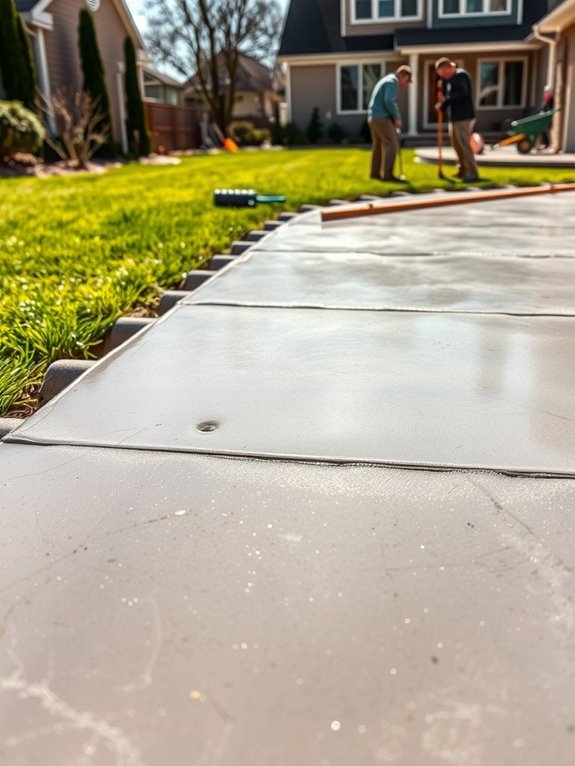
DIY Approach
You save money upfront but risk costly mistakes. Common errors include skipping the gravel base, using insufficient reinforcement, and placing control joints incorrectly. These mistakes cause long-term cracking and settlement.
Professional Approach
Contractors handle tasks that DIY projects often miss:
- Assess soil stability, drainage, and climate conditions
- Determine accurate concrete thickness based on your location
- Layout rebar correctly
- Place control joints at proper intervals
- Reduce freeze-thaw failure risks
Professional work costs more initially but prevents expensive repairs later. A contractor’s expertise protects your patio’s durability and structural integrity over time.