

Pour one cup of water onto a clear, flat section of your landscape fabric and start your stopwatch. Watch how the water behaves over the next 30 minutes.
If water soaks through within 5–15 minutes, your fabric has good drainage. Water that pools for 15–30 minutes signals slow drainage, meaning water will move through eventually but at a sluggish pace. Anything beyond 30 minutes indicates clogged pores or lower-quality fabric that won’t drain well.
Pay attention to whether water disappears beneath the surface or sits on top. Water that vanishes quickly tells you the fabric will let moisture pass through to the soil below. Water pooling on the surface suggests the fabric may trap moisture instead of allowing it to drain, which can lead to wet spots in your yard.
This simple test reveals how your fabric will perform once installed. The results depend partly on how new the fabric is and how it was laid down, but the test itself gives you a clear picture of what to expect.
How Landscape Fabric Permeability Works
Ever notice how water disappears under some landscape fabrics while it pools under others. That’s permeability doing its job. Permeability measures how easily water passes through fabric layers.
Permeability determines whether water flows through landscape fabric or pools on top—a key factor in choosing the right garden protection.
Woven geotextiles drain better than nonwoven fabrics because of how they’re constructed. The open weave pattern lets water flow freely, similar to comparing a loose mesh against a tightly packed surface. Nonwoven fabrics, made from needle-punched polypropylene, also perform well because the fibers create small gaps that allow drainage.
Material quality makes a real difference here. Low-quality, tightly woven plastics block water flow and create pooling problems. Better-quality fabrics let water pass through at reasonable rates. When you’re shopping, check the fabric’s thickness and weave pattern—these details tell you how well it will drain.
There’s something important to know when testing fabric: a single layer behaves differently than folded or bundled samples. When you stack multiple layers, they can press together and stick, making the fabric appear waterproof when it isn’t. Testing one layer reveals what you’re actually getting. This matters because landscape fabric performs one way in the store and another way once you install it in your yard. A single layer of quality woven fabric might drain water in 30 seconds, while stacked layers of the same fabric could take several minutes. That difference affects how well your garden beds handle rainfall and irrigation.
What You’ll Need to Test Landscape Fabric Permeability
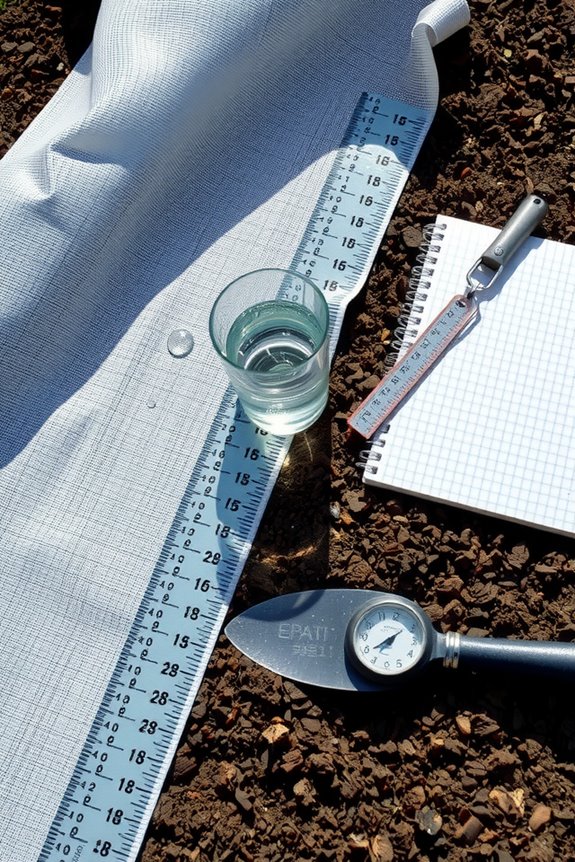
Before you measure how water moves through your fabric, gather a few simple materials. Nothing here requires special equipment or a big budget.
Essential items for testing:
- A clear, single layer of landscape fabric laid completely flat on the ground
- A container with a measured amount of water (1 cup works well) for consistent testing
- A stopwatch to time water penetration
- A notepad to record your conditions and results
Setting up your testing area
Choose your spot carefully and note the current weather conditions—sun exposure, wind, and soil moisture all affect how water moves through fabric. Clear away any debris from the fabric surface before you start. This step matters because dirt or leaves can block pores and give you false results. You want your measurements to show how the fabric actually performs, not how it performs when it’s dirty.
The Basic Water-Pour Test: Step-by-Step Instructions
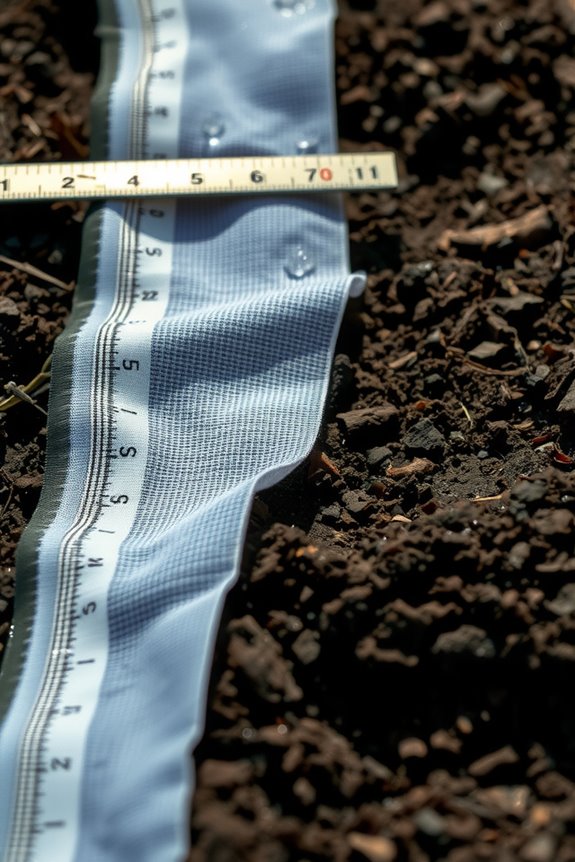
Pour your measured amount of water directly onto the fabric’s surface. Watch closely as the water makes contact—this is where you’ll observe how well the fabric lets water through.
Time how long water takes to drain through or beneath the fabric. If water drains within a few minutes, your fabric is working well and water is moving through it properly. Pay attention to any water sitting on top of the surface. Pooling means the fabric isn’t draining the way it should.
Write down what you see: how long drainage took, where water pooled, and how much the fabric seemed to resist the water. This record lets you compare different fabric samples or test the same fabric under different conditions. You now have real measurements about how your landscape fabric actually performs.
Measuring Permeability: Drainage Time and Pooling
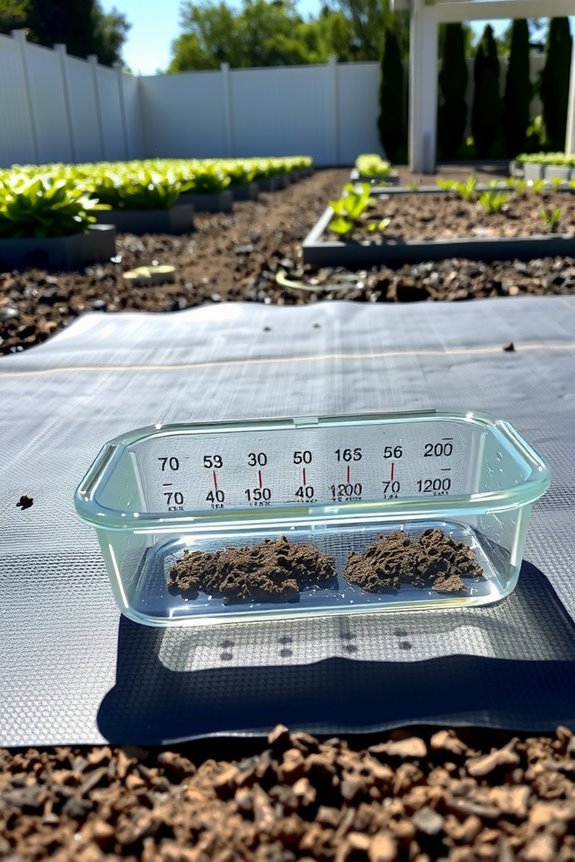
Your fabric’s permeability shows itself in two straightforward ways: how quickly water moves through it and whether water stays sitting on top.
Watch for these specific signs during your test:
- Initial seepage speed: Water should start moving through the fabric within 5 to 15 minutes, not hours
- Pooling behavior: Small puddles on the surface are normal at first, but they should disappear within 2 to 4 hours after rainfall
- Steady infiltration: Good landscape fabric drains consistently through its core material without stopping or slowing down unexpectedly
- Acceleration pattern: You’ll usually see water move slowly at the start, then pick up speed as it finds channels through the material
If water stays sitting on your fabric for more than half a day, you likely have clogging or reduced permeability. Keep careful notes on how long drainage takes. Quality landscape fabric lets water pass through at a predictable rate, which keeps your soil from becoming waterlogged and prevents the conditions that damage plants.
How Layering and Packaging Skew Test Results
Why Packaging and Layering Skew Test Results
When you pull landscape fabric straight from the package and test it, you might get very different results than what happens when you lay it flat in your yard. The problem comes down to how the fabric behaves when it’s bundled up versus when it’s spread out.
What Happens in the Package
Folded fabric sheets stick together during unrolling. This adhesion creates a false waterproof barrier that doesn’t match how the fabric actually performs on the ground. When you stack two or more layers on top of each other during testing, the layers adhere to one another, blocking water from moving between them. This gives you a misleading result: the fabric appears completely waterproof when it really isn’t.
The Difference Single-Layer Testing Makes
Testing one fabric layer alone shows you what actually happens in your landscape. Water seeps through over time, confirming the real drainage claims the manufacturer states. This single-layer result matches what you see when the fabric is properly installed in your yard, spread flat across the soil.
How to Test Accurately
Unroll your fabric completely and let it sit flat before testing. Place the fabric in a single layer, not stacked. Pour water onto the surface and observe how long it takes to pass through. Time this process—typically between 30 seconds and 2 minutes for standard landscape fabric. This result reflects genuine permeability and real-world performance.
When you test properly, your findings align with actual installation results. The fabric drains as intended because you’re measuring it under the same conditions where it will work.
Compare Your Fabric Against a Known Permeable Sample
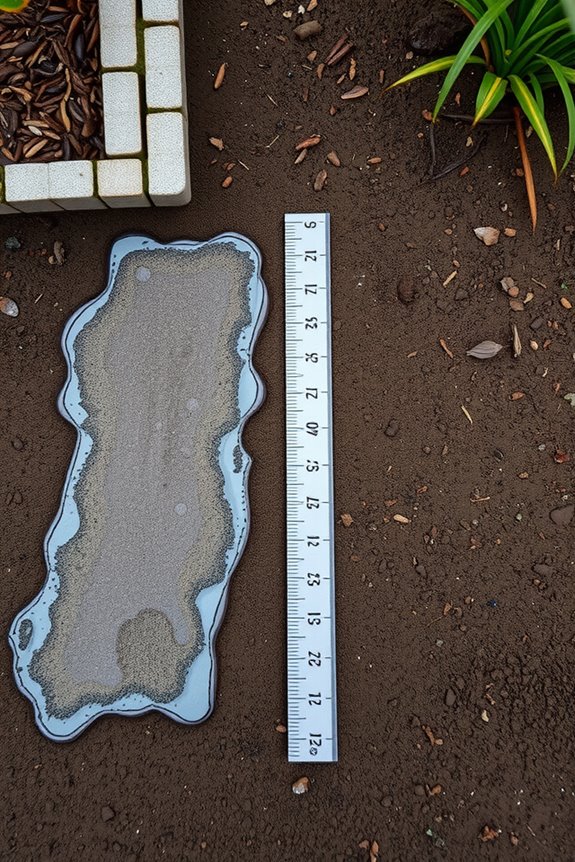
One of the best ways to figure out if your fabric drains properly is to stack it up against something you already know works. This comparison method shows you exactly how permeable your material is by putting two samples side-by-side.
What you’ll need: your fabric sample, a known permeable reference fabric (like landscape fabric or mesh netting), a flat surface, water, and a timer or watch.
Set up your test. Place your fabric next to the reference sample on a flat, level surface. Make sure both pieces are spread out flat and not bunched up. They should be touching or very close to each other so water can be poured on them at the same time.
Pour water and observe. Pour about one cup of water on both samples simultaneously. Start your timer right away. Watch what happens to the water on each fabric. Does it sit on top of your fabric in a puddle, or does it start soaking through right away?
The reference fabric should drain quickly—typically within 30 seconds to 2 minutes depending on the type. If your fabric still has standing water after 3 to 5 minutes while the reference fabric has already drained, your material likely won’t provide the drainage your project needs. Good permeable fabrics show visible seepage and water pooling underneath within the first couple of minutes.
Note any differences in how quickly each fabric absorbs and releases water. If there’s a significant gap between the two, you may want to look for a different material for your project.
Spot Clogged Pores and Slow Drainage
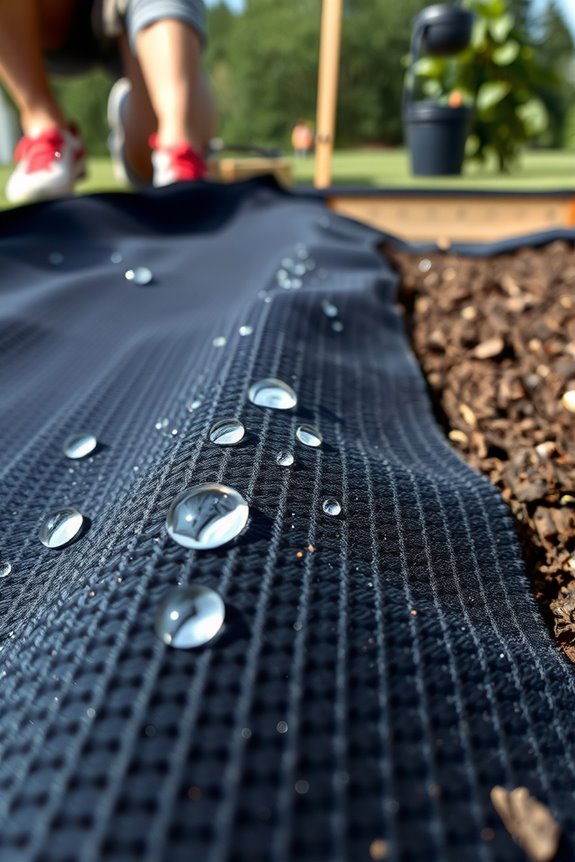
Over time, landscape fabric stops draining the way it should. This happens because small bits of debris—dirt, leaves, and mulch particles—get stuck in the fabric’s tiny pores and block water from passing through.
To check if your fabric has clogged spots, pour water directly onto it and watch what happens. Good fabric lets water soak through in just a few seconds. If the water sits on top instead, you’ve found a problem area. Those pooling spots tell you that debris has built up and is blocking the fabric’s ability to let water through.
The fix is straightforward. Clear away the accumulated debris from the clogged spots by hand or with a soft brush. Once you remove the buildup, the fabric will drain again like it did when it was new.
Debris Accumulation And Blockage
How quickly does your landscape fabric drain after a rainstorm? If water pools on the surface, debris accumulation and blockage likely explains why. This is a common problem that affects even quality fabrics.
Several factors contribute to clogged pores. Mulch particles settle into the fabric’s weave over months. Dirt and organic material create a seal that traps moisture. Weed seeds and decomposed plant matter build layers that gradually worsen without intervention.
Standing water after rainfall signals trapped debris restricting flow. You’ll notice this especially in low spots where water naturally collects.
To address this issue, regular maintenance prevents serious problems from developing. Remove accumulated debris by hand, sweep the surface, and pull emerging weeds promptly. Do this work every 3-4 months during the growing season, or more frequently if you notice pooling water returning quickly after storms.
When choosing fabric initially, coarser weaves resist clogging better than tightly woven options. A fabric with 4-6 ounce weight and larger pore openings will remain easier to maintain throughout the year compared to heavy-duty 8-ounce alternatives that trap finer particles more easily.
Testing For Drainage Issues
The simplest way to reveal drainage problems is to run a water test right on your fabric. Pour a gallon of water onto a 1–2 foot square area and observe what happens. You’re checking whether permeable materials truly let water through or if clogged pores trap it on the surface.
What the Results Tell You
| Test Condition | Expected Result | What It Means |
|---|---|---|
| Water absorbed immediately | Passes through quickly | Fabric is performing well |
| Water pools for 15–30 minutes | Slow drainage detected | Possible blockage present |
| Water stands longer than 30 minutes | Failed drainage | Pores are clogged or fabric is wrong type |
| Debris visible on surface | Infiltration blocked | Clear mulch and organic matter |
| Layered setup shows slow drainage | False impermeability | Single-layer tests drain faster |
Standing water signals pore blockage. When water sits on top instead of soaking through, something is stopping it. This usually means debris has settled into the fabric’s tiny holes, or the fabric itself isn’t right for your situation.
What to Do Next
Clear away any mulch, leaves, or organic matter sitting on the surface. Regular maintenance keeps those pores open and working. If you’ve removed debris and water still pools after 30 minutes, the fabric may need replacement or you might need a different type designed for your specific conditions.
It’s the Installation, Not the Fabric
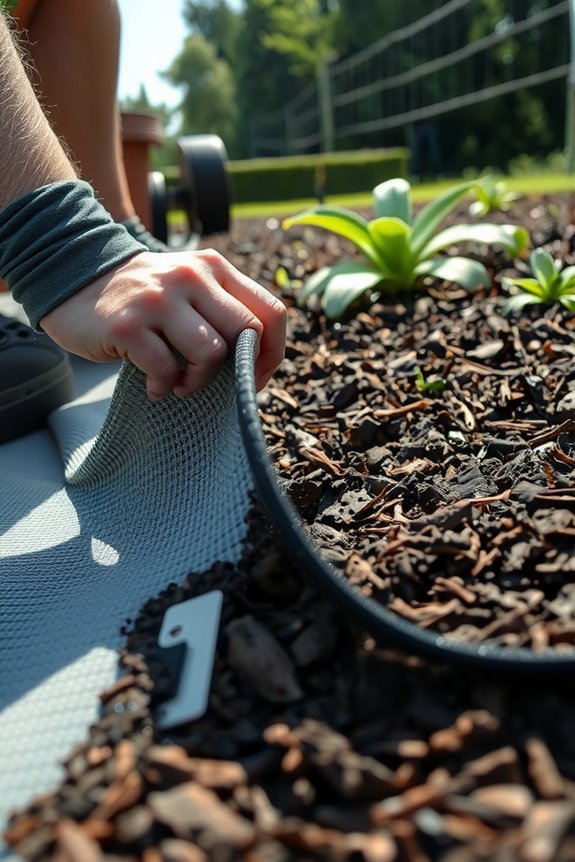
Even if your fabric passes every permeability test, poor installation can make it seem like it’s failing. Start by checking your site preparation, which is where most problems begin.
Ground slope matters more than people realize. The soil should slope gently away from your structures—aim for about 1 inch of drop for every 8 to 10 feet of distance. This small angle prevents water from pooling against foundations or sitting on top of the fabric.
Before laying fabric, clear the area of debris like rocks, sticks, and roots. These create pressure points that can puncture the material or prevent it from lying flat. Walk the prepared ground carefully to identify high spots and low spots. If you spot obvious dips or bumps, rake them smooth.
Foot traffic is another common issue. Once you’ve laid the fabric, keep people off it during the first few days while the ground settles beneath it. Heavy stepping compacts the soil unevenly and can shift the fabric out of position.
When water pools or drains slowly after installation, look at the ground underneath rather than blaming the fabric itself. Compacted soil or uneven grading are the usual causes. Check whether the area has settled differently than you expected, or whether the ground was packed down during installation work. Sometimes a light raking of the surface helps water move through more freely.
Proper Site Preparation Matters
Why do some landscaping fabrics fail while others work well? The answer usually isn’t the fabric itself. It’s what you do before you install it. You’re building a strong foundation for water to move through the soil, and that work happens before the fabric even goes down.
Getting Your Ground Ready
Clear away weeds, grass, and debris first. This gives you a clean surface to work with. Next, till your soil to break it up and mix in amendments like compost. A loose, even surface helps the fabric lay flat without bumps or gaps. Create gentle slopes that angle away from your house or other structures—about a 2 to 3 percent grade works well. This directs water where it needs to go instead of letting it pool in low spots.
Once the fabric is down, anchor it firmly with landscape staples or pins spaced every 12 inches along the edges. This keeps it from shifting when water moves through or when you walk on it.
Why These Steps Matter
When you skip preparation, problems follow. Shifting fabric blocks water from moving through properly. Wrinkles and bunching trap moisture in pockets underneath. An uneven surface creates weak spots where the fabric doesn’t do its job. Skipping edge anchoring means the fabric moves with water flow instead of staying in place.
Spending 2 to 3 hours on site prep before installation saves you from fixing problems later. A level, secured fabric lasts longer and works the way it’s supposed to.
Soil Grading And Drainage
Good site prep gets you halfway there, but now you’ve got to nail the grading and drainage underneath—because that’s where most water problems actually start. You’ll want to slope your soil away from structures at 1–2% (roughly 1/8 to 1/4 inch per foot). Before laying fabric, loosen and amend your soil to create a porous base that lets water move freely.
What to Do and Why
| Task | Why It Matters |
|---|---|
| Loosen soil | Lets water soak in instead of pooling |
| Check grade slope | Directs water away from your house or building |
| Fill low spots | Creates even drainage across the whole area |
| Avoid foot traffic | Keeps soil loose so water can move through it |
| Re-check after setup | Makes sure nothing settled or shifted |
Heavy equipment and foot traffic compact the soil, and that kills water movement. Think of loose soil like a sponge—it absorbs and lets water pass through. Compacted soil is more like concrete. Once you pack it down, water can’t get in.
If your subgrade’s uneven, fill those low spots with loosened soil and recheck your grade. This step only takes 15 to 30 minutes but prevents pooling months later.
Secure Installation Prevents Shifting
Secure Installation Prevents Shifting
Most water problems and weed breakthroughs don’t happen because the fabric fails—they happen because it wasn’t anchored down properly. Your woven fabric needs to stay flat and tight against the soil to work effectively.
To secure it right, use landscape staples or dirt stakes every 2–3 feet along the edges. Extend the fabric 6–12 inches beyond your planting areas, then cover those edges with mulch to hold them in place. When you need to walk on your beds, place sturdy boards or stepping stones underneath your feet to avoid loosening the material. For the seams, reinforce them with fabric tape or by overlapping layers so water can’t find a way around the edges.
When your fabric shifts or develops gaps, water channels underneath instead of filtering through properly. Weeds find those openings and push through them. Think of installation like building a dam—small breaches cause big problems down the line. Take time securing it properly from the start, and you’ll avoid frustrating failures later.
Woven vs. Non-Woven: Which Type Drains Better?
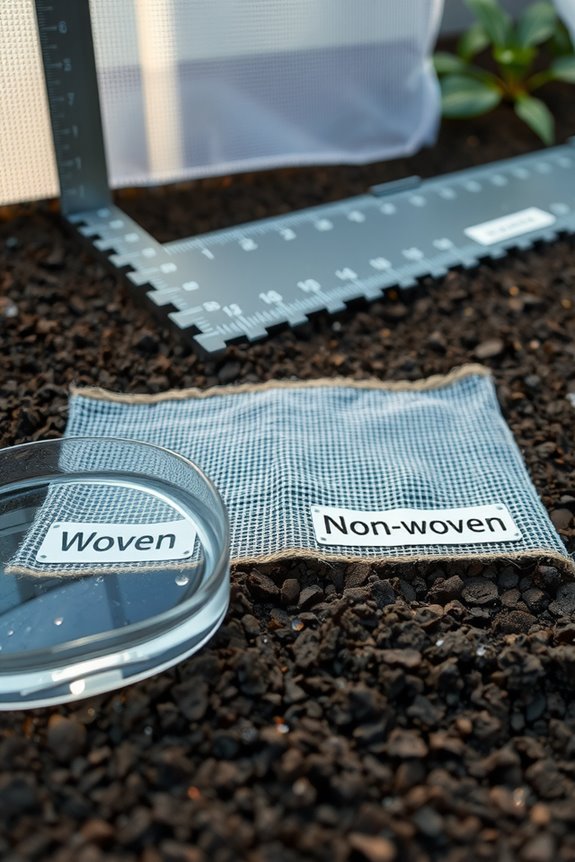
Woven vs. Non-Woven: Which Type Drains Better?
When you’re choosing between woven and non-woven landscape fabric, think about how water moves through your garden. Each type handles moisture differently, and understanding these differences helps you pick the right one for your beds.
How Woven Fabric Drains
Woven fabrics have tightly interlocked fibers that create small, consistent gaps. Water passes through these gaps at a steady rate while the tight structure blocks most weed seeds and roots. If you lay down 4-ounce woven fabric, you’re looking at reliable drainage year after year. The fibers stay stable and don’t compress easily under mulch weight or foot traffic.
How Non-Woven Fabric Drains
Non-woven fabrics feel softer because the fibers aren’t locked together the same way. Water moves through quickly at first, which works well if you want plants to get steady moisture. However, these fabrics can become clogged. After 2-3 years of sitting under mulch, fine particles like dust and decomposed organic matter settle into the material and slow water movement. Once this happens, your soil stays too wet and roots may struggle.
Comparing Performance Over Time
| Fabric Type | Drainage Speed | Long-Term Performance |
|---|---|---|
| Woven | Excellent | Stays effective with proper maintenance |
| Non-Woven | Good initially | May clog with debris over time |
| Layered Approach | Balanced | Works best with mulch management |
Making Your Choice
For lasting results in most garden situations, choose heavyweight woven fabric with a 4-ounce or higher rating. These fabrics maintain their drainage properties for 5-10 years without degrading. If you prefer non-woven, add 2-3 inches of mulch on top and refresh it every year. This keeps heavy debris from settling directly onto the fabric and maintains water flow. Both approaches work—the right choice depends on whether you want a fabric that requires minimal maintenance or one that needs occasional attention.
What to Do If Your Fabric Fails the Permeability Test
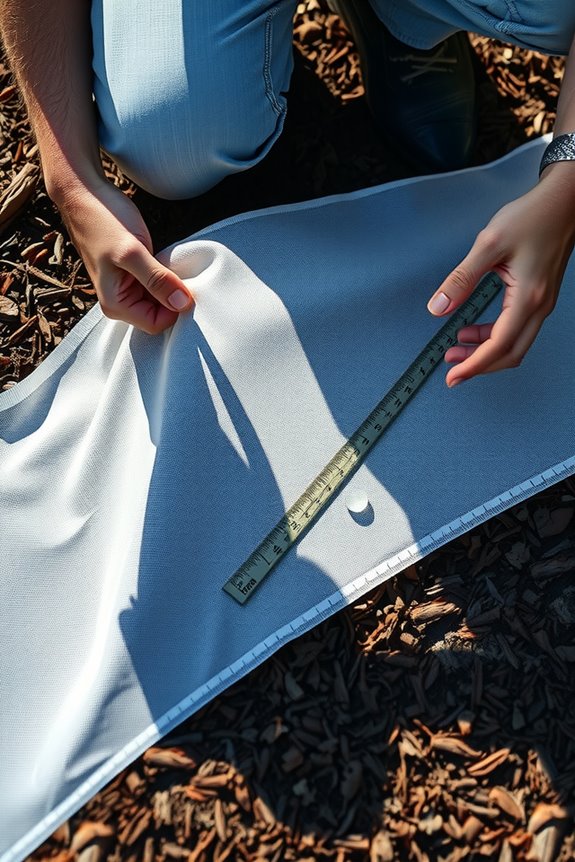
If water pools on your fabric after 5–10 minutes, you need to decide whether the problem lies with the material itself or with how it’s been installed. This distinction matters because it determines your next steps.
Your first option is to replace the fabric with a higher-permeability material. Woven or nonwoven fabrics designed for drainage work better in situations where water isn’t moving through your current setup. Before you buy replacement materials, examine what you have installed right now.
Your second option is to repair the existing installation. Check for wrinkles that might be trapping water or multiple layers stuck together in spots. Sometimes fabric bunches up during installation and creates barriers to drainage that weren’t there by design. Smoothing these out or separating stuck sections can restore function without replacement costs.
Your third option is removal. If the fabric itself is working against your soil’s natural drainage patterns, taking it out entirely might be the right call. This makes sense when the material is too dense or the installation is too problematic to fix easily.
Start by examining your setup carefully. Look at how the fabric lies against the ground, whether it’s wrinkled or compressed in certain areas, and whether water is actually blocked by the material or just trapped by poor installation. Spend time on this investigation before spending money on new materials.
Replace With Better Material
Your fabric isn’t draining water the way it should. This means you need to find a different material that works better for your landscape.
Several fabric options perform well in drainage situations.
Woven polypropylene fabrics let water pass through while stopping weeds from growing up through them. Nonwoven geotextiles allow water to flow steadily and resist getting clogged with dirt and leaves. Permeable landscape cloth rated for high water transmission keeps water moving down into your soil. Biodegradable alternatives break down over time while still letting water through during the seasons they’re in place.
When you pick a new fabric, look at the permeability rating that the manufacturer lists. This number tells you how much water can pass through in a specific time period. A rating of 100 gallons per minute per square yard means water moves quickly through the material. Check this rating before you buy.
Installation matters just as much as material choice. Lay your fabric over ground that slopes slightly so water naturally runs downhill. Don’t compress the fabric by walking on it or packing soil on top of it. Never stack multiple layers of fabric on top of each other. Layering blocks water movement and defeats the purpose. One good layer of quality fabric under your mulch gives you the drainage you need.
After you install your new fabric, run the same water test you used before. Pour water on top and time how long it takes to drain through. If water moves through in under 30 seconds, your replacement material is working correctly. If drainage is slow, remove it and try a different type. Testing first prevents problems later when the fabric is buried under mulch and harder to fix.
Repair Or Remove Fabric
When water sits on top of your fabric instead of soaking through, your material’s permeability has failed. This means the tiny pores that let water pass are blocked or damaged, and you need to act within a few days before standing water creates bigger problems.
First Steps: Clean and Test
Remove the fabric and look it over carefully. Debris, mulch, or leaves often clog the pores and stop water from draining. Use a soft brush or cloth to clean both sides thoroughly. Rinse with a garden hose, working gently to avoid tearing. Once dry, place it back and run water over a small section to see if drainage improves. If water still pools after cleaning, the fabric itself is compromised and needs replacing or patching.
Small Damage: Patch It
For tears or holes smaller than 3 inches across, patching works well. Cut a piece of compatible fabric at least 4 inches larger than the damaged area on all sides. Overlap the patch by 2 inches minimum and secure it with landscape staples every 6 inches around the edges. This method typically holds for 3 to 5 years depending on sun exposure and foot traffic.
Extensive Damage: Replace the Fabric
If damage covers more than 25 percent of the area or includes multiple tears, replacement makes more sense than patching. Woven geotextiles drain water faster and suppress weeds better than non-woven types. When you install new fabric, test it on a sloped area with mulch on top to confirm it handles real conditions before covering your entire project.