5 Things That Happen If You Swim in a Freshly Shocked Pool
Swimming in a freshly shocked pool brings immediate physical discomfort. Your eyes burn, your skin feels irritated, and breathing becomes difficult because of harsh chemical fumes. Free chlorine spikes well above the safe 1–3 ppm range, often jumping to 5–10 ppm or higher right after shocking.
The chemical compounds in the pool create multiple problems at once. Your nasal passages sting from the fumes. Contact dermatitis—a red, itchy rash—develops on any exposed skin. Chloramines, which form when chlorine reacts with sweat and other organic matter, build up and intensify that sharp chemical smell people often mistake for “chlorine.”
Repeated early swims in a freshly shocked pool can actually train your body to become more sensitive to chlorine over time. This happens because your skin and mucous membranes experience repeated chemical exposure before they should.
The waiting period matters because it lets chlorine levels drop to safe ranges. Calcium hypochlorite shock requires 24–48 hours of waiting before swimming. Sodium dichlor needs 12–24 hours. These timelines give the pool chemistry time to stabilize and free chlorine to settle into the 1–3 ppm range where it works safely.
Understanding what happens during those first hours after shocking explains why patience prevents problems. Your body recovers better when you wait, and the pool works better when you do.
Why You Must Wait After Shocking Your Pool
Shocking your pool raises free chlorine levels dramatically—often above 5 ppm, sometimes reaching 10 ppm or higher. Swimming immediately after puts you at risk for irritated skin and eyes because the chlorine concentration is simply too strong.
Your pool needs time for the shock chemical to spread throughout and for water chemistry to balance out. Turn on your pump to circulate the shock, then use test kits to check both free chlorine and pH levels. You can safely swim once chlorine drops to 1–3 ppm. This typically takes 8–24 hours, though the exact timeline depends on several factors: the type of shock you used, your pool’s size, how much shock you added, water temperature, and how much sunlight hits the pool.
Before you jump in, watch for warning signs. A strong chemical smell, cloudy water, or test kit readings showing high chlorine all mean you should wait longer. These indicators tell you the water isn’t ready yet.
How Long to Wait: Timelines by Shock Type

The time you’ll need to wait depends entirely on which shock product you’ve chosen, since different chemicals work at different speeds. Calcium hypochlorite requires the longest commitment—you’re looking at 24 to 48 hours before you can safely swim. Sodium dichlor cuts that time roughly in half, needing 12 to 24 hours. If you’ve used potassium monopersulfate, the non-chlorine option, you’ll wait just 15 to 20 minutes.
Before you get in the water, run a test first. Turn on your pool circulation system to help the chemicals dissolve and spread evenly throughout the water. Use test strips to check that chlorine levels drop to 1–3 ppm and that pH is balanced properly. These safety checks matter more than watching the clock. The waiting period varies by product, but the testing step stays the same no matter which shock you chose.
Testing for Safety: When Chlorine Levels Are Safe
Once you’ve waited the appropriate time based on your shock type, it’s time to check whether your pool is actually safe to swim in. You’ll need a test kit or strips to measure your water chemistry—these are inexpensive and available at any pool supply store.
Start by checking your free chlorine level. You want to see 1–3 ppm (parts per million). This range tells you that chlorine is doing its job without being too strong. Next, test your pH, which should fall between 7.2–7.6. This balance keeps the water comfortable on your skin and eyes while letting the chlorine work effectively.
Free chlorine should read 1–3 ppm, with pH between 7.2–7.6 for safe, comfortable swimming.
Don’t skip the combined chlorine test. This number should stay under 0.5 ppm. Combined chlorine is what forms when chlorine reacts with dirt and sweat in the water, and high levels mean more disinfection byproducts and chloramines—the stuff that makes pool water smell strongly of chemicals and can irritate your skin and lungs.
If your levels are still too high after the circulation time recommended for your shock type, wait longer and test again. Running your pump helps move water around and speed up chemical distribution, while sunlight naturally breaks down excess chlorine over time. Before anyone gets in the water, retest to confirm everything is in the safe range. This simple step protects against skin irritation, red eyes, and respiratory discomfort.
What Happens if You Swim Too Soon
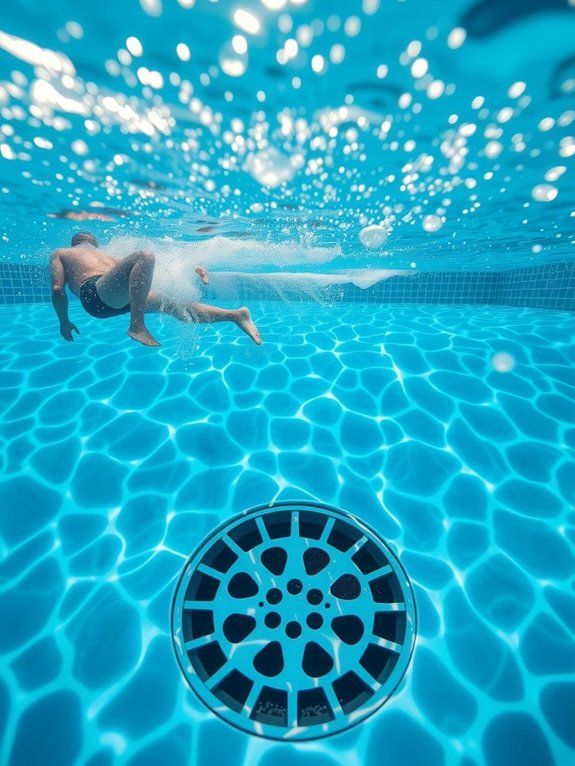
Once you know what safe chlorine levels look like, you need to understand why waiting matters. When swimmers jump in before the pool is ready, their bodies face real chemical irritation.
High free chlorine levels above 5–10 ppm create immediate problems. Your eyes burn behind your goggles. Your skin develops contact dermatitis on any exposed areas. Chloramines rising from freshly shocked water irritate your nasal passages and throat, making each breath uncomfortable. Children and anyone with asthma sensitivity are at higher risk during these moments because their airways are more sensitive to chemical fumes.
Before you enter the water, test strips should show chlorine levels between 1–3 ppm. Check that pH readings fall between 7.2–7.6 as well. These numbers matter because both affect how your body reacts in the pool.
Waiting those critical hours—usually between 2 to 8 hours after shocking, depending on your pool size and chemical amount—stops preventable reactions from happening. Chemical irritation from early swimming can linger on your skin and in your respiratory system for several days afterward. The wait is about protecting yourself from discomfort you don’t have to experience.
Building Chlorine Sensitivity From Repeated Early Swimming
Why do some swimmers find themselves coughing and itching more after each pool visit? Repeated early swimming in a freshly shocked pool can build chlorine sensitivity over time. When you expose yourself to high chlorine levels repeatedly, your body starts reacting more noticeably with each session.
What happens when you keep swimming too soon:
Your skin develops increased reactivity to chlorine exposure after multiple sessions in high-ppm water. Eye redness and coughing worsen progressively as sensitivity accumulates. Individual skin types respond differently—some swimmers experience rashes or itching sooner than others. Using the same pool without allowing chlorine to drop to safe 1–3 ppm amplifies these adverse reactions.
The timeline varies by person. A swimmer might notice mild eye irritation after the first visit to a freshly shocked pool. By the third or fourth visit in that same week, the coughing could become more persistent and skin itching more noticeable. This happens because your body’s protective barrier starts breaking down from repeated exposure to chlorine levels that typically range from 5–10 ppm right after shocking.
Before you enter the water, test both free chlorine and pH. Free chlorine should read between 1–3 ppm for safe swimming. Check the product label on the chlorine you use to understand how long you need to wait after shocking before the pool is ready. Most pool shock treatments require 24 hours before swimming, though some newer formulations allow swimming after 8–12 hours.