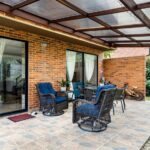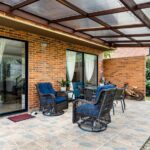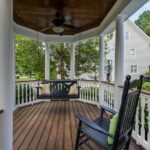
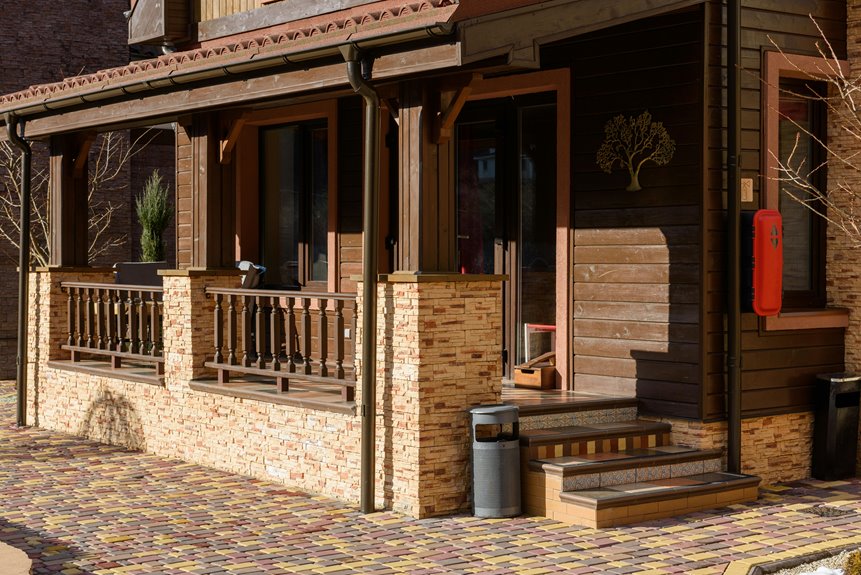
A farmers porch stretches across your home’s entire front facade. These porches typically measure 8 to 12 feet deep and 20 to 40 feet wide, creating a genuine outdoor living area rather than just a small entry shelter.
You can identify a farmers porch by looking for several specific features. The structure uses sturdy 4×4 or 6×6 timber posts spaced 6 feet apart. Solid railings run along the edges, and a roof extends 6 to 10 feet outward from your house.
The full-width design means this porch becomes your home’s dominant architectural feature. Unlike small porticos that only protect your doorway, a farmers porch has enough space to fit multiple chairs, swings, and small tables where people can gather comfortably. You could sit out there with friends or family without feeling crowded.
These porches look different depending on where you live and what architectural style your house follows. A farmers porch on a Colonial home looks different from one on a farmhouse in the Midwest or a cottage in the South. Understanding these regional variations and how they match your home’s existing style helps you see whether your porch truly fits your property.
What Makes a Porch a Porch?
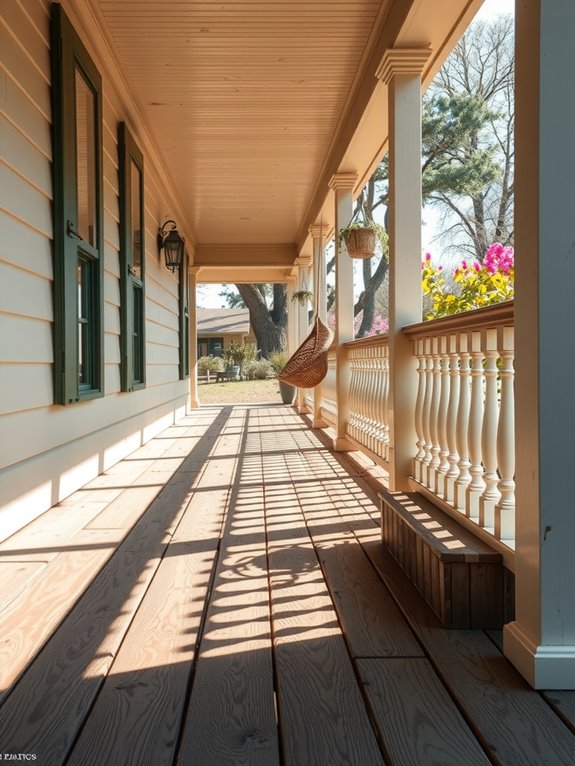
A porch isn’t just any outdoor space attached to your home. It’s a specifically defined architectural feature that serves as a protective transition between inside and outside. You’ll recognize a true porch by several key characteristics.
First, it must connect to your house for at least 50% of its area. Second, it requires a roof supported by columns, walls, or other structural supports. These elements distinguish your front porch from a deck or patio, which lack roofs. That roof overhead is what makes the real difference between a covered space and an open one.
A wrap-around porch extends along multiple sides of your home, maximizing outdoor living space. Whether modest or expansive, porches function as social zones and curb appeal enhancers. They’re intentionally designed for outdoor activities and shelter, making them essential architectural features that extend your home’s footprint while protecting you from weather.
The Defining Features of a Farmers Porch
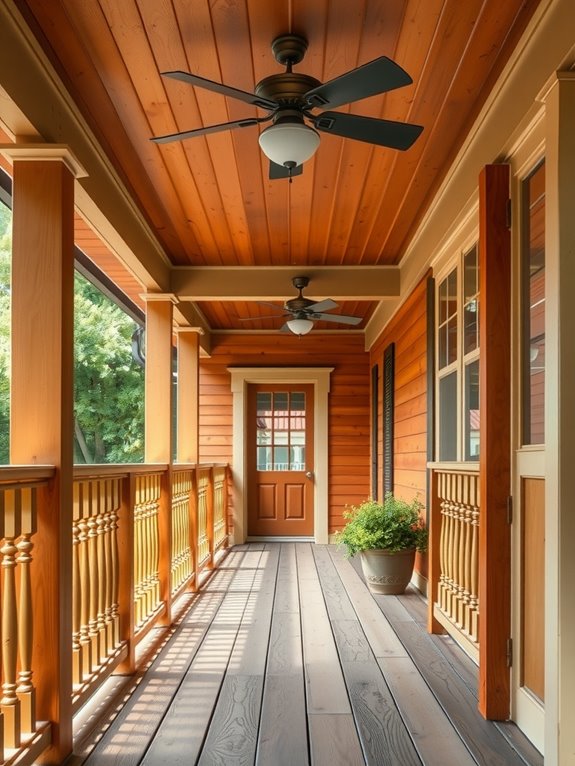
A farmers porch is one of the most straightforward porch styles you’ll encounter in American homes. It stretches across your home’s entire front, typically 8 to 12 feet deep and running the full width of the house. This design creates a generous outdoor space without requiring complex construction.
A farmers porch stretches across your entire home front, creating generous outdoor space with straightforward construction and full-width design.
The structure has several consistent elements. Farmhouse-style wooden beams and simple railings give it authentic character. The roof overhead shelters you from both rain and sun, making the space usable during most seasons. The posts supporting this roof are usually 4×4 or 6×6 timber, spaced about 6 feet apart, which provides solid stability while maintaining that classic farmhouse look.
What distinguishes a farmers porch from other styles is its emphasis on size and accessibility. The porch is spacious enough to hold multiple rocking chairs, a porch swing, and small tables without feeling cramped. You might add a bench along one side or position seating in pairs for conversation. The entry stairs are wide and comfortable—typically 3 to 4 feet across—making the transition from ground to porch feel welcoming rather than steep or narrow.
Farmers porches work at different heights depending on your home’s foundation. Some sit just 12 to 18 inches above ground level, while others stand 2 to 3 feet up with a substantial staircase. Either way, the front-facing presentation is generous and inviting. The design prioritizes function over decoration, making it accessible for children, elderly visitors, and anyone carrying groceries or packages.
How to Spot a Farmers Porch: Materials, Railings, and Structure
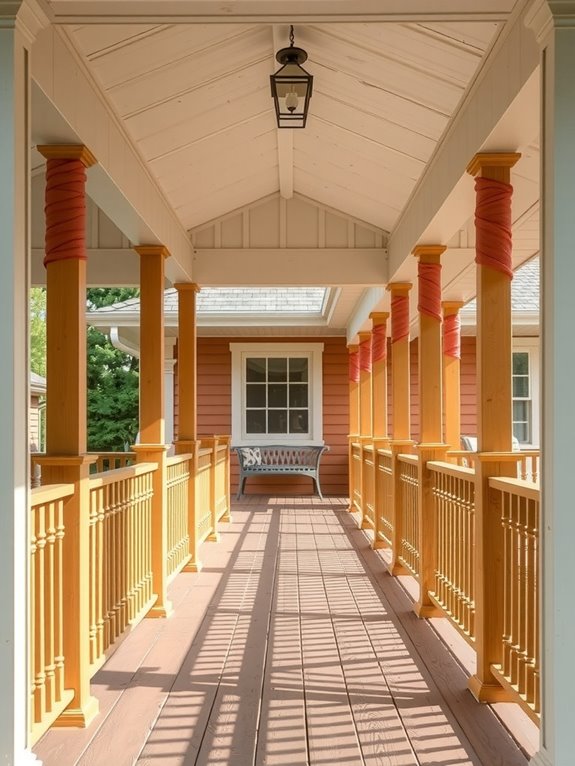
Spotting a farmers porch means looking at three key elements: what materials make it up, how it stands, and what style details finish it off. Start by examining the wood construction. You’ll see sturdy beams, typically 6 to 8 inches wide, that run across the entire front of the house. These beams support the porch and give it that solid farmhouse look.
Next, check out the railings and support columns. Most farmers porches have wooden railings made from 2×4 or 2×6 lumber, spaced about 4 inches apart for safety. The columns holding up the roof are usually square wooden posts, roughly 4×4 inches in size, placed at regular intervals along the porch front. This arrangement creates the classic, welcoming appearance you notice on older farmhouses.
Look at the roof structure too. The porch roof extends across the full width of the front, usually projecting 6 to 10 feet out from the house. This overhang shelters the space while keeping the sides open and unenclosed. The open sides let air flow through, which is different from a screened-in porch or a fully enclosed room.
Pay attention to elevation as well. Farmers porches sit raised from ground level, typically 18 to 24 inches high. This height creates a real gathering space where people can sit, rock in chairs, or stand and talk. The solid construction you see in these details—the thickness of the wood, the way posts connect to beams, the spacing of railings—shows quality workmanship that has often lasted 50, 75, or even 100 years.
How Northern and Southern Farmers Porches Differ
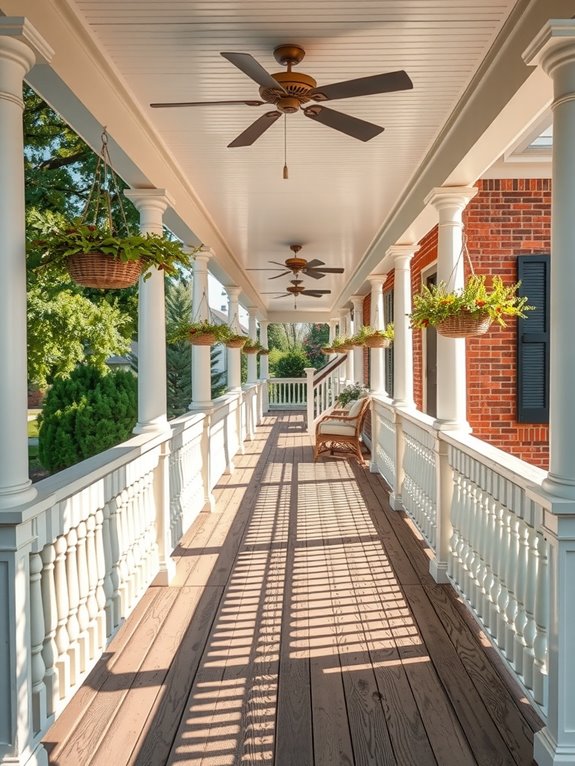
Farmers porches look noticeably different depending on where you find them. The main distinctions come down to design priorities and regional building traditions that developed over time.
Northern farmers porches tend toward simplicity. You’ll see clean lines, minimal decoration, and a focus on practical functionality. These porches typically span your home’s full width and provide excellent seating areas for outdoor work and relaxation. The design philosophy centers on what works rather than what looks impressive.
Southern farmers porches take a different approach. These designs feature ornate columns, elaborate railings, and decorative details that command attention. The porches emphasize visual prominence with generous shade coverage for extended outdoor living. A typical Southern farmers porch might include turned balusters, decorative brackets under the roof line, and painted details that showcase the carpentry work involved.
The regional differences reflect how each area’s climate and culture shaped building practices. Northern porches were designed to handle heavy snow loads and harsh winters, so builders kept structures simple and sturdy. Southern porches developed with hot, humid summers in mind. The wide overhangs, tall columns, and open designs allowed air to circulate while protecting the house from sun and rain. A well-designed Southern porch can reduce the interior temperature by 5 to 10 degrees on hot days.
When you look at these two styles side by side, the contrast becomes clear. Northern porches make understated architectural statements with their straightforward construction. Southern porches use ornamental features to create bold visual presentations. Both styles serve their communities well by fitting local needs and building traditions.
Farmers Porch vs. Portico: Small and Budget-Friendly
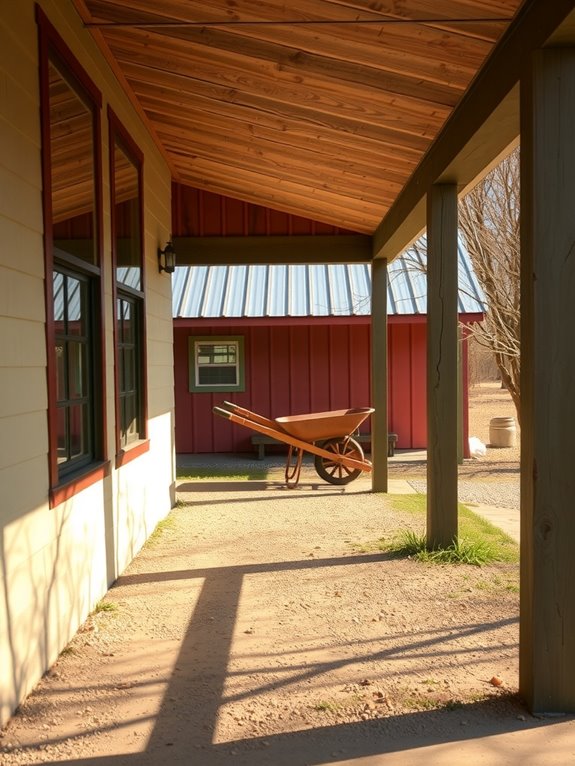
When you’re comparing a farmers porch to a portico, size is the clearest difference between them. A farmers porch spans your home’s full front width—typically 8 to 12 feet deep—and gives you room for multiple chairs, a swing, or a small table. A portico, on the other hand, covers just your entry steps and works for one or two people standing comfortably.
Your budget matters too. A portico costs less because it needs fewer materials like wood framing, roofing, and siding. The construction takes less time as well, usually a few weeks rather than a couple of months. If you only want weather protection at your front door, a portico handles that job well and keeps costs down.
A farmers porch requires a bigger investment in lumber, roofing materials, flooring, and labor hours. The payoff comes if you want an outdoor space where you can actually spend time. You could sit out there on warm evenings, invite neighbors over, or just watch the street from a comfortable chair. Think about how you plan to use the space before deciding which option fits your situation.
Size and Space Differences
How much room do you actually need on your front porch. The answer depends on your lifestyle and what you plan to do outside your home. A farmers porch and a portico serve different purposes, and their sizes reflect those different jobs.
A farmers porch spans your home’s full width and provides plenty of space for outdoor living. A portico, by contrast, offers just enough room for weather protection at your entry. The size differences matter when you’re deciding which one fits your needs.
Farmers porches extend 8 to 12 feet deep with coverage across the entire front of your house. Porticos measure only 3 to 4 feet deep, which means they take up less of your yard and preserve more interior square footage. Because of this extra depth, a farmers porch can hold multiple chairs, swings, and groups of people gathering together. A portico prioritizes shelter over seating capacity, so it works better as a protected entryway than as a gathering spot.
Your choice depends on how you want to use the space. If you like hosting neighbors and family for outdoor time, a farmers porch delivers what you need. If you prefer a minimal footprint with just the weather protection you require, a portico works perfectly. Both styles add value to your home, though in different ways.
Budget and Affordability Comparison
Now that you understand the space each option provides, it’s time to think about what they’ll cost. Your budget shapes which porch size works for your home and lifestyle.
A portico costs less because it covers less ground. You’re paying for fewer materials and shorter labor hours. A farmers porch demands more investment—extended roofing, additional columns, and extra structural support add up quickly.
| Feature | Portico | Farmers Porch |
|---|---|---|
| Typical Cost | $3,000–$5,000 | $15,000–$30,000 |
| Materials Needed | Minimal | Extensive |
| Labor Hours | 40–60 | 120–200 |
| Affordability | Budget-friendly | Premium investment |
| Porch Size | 4×8 feet | 12×20 feet |
Making Your Decision
A portico gives you shelter and curb appeal without stretching your finances thin. You get a modest covered entry that handles rain and sun, and you’ll finish the project in a few weeks. A farmers porch represents a longer financial commitment, typically taking 3 to 4 months to complete. The bigger structure—with its 12×20-foot footprint—creates genuine outdoor living space that you’ll use through seasons. The higher upfront cost often translates into increased home value when you sell, though the payoff comes years later rather than immediately.
Your choice depends on two things: how much money you can spend right now, and how you plan to use the porch. If you want a quick, affordable addition that looks polished, a portico fits the bill. If you have the budget and want a porch where your family actually gathers to relax, eat dinner, or watch the neighborhood, a farmers porch delivers that experience.
Farmers Porch vs. Covered Front Porch: Customizable and Practical
A farmers porch runs the full width of your home’s front, giving you room for seating, tables, and space where people naturally gather. A covered front porch lets you build out just 4 to 8 feet, depending on what fits your budget and how you plan to use it.
The open design of a farmers porch invites people to linger and spend time outside. You might set up a few rocking chairs, add a small table, or just have room for neighbors to stop by and chat. A standard covered porch focuses on protecting your front door and entry area from rain and sun. You get to decide how deep it extends and what style matches your home.
Think about how you actually use your front entrance. If you want a spot where family and friends hang out regularly, a farmers porch works well. If you mainly need shelter while you unlock the door or wait for a delivery, a covered porch does the job without taking up as much space or money.
Both styles have real value. The choice comes down to your available yard space, how much you want to spend, and whether you see your front area as a gathering spot or simply a practical entry point.
Size and Scope Differences
What sets a farmers porch apart from a standard covered front porch comes down to one thing: how wide it is. A farmers porch runs across your entire front of your home, typically spanning 20 to 40 feet depending on your house size. A covered front porch can be smaller—maybe 8 to 16 feet wide—and doesn’t have to cover the full front of your house.
Think of it this way. A farmers porch makes a bold statement because it stretches all the way across. It uses thick farmhouse beams and sturdy railings that look right for that big, open feeling. A covered front porch is more flexible. You can build it just over your front door, or extend it wider if you want. Both need a roof and columns to hold it up, but the farmers porch’s look depends on that wide coverage creating a strong presence on your home’s front.
The main differences break down like this. Farmers porches demand full-width coverage and emphasize that wide footprint as a defining feature of your home’s style. Covered front porches let you choose partial or full coverage based on your space and budget. A farmers porch might use deeper beams—6 by 8 inches or larger—while a covered porch can work with lighter support columns, maybe 4 by 4 inches. Both work well, but they serve different purposes based on how much space you have and the look you want.
Customization and Flexibility Options
How Much Freedom Do You Actually Have?
Covered front porches give you more choices than farmers porches. You can build one that fits your specific space, whether you need just 4 feet of coverage or want it to span the full 30 to 40 feet across your home’s front. This adaptability makes them work well when you’re adding a porch to an existing house.
Farmers porches require a different approach. They’re built to be the main feature of your front, so they work best when your house structure can handle the weight and size. They don’t offer the same flexibility in sizing.
What Sets Them Apart
| Feature | Farmers Porch | Covered Porch |
|---|---|---|
| Size Options | Full-width only | 4 feet to full-width |
| Design Flexibility | Limited choices | Many customizable options |
| Visual Style | Bold, dominant look | Subtle, refined addition |
A covered porch lets you decide if you want 6 feet of coverage on one side or full coverage across your entire front. A farmers porch commits you to the full width because that’s how the design works. The structural posts, railings, and roof all depend on that full-width layout to look and function correctly.
Your decision comes down to what matters more to you: a strong visual statement that takes up your whole front, or practical flexibility that lets you work with what you have.
Practical Uses and Functionality
Practical Uses and Functionality
When you’re deciding between a farmers porch and a covered front porch, the real difference shows up in how you’ll actually use the space. A farmers porch changes your front porch into a genuine outdoor living area where your family gathers regularly. You’ll find yourself hosting neighbors, relaxing with morning coffee, and creating memories in an area designed for extended use.
A farmers porch works well for several reasons. First, it gives you room to entertain guests comfortably with multiple seating arrangements. The wide, open design encourages you to spend time outside, unlike standard porches that feel more like a quick pass-through. You get shelter from rain and sun while still enjoying fresh air throughout the year. The porch also creates a natural transition zone between your indoor home and your yard, and you have space for functional storage of seasonal items like gardening tools or holiday decorations.
Think about how you actually spend your time. If you imagine sitting outside on a Saturday morning with your family, or having neighbors stop by to chat, a farmers porch makes that happen naturally. The layout prioritizes accessibility and comfort, making it an inviting place where people naturally want to gather. A standard 12-by-16-foot farmers porch gives you enough room for a few chairs, a small table, and still leaves space to move around easily.
Farmers Porch vs. Wrap-Around Porch: Extended Living and Entertainment
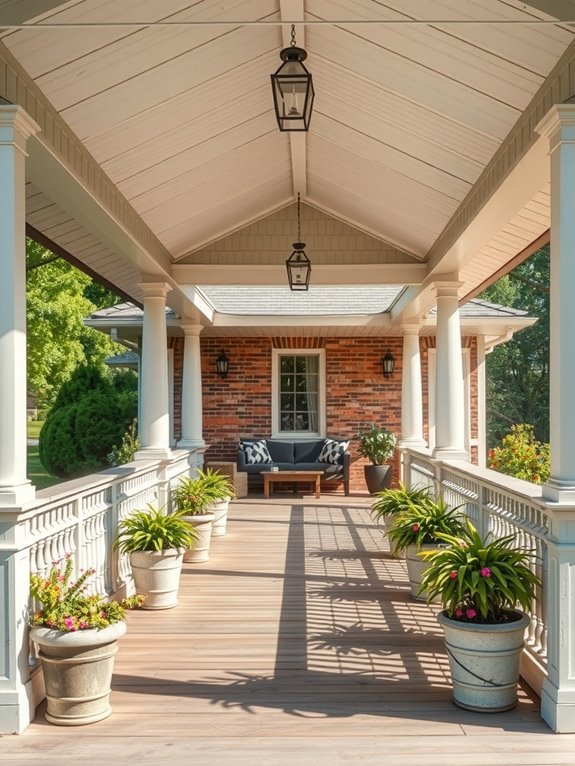
A wrap-around porch extends around two or more sides of your home, typically spanning 8 to 12 feet in depth. This design creates separate zones for different activities. Your front entrance becomes a formal greeting area, while the side and back sections work as casual seating spots. You gain multiple sightlines across your property and can move between spaces without going inside.
A farmers porch, by contrast, spans only the front of your home. It’s usually 6 to 8 feet deep and focuses attention on one wide façade. This style shines for curb appeal and front-door gatherings where guests arrive and interact in a single location.
The key difference comes down to how you use your outdoor space. If you host people in multiple areas—say, morning coffee on the side while grilling happens at the back—a wrap-around gives you that flexibility. The circulation options are genuinely broader. You can move guests around without retracing steps or disrupting traffic flow.
If your entertaining happens mainly at the front of your home, a farmers porch does that job efficiently. It commands attention from the street and provides a generous platform for socializing in one spot. The construction timeline is also shorter—typically 3 to 4 weeks versus 5 to 7 weeks for a wrap-around.
Consider your property layout and how you actually spend time outdoors. The right choice depends on where you naturally gather, not on which style looks better in photos.
Farmers Porch vs. The Open Stoop: Minimalist and Space-Saving
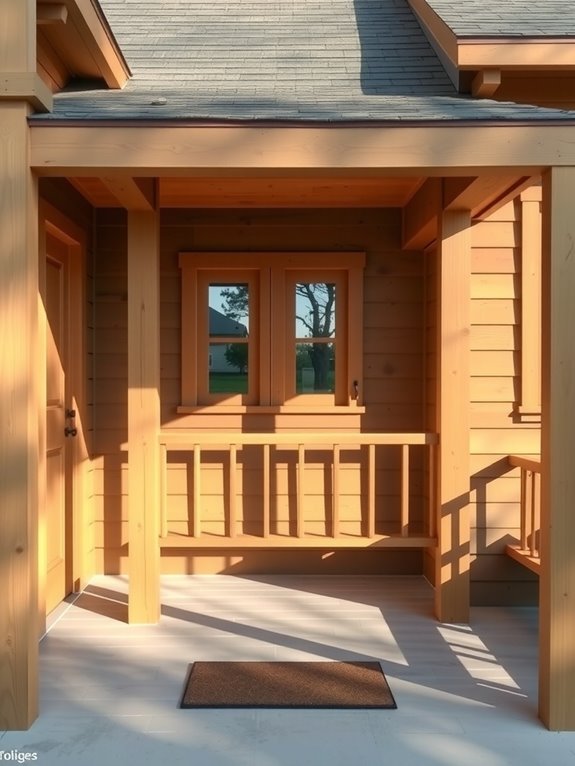
A wrap-around porch and an open stoop represent two different approaches to your home’s front. One philosophy adds outdoor living space. The other keeps things simple and focused on entry.
What an Open Stoop Offers
An open stoop strips away extras. It saves square footage—typically just 4 to 6 feet deep and 8 to 12 feet wide. You get a compact entryway, usually one to three steps leading to your door. Because there’s no roof overhead, furniture and decorations sit exposed to rain and sun. The design keeps attention on your home’s interior rather than creating an outdoor gathering area.
What a Farmers Porch Provides
A farmers porch spans your entire front facade. It can measure 8 to 12 feet deep and run the full width of your home’s front. You have room to arrange multiple chairs, add a porch swing, and position tables. The covered space protects furniture from weather. These porches create genuine gathering spots where neighbors or family members can spend time outside together.
Making Your Choice
Consider how you actually use your front space. If you want an extension of your living area where people gather, a farmers porch serves that purpose. If you prefer clean lines and a straightforward entry without outdoor furniture to maintain, an open stoop works better. Think about maintenance too—a farmers porch requires regular upkeep of a larger covered area, while a stoop needs minimal attention beyond occasional sweeping.
What a Farmers Porch Is Built From
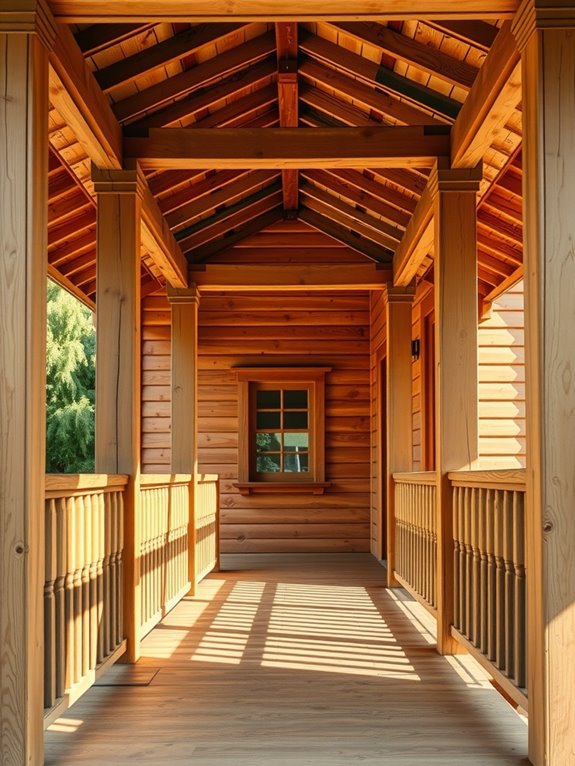
Building a porch that lasts 20 to 30 years requires choosing the right materials from the start. The foundation matters most. You’ll want a concrete or stone base at least 12 inches deep, set below the frost line in your area. This keeps your porch from shifting when the ground freezes and thaws.
The frame of your porch relies on pressure-treated lumber for the beams and columns. This wood resists rot because it’s been treated to withstand moisture and insects. Most farmer porches use 4-by-4 or 6-by-6 posts spaced 6 to 8 feet apart, depending on your roof’s weight and your local building codes.
Your decking takes a beating from daily foot traffic and weather. Composite materials or treated wood planks work well here. They hold up better than regular wood when exposed to rain, snow, and sun. Plan for boards about 1.5 inches thick.
Railings serve both safety and style on a farmer’s porch. You can use vertical balusters spaced 4 inches apart—a requirement in most places for child safety. Some people prefer horizontal cables instead, which give a more modern farm look while still meeting safety standards.
The roof overhead protects everything below it. Metal roofing lasts 40 to 50 years and sheds water quickly. Asphalt shingles cost less and typically last 15 to 20 years. Both options work for a functioning farmer’s porch.
These materials work together as a system. When properly installed and maintained, they create a porch space that handles sun, rain, snow, and regular use without failing.
Furnishing Your Farmers Porch for Gathering and Relaxation
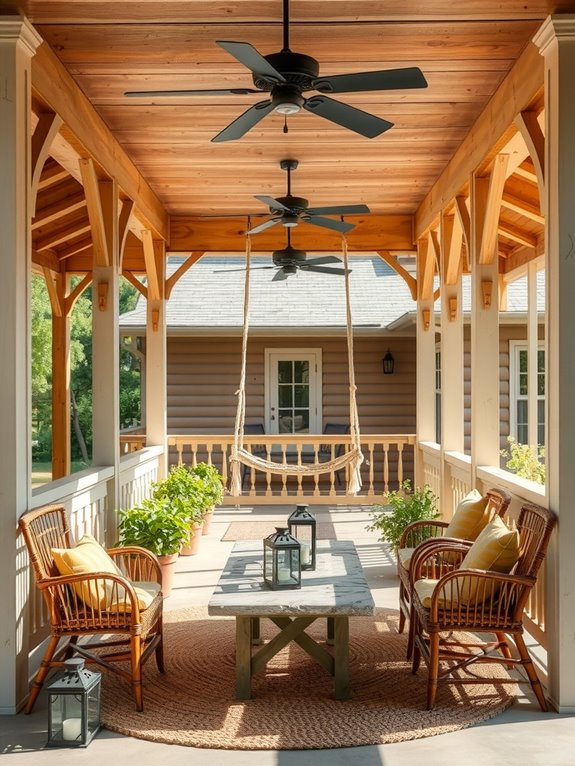
Once you’ve built a sturdy porch with quality materials, you’re ready to furnish it for the gatherings and quiet moments that make farm life rewarding. Your porch furniture should invite people to stay and connect.
Start with these essentials:
- Rocking chairs for individual seating and comfort
- At least one porch swing for relaxation
- A small table for drinks and snacks
- Extra chairs for accommodating guests
Choose durable outdoor seating that withstands heat and weather without requiring constant maintenance. Wood rockers last 10-15 years with basic annual care, while metal frames with weather-resistant cushions need less upkeep. Wicker and woven materials work well in covered areas but fade faster in direct sun.
Arrange furniture to create natural conversation areas while leaving clear pathways to your front door. Space pieces generously—aim for at least 18 inches between seating and table edges—so guests don’t feel crowded. Position the swing or chairs to face each other or toward the yard view. This setup encourages people to linger, share stories, and enjoy the outdoors together.
Why Farmers Porches Enhance Curb Appeal and Home Value
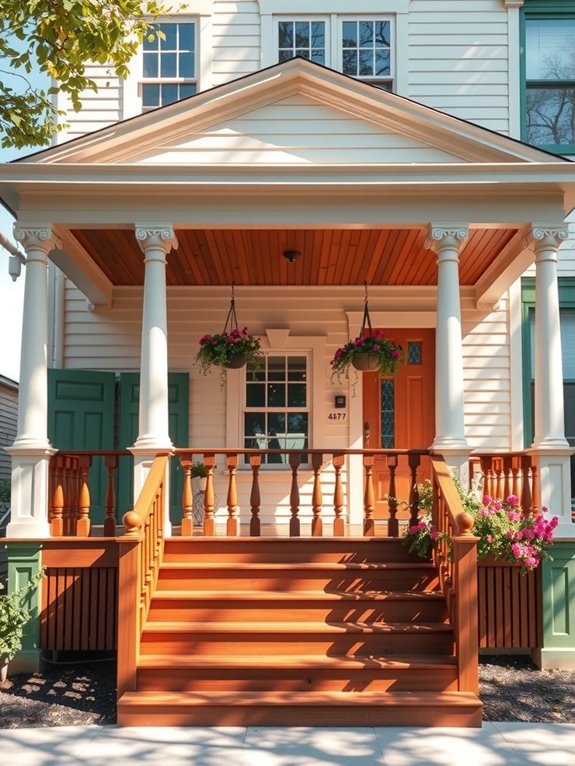
What’s the first thing people notice when they drive past your home? Your farmer’s porch. This architectural feature creates a strong front appearance that catches attention.
Your porch design makes an immediate visual statement. The wide, covered structure spans your entire front, drawing the eye upward and outward. Instead of seeing just a doorway, visitors see welcoming space. That first impression shapes how neighbors and potential buyers view your property’s value.
Your porch design makes an immediate visual statement that shapes how neighbors and potential buyers view your property’s value.
The curb appeal works on a practical level too. When you add comfortable seating and perhaps a swing, you’re showing off outdoor living space. Visitors recognize your home as a place where people gather. That visible social area suggests your family values quality of life and connection with neighbors.
The materials you choose matter for lasting value. Wood railings and sturdy columns signal that you’ve invested care into your home. A farmer’s porch typically extends 8 to 12 feet from your front door, creating real usable space. Your investment in porch design increases your home’s marketability and presence in the neighborhood.
Does a Farmers Porch Fit Your Home? Finding the Right Fit
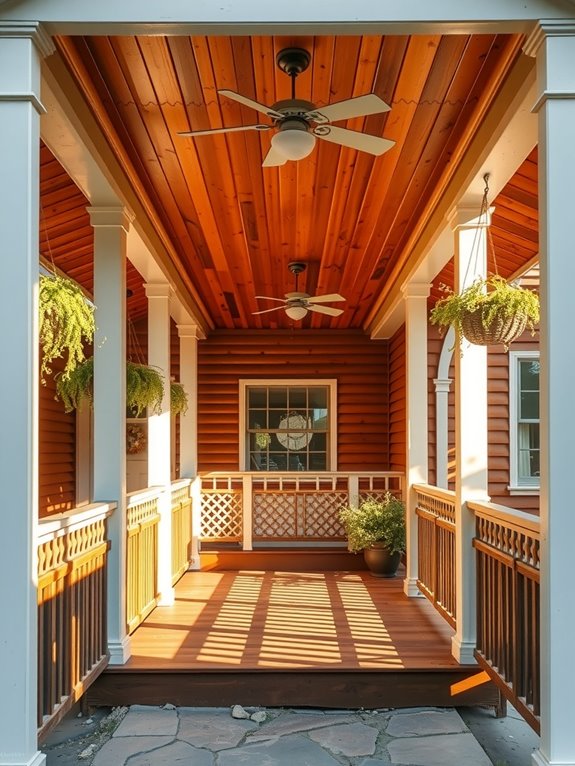
Before adding a farmers porch, check three main things: style match, entrance alignment, and practical considerations.
Start by looking at your home’s architecture. A farmers porch works best when its design complements your existing style. If your house has a traditional colonial look, a simple porch with classic railings fits naturally. A ranch-style home might pair better with a low-profile porch design. Walk around your property and note the details—roof pitch, siding material, window styles—then compare them to farmers porch examples online or in your neighborhood.
Next, examine your front entrance. The porch needs to work with how your door currently sits. Measure the distance from your front door to the edge of your property line. Most full-width porches run 4 to 6 feet deep and span the entire front of the house, typically 12 to 16 feet wide on average homes. A partial porch covering just the entry area needs only 3 to 4 feet of depth and 4 to 6 feet of width.
Budget and space are equally important. Full-width porches cost more because they require more materials and labor, typically running $3,000 to $8,000 depending on your region and whether you hire professionals. Partial porches cost less, usually $1,500 to $4,000. Measure your available space carefully. Some properties have tight front yards that won’t accommodate a full porch without looking cramped. Others have ample space and could benefit from the expanded outdoor area.
Take time now to evaluate these practical factors. Doing so helps you decide whether a farmers porch genuinely fits your property and daily life.
Architectural Style Compatibility
Matching Your Porch to Your Home
A farmers porch needs to look like it belongs to your house, not like something added as an afterthought. The way to know if it’ll work is by checking it against your home’s existing style and structure.
Start by looking at these four key things:
Roof lines. Your porch roof should connect smoothly with your home’s roofline. If your house has a steep pitched roof, your porch roof should follow the same angle and pitch.
Columns. Look at what columns your house already has, or pick a style that fits your home type. Colonial homes typically use straight, simple columns, while Cape Cod houses often have thicker, more sturdy posts.
Materials. Use the same wood, brick, or siding on your porch that covers your house exterior. If your house has cedar siding, your porch should too. If it’s brick, match that brick as closely as possible.
Proportions. Measure your front facade from corner to corner. A porch should be about one-third to one-half the width of your home’s front, depending on your house size. A 40-foot-wide house works well with a 15-foot to 20-foot porch.
Regional Style Differences
Southern farmhouses often use ornate columns with detailed brackets and trim. Northern farmhouses lean toward simpler, cleaner designs with minimal decoration. Look at homes in your area that match your house’s age and style to see what feels right.
Before you pick a porch design, spend time measuring your front facade and taking photographs of similar homes in your neighborhood. This step takes about two to three hours but prevents costly mistakes later.
Space and Budget Assessment
After you’ve matched your porch design to your home’s architectural style, the next step is figuring out whether you have the space and money to build it. This matters because a porch project involves real costs and needs real space to work well.
A full-front farmers porch requires significant spending. You’ll need foundation work, structural support beams, and quality materials like wood or composite decking. If a full-length porch stretches your budget too far, partial porches or porch-deck combinations give you workable alternatives that cost less.
| Option | Space Needed | Budget Level | Best For |
|---|---|---|---|
| Full-front porch | Entire façade | Higher | Maximum curb appeal |
| Partial porch | Half front | Moderate | Balanced approach |
| Porch-deck combo | Front door area | Lower | Budget-conscious homeowners |
| Covered entry | Minimal | Lowest | Limited space |
Start by honestly assessing your lot size and what your foundation can handle. Most comfortable porches allow space for at least three to four chairs and a porch swing while keeping a clear 3-foot path to your front door. A typical porch runs 6 to 8 feet deep and stretches 12 to 16 feet across your home’s front. Measure your space carefully before deciding which option works for your home.
Your wallet matters just as much as your measurements. A covered entry might cost $3,000 to $5,000 and takes three to four weeks. A partial porch typically runs $8,000 to $15,000 and takes six to eight weeks. A full-front porch can reach $20,000 or more and take ten to twelve weeks. Write down what you can actually spend, then match it to an option that fits both your lot and your finances.
Getting Started: Building Your Farmers Porch
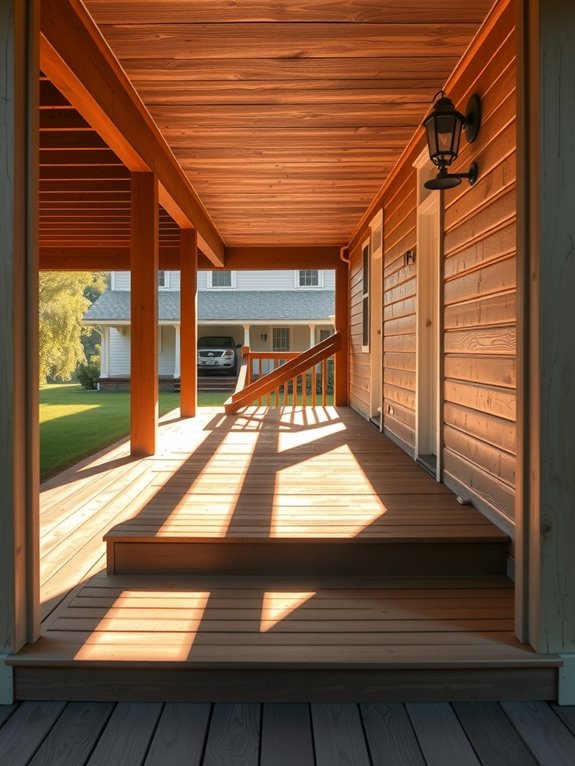
A farmers porch adds function and character to your home’s entrance. Before you break ground, spend time planning to avoid expensive changes down the road.
Plan Your Layout
Start by measuring your home’s width and deciding whether you want a ground-level porch or an elevated one. Ground-level porches work well in flat areas and require less structural support. Elevated porches sit 2 to 4 feet above grade and need proper stairs and foundation work.
Next, sketch a basic layout. Mark where stairs will go if you’re building elevated, and identify zones for seating, plants, or a small table. Your sketch doesn’t need to be perfect—it just needs to show you what you’re working with.
Gather Information About Materials and Codes
Farmhouse-style porches typically use materials like pressure-treated lumber for framing, cedar or composite boards for railings, and stone or concrete for flooring. Visit a local building supply store to see samples in person and ask staff about durability in your climate.
Contact your local building department to learn permit requirements for your area. Most porches need permits, and inspections happen at foundation stage and again when framing is complete. Getting this information early saves weeks of delays later.
Consider Your Situation
Think honestly about maintenance. Wood railings need staining or sealing every 2 to 3 years. Composite materials cost more upfront but require less upkeep. Also consider your climate—porches in rainy regions need good drainage, while those in dry areas face different challenges.
A typical farmers porch project takes 4 to 8 weeks from start to finish, depending on size and complexity. Set a realistic timeline before you begin.