
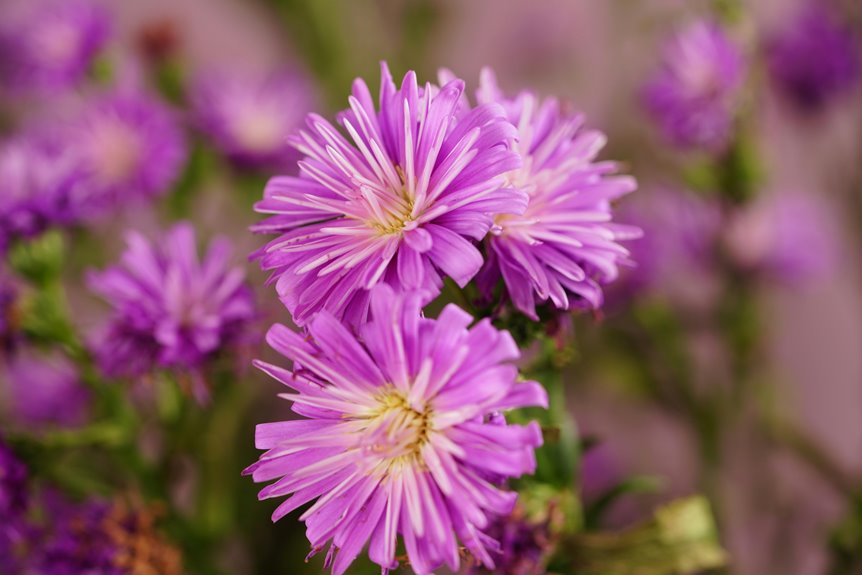
September has two birth flowers worth knowing about: the Aster and the Morning Glory.
Asters are star-shaped perennials that bloom from late summer through early fall. They represent wisdom, loyalty, and faith. These flowers grow 1 to 6 feet tall depending on the variety, and they’re straightforward to care for once established. Asters prefer full sun and well-draining soil. You can plant them in spring or fall, and they’ll return year after year with minimal attention.
Morning Glories are fast-growing vines with trumpet-shaped flowers that symbolize love and new beginnings. They climb quickly, often reaching 6 to 10 feet in a single growing season. Unlike asters, morning glories are annuals, meaning they complete their life cycle in one year. They need direct sunlight and can grow in various soil types, making them flexible for different garden setups.
Both flowers come in white, pink, purple, red, or blue varieties. If you prefer low-maintenance plants that return each season, asters work well. If you want rapid growth that fills a vertical space within weeks, morning glories are your better choice. Consider your gardening style and available space when deciding which one fits your needs.
September’s Two Birth Flowers: Aster and Morning Glory
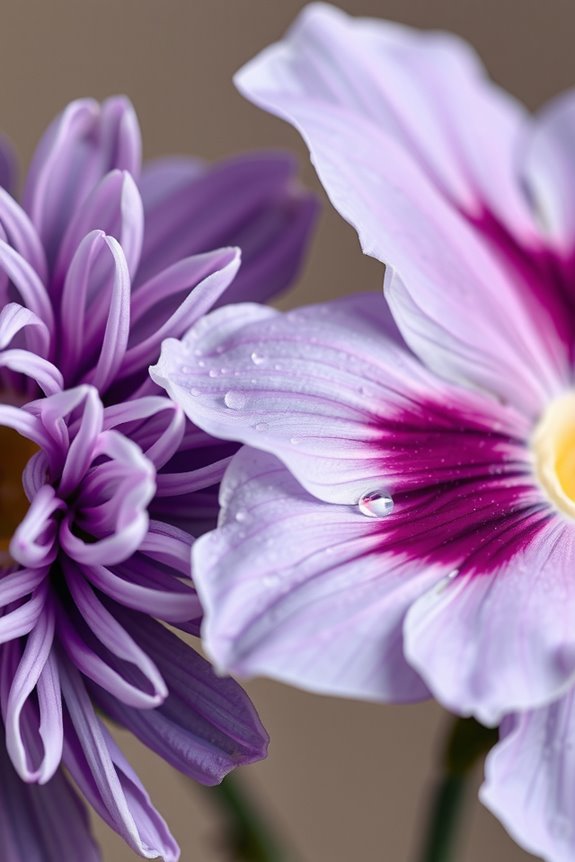
September stands apart from other months because it claims two birth flowers instead of one. You get both the aster and the morning glory, each with its own characteristics and appeal.
September uniquely claims two birth flowers: the aster and morning glory, each bringing distinct characteristics and appeal.
The aster is a star-shaped perennial that blooms from late summer through early fall. You’ll find them in white, pink, purple, red, or blue. The morning glory, by contrast, is a fast-growing vine with trumpet-shaped flowers in a similar color range. While they look quite different, florists often pair them together in arrangements because their textures and colors work well as a combination.
Each flower carries specific meanings. Asters represent wisdom, love, faith, patience, and loyalty. Morning glories symbolize love, affection, and new beginnings. When you choose these flowers for September celebrations, you’re picking blooms that match what the season represents.
Understanding what each flower offers helps you decide how to use them. If you want to emphasize loyalty and patience, asters work well on their own. If you’re marking a fresh start or transition, morning glories deliver that message. Combining them gives you a fuller range of meanings in a single arrangement, which is why florists recommend this pairing for September birthdays and events.
The Aster: A Star-Shaped Symbol of Wisdom and Love
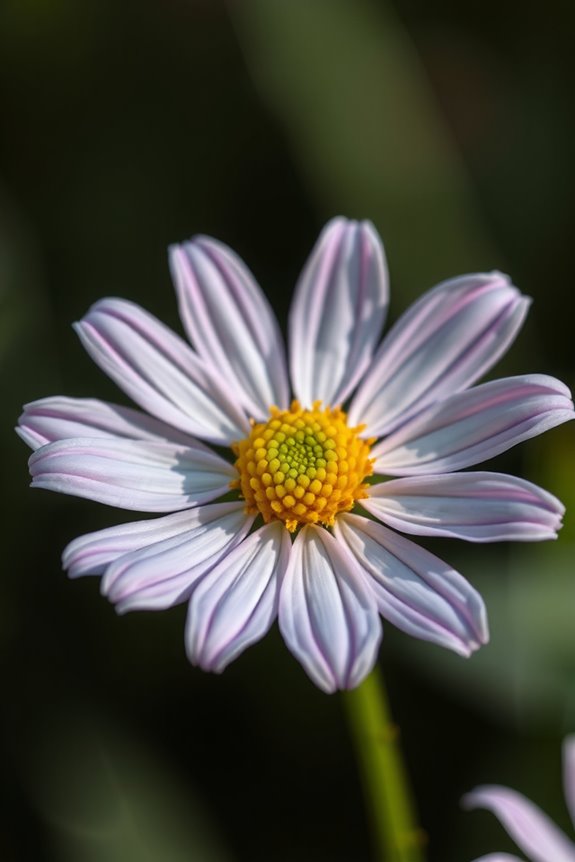
The aster’s star-shaped petals hold meaning that connects to ancient stories and human values. The flower’s name comes from the Greek word for star. In old mythology, asters grew from the tears of Astraea, a goddess who watched over justice and innocence. This connection links the flower to both the heavens and real human emotion.
When you give asters as a September birthday gift, you’re offering something with layers of meaning. These flowers represent wisdom, patience, faith, and loyalty—qualities that people have valued for thousands of years. The choice matters because it shows thought behind the gift rather than picking something random.
Understanding why certain flowers carry specific meanings helps you make better choices when selecting gifts or planning a garden space. Asters bloom in late summer and early fall, typically from August through October depending on your location. They grow 1 to 4 feet tall and come in colors ranging from purple and pink to white and blue. When you know both the history and the practical details about a flower, you can appreciate it more fully.
Symbolism of Wisdom and Love
What makes a flower worthy of representing an entire month? The aster, September’s birth flower, earns this distinction through symbolism rooted in ancient tradition. The name comes from the Greek word for star, connecting this flower to celestial wisdom and lasting meaning.
When you choose or receive asters, you’re selecting a flower with specific symbolic weight. The Greeks associated asters with Astraea, the goddess of wisdom, which reinforced themes of protection and intelligent guidance. This connection matters because it shapes how people interpret the gift.
Asters communicate four main messages:
- Wisdom—reflecting intelligence and thoughtful understanding
- Love—expressing genuine affection and devotion
- Loyalty—symbolizing faithful companionship
- Faith—representing trust and belief in one another
These star-shaped blooms grow between 1 and 6 feet tall, depending on the variety. Their height and structure make them visible statements in any arrangement. When you gift asters to someone with a September birthday, you’re acknowledging their depth and character. You’re saying that you recognize their wisdom and value what they bring to your life.
Star-Shaped Physical Characteristics
The aster’s defining feature is its unmistakable star shape. When you observe an aster bloom, you’ll notice how numerous slender petals radiate outward from a central yellow disk, creating that celestial silhouette. The flower’s name itself comes from the Greek word for star, making the connection between appearance and symbolism clear.
| Feature | Description |
|---|---|
| Petal Arrangement | Radiating outward in star pattern |
| Center Disk | Bright yellow core |
| Height Range | 1 to 6 feet tall |
These September bloomers display petals in white, pink, purple, blue, and red. The radiating petal design embodies the symbolism of wisdom and endurance. In late summer, you’ll spot asters growing in upright, bushy forms that work well in garden beds and borders.
The star pattern you see isn’t accidental. Each petal extends from the center like a spoke on a wheel, and this arrangement serves a purpose. The bright yellow disk in the middle acts as a landing pad for pollinators, while the outer petals guide insects toward the center. When you’re selecting asters for your garden, look for plants with fully formed rays—this indicates a healthy, mature flower ready to attract bees and butterflies.
Historical and Cultural Significance
How Ancient Flowers Connected People to the Stars
Where did asters get their connection to wisdom and love. The answer lies in Greek mythology and how people actually used these flowers over thousands of years. According to legend, the goddess Astraea wept, and her tears became star-shaped flowers. This story gave people a way to think about these blooms as links to the heavens.
What Ancient Cultures Valued About Asters
Greeks, Romans, and other ancient peoples saw asters as more than just pretty flowers. They used them in sacred rituals for protection. Romans believed asters could push away negative energy during ceremonies. Over time, the flowers came to mean wisdom, patience, and lasting affection. People passed down these meanings from one generation to the next.
The word “aster” comes straight from Greek and means “star.” When you look at the flower’s shape, you understand why. The petals radiate outward like points of light. Ancient people connected this appearance to the mythological story, which made the flower feel special and meaningful.
Connecting to the Past When You Plant Today
When you place asters in your garden now, you’re doing something that humans have done for at least 2,000 years. You’re part of a long line of people who recognized value in these flowers. These blooms carry history in them. Growing them helps you understand how cultures across time and distance all noticed the same qualities in nature and decided these qualities mattered.
Morning Glory: The Flower of New Beginnings
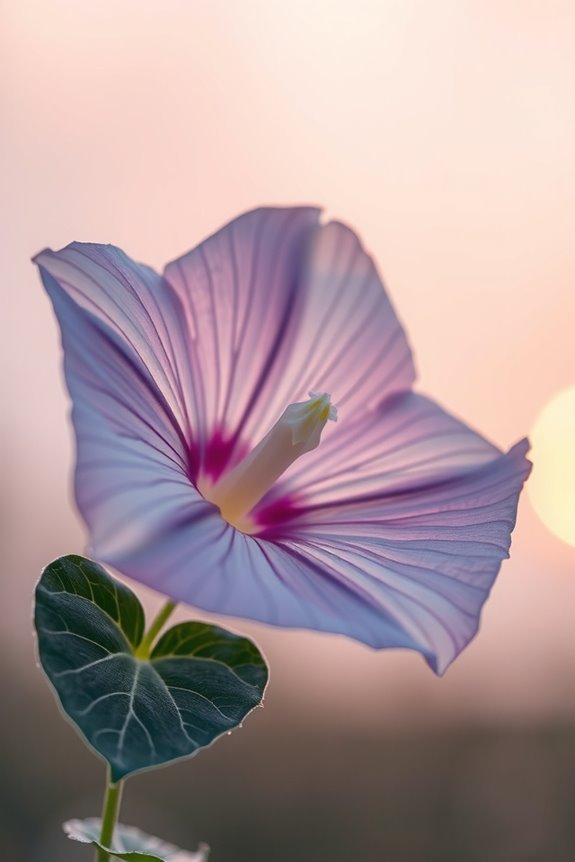
Morning glories are a practical choice for covering fences or trellises. Many gardeners plant them specifically to add greenery to bare structures. By choosing them, you’re joining a long tradition of growers who value growth and new possibilities.
Morning glories transform bare structures into lush green spaces, connecting you to generations of gardeners celebrating growth and possibility.
The Morning Glory serves as September’s birth flower and belongs to the Convolvulaceae family. These vines grow quickly, reaching 6 to 10 feet or more in a single season. Their trumpet-shaped flowers open each morning in shades of blue, purple, pink, red, or white, then close by afternoon. This daily cycle repeats, giving you a consistent reminder that each day brings a fresh start.
Growing morning glories requires full sun to partial shade. They establish themselves rapidly and will cover ground quickly once planted. Whether you grow them as annuals or perennials depends on your climate—they’re winter-hardy in warmer zones but often treated as annuals in colder regions. The result is ground cover that addresses bare spots in your garden while serving as a visual symbol of optimism and renewal.
Aster vs. Morning Glory: Which Flower Defines You?
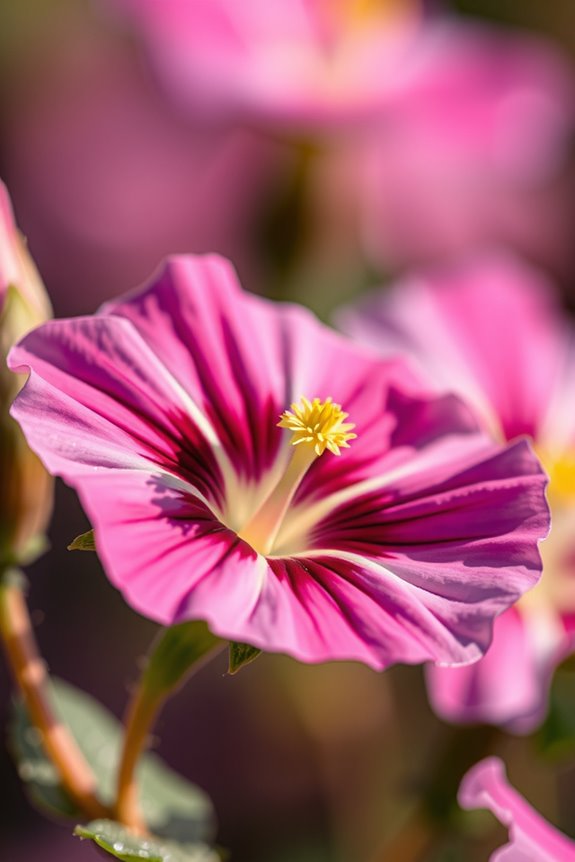
Asters and morning glories show different sides of who you are through their meanings. Asters represent wisdom and patience. Morning glories stand for love and fresh starts.
These flowers look quite different from each other. Asters grow as compact, daisy-like blooms with yellow centers. Morning glories have delicate trumpet-shaped flowers that climb upward on vines as they sprawl across a space.
How each flower grows matters when you’re deciding which one fits your life. Asters are sturdy perennials that come back year after year with minimal care required. You can plant them once and they’ll return. Morning glories, by contrast, are annuals that live for just one growing season. They need consistent warmth, grow quickly, and require support structures like trellises or stakes to climb. If you live in a cooler climate, morning glories may struggle, while asters handle temperature changes better.
Think about what kind of gardener you are right now. Do you prefer planting something once and letting it do its work for years. Or do you enjoy the process of starting fresh each spring, giving you a chance to try new colors and varieties.
Symbolic Personality Traits
What Your September Birth Flower Says About You
Flowers communicate in their own way, and the one you’re drawn to can tell you something real about yourself. Your September birth flower choice points to personality traits that matter to how you live your life.
If You’re an Aster Person
Asters reveal a specific set of strengths. You show up for people consistently because loyalty matters to you. You think things through before acting, which helps you stay calm when situations get hard. Your values don’t shift easily, even when things get complicated. You believe in building connections that actually last.
If You’re a Morning Glory Person
Morning Glories point to different qualities. You look for new ways of thinking and aren’t afraid of change. You take action instead of waiting around. Your outlook leans toward possibility. You move forward with energy and purpose.
Understanding Your Pattern
Neither flower type is better than the other. Both represent legitimate ways of being. If you’re an Aster person, you likely trust steadiness and deep relationships as your guide. If you’re a Morning Glory person, you probably value growth and fresh chances as your direction. Knowing which one speaks to you helps you understand what matters most in how you approach life.
Visual Appearance Differences
When you place asters and morning glories side by side, their differences become obvious. Asters have star-shaped petals that point outward from a yellow center. These flowers grow in tight clusters and come in white, pink, purple, red, and blue. The plants themselves stand upright and bushy, filling in garden beds with their dense growth habit.
Morning glories look completely different. Their blooms are shaped like trumpets or funnels and open when the sun rises. By afternoon, they close up again. These plants are vines that grow quickly and can reach 6 to 10 feet or longer. They climb and trail across trellises with ease.
The timing of when these flowers bloom also matters for your choice. Asters flower starting in late summer and continue through early fall. Morning glories bloom their best during the warm months of the growing season. If you want flowers in your garden during September specifically, asters are the better pick since they peak right then.
Growing Habits And Needs
These two flowers grow in very different ways, and that difference matters when you decide what to plant in your garden. As your September birth flower, the Aster grows upright and bushy, reaching between 1 and 6 feet tall, while Morning Glory climbs and sprawls across 6 to 10 feet or more using twining stems that wrap around supports.
Your choice depends on what your garden space allows and how much time you can give to care.
Asters grow best in full sun with well-drained soil. They’re perennials that come back year after year in zones 4 through 8. You’ll need to deadhead spent flowers regularly and divide the plants every few years to keep them healthy and flowering well. They also prefer watering at the base of the plant rather than from above, which helps prevent mildew from developing on the leaves.
Morning Glories need sturdy trellises, stakes, or fences to climb. They bloom daily, opening in the morning and closing by afternoon—a rhythm you’ll notice if you plant them near a window you look out of regularly. These plants want consistent moisture in the soil. In cool climates, treat them as annuals that live one season. In warm zones, they’ll come back as perennials.
Both flowers love full sun and will flower less in shaded spots. Think about your watering routine and how much structure you’re willing to build before choosing. If you prefer low-maintenance plants, Asters ask less of you once established. If you enjoy the daily show and don’t mind tending climbing vines, Morning Glories reward that attention.
Using September Birth Flowers in Arrangements and Gifts
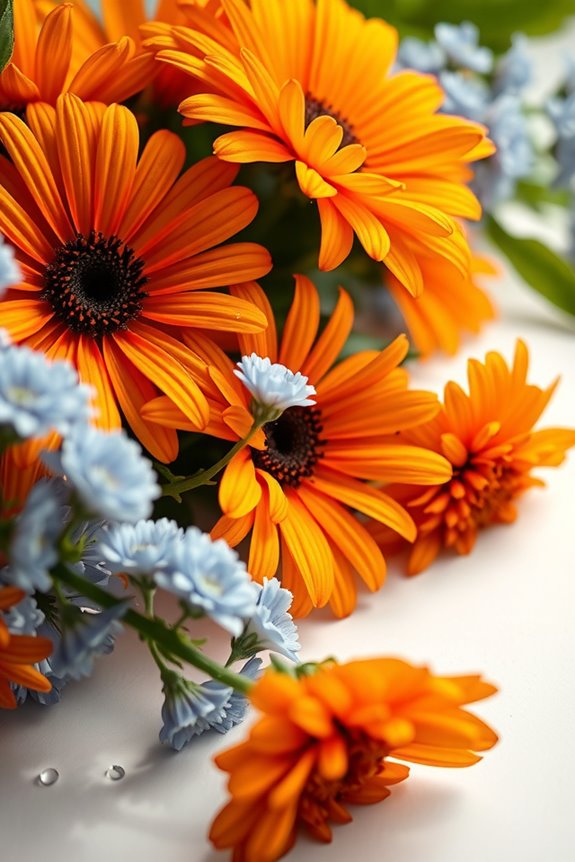
How to Create a September Birthday Gift with Asters and Morning Glories
When you want to give a birthday gift that feels personal, combining asters and morning glories works well. These two flowers grow together naturally and complement each other in an arrangement.
Start by placing purple asters in the center of your vase or container. Purple is the most common variety and holds up reliably in arrangements. These flowers provide texture and fullness. Then select either pink or blue asters to add depth around the purple ones. The mix of colors creates visual interest without looking chaotic.
Next, add morning glory vines along the sides. Morning glories grow tall—reaching 6 to 10 feet in gardens—so in an arrangement, let them cascade or curl around your container’s edges. You can support them with thin stakes or wire if needed. The vines bring movement and flow that asters alone cannot provide.
These September birth flowers carry meaning beyond their appearance. Asters represent loyalty and wisdom. Morning glories symbolize new beginnings and daily renewal. When someone receives this arrangement for their birthday, they’re getting a gift that says something about who they are and what the month means.
The pairing tells a story. It shows you picked these flowers on purpose, not just grabbed whatever looked nice. That thoughtfulness matters more than spending a lot of money. Building an arrangement this way takes about 20 to 30 minutes once you gather your materials, making it a reasonable project for an afternoon.
How to Grow Asters and Morning Glories at Home
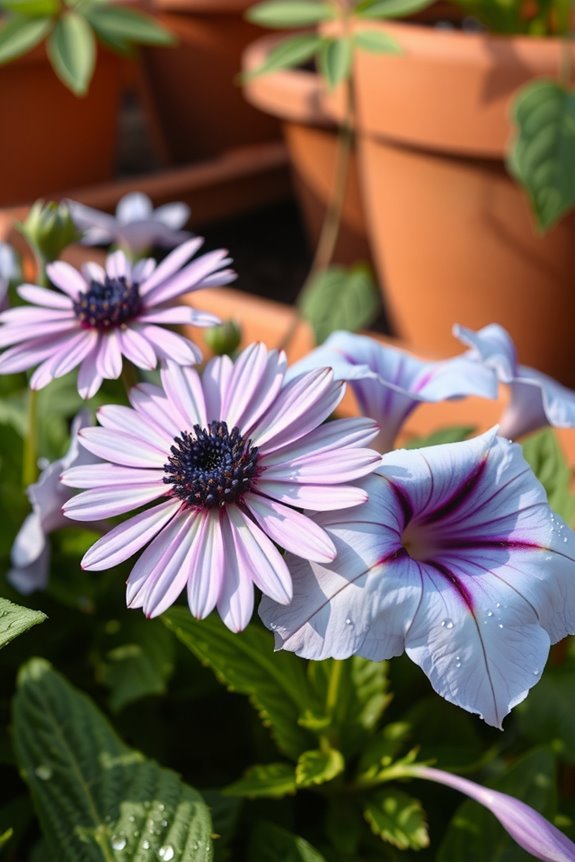
Why not grow your own September birth flowers instead of buying them from a florist. You’ll join a community of gardeners who cultivate these beauties year after year.
Asters and morning glories have straightforward needs. Plant asters in full sun within open beds, and they’ll reward you with late-summer blooms reaching 1–6 feet tall. Deadhead spent flowers regularly to extend your display through early fall. For morning glories, position the vines on sturdy trellises or arbors and let them climb 6–10 feet or higher.
Both plants need well-drained soil and consistent watering. Asters thrive in full sun, while morning glories do well in full sun to partial shade. Asters are perennials in USDA zones 4–8, whereas morning glories grow as annuals in temperate climates. You can start seeds indoors or transplant established plants into your garden beds.
Your homegrown arrangement will feel more meaningful than store-bought blooms. The work takes patience, but the results speak for themselves.