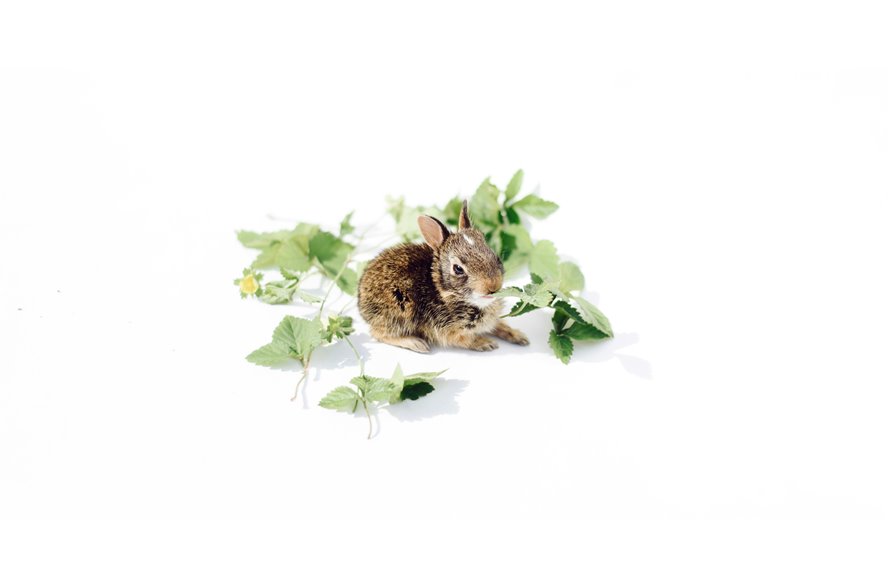
Rabbits will eat basil, particularly pet rabbits that have access to gardens. Wild cottontails may leave it alone, but you shouldn’t count on that. The type of rabbit you’re dealing with matters when deciding how to protect your plants.
The most effective approach combines several methods rather than relying on one alone. Start by raising your basil containers 18 to 24 inches off the ground, which puts them out of reach for most rabbits. If you’re growing basil in garden beds, install fencing that stands 2 feet tall with 6 inches buried underground to prevent rabbits from digging beneath it.
Plant aromatic herbs like rosemary or lavender near your basil. Rabbits dislike strong scents, so these companions provide some protection. However, scent deterrents work only for 2 to 4 weeks before rabbits adjust to the smell and ignore them. This means you’ll need to rotate deterrent products or rely on physical barriers as your main defense.
Young basil plants face the greatest risk during their first 4 to 6 weeks of growth. Cover seedlings with cloches (glass or plastic covers) or drape low chicken wire over the area during this vulnerable period. Once basil matures, it becomes tougher and less attractive to rabbits, though mature plants aren’t completely safe.
The specific rabbit species in your area influences which method works best. Pet rabbits that escape into gardens tend to eat almost anything, while wild cottontails may be pickier. Combining height, burial depth, and protective covers gives you the strongest defense against whatever rabbits you’re facing.
Do Rabbits Eat Basil?
Do Rabbits Eat Basil?
Rabbit damage to basil plants varies widely depending on where you live and what type of rabbits are in your area. You might find your basil completely eaten while your neighbor’s plants go untouched. Pet rabbits often enjoy basil, but wild cottontails may ignore it entirely. This unpredictability means you can’t count on basil being naturally rabbit-resistant.
Rabbit damage to basil varies widely by location and species—some gardens suffer complete loss while others remain untouched.
Some gardeners report heavy damage, with rabbits chewing outdoor potted basil down to bare stems within a few days. Others experience no problems at all. Because results differ so much from one location to another, you’ll want to use multiple protection methods together rather than relying on a single approach.
Start by identifying whether rabbits are actually present in your area. Look for droppings near your garden, tracks in soft soil, or damage patterns on low-growing plants. If you see these signs, combining physical barriers like fencing or netting with additional deterrents gives you the best chance of protecting your basil. Understanding your local rabbit population helps you decide how much protection your garden actually needs.
Physical Barriers: The Only Rabbit-Proof Basil Defense
If rabbits are eating your basil, the plant won’t defend itself. You need to build a physical wall between your plants and the rabbits visiting your garden. Physical barriers are your most reliable protection strategy.
Install fencing at least two feet high around your garden beds, or use cages to enclose individual pots. Many gardeners find that elevated containers placed near their homes work well because the height combined with foot traffic naturally keeps rabbits away. I’ve seen this work consistently in home gardens where people live close enough to notice and discourage rabbit visitors.
Fencing and cages do reduce damage significantly, but they require regular maintenance. Check for gaps every few weeks, especially after heavy rain or wind. You might combine barriers with scent-based deterrents for additional protection, though the barriers themselves do the heavy lifting.
Accept that no truly rabbit-proof solution exists without these protective structures. Your commitment to installing and maintaining barriers keeps your basil safe through the growing season.
Protect Seedlings and Mature Basil
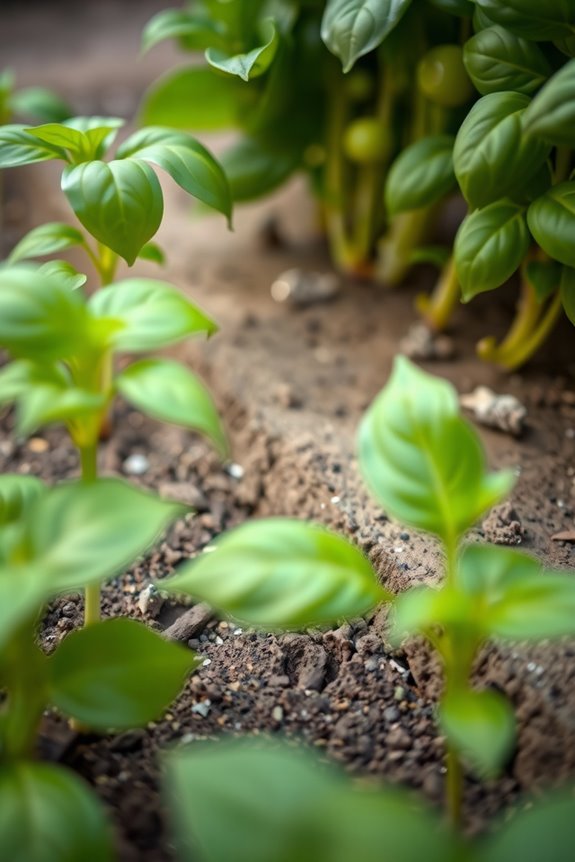
You’ll protect your seedlings and mature basil most effectively by combining physical barriers with smart container placement. The key is matching your defense method to the plant’s age and growing location.
For young seedlings, rabbits are especially drawn to tender new growth, so extra protection during the first 4-6 weeks makes a real difference. Place individual cloches or low chicken wire tunnels directly over newly planted areas. These simple barriers block rabbits from accessing the most vulnerable stage of your plants.
Container-grown basil has a built-in advantage. Move pots onto shelves or tables positioned 18-24 inches high. At this height, rabbits can’t reach them while browsing. Even a basic plant stand works well for this purpose.
If your basil grows in garden beds, install a 2-foot fence and bury it 6 inches underground. The underground portion prevents rabbits from digging underneath, which they’ll attempt if given the chance. This setup provides reliable long-term protection without needing seasonal adjustments.
The method you choose depends on your situation. Container elevation requires less ongoing work and gives you the most reliable results. Garden bed fencing takes more initial effort but works well if you have limited space for moving pots around your growing area.
Physical Barriers And Fencing
Rabbits return to your basil garden again and again because they’ve found a food source. To stop this pattern, you need to block their access completely. Install fine-mesh fencing that goes 3–6 inches below the soil surface and rises at least 2 feet high. This dual approach prevents rabbits from entering at ground level and from digging underneath.
For smaller plantings, wrap chicken wire cages around individual seedlings and stake them firmly into the ground. The wire should be tight enough that rabbits can’t squeeze through or push it aside. Row-cover fabric and tulle sheets also work well since they let sunlight reach the plants while blocking access to tender leaves. Lift these covers regularly—once or twice weekly—so your basil doesn’t grow into the mesh and become trapped.
Potted basil containers offer another layer of protection. Place them on elevated surfaces like tables or shelves rather than sitting them on the ground. Rotate where you put the pots every few weeks to prevent rabbits from learning predictable patterns around your garden space.
Beyond these barriers, address what makes your garden appealing to rabbits in the first place. Remove brush piles, wood stacks, and other debris where rabbits hide. Trim tall grass around your garden beds to 2–3 inches and clear weeds that provide cover. When rabbits can’t find shelter nearby, they’re less likely to settle in and make your basil a regular feeding spot.
Strategic Container Elevation Methods
How High Should You Lift Your Basil Pots to Keep Rabbits Out?
Elevating your containers eighteen to twenty-four inches off the ground makes it significantly harder for rabbits to reach shallow-rooted seedlings and nibble stems at ground level. Use large pots for basil, lavender, and rosemary placed near your house where you can monitor them easily.
Container elevation works best when you combine it with other deterrents. Pair your raised setup with netting or barriers to prevent rabbits from jumping or squeezing underneath. Rotate your protective methods regularly so rabbits don’t grow accustomed to one strategy alone. This multi-layered approach keeps your protected plantings safe throughout the growing season.
When you lift containers, remember that adequate drainage and light exposure remain important for healthy plant growth. Check that water drains freely from pot bottoms and that your plants receive six to eight hours of direct sunlight daily.
Spatial Strategies: Distance and Elevation Tactics
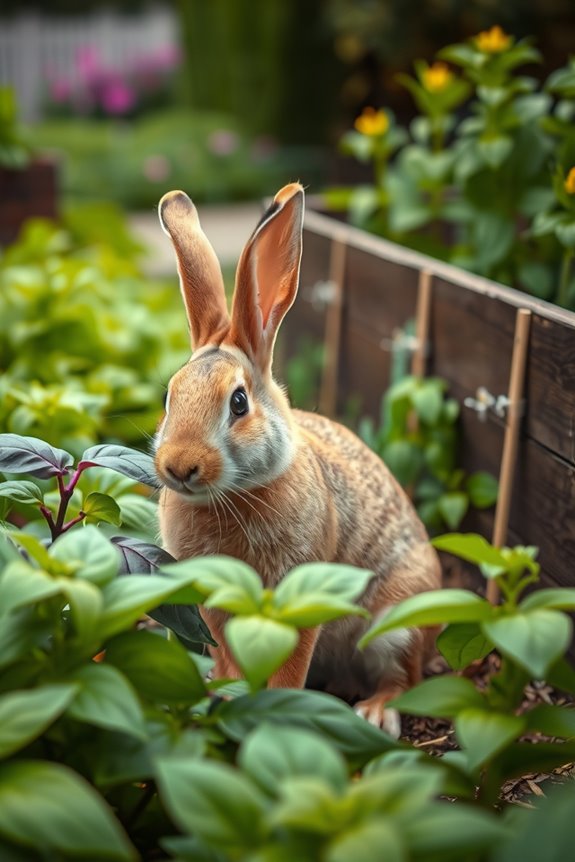
You can use elevation and smart positioning to keep rabbits away from your basil plants. Place your herb containers on raised surfaces or in elevated pots at least 18 to 24 inches off the ground. Ground-level rabbits have a harder time reaching plants at this height, especially when they’re positioned closer to your house.
Rabbits naturally hesitate to venture near buildings and human activity. They prefer open spaces where they can spot danger from a distance. By combining height with proximity to your home, you’re using two deterrents at once. A rabbit encountering a tall pot near your back door has to weigh the effort of jumping against the risk of being exposed. Most will move on to easier food sources instead.
The distance between your basil and the edge of your yard matters too. If you can position your containers 10 to 15 feet from open garden beds or lawn edges, rabbits are less likely to approach them during their evening feeding rounds. They tend to work their way outward from cover, moving from shrubs and brush piles toward food. Starting your basil containers well away from these launching points adds another layer of protection.
This approach works best when you combine it with other deterrents like fencing or netting around larger garden areas. Elevation alone might slow a determined rabbit, but it works better as part of a broader strategy.
Elevation and Container Placement
Rabbits eat close to the ground. That’s just how they forage naturally. So lifting your basil and herb containers off the soil stops them from reaching your plants easily. When you raise your containers higher, you break their normal feeding pattern and make your herbs harder to access.
| Placement Height | Rabbit Deterrence | Best Location |
|---|---|---|
| 12-18 inches | Moderate | Garden edges |
| 2-3 feet | Strong | Near house walls |
| 4+ feet | Very strong | Deck railings |
Put your raised pots on shelves, tables, or platforms near your house. Being able to see your containers from a window means you can watch them regularly. Positioning containers close to your home also adds protection through sight and scent deterrence—rabbits tend to avoid areas near human activity.
Change where you place your containers every two weeks. Rabbits notice patterns. If they see your pots in the same spot week after week, they’ll figure out how to reach them. Rotating positions keeps them guessing. Make sure containers sit securely on their surfaces so they won’t tip over if disturbed. For the best protection, combine elevation with fencing around your garden beds.
Distance From Ground Level
Rabbits prefer hunting at ground level where they can move easily and spot food without much effort. When you lift your basil away from the soil, you remove it from the zone where rabbits naturally look for meals. This simple shift in height makes a real difference in protecting your herbs.
Raised beds work well for this purpose. Build or buy beds that sit 2 to 3 feet high—this height keeps tender basil plants out of reach for most rabbits. You’re creating a physical obstacle that makes it harder for them to access your plants, so they often move on to easier targets nearby.
Container placement matters too. Positioning your basil near your house, on a porch or by an entryway, puts distance between your herbs and the areas where rabbits typically forage. The combination of height plus nearness to your home works better than either strategy alone.
Rabbits will usually skip over your elevated plantings and look for ground-level plants elsewhere in your yard. They take the path of least resistance, so a 2 to 3-foot barrier often sends them searching for simpler meals in other spots.
Why Do Scent Deterrents Fail on Rabbits?
Why Do Scent Deterrents Fail on Rabbits?
Scent deterrents sound like a simple fix, but they don’t work as reliably as many gardeners hope. There’s solid science behind this disappointment. Your rabbits adapt quickly to odors and tastes through a process called habituation. What repels them today loses its effectiveness within 2-4 weeks. Once a deterrent stops working, rabbits explore alternative food sources, making your protection inconsistent.
The adaptation problem runs deeper than you might expect. Strong scents deter some rabbits while others ignore them entirely. Two gardens side by side might have completely different results. This happens because rabbits have individual preferences, much like people do with food flavors.
Environmental conditions also work against scent deterrents. Wind carries odors away. Rain washes them off plants. Dense plant growth masks the smell entirely. A deterrent spray that worked perfectly on an open garden bed may fail completely in a sheltered corner surrounded by thick foliage.
The practical takeaway is straightforward: don’t rely on scent alone. Combine deterrents with physical barriers like 3-4 foot fencing or quarter-inch netting. This dual approach provides lasting protection where deterrents by themselves will eventually fail.
Use Companion Plants to Shield Basil From Rabbits
How to Use Companion Plants to Shield Basil From Rabbits
You can protect your basil by planting herbs around it that rabbits naturally dislike. This method, called companion planting, uses aromatic plants to keep rabbits away from your basil without building fences or cages.
Building Your Plant Barrier
Plant rosemary, lavender, thyme, and oregano directly around your basil patch. These herbs have strong scents that many rabbits want to avoid. Position mint as your first line of defense since its powerful smell bothers some rabbits more than others.
For extra protection, arrange these companion plants in large pots surrounding your basil containers. If you keep your basil in elevated planters that sit 12 to 18 inches off the ground, the potted herbs around them create a stronger barrier. Rabbits are less likely to jump up or squeeze through a wall of fragrant plants.
Combining Methods for Better Results
Companion planting works better when you add a second layer of protection. Pair your aromatic plants with low fencing or protective cages around your basil. This combination gives rabbits multiple reasons to choose easier plants to eat instead.
What to Expect
This approach won’t guarantee complete protection, since rabbits in different areas behave differently and some individual rabbits ignore scents that bother others. Many gardeners do report good results when they combine aromatic neighbors with physical barriers. The two methods working together tend to discourage most rabbits from bothering your basil patch.
When Rabbits Win: Replanting and Strategy Adjustments
Even with companion plants and barriers in place, some rabbits will still reach your basil. You’ll notice the damage quickly—chewed stems and missing leaves are hard to miss. Don’t get discouraged. Instead, strengthen your defenses with fencing that stands at least 2 feet high and has buried edges extending 6 to 12 inches underground to block tunneling.
Strengthen your defenses with 2-foot fencing buried 6 to 12 inches deep to block rabbit tunneling.
When replanting becomes necessary, consider swapping out eaten basil for herbs and perennials that rabbits typically avoid. Plants like oregano, lavender, and yarrow tend to be left alone. Raise your containers off the ground using stands or shelves. This simple step removes ground-level access entirely and makes rabbits work much harder for a meal.
Create a layered protection system around your garden. Plant lettuce or other crops rabbits prefer as sacrificial barriers around the perimeter—they’ll eat these first and leave your basil alone. Surround your basil with aromatic plants like mint, rosemary, and thyme. These herbs smell strong to rabbits and act as additional deterrents.
This combined approach works because it stacks multiple obstacles in your favor. A rabbit facing fencing, raised containers, deterrent plants, and sacrificial crops will likely move to easier food sources elsewhere. Check your setup regularly over the next few weeks and months. Watch what local rabbits are eating during different seasons, and adjust your barriers and plantings based on what you observe.
How Wild and Pet Rabbits Differ in Basil Preferences
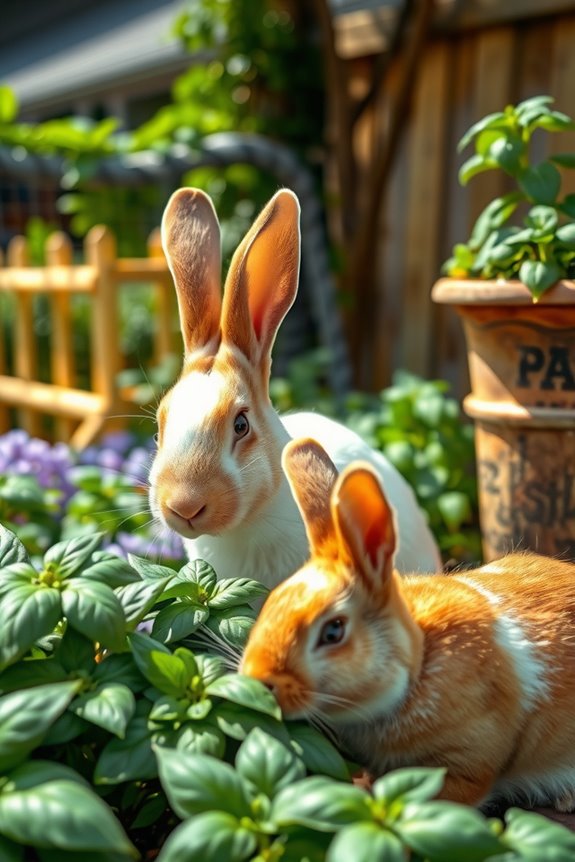
Why Wild and Pet Rabbits Eat Basil Differently
Some gardeners find their basil stripped bare while others barely see a nibble. The reason comes down to what kind of rabbit is in your garden.
Pet rabbits often eat basil readily because they have regular access to it and develop preferences for cultivated herbs. Wild cottontails, by contrast, rely more on instinct and whatever native plants grow nearby. They may skip basil entirely or take only a few leaves before moving on.
Key Differences Between Rabbit Types
Pet rabbits have grown accustomed to human-grown herbs through repeated exposure. They learn that basil tastes good and will return to eat it when hungry. Wild rabbits work differently. They follow their natural food preferences and only eat what they recognize as safe from their native habitat.
Location matters too. A suburban garden with pet rabbits nearby faces different risks than a rural property where wild cottontails pass through occasionally. Your rabbit problem depends on which type you’re dealing with.
Planning Your Defense
Knowing whether you’re protecting against wild or pet rabbits helps you choose the right approach. Pet rabbits need stronger physical barriers since they actively seek out basil. Wild rabbits may be deterred by plants that smell unfamiliar or by simple fencing they can go around. Different rabbit types respond to different strategies, so identifying what’s eating your plants first saves you time and effort later.